US-Colombia Barranquilla Talks Target Drug Cartels, Trade
Colombia · Politics
Key Facts
—Who. A US delegation traveled to Barranquilla on July 29 to meet Colombian president-elect Abelardo De la Espriella.
—Agenda. Discussions centered on security cooperation against organized crime and narcotics trafficking, plus expanded trade and investment.
—Security. Talks covered intelligence sharing, institutional and military strengthening, and regional security coordination.
—Economy. The economic track aims to improve fiscal confidence, attract investment, and open new commercial opportunities.
—Context. Parallel meetings in Washington with the World Bank, State Department, Treasury, Commerce, Energy, and Congress highlight the financial and commercial stakes.
Washington moves early to secure a strategic partner in Bogotá, dispatching officials to the Caribbean coast for direct talks with the incoming leader on crime, intelligence and investment.
A coastal courtship before the inauguration
A United States delegation sat down with Colombian president-elect Abelardo De la Espriella in Barranquilla on July 29, signaling an early push to shape the bilateral relationship before the transfer of power. The choice of Colombia’s main Caribbean port city, rather than the capital Bogotá, reflects the incoming administration’s regional base and the pragmatic tone both sides want to set.
The meeting is part of a broader transition-phase effort to deepen ties, with De la Espriella already holding or scheduling additional encounters with US representatives on Colombian soil. Both governments are framing the engagement as a deliberate shift toward closer cooperation.
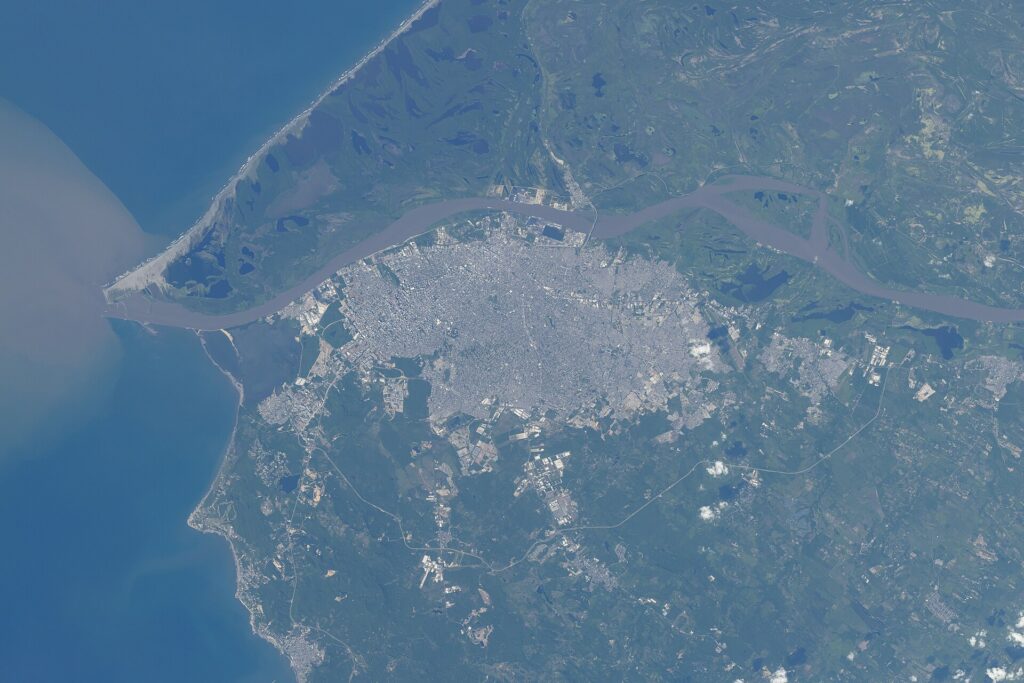
For readers outside Colombia, Barranquilla is more than a coastal city. It is the country’s fourth-largest urban center and a historic gateway for trade along the Magdalena River, long associated with a distinct Caribbean identity that often translates into a more business-friendly, outward-looking political style.
Holding talks there sends a symbolic message that the new administration intends to govern with that coastal, commercially oriented perspective in mind, rather than exclusively from the Andean highlands where Bogotá sits.
Security dominates the dialogue
Topping the agenda was joint action against organized crime and narcotics trafficking, long-standing irritants that Washington wants to tackle with a willing partner. The talks also explored intelligence sharing, regional security coordination, and the strengthening of Colombia’s military and law enforcement institutions.
For the United States, a reliable ally in the Andes is critical to countering transnational threats and stabilizing a region where illicit networks operate across borders. The incoming Colombian government has signaled it is receptive to a more muscular security partnership.
This emphasis on institutional strengthening matters because it goes beyond short-term operations. It suggests both sides are interested in building Colombian agencies that can sustain pressure on criminal groups over time, reducing the need for direct US involvement.
Regional security coordination also points to a wider lens: Colombia’s geography places it at the crossroads of routes used for moving drugs, people, and illegal goods northward, so any durable strategy must involve neighbors and not just bilateral police work.
An economic pillar takes shape
Beyond security, the delegation pressed for expanding bilateral trade, attracting foreign investment, and improving fiscal confidence in Latin America’s fourth-largest economy. Officials discussed opening new economic opportunities and creating a more predictable climate for American and international capital.
The Barranquilla talks did not happen in isolation. Earlier and parallel meetings in Washington brought together the World Bank, the State Department, the Treasury, Commerce, Energy, Congress, and private-sector actors, revealing a whole-of-government effort to anchor Colombia economically.
For a foreign audience, the presence of the World Bank and multiple US cabinet departments signals that this is not a routine diplomatic courtesy. It reflects a coordinated push to align development lending, trade policy, and energy cooperation behind a single bilateral framework.
Improving fiscal confidence, a phrase that can sound abstract, essentially means making government finances more transparent and predictable so that investors feel safe putting money into Colombian infrastructure, factories, or services. That confidence, in turn, can lower borrowing costs and create jobs, which is why it featured so prominently in the discussions.
Washington’s pre-handover positioning
By engaging De la Espriella weeks before his inauguration, the United States is betting that early, high-level contact will lock in goodwill and policy alignment from day one. The outreach blends hard security interests with a commercial diplomacy push that treats Colombia as both a security anchor and an emerging investment destination.
The dual-track approach—political-military on one side, financial-commercial on the other—suggests Washington views the transition as a window to reset a relationship that both capitals describe as entering a phase of more active economic partnership.
What to watch next is whether the goodwill built in Barranquilla translates into concrete agreements during the first hundred days of the new government. Open questions include how quickly intelligence-sharing protocols can be updated, which sectors will see the first investment announcements, and whether the parallel Washington meetings produce a coordinated financial package involving multilateral lenders. Another unknown is how Colombia’s neighbors will react to a deepened US security footprint, and whether regional coordination will extend beyond rhetoric to joint operations or shared intelligence platforms.
More: Colombia news in English, every day from The Rio Times.
Frequently Asked Questions
Who is Abelardo De la Espriella?
He is Colombia’s president-elect, preparing to take office after winning the 2026 election. His incoming government is actively deepening ties with the United States during the transition period.
Why did the US delegation travel to Barranquilla instead of Bogotá?
Barranquilla is the president-elect’s home city on Colombia’s Caribbean coast. Holding talks there during the transition highlights the personal and political importance of the region to the new administration.
What security issues were discussed?
The agenda covered cooperation against organized crime and narcotics trafficking, intelligence sharing, regional security, and strengthening Colombia’s military and law enforcement institutions.
What economic topics were on the table?
Discussions focused on expanding bilateral trade, attracting investment, improving fiscal confidence, and opening new commercial opportunities, backed by parallel meetings with US financial and trade institutions.
Connected Coverage
This article was produced by The Rio Times’ automated newsroom system. How we use AI · Report an error
In depth
Read More from The Rio Times