
ARGENTINA · ECONOMY
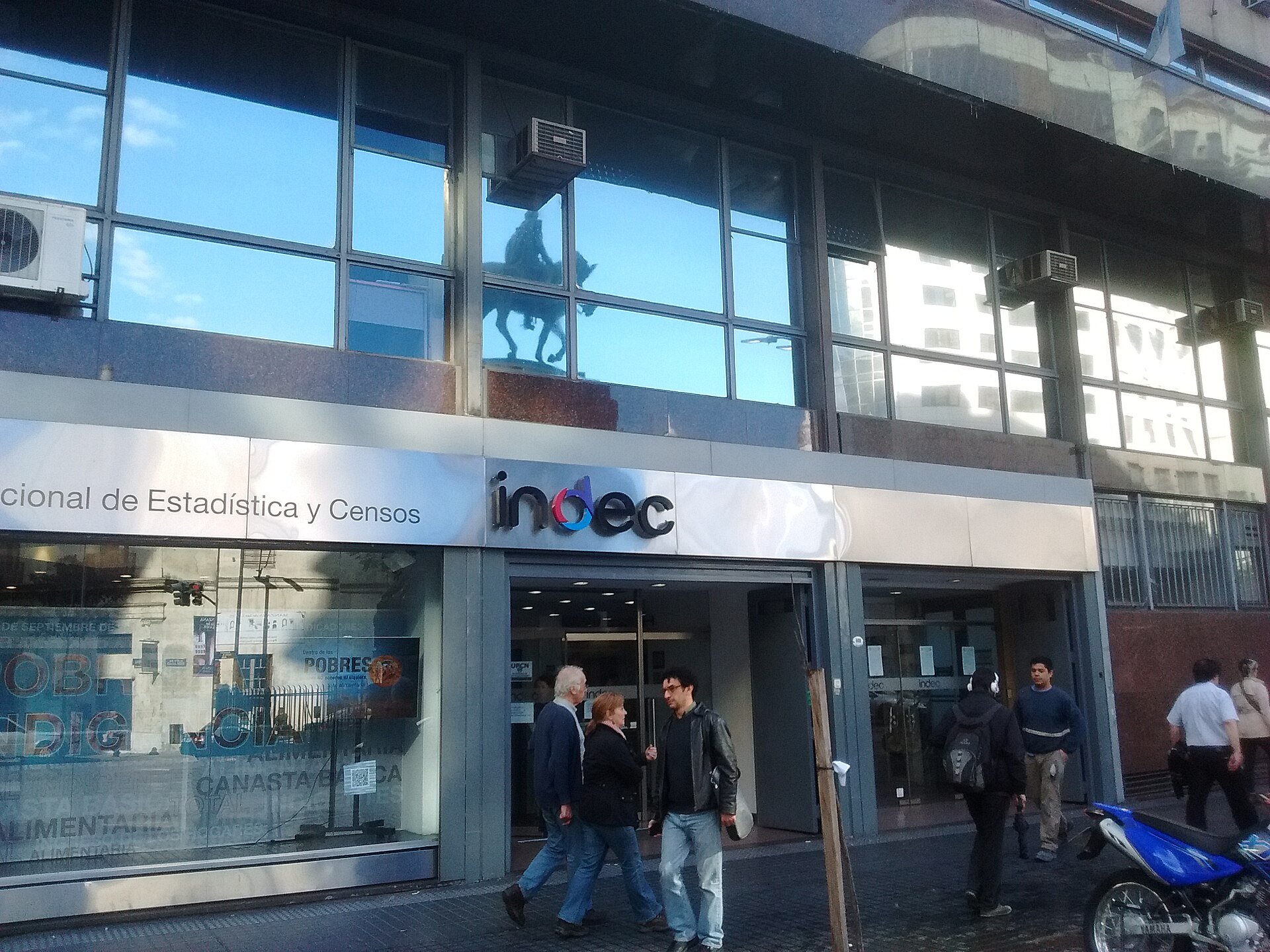
Argentina’s wholesale prices rose 1.6% in October, about half September’s 3.2%, the statistics institute INDEC reported on Tuesday 17 November 2026. The wholesale index, known as IPIM (Índice de Precios Internos al por Mayor), tracks what producers and importers charge in bulk and is watched as an early signal for consumer prices.
Prices are up 24.8% in the first ten months of 2026. Over twelve months the rise is 29.8%.
Key Facts
- What Wholesale prices rose 1.6% in October 2026, against 3.2% in September.
- Year Up 24.8% from January to October and 29.8% over twelve months.
- Split Domestic products rose 1.6% and imported products 0.9% in the month.
- Retail Consumer prices rose 2.2% in October, above the wholesale rate (published 12 November).
- Prediction markets Polymarket, a crypto-based market, gives 94% to 2026 consumer inflation ending at 30.0-34.9%, as of 17 November 2026, 15:40 ET.
Argentina’s wholesale inflation has cooled sharply after a September spike, though consumer prices are still rising faster than what producers charge.
What INDEC Reported
INDEC said the index of wholesale prices rose 1.6% in October, down from 3.2% in September. Domestic goods rose 1.6% and imported goods 0.9%, according to the figures published on 17 November 2026.
Over the first ten months of the year wholesale prices climbed 24.8%, and against October 2025 they are 29.8% higher. Consumer prices rose 2.2% in October and 33.1% over twelve months, INDEC reported on 12 November, so retail inflation is running above wholesale.
What the Gap Tells Us
When wholesale prices rise slower than retail prices, shops and service providers absorb less cost from producers. It leaves less pressure for further consumer price rises in the coming months, though it does not guarantee they fall.
One month of cooler wholesale prices is not yet a trend. Another monthly reading is needed to tell.
Live Market IntelligenceArgentina — Live Market Board
Rio Times · Live Market Intelligence
Argentina — Live Market Board
—
169,865.13
+0.34%
71,204.98
-0.84%
10,477.22
-0.46%
2,848,945
—
2,452.46
-0.02%
| Instrument | Last | Change | YoY | Prev. | High | Low | Volume |
|---|---|---|---|---|---|---|---|
| MERVAL | 2,848,945 | — | — | 2,848,945 | — | — | — |
| USD/ARS | 1,552 | +0.14% | +10.29% | 1,550 | 1,553 | 1,550 | — |
| YPF | 6,165 | +2.66% | +8.71% | 6,005 | 6,215 | 6,005 | 1,612,195 |
| GGAL | 4,810 | +1.42% | -36.19% | 4,743 | 4,840 | 4,678 | 2,517,339 |
| PAMPA | 4,223 | +2.93% | -19.22% | 4,103 | 4,250 | 4,070 | 1,111,810 |
| TXAR | 690.50 | +0.73% | -15.57% | 685.50 | 717.00 | 665.50 | 1,698,943 |
| ALUAR | 804.00 | +5.17% | -25.79% | 764.50 | 805.00 | 745.00 | 585,835 |
| TGS | 6,920 | +2.37% | -21.73% | 6,760 | 7,015 | 6,555 | 154,776 |
| CEPU | 1,739 | +0.99% | -20.70% | 1,722 | 1,767 | 1,700 | 981,907 |
| MIRGOR | 1,655 | -0.30% | -92.92% | 1,660 | 1,700 | 1,590 | 15,465 |
| COME | 28.86 | -4.91% | -63.59% | 30.35 | 30.66 | 28.00 | 13,703,776 |
| LOMA NEGRA | 2,710 | +0.28% | -21.46% | 2,703 | 2,773 | 2,625 | 228,942 |
| BYMA | 190.50 | +1.46% | -34.39% | 187.75 | 193.75 | 185.25 | 8,565,101 |
| TELECOM ARG | 3,555 | +3.27% | -6.84% | 3,443 | 3,578 | 3,320 | 45,804 |
| GLOBANT | 42.78 | -4.44% | -29.44% | 44.77 | 44.31 | 41.55 | 782,046 |
| MERCADOLIBRE | 1,433 | -1.97% | -30.21% | 1,462 | 1,466 | 1,427 | 336,937 |
What Prediction Markets Say
On Polymarket, a crypto-based prediction market, traders put a 94.0% probability on Argentina’s 2026 annual consumer inflation finishing between 30.0% and 34.9%, with US$100,925 traded across all brackets of that market as of 15:40 ET on 17 November 2026. Prices are bets, not polls.
Why we show this: prediction markets turn real-money bets into a live probability that moves within minutes of the news, which is why investors, campaigns and newsrooms in the United States now follow them closely. We show them next to polls and official results, never instead of them.
What It Means for Readers Outside Argentina
Slower wholesale inflation helps importers and exporters of goods priced in dollars plan their costs. Holders of Argentine bonds and the peso should watch INDEC’s November consumer price report in mid-December.
Frequently Asked Questions
What is the wholesale price index in Argentina?
The IPIM measures the prices producers and importers charge for goods in bulk. INDEC publishes it monthly.
How much did wholesale prices rise in October 2026?
They rose 1.6% in the month, 24.8% since January and 29.8% over twelve months, according to INDEC.
Is retail inflation higher than wholesale?
Yes. INDEC reported consumer prices up 2.2% in October against 1.6% for wholesale prices.
Sources: INDEC (Instituto Nacional de Estadística y Censos), wholesale price index for October 2026 and consumer price index for October 2026, published 17 and 12 November 2026; Polymarket, “Argentina Annual Inflation 2026”, read 17 November 2026. Related: Argentina September wholesale inflation 3.2%; Argentina news.
In depth
This article was produced by The Rio Times’ automated AI newsroom. Editorial responsibility: Matthias Camenzind, Publisher and Editor-in-Chief. The Rio Times also runs Ask Rio Times, which answers from 100,000+ of our own articles, the daily Latin America Power Map, and prediction-market odds on elections and markets.. How we use AI · Report an error