
ARGENTINA · ECONOMY
September 2026 Update. This guide was reviewed on 25 September 2026. New since the last edition: INDEC published first-half poverty of 32.3% on 24 September, August inflation came in at 1.7% monthly, the dollar hit its 2026 high on 23 September, and the Senate passed the central-bank charter rewrite on 24 September. All figures below are current as of 25 September 2026.
Key Facts
—Inflation Argentina’s monthly inflation fell to 1.7% in August 2026 under President Javier Milei, with prices up 33.5% on the year.
—The peso The official retail rate was about 1,535 pesos per US dollar on 24 September; the informal rate was 1,560.
—Currency controls Most were scrapped in April 2025, and individuals can buy dollars freely, though companies still face limits.
—Growth The economy shrank 1.3% in 2024, grew 4.4% in 2025, and the IMF expects 3.5% in 2026.
—The catch Poverty rose to 32.3% in the first half of 2026 from 28.2%, as activity stalled and incomes lagged living costs.
—Politics Milei’s party won the October 2025 midterms with about 41% and has the largest bloc in the lower house.
Nearly three years into Javier Milei’s spending cuts, Argentina’s economy in 2026 has monthly inflation below 2% and few currency controls. But growth has stalled, and poverty rose again in the first half of the year.
What has not turned is the pay packet: formal private-sector wages still trail inflation over the past year.
Where Argentina stands in September 2026
Javier Milei took office in December 2023 promising to slash public spending, kill inflation and shrink the state. Whatever you think of the method, the headline numbers for Argentina’s economy in 2026 look very different.
Prices rose 1.7% in August 2026, the lowest monthly rate in 14 months, and 33.5% over a year, official data show. That is still high, but in 2023 prices rose 211.4% in a year, and 25.5% in December alone.
The economy shrank 1.3% in 2024 as the cuts landed, then grew 4.4% in 2025. The IMF still expects about 3.5% growth in 2026, but output fell 0.6% in the second quarter from the first.
Activity then dropped 2.9% in July from June, the steepest monthly fall since the pandemic. Unemployment was 7.9% in the second quarter, up from 5.7% when Milei took office.
Poverty has moved furthest, and it has turned. INDEC, the national statistics office, put it at 32.3% in the first half of 2026, up from 28.2% in late 2025.
When Milei was sworn in it was 41.7%, and it went above 50% in his first six months before falling back. Economy Minister Luis Caputo said both poverty and extreme poverty remain far below early-2024 levels.
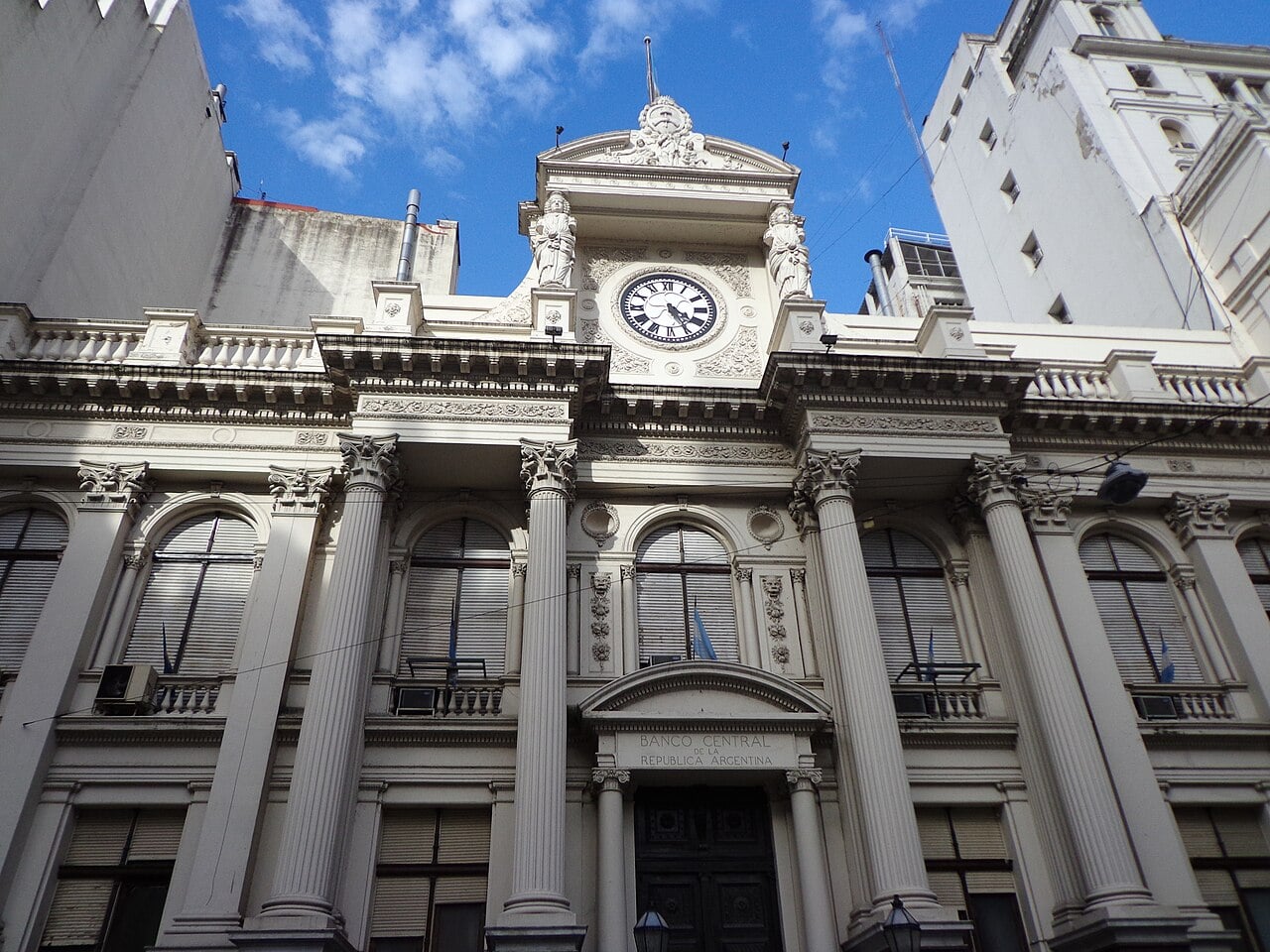
The peso: what it costs and where you can buy it
This is where most outdated guides will get you into trouble, because the rules changed completely in April 2025.
For years Argentina ran a hard currency control known as the cepo – literally, the stocks. Ordinary people could buy only small, heavily taxed amounts at the official rate, so a parallel “blue” market grew up.
At its worst, the informal dollar cost more than twice the official one.
The cepo was lifted for individuals on 11 April 2025, taking effect the following Monday. Since then the peso has floated inside a band set by the central bank.
Since January 2026 the band’s edges have moved daily in line with the latest monthly inflation figure. The dollar hit its 2026 high on 23 September, but was still about 26% below the ceiling, La Nación reported.
On 24 September 2026 the state-owned Banco Nación sold dollars at about 1,535 pesos per US dollar, Ámbito reported. The informal rate was about 1,560, a gap of under 2%.
In mid-2024 the gap was above 50%, and in late 2023 it was close to 200%. For visitors and new residents, that is the biggest practical change: you can now use the official rate.
Companies have noticed too. Firms sent US$2.6 billion of profits out of Argentina in the first half of 2026, the most in a decade.
Foreign oil and gas companies resumed sending profits home in early 2026, for the first time in almost seven years. They sent US$460 million in March alone.
Restrictions remain for companies: profits from financial years before 2025 are still blocked, and firms cannot buy dollars simply to hold them. Inter-company debts taken on before December 2023 have their own rules.
What it cost, and who paid
The disinflation was not free, and it is worth being plain about who paid for it.
Real wages collapsed in early 2024, recovered through 2024 and 2025, and have since gone flat. Formal private-sector workers were about 3% worse off in July 2026 than a year earlier, after inflation.
Their pay rose 29.7% over those twelve months, but prices rose 33.8%, INDEC figures show. In July itself, pay in all three sectors INDEC tracks rose faster than prices.
Public spending was cut across pensions, public works, provincial transfers, energy subsidies and university budgets. Bus fares and electricity bills, held artificially low for years by government subsidy, were allowed to rise towards what the services cost.
Those increases fed straight into the published inflation figures, even as the money-printing behind the old inflation stopped.
The unions have not gone quiet. The CGT, Argentina’s main labour federation, held its fourth general strike against Milei on 19 February 2026, during the labour-bill debate.
The budget: a surplus, but a thin one
Milei’s central promise was a balanced budget, and he has broadly delivered one – which for Argentina is genuinely unusual.
In the first eight months of 2026 the government took in more than it spent, the Economy Ministry said on 18 September. The surplus was worth 1.1% of the economy before debt interest, and 0.2% after paying it.
June itself was in deficit, because of a mid-year bonus payment and a tax collection that shifted into July.
The full-year target agreed with the IMF is 1.4% of the economy before interest, cut in April from the 2.2% originally set. The government now expects about 1.3%, slightly short of it, Ámbito reported on 15 September.
An IMF team was due in Buenos Aires on 21 September to start the programme’s third review. The political pressure to spend never really goes away, and the economy is slowing.
The IMF programme and the money in the vault
Argentina and the IMF signed a US$20 billion, four-year programme on 11 April 2025, the same week the currency controls came off. The Fund’s board completed the second review on 21 May 2026, releasing about US$1 billion.
That took total disbursements to about US$15.8 billion.
Reserves have rebuilt, though buying has slowed. The central bank has bought about US$14.3 billion in the market so far this year, Ámbito reported.
Gross reserves reached nearly US$51 billion on 25 August, the highest since 2019, helped by a rising gold price. They had slipped to about US$48.9 billion by 23 September.
The market’s verdict shows up in country risk – the extra interest Argentina pays over US government debt. It fell close to 4 percentage points in July, its lowest since 2018.
It had climbed back to about 5.7 points by 23 September, a five-month high, La Nación reported. When Milei took office it was about 19 points.
Politics: Milei is no longer a president without a Congress
For his first two years Milei governed with a tiny parliamentary bloc and ruled largely by decree, which the courts repeatedly trimmed. That changed on 26 October 2025.
His party, La Libertad Avanza, took about 41% of the vote in the midterm elections, the largest single share. By the December swearing-in it had about 95 deputies, counting defectors, and 20 senators.
That made it the largest single bloc in the lower house. A 21st senator joined in early 2026, leaving its own bloc level with the main Peronist bloc in the 72-seat Senate.
With those numbers Milei can sustain a veto, as long as his bloc and its allies hold together. In practice, the opposition can no longer overturn his vetoes.
He has used his stronger hand. Congress passed a sweeping labour reform in February 2026, rewriting severance, working-hours and strike rules and scrapping eight national taxes.
On 30 July 2026 Milei announced a bill rewriting the central bank’s founding charter. Its mandate would narrow to protecting the currency’s value, and it could no longer lend to the Treasury or provinces.
The lower house approved it 144–102 on 26 August, and the Senate passed it 46–22 on 24 September. Senators changed how board members can be removed, so the bill returns to the lower house.
The next national election is in 2027.
What this means if you are moving there, working there or investing
Buying and selling currency is normal again. You can open an account, buy dollars and move money in ways that were simply not possible before April 2025. Check the current rules before a large transfer, but stop planning around the cepo.
Argentina is no longer a bargain. The peso has strengthened in real terms, and Buenos Aires is far pricier in dollars than in 2023. Old advice about a dollar going twice as far no longer applies, though prices outside the capital are lower.
Prices still move fast. Even at 1.7% a month, prices rise 22% over a year, so a sum fixed in pesos buys almost a fifth less. Index anything long-term, or price it in dollars.
The government is no longer at risk of being blocked at every turn. Whether you like the direction or not, the government has the votes to keep going until 2027. The bigger risk now is whether incomes catch up before patience runs out, as poverty rises again.
Frequently Asked Questions
What is Argentina’s inflation rate now?
Prices rose 1.7% in August 2026, the lowest monthly reading in 14 months, and 33.5% over twelve months. INDEC publishes the September figure in mid-October.
Can foreigners buy dollars in Argentina?
Yes, since Argentina lifted its currency controls for individuals in April 2025. On 24 September 2026 the state bank sold dollars at about 1,535 pesos per US dollar, and the informal rate was 1,560.
Is poverty rising again in Argentina?
Yes, to 32.3% in the first half of 2026 from 28.2% in late 2025, INDEC said on 24 September. That is still well below the 52.9% peak of early 2024.
Is Argentina’s economy in 2026 growing?
It has stalled: output shrank 0.6% in the second quarter, and activity fell 2.9% in July from June. The IMF still expects Argentina’s economy in 2026 to grow about 3.5%, in its July forecast.
What is the status of Argentina’s IMF programme?
Argentina signed a US$20 billion, four-year Extended Fund Facility on 11 April 2025. The IMF board completed the second review on 21 May 2026, taking disbursements to about US$15.8 billion, and a Fund team arrived in Buenos Aires on 21 September 2026 to start the third review.
What is Argentina’s country risk now?
About 5.7 percentage points over US Treasuries on 23 September 2026, a five-month high, La Nación reported. It fell close to 4 points in July, the lowest since 2018, and stood near 19 points when Milei took office.
Sources: INDEC – consumer price index, August 2026, Rio Times – Cost of living in Buenos Aires 2026, INDEC – poverty and extreme poverty, first half of 2026 (24 September 2026), Banco Central de la República Argentina, IMF – second review of the Extended Fund Facility, May 2026
Connected Coverage
Related: Best Buenos Aires Neighborhoods for Expats
This article was produced by The Rio Times’ automated newsroom system. How we use AI · Report an error · Editorial responsibility: Matthias Camenzind, Editor-in-Chief
Fresh reporting on this topic, refreshed automatically as new stories are published.
- Oct 14Milei Lands in Washington for 36-Hour Visit
- Oct 14Brazil Court Halts 30,000 Union Newspapers
- Oct 14Argentina Media Landscape Explained
- Oct 14Argentina Religion Beliefs and Church Attendance Today
- Oct 14Argentina Lines Up US$800 Million in Loans
- Oct 14Peru Arrests Suspect in 3 Argentine Murders
- Oct 14Lula vs Flávio: Where They Stand on 7 Issues
- Oct 14São Paulo Daily Brief