What Is YPF? Argentina’s State Oil Giant, Its Record Shale Profits and the US$16.1bn Case

COMPANIES · ARGENTINA
Key Facts
- —The country Argentina, South America’s second-largest economy, governed by President Javier Milei since 10 December 2023. Its oil output hit a record 916,200 barrels a day in July 2026, most of it shale.
- —What it is Argentina’s largest energy company, founded by the state in 1922. It pumps oil and gas, runs three refineries and sells more than half the country’s petrol and diesel.
- —Size Revenue of US$20.7 billion in the twelve months to June 2026. In the second quarter of 2026 alone it earned a net profit of US$1.2 billion on US$6.6 billion of sales.
- —Ownership The Argentine state holds 51 percent, taken from Spain’s Repsol in 2012. The other 49 percent trades in Buenos Aires and, as ADRs, on the New York Stock Exchange.
- —Why it matters YPF is the largest operator in Vaca Muerta, one of the biggest shale deposits outside North America. Argentina’s hopes of becoming an energy exporter run largely through it.
- —The catch A US$16.1 billion New York judgment over the 2012 takeover was overturned in March 2026. The plaintiffs had until 30 September 2026 to seek a Supreme Court hearing, and in September their funder Burford also took the dispute to the World Bank’s arbitration tribunal.
What is YPF? A plain-English guide to Argentina’s state-controlled oil company: what it owns, how it earns, and why its profits are at records. Plus the court case that once threatened to take it away.
YPF is the company that decides how much oil and gas Argentina produces and how much its drivers pay at the pump. For foreign investors it is the most liquid way to bet on Vaca Muerta. For the Argentine state it is the flagship of a plan to earn export dollars from energy.
What the company does
YPF stands for Yacimientos Petrolíferos Fiscales, roughly “state oilfields”. It was created in 1922, fifteen years after the state struck oil by chance at Comodoro Rivadavia in Patagonia while drilling for water. For most of the twentieth century it was the Argentine oil industry.
The company was privatised in the 1990s, and Spain’s Repsol took control at the end of that decade. In 2012 the government of Cristina Fernández de Kirchner expropriated 51 percent of the shares from Repsol by law. Argentina later compensated Repsol with government bonds.
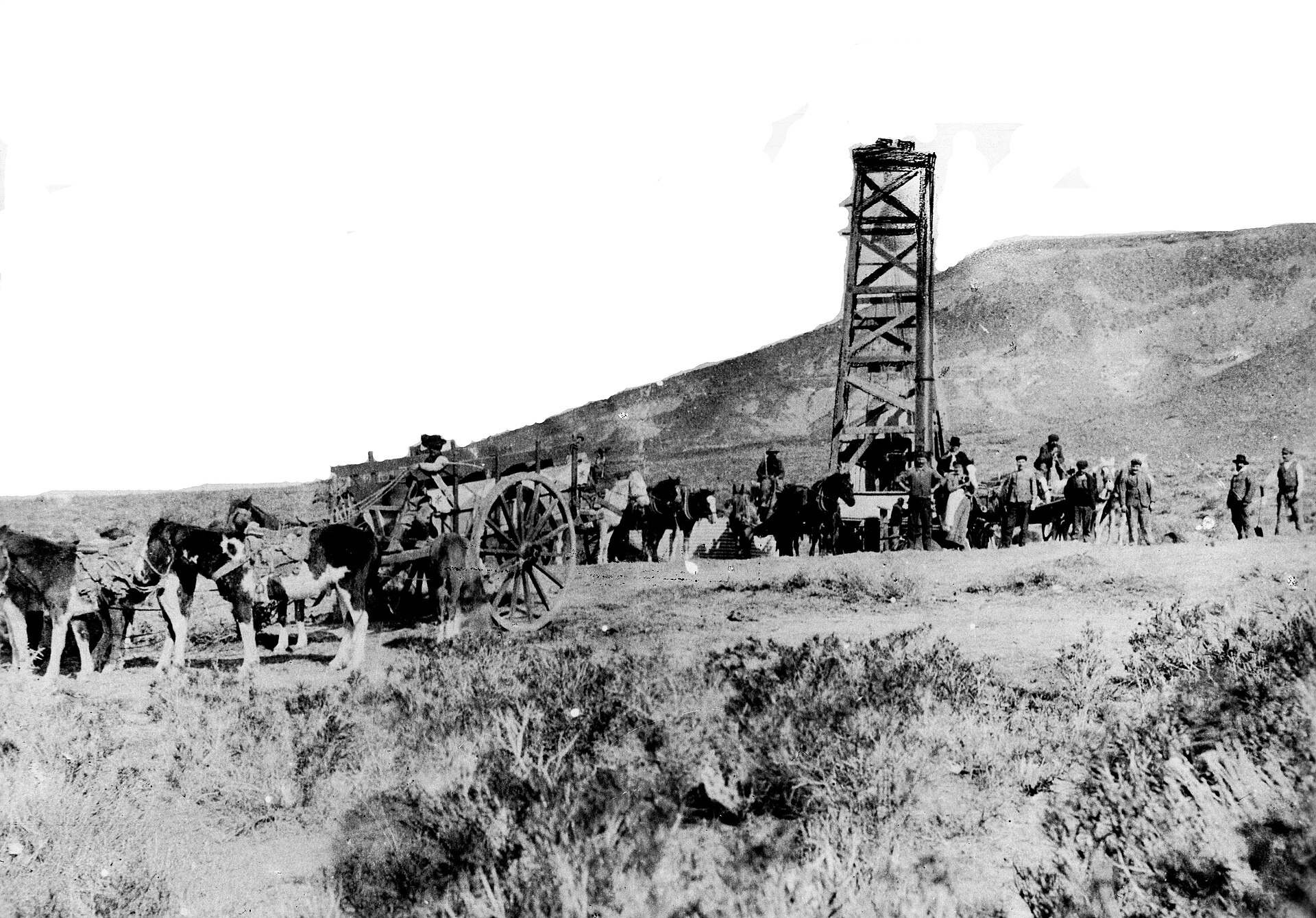
Today YPF is what the industry calls an integrated company. It finds and pumps crude oil and natural gas, which is the “upstream”. It then moves, refines and sells fuel, which is the “midstream” and “downstream”.
Upstream, it produced about 260,000 barrels of oil a day and 34.5 million cubic metres of gas a day over the twelve months to June 2026. Three quarters of that oil and seven tenths of that gas now come from shale. Downstream, it owns refineries at La Plata near Buenos Aires, Luján de Cuyo in Mendoza and Plaza Huincul in Neuquén, with capacity of about 338,000 barrels a day.
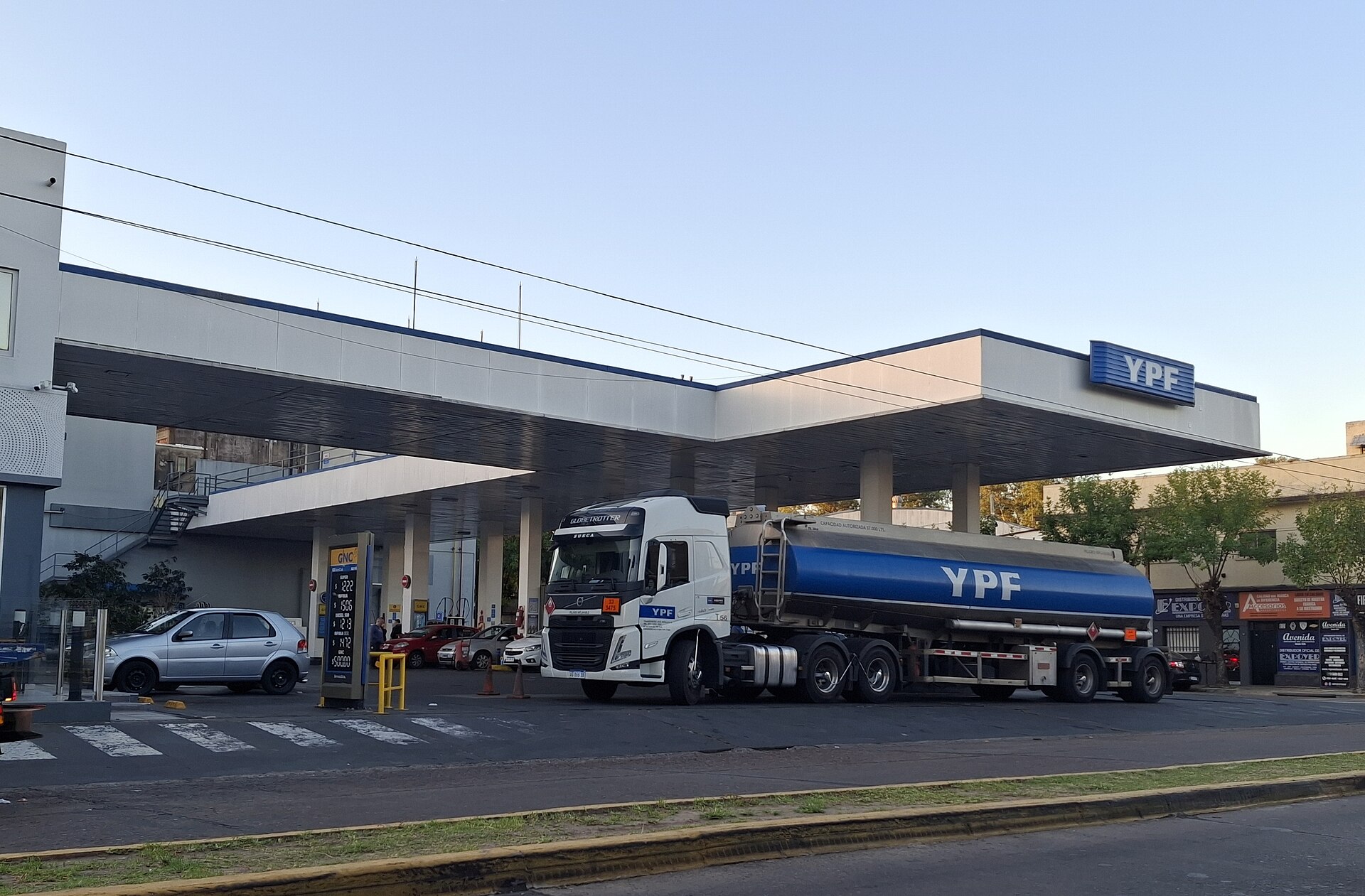
That is more than half of Argentina’s refining capacity. YPF also sells about 57 percent of the petrol and diesel bought in the country, through the blue-and-white stations that line almost every Argentine highway.
Vaca Muerta, in plain words
Vaca Muerta (“dead cow”) is a layer of shale rock under the province of Neuquén and its neighbours. Oil and gas are trapped in it and must be freed by horizontal drilling and hydraulic fracturing, the same methods used in Texas.
YPF is the largest operator there. By its own count it produced 51 percent of Vaca Muerta’s oil and 23 percent of its gas in the second quarter of 2026. Its biggest shale block, Loma Campana, is run with Chevron as partner.
How it makes money
The largest slice of YPF’s revenue comes from selling fuel inside Argentina. Local gas sales and exports make up most of the rest.
The profit, however, is increasingly made in the oilfield. A shale well in Vaca Muerta costs less to run than the ageing conventional fields YPF inherited, many of which it has been selling. The company puts the lifting cost in its core shale hub at about US$4.5 per barrel of oil equivalent in the second quarter of 2026, well-servicing costs included.
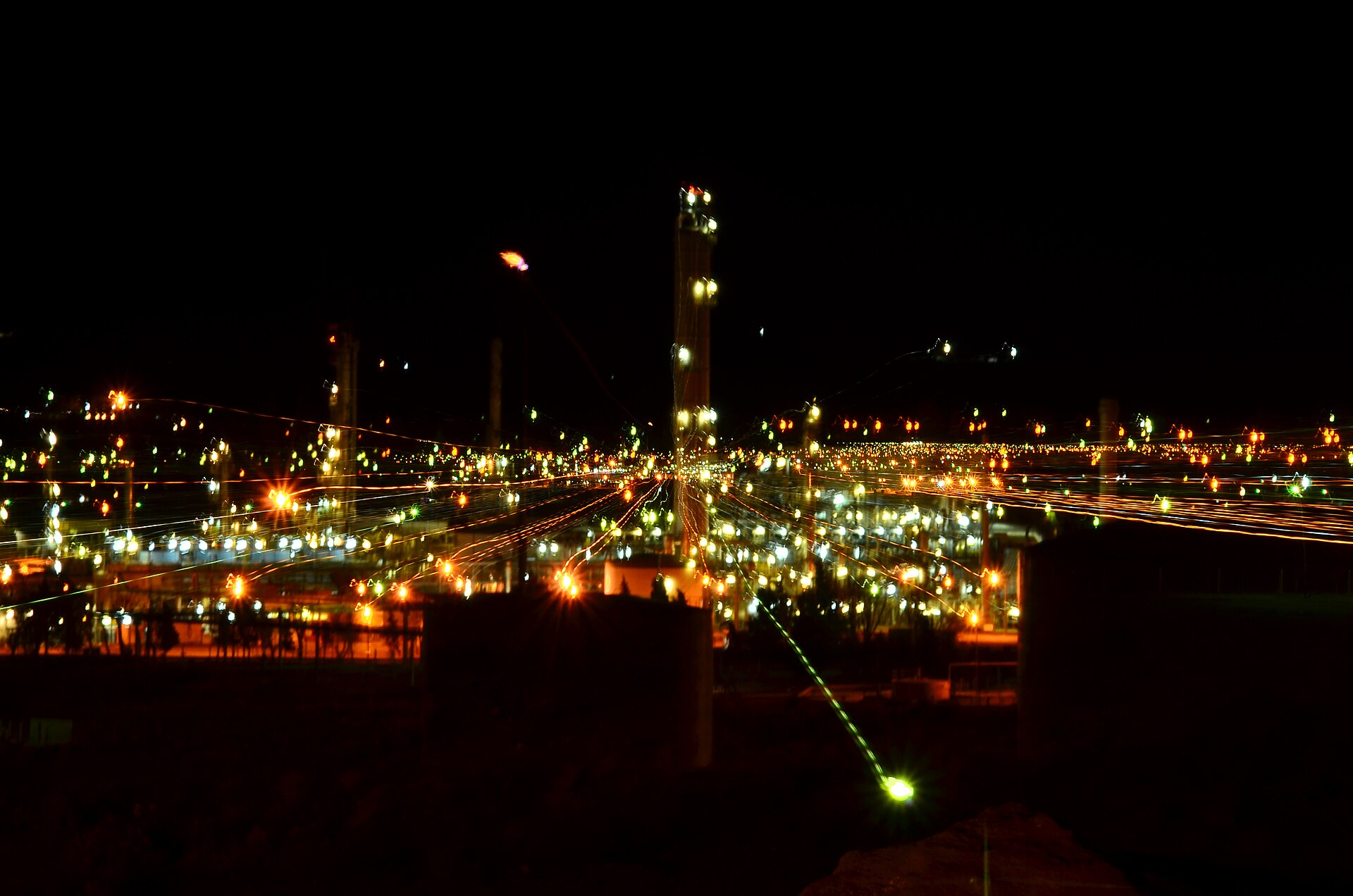
Pricing is the other lever. Under President Milei, YPF has been allowed to move pump prices closer to import parity, the price of bringing the same fuel in from abroad. Under earlier governments, prices were often held down to fight inflation, and YPF’s margins suffered.
Exports are the growth story. Vaca Muerta crude already reaches Atlantic ports, and a dedicated export pipeline is under construction. YPF also wants to add liquefied natural gas (LNG), gas chilled into liquid so it can travel by ship.
Live Company IntelligenceYPF Sociedad Anonima — the full investor dossier
Wall Street view
Valuation & profitability
Price & risk
$23.3752-wk high
$57.87
Revenue trend · 6y
Ownership
Dividend
The numbers
The latest reported period is the second quarter of 2026, April to June, published in August. YPF reports in US dollars, which spares foreign readers any conversion.
- Revenue: US$6.57 billion, up 42 percent on a year earlier.
- Adjusted EBITDA: US$2.80 billion, up 149 percent, a 43 percent margin and the highest in the company’s history. EBITDA is profit before interest, tax, depreciation and amortisation.
- Net profit: US$1.21 billion, against US$58 million in the same quarter of 2025.
- Investment (capex): US$1.34 billion, 77 percent of it in unconventional fields.
- Free cash flow: US$824 million after investment, interest and acquisitions.
- Debt: net debt equal to 1.09 times a year’s adjusted EBITDA, the lowest ratio in eleven years.
- Shale oil: 213,000 barrels a day, up 47 percent, about 80 percent of its total oil output.
For the first half of 2026, the company’s interim financial statements filed with the US Securities and Exchange Commission show revenue of US$11.52 billion and net profit of US$1.61 billion. In the first half of 2025 it earned just US$48 million.
Part of the jump reflects higher oil prices this year. The rest is volume: more shale barrels, fewer high-cost conventional ones. YPF targets about 215,000 barrels a day of shale oil for 2026 as a whole and about 250,000 by December.
On the stock market, YPF’s New York shares closed at US$53.93 on 23 September 2026. Across its 393 million share-equivalents, that implies a market value of roughly US$21 billion.
Ownership and governance
The Argentine state, through the economy ministry, holds 51 percent of YPF’s shares. The state pension fund, the FGS of ANSES, holds another 8 percent. The remaining 41 percent belongs to private investors in Buenos Aires and New York.
So YPF is a listed company with a controlling government shareholder, much like Brazil’s Petrobras. The government appoints the leadership. Private shareholders get a share of profits and a vote, but not control.
Horacio Marín, a petroleum engineer who spent most of his career at the private Tecpetrol group, has been chairman and chief executive since the Milei government took office. He signed the company’s June 2026 interim accounts as president.
Marín’s strategy is to concentrate on Vaca Muerta, sell mature conventional fields, and build export infrastructure with partners. On 8 September 2026 the company presented a multi-year investment programme that it priced at US$154.1 billion.
The US$16.1 billion case
The 2012 expropriation left behind a lawsuit in New York. Former minority shareholders, led by the Petersen companies and Eton Park, sued. They argued Argentina broke YPF’s bylaws by not offering to buy out all shareholders when it took control.
The claims were financed by Burford Capital, a litigation funder. In September 2023 US District Judge Loretta Preska ordered Argentina to pay US$16.1 billion. She dismissed the claims against YPF itself, so the company was never the debtor.
On 27 March 2026 the Second Circuit Court of Appeals reversed the judgment by two votes to one. Judge Denny Chin, writing for the majority, found the claims failed under Argentine law; Judge José Cabranes dissented. The court upheld the dismissal of the claims against YPF.
The full appeals court declined to rehear the case on 2 June 2026. Justice Sonia Sotomayor then extended the deadline for a Supreme Court petition to 30 September 2026, and Argentine media reported that Burford was preparing one.
Burford also opened a second front. In mid-September 2026 it filed an arbitration claim against Argentina at ICSID, the World Bank’s investment tribunal, on behalf of the Petersen companies. As of 24 September 2026, the US case was therefore close to over but not formally closed, and the dispute itself was not over.
Why it matters for the region
Argentina spent much of the last two decades importing energy it could not produce. Shale has reversed that. National crude output reached a record 916,200 barrels a day in July 2026, and crude oil led all single export products in the first half of the year.
YPF sits at the centre of that shift. It holds about 30 percent of the Vaca Muerta Sur pipeline, known as VMOS, an export line to the Atlantic coast of Río Negro. The company expects its capacity to reach about 180,000 barrels a day in December 2026 and about 550,000 by the third quarter of 2027.
Gas is the next step. YPF owns 25 percent of Southern Energy, a group planning about 6 million tonnes a year of LNG from floating plants off Río Negro. A far larger project, Argentina LNG, would add about 12 million tonnes a year.
Argentina LNG is owned 36 percent by YPF, 32 percent by Italy’s Eni and 32 percent by XRG, the international investment arm of Abu Dhabi’s ADNOC. It still needs a final investment decision. Rio Times reporting in September put its cost at around US$51 billion.
For neighbours, more Argentine gas means potential supply for Chile, Brazil and Uruguay. For Europe and Asia, it is a possible new LNG source outside the Gulf. For Argentina, it is dollars: the one thing its economy has chronically lacked.
Risks
Politics. YPF’s freedom to price fuel and sell assets depends on the government of the day. A future administration could again cap pump prices or steer investment for political ends, as happened before 2023.
Oil prices. Record 2026 profits partly reflect a strong crude price. YPF’s own export estimates assume Brent near US$70 a barrel, well below levels seen this year.
Financing. The export projects are enormous relative to the company. Argentina LNG in particular needs long-term buyers and project finance before construction can start.
Legal tail. The Supreme Court rarely takes such cases, and Argentina’s lawyers have called the plaintiffs’ prospects very limited. Until the deadline passes or the court rules, the matter is not formally closed. The new ICSID arbitration could run for years.
Currency and capital controls. Argentina has loosened its currency controls, but the rules have changed often. Foreign shareholders care about whether dividends can leave the country freely.
What to watch
- 30 September 2026: the extended deadline for a US Supreme Court petition in the Petersen case.
- Third-quarter 2026 results: expected in November, the first read on whether shale output is tracking towards 250,000 barrels a day by December.
- Argentina LNG decision: YPF has said it wants sales contracts signed before a final investment decision, which Rio Times reported it was aiming for in November.
- US financing: a US export-credit package, reported at up to US$7 billion, was due to be presented in New York on 23 September 2026. Its final terms had not been published.
- VMOS start-up: first export capacity on the new pipeline is expected in December 2026.
What this means for foreigners and investors
For a visitor, YPF is simply the default petrol station and, often, the best place to buy a coffee on a long drive. Prices are set by the company and move with the peso and the oil market.
For an investor, YPF offers direct exposure to Vaca Muerta through a New York listing. It also carries Argentine political risk in concentrated form. In September 2026 it sold US$1.2 billion of bonds due 2035 at a 7.55 percent coupon. It was the largest international issue by an Argentine company in eleven years, a sign that lenders now judge that risk more kindly.
For companies in the supply chain, from drilling services to pipes and engineering, the investment programme is the opportunity. Most of the spending will flow through Neuquén, Río Negro and the new export terminals.
Connected Coverage
YPF LNG Contracts Are Close to Signature, and a US$51 Billion Project Depends on Them
YPF Borrows US$1.2 Billion, the Largest Argentine Issue in Eleven Years
Argentina Seeks Up to US$7 Billion in US Financing for Vaca Muerta LNG Exports
Argentina Sets Oil Record as Its Export Ranking Shifts
What Is Ecopetrol? Colombia’s State Oil Giant, Its Numbers and Its New Boss
Sources: Company figures from YPF’s second-quarter 2026 investor presentation, its shareholding page and its June 2026 interim financial statements filed with the SEC; court history from the US Supreme Court docket and published reports of the Second Circuit decisions; all accessed 24 September 2026.
- YPF — Investor Presentation, 2Q26 results.
- YPF — Form 6-K, interim financial statements as of 30 June 2026 (SEC).
- YPF — Shareholding structure.
- Supreme Court of the United States — Docket 26A204, Petersen extension application.
- Debevoise & Plimpton — Second Circuit affirms dismissal of claims against YPF.
- Steptoe — Petersen v. Argentina: Second Circuit reversal.
- Bloomberg Law — appeals court denies further review, 2 June 2026.
- Los Andes — Burford takes YPF claim to ICSID, September 2026.
What Is Not Known
Whether Burford and the former shareholders will actually file a Supreme Court petition by 30 September 2026, and how the new ICSID arbitration will proceed, is not known. Nor is it known when, or whether, Argentina LNG will reach a final investment decision, or on what financing terms. The size and conditions of any US export-credit support had not been published. YPF’s own export and revenue estimates rest on oil and gas price assumptions that may not hold.
Frequently Asked Questions
What is YPF?
YPF is Argentina’s largest energy company, founded by the state in 1922. It produces oil and gas, mainly from the Vaca Muerta shale formation, runs three refineries with about 338,000 barrels a day of capacity and sells about 57 percent of the country’s petrol and diesel.
Who owns YPF?
The Argentine state holds 51 percent of the shares, taken from Spain’s Repsol in 2012. The state pension fund FGS of ANSES holds about 8 percent, and the rest is owned by private investors trading in Buenos Aires and, as ADRs, on the New York Stock Exchange.
Who is the CEO of YPF?
Horacio Marín, a petroleum engineer who previously worked at the Tecpetrol group, is chairman and chief executive. He has led the company since the Milei government took office and signed its June 2026 interim accounts as president.
How much money does YPF make?
In the second quarter of 2026 YPF reported revenue of US$6.57 billion, adjusted EBITDA of US$2.80 billion and a net profit of US$1.21 billion. Revenue over the twelve months to June 2026 was US$20.7 billion.
What happened to the US$16.1 billion YPF judgment?
A New York district court ordered Argentina, not YPF, to pay US$16.1 billion in September 2023. The Second Circuit reversed that judgment 2 to 1 on 27 March 2026 and refused a rehearing on 2 June 2026. The plaintiffs had until 30 September 2026 to ask the US Supreme Court to take the case, and Burford has also taken the dispute to ICSID, the World Bank’s arbitration tribunal.
What is Argentina LNG?
Argentina LNG is a planned project to export liquefied natural gas from Vaca Muerta, at about 12 million tonnes a year. YPF owns 36 percent, Eni 32 percent and ADNOC’s XRG 32 percent. It still needs a final investment decision and long-term buyers.
This article was produced by The Rio Times’ automated newsroom system. How we use AI · Report an error · Editorial responsibility: Matthias Camenzind, Editor-in-Chief
LatAm Markets: Live Signals → — real-time movers, turnover leaders and FX across Latin America.