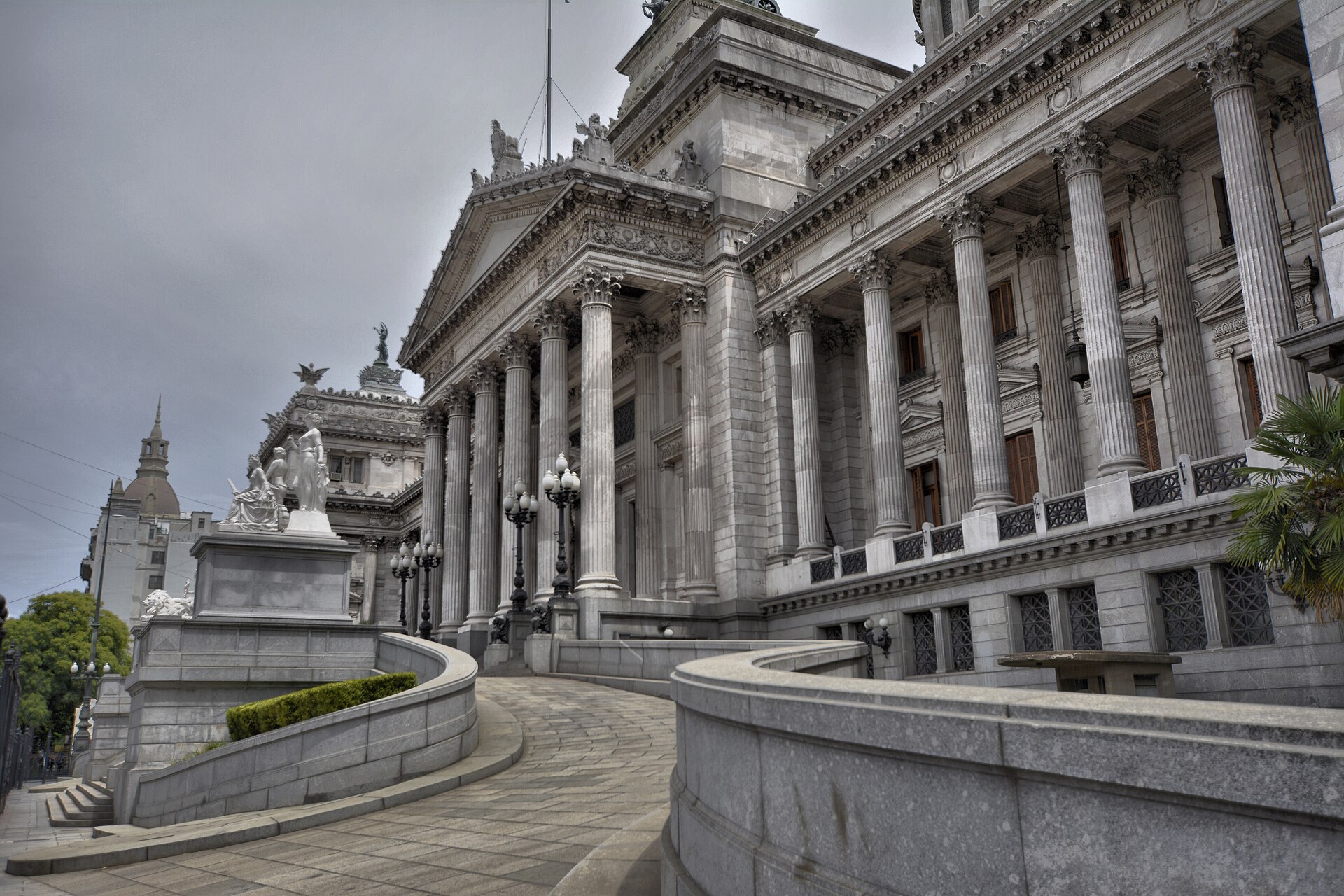
Argentina’s governing party won a majority committee report, called a dictamen, on the 2027 national budget on Tuesday 17 November 2026, the first hurdle in the lower house. The full Chamber of Deputies is due to debate the bill on Wednesday 25 November.
The committee backing came from 27 of the 48 members present, 20 from President Javier Milei’s governing party, La Libertad Avanza, and seven from allies, after the government dropped articles on disability benefits (El Litoral, a Santa Fe newspaper). The same newspaper calls the outlook for the floor vote tight and open.
For US investors who follow Argentine assets, the budget sets the spending and currency assumptions for 2027, the year of Argentina’s presidential election. It also shows what the government expects the peso to do.
Key Facts
- What. A Deputies committee backed the 2027 budget on 17 November with 27 of 48 signatures.
- Next. The full chamber is due to debate it on Wednesday 25 November; the Senate must follow.
- Changes. The government dropped disability-benefit articles 36 to 41 and extended car-industry incentives to 2032.
- Power Index Argentina ranks 4th of 14 in The Rio Times Latin America Power Index, with 60.2 points (November 2026 edition).
- As of Wednesday, 18 November 2026, 6:00 a.m. GMT
Allies gave Milei a committee win, but only after concessions on disability aid and car-industry incentives. The floor vote on 25 November is the real test.
What the Committee Decided
“We have a majority report for the 2027 budget, with 27 signatures out of 48 present,” said Alberto Benegas Lynch, who chairs the Budget and Finance Committee, after 5 p.m. on Tuesday. Five of the signatories attached partial dissent, and the allies came from PRO (the centre-right party of former president Mauricio Macri), the UCR (the Radical Civic Union), the MID (a small party) and provincial blocs (El Litoral; Canal 26, an Argentine news channel).
The government removed articles 36 to 41, which would have changed disability pensions and benefits. A new article 35 pays for those programmes from the Health Ministry budget, said libertarian deputy Laura Rodríguez Machado.
It also agreed to extend the car and auto-parts promotion regimes, set up by laws 27.263 and 27.686, until 2032. El Litoral reports that a PRO promise to settle national debts with the City of Buenos Aires was not written into the articles.
The Big Picture
Argentina’s Congress was meant to vote on the budget earlier, but debate was suspended from late October while the government negotiated with allies (El Litoral). Under article 63 of the Constitution, Congress’s ordinary sessions normally run until 30 November, which is why the floor date matters.
The dictamen, the committee’s majority report, opens the way to the floor but does not decide the vote. The bill also needs the Senate, and the reports give no Senate date.
Who Won and Who Lost
Universities did not get more money. The government kept their budget at more than ARS 7 trillion (about US$4.5 billion at 1,552 pesos per US$, the central bank rate of 17 November), while the national university council, known as CIN, asked for at least ARS 11 trillion (about US$7.1 billion), a gap of about US$2.6 billion by our arithmetic (Canal 26).
The Peronist opposition bloc Unión por la Patria proposed adding ARS 878.3 billion (about US$566 million) for disability pensions and care. Deputy Sabrina Selva said the new law would otherwise stay “a mere wish” without specific funds (El Litoral).
Why It Matters
The bill assumes 1,847.6 pesos per US$ in December 2027, 19% above the roughly 1,552 pesos per US$ (central bank rate, 17 November 2026) by our calculation. That means the government plans for a gradually weaker peso, not a sudden jump, alongside 4% growth and 18% annual inflation (budget assumptions as reported by Canal 26).
Spending on social services is the largest line at ARS 150.9 trillion (about US$97 billion), ahead of public debt at ARS 18.6 trillion (about US$12 billion), according to Canal 26’s reading of the bill. These are government projections, not results.
What to Watch
The first date is Wednesday 25 November 2026, when La Libertad Avanza wants the full chamber to debate the bill. The second is 30 November, when the ordinary session period normally ends.
Provincias Unidas, an opposition bloc of provincial lawmakers, objected to the university money and to funds for provincial pension systems (Canal 26). How that bloc and the five signatories with reservations vote will shape the 25 November session.
What Is Not Known
We do not know whether the government has the votes on the floor, or when the Senate will take the bill. It is also unclear whether PRO’s promise on the City of Buenos Aires will be written into the text.
In Plain English
PRO, UCR and MID are allied parties; a dictamen is a committee’s majority report that lets a bill go to the floor. “Billones” in Spanish means trillions, so ARS 7 billones is ARS 7 trillion.

What It Means for You
Investors and expats tracking Argentina should read the budget as a statement of intent, not a forecast. Earlier steps are in our reports on the budget sent to Congress, the growth and peso targets and the split over disability cuts, with more on the Argentina news page.
Sources
Press: El Litoral, 17 November 2026; Canal 26, 17 November 2026. Figures from the bill are as reported by these outlets.
This article was produced by The Rio Times’ automated AI newsroom. Editorial responsibility: Matthias Camenzind, Publisher and Editor-in-Chief. The Rio Times also runs Ask Rio Times, which answers from 100,000+ of our own articles, the daily Latin America Power Map, and prediction-market odds on elections and markets.. How we use AI · Report an error
Frequently Asked Questions
When will Argentina’s Congress vote on the 2027 budget?
The Chamber of Deputies is due to debate it on Wednesday 25 November 2026. The Senate must also approve it, and no Senate date is set.
Why did the government drop the disability articles?
Libertarian deputy Laura Rodríguez Machado said the articles held concepts opposed to the disability law Deputies passed almost unanimously, El Litoral reports. Article 35 now funds the programmes from the Health Ministry budget.
What does the budget assume for the peso?
It assumes 1,847.6 pesos per US$ in December 2027, with 4% growth and 18% year-end inflation. These are government projections.