
ETHIOPIA · ADDIS ABABA · CITY FINANCE
Addis Ababa, Ethiopia’s capital, is one of the few cities in Sub-Saharan Africa outside South Africa that pay for large public works with long-term borrowing, according to coverage of a new report by the World Bank, the global development lender, on African cities. We could not open the report itself, so every figure from it below is marked as reported, not confirmed.
This matters to readers in the United States because Ethiopia is restructuring its foreign debt, and how its biggest city borrows is a useful test of whether public borrowing can work there. The capital also won a United Nations award on 31 October 2026 for its urban renewal.
Key Facts
- The report A World Bank report on African cities is said to single out Addis Ababa’s long-term city borrowing.
- The claim Addis Ababa is described as one of few Sub-Saharan cities outside South Africa borrowing this way.
- The spending The city is said to spend about 50% of its budget on capital projects (reported, not confirmed).
- The award UN-Habitat, the UN’s cities agency, named Addis Ababa a 2026 Shanghai Award winner on 31 October.
- The backdrop The IMF, the global lender to governments, welcomed a deal in principle with Ethiopia’s dollar bondholders.
What the World Bank Report Is Said to Say
The report describes long-term contractual borrowing as a way for a city to pay for foundational infrastructure, meaning the basic physical works a city runs on. It is said to call Addis Ababa a rare example in Sub-Saharan Africa outside South Africa of a city that has used this tool on a meaningful scale.
Coverage of the report says the city routinely spends about 50% of its budget on capital projects, peaking at 56% in the 2022/23 fiscal year. We could not check these percentages against the report, so treat them as reported, not confirmed.
The report is said to note that local budgets in the region mostly go on salaries and running costs. By that yardstick, a city that puts half its budget into building would stand out.
Why the City Can Borrow
The report is said to credit two things: high fiscal autonomy, meaning the city decides much of its own spending, and steady backing from the federal government for municipal borrowing. It also points to the city’s weight in the economy and its role as the federal capital and the seat of the African Union, the continental body.
Whether other African cities could copy this mix is not something the coverage answers. Cities that depend on national transfers for most of their income would start from a very different place.
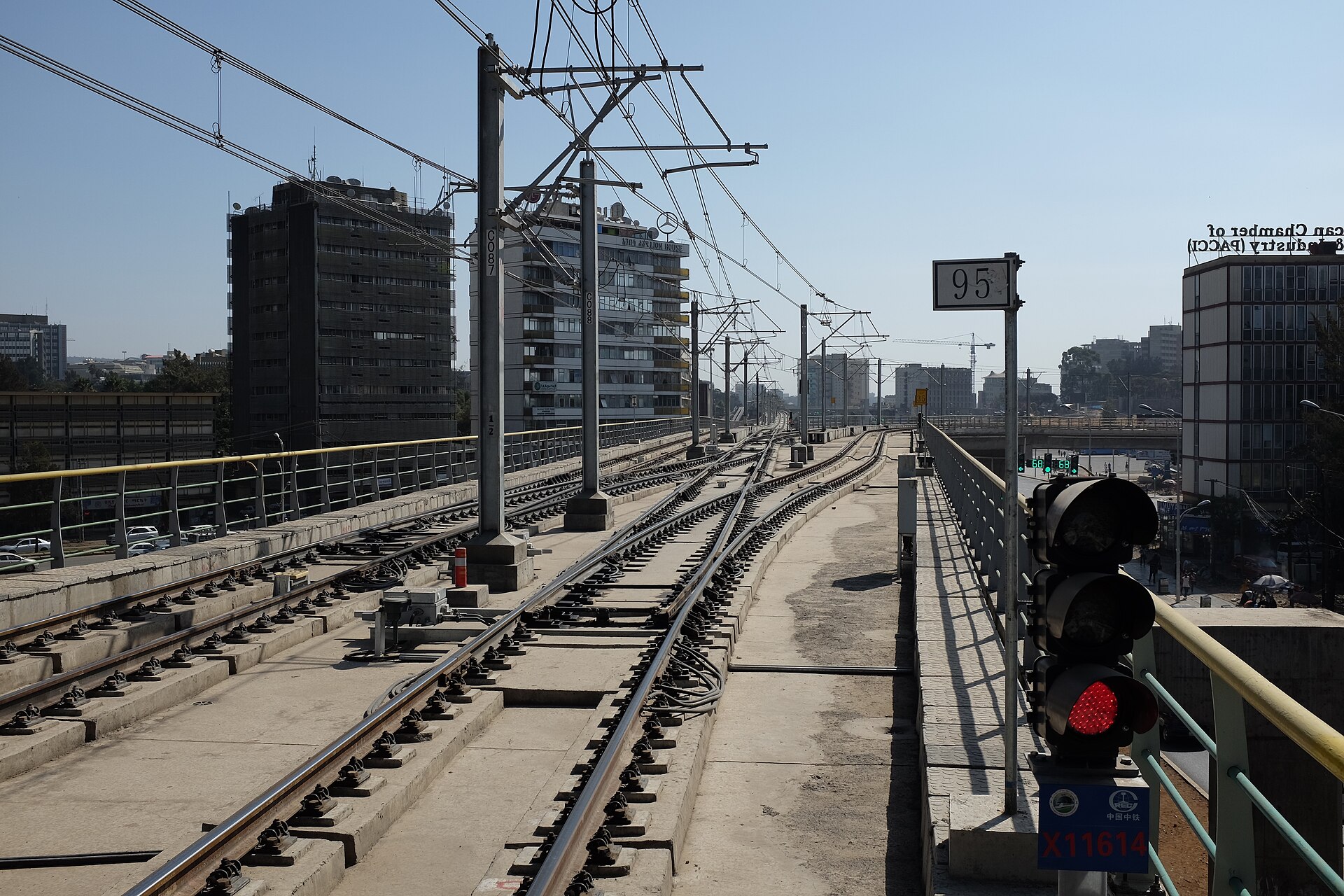
The Award Behind the Headline
UN-Habitat, the United Nations agency for cities, announced on 31 October 2026 in Fuzhou, China, that five cities had won the 2026 Global Award for Sustainable Development in Cities, known as the Shanghai Award. They are Addis Ababa, Santiago de Cali in Colombia, Istanbul, Jingdezhen in China and Katowice in Poland.
UN-Habitat recognised Addis Ababa for an integrated approach that combines adequate housing, green infrastructure, river restoration, safe and accessible mobility and participatory governance. The 2026 cycle drew 92 applications from 34 countries.
The National Debt Backdrop
Ethiopia is still restructuring its foreign debt, the process of agreeing new repayment terms with lenders. The International Monetary Fund (IMF), the global lender to governments, said on 1 July 2026 that it welcomed progress with official creditors.
It also welcomed an agreement in principle with holders of Ethiopia’s Eurobonds, which are bonds sold abroad in dollars. City borrowing is a separate matter, and the coverage gives no dollar amounts for what Addis Ababa owes.
Our earlier piece on Ethiopia’s bond exchange covers the market side. The GDP rebasing explainer shows why the size of the economy is itself under review.
What It Means for You
For investors, a city that borrows on long contracts is a different credit story from a national government that is restructuring its debt. Any investable product would need audited figures for the city’s debt, and none were given in the coverage.
For readers with ties to Ethiopia, the practical signal is modest. Cities with predictable budgets are better placed to finish housing, transport and water projects.
What Is Not Known
We could not open the report, so the 50% and 56% figures, the list of reasons and the claim about “few cities” rest on coverage of it. The size of the city’s debt, its lenders and its repayment terms were not given in that coverage.
More coverage sits on our Ethiopia hub. The central bank rate decision shows how tight money is for borrowers.
Frequently Asked Questions
Which Ethiopian city won a 2026 Shanghai Award?
Addis Ababa. UN-Habitat announced on 31 October 2026 that it was one of five winners.
Does Addis Ababa borrow for infrastructure?
A World Bank report is said to describe it as one of few Sub-Saharan cities outside South Africa doing so on long-term contracts. We could not confirm this against the report itself.
How much of the city budget goes on construction?
Coverage of the report puts it at about 50% in a normal year and 56% in the 2022/23 fiscal year. These figures are reported, not confirmed.
Is Ethiopia restructuring its national debt?
Yes. On 1 July 2026 the IMF welcomed progress with official creditors and an agreement in principle with Eurobond holders.
Sources: UN-Habitat, “Five cities receive the 2026 Global Award for Sustainable Development in Cities”, 31 October 2026 (unhabitat.org/news/31-oct-2026/five-cities-receive-the-2026-global-award-for-sustainable-development-in-cities); International Monetary Fund, press release 26/235 on the fifth review of Ethiopia’s Extended Credit Facility, 1 July 2026 (imf.org/en/news/articles/2026/07/01/pr26235-ethiopia-imf-completes-5th-review-under-ecf-arrangement); World Bank report on African cities, as described in coverage (the report itself was not opened).
This article was produced by The Rio Times’ automated AI newsroom. Editorial responsibility: Matthias Camenzind, Publisher and Editor-in-Chief. The Rio Times also runs Ask Rio Times, which answers from 100,000+ of our own articles, the daily Latin America Power Map, and prediction-market odds on elections and markets.. How we use AI · Report an error
LatAm Markets: Live Signals → — real-time movers, turnover leaders and FX across Latin America.
Living in or visiting Addis Ababa? See our Addis Ababa city guide with rents, safety and upcoming concerts.
Horn of Africa and the Red Sea
- Horn of Africa 2026: Why It Matters and Who Backs Whom
- Ethiopia’s Neighbors Explained, Ports, Eritrea, Somalia
- Eritrea Explained 2026, a Red Sea Country Guide
- Somalia Explained: Al-Shabaab, Somaliland, the Ports and the Fight Over a 2026 Vote