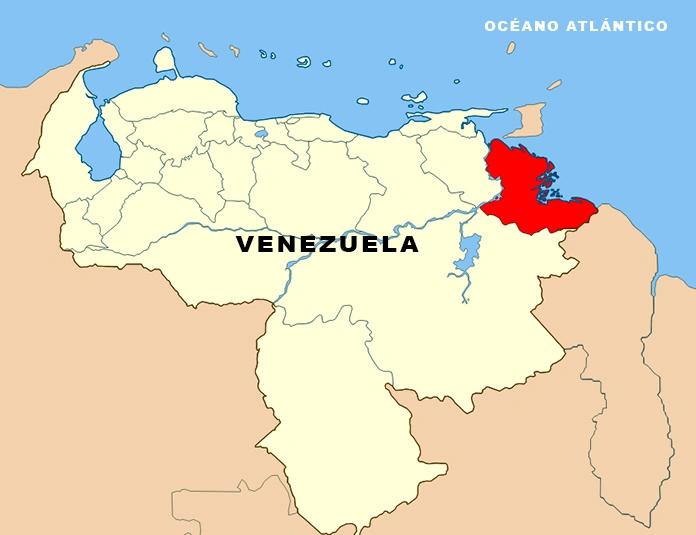
Venezuela’s Navy is establishing a new naval base at Punta Barina, near the Esequibo region controlled by Guyana.
This move, part of a broader naval strategy, was announced by Admiral Neil Villamizar Sánchez.
It aims to boost maritime logistics, especially in the Orinoco Delta.
The expansion involves upgrading the Punta Barima Coast Guard station into a full naval base, enhancing Venezuela’s naval reach along its Atlantic coast.
Managed by the No. 75 Atlantic Maritime and Insular Integral Defense Operational Zone Commander, this initiative is key to Venezuela’s defense strategy.
The establishment near the Esequibo region is geopolitically significant, potentially impacting the border conflict with Guyana and regional dynamics.
Background
This naval development is a significant move in Venezuela’s historical maritime strategy, reflecting its ongoing efforts to assert sovereignty.
Historically, Venezuela has leveraged its naval power in territorial disputes, notably in the Esequibo region.
The establishment of the Punta Barina base could be seen as a strategic move to reinforce claims over this disputed area.
Comparatively, such military expansions often prompt neighboring countries to enhance their own defenses, potentially leading to regional arms races.
The Esequibo conflict has long influenced Venezuela-Guyana relations, and this naval expansion might escalate tensions further.
This development, therefore, holds considerable significance in the broader context of Caribbean geopolitics and regional security dynamics.
More: Venezuela news in English, every day from The Rio Times.
This article was produced by The Rio Times’ automated AI newsroom. Editorial responsibility: Matthias Camenzind, Publisher and Editor-in-Chief. How we use AI · Report an error
Venezuela and the United States
- What Is Going On Between Venezuela and the United States?
- What Is Going On Between Venezuela and the United States?
- Venezuela Geopolitics Explained, US Now Runs Its Oil
- Venezuela Politics 2026, Who Holds Power After Maduro
Read More from The Rio Times