Who Dominates Venezuela, Elites and Regions Explained

VENEZUELA · POWER
Key Facts
- —The basics As of October 2026, acting president Delcy Rodríguez runs Venezuela, which she took over after US forces captured Nicolás Maduro on 3 January 2026, while the ruling party, the army and US sanctions licences shape what she can do.
- —Why it matters No presidential election date has been set, so a small circle of the Rodríguez siblings, security chiefs and party leaders still decides who signs oil deals, who leaves prison and when Venezuelans vote.
- —The numbers A 2025 household survey found 68.5% of households income-poor, while the government raised the monthly minimum income to US$240 on 30 April 2026 and the 2026 economy is projected at about US$124 billion.
- —Who is who Delcy Rodríguez is acting president, her brother Jorge Rodríguez leads the National Assembly and the government’s negotiating team, and General Gustavo González López has been defence minister since 18 March 2026.
- —What to watch A third round of US-backed talks between the government and the opposition opened in Caracas on 14 October 2026, with the renewal of the Supreme Court and an election date still unresolved.
- —Prediction markets Polymarket gives a 10.5% chance that Venezuela schedules a presidential election by 31 December 2026 (16 October, 10:09 a.m. ET).
- —Power Index Venezuela ranks 13th of 14 in The Rio Times Latin America Power Index, with 27.0 points (October 2026 edition).
- —What it means for you US investors and oil companies deal with Caracas only under Treasury licences, so every counterpart needs checking against the sanctions list, and travellers should read the State Department’s current Venezuela advisory first.
Venezuela power in October 2026 rests on a ruling family circle, a party machine and the armed forces, with Washington watching closely. This guide maps who dominates whom, from governors to bishops, and who is left out.
Venezuela power in October 2026 sits with acting president Delcy Rodríguez, the ruling PSUV party and the armed forces. They govern under heavy US influence, more than nine months after US forces captured Nicolás Maduro on Saturday, 3 January 2026.
For US readers, the question is who signs oil contracts, who frees prisoners and when Venezuelans vote again. This guide covers families, the military, regions, business, churches, unions and the people left out, as of October 2026.
Venezuela Power in October 2026, Who Holds the Levers
Maduro and his wife, Cilia Flores, pleaded not guilty in a US court to new torture-conspiracy charges unsealed on 8 October 2026. Rodríguez, his former vice-president, has run the state since the raid, and regional outlets still call her acting president.
No presidential election has been called as of 16 October 2026. Rodríguez promised the UN General Assembly in September that elections would come, without giving a date.
- The presidency: Delcy Rodríguez, acting president, with the cabinet.
- The legislature and the talks: her brother Jorge Rodríguez, president of the National Assembly.
- Force: the armed forces under Defence Minister Gustavo González López, and the interior ministry.
- Washington: the US Treasury’s licences and the State Department’s sponsorship of the talks.
The Rio Times Latin America Power Index (October 2026) ranks Venezuela 13th of 14 countries, scoring 27.0 out of 100. Its state capacity score is 7.9 and its diplomatic influence score is 1.3, both near the bottom.
The military pillar is the outlier at 81.2, though it rests on incomplete data because SIPRI publishes no Venezuelan defence spending. The full ranking and the six pillar scores sit on the Latin America Power Map.
The Rodríguez Siblings and the Ruling Circle
The ruling party is the United Socialist Party of Venezuela (PSUV), the party of Hugo Chávez and Maduro. It won 23 of 24 governorships on Sunday, 25 May 2025, on 42.63% turnout in the first official bulletin.
Delcy Rodríguez, a lawyer and Maduro’s former vice-president, leads the executive. The US Treasury removed her from its sanctions list on Wednesday, 1 April 2026.
Her brother Jorge Rodríguez, born in 1965, presides over the National Assembly and leads the government team in the talks. The Treasury removed him from its sanctions list on Wednesday, 14 October 2026, giving no reason.
Between them, the siblings hold the presidency and the head of the legislature, and both now sit outside US sanctions. That puts the family at the centre of every deal with Washington, from oil licences to a new Supreme Court.
Diosdado Cabello, a veteran PSUV leader, is interior, justice and peace minister, as El Universal described him on 15 October 2026. That day he told state television that those detained in the Farmatodo pharmacy assault case must accept criminal responsibility.
The courts and the Assembly move in step with the executive, while the Supreme Court’s renewal is under negotiation. The Supreme Court declared Rodríguez’s Anti-Hate Law reform constitutional on 15 October 2026, a day after the Assembly sent it.
The Armed Forces and the Security Chiefs
The Bolivarian National Armed Forces (FANB) remain the backbone of the state, and generals still hold cabinet posts. Defence Minister Gustavo González López, an army general, took over on Wednesday, 18 March 2026.
González López ran the SEBIN intelligence service twice, from 2014 to 2018 and from 2019 to 2024, and later headed military counter-intelligence. The United States sanctioned him in 2015, and Canada and the European Union followed.
His predecessor, Vladimir Padrino López, became agriculture minister on Monday, 13 April 2026, after about 12 years at defence. Rodríguez therefore changed the top of the armed forces within her first three months.
Infobae reported on 13 October 2026 that the Army ended the annual recall of 88 retired officers, including 84 colonels. It reported similar measures in the Air Force, the National Guard and the Navy.

Regions, Governors and Ethnic Groups
The May 2025 elections filled 24 governorships, including one for Guayana Esequiba, the territory Venezuela claims from Guyana. The ruling side won 23, and only Cojedes went to Alberto Galíndez of a local party, Vamos Vamos Cojedes.
- Zulia: Luis Caldera, PSUV, in the most populous state, with 3.70 million residents at the 2011 census.
- Miranda: Elio Serrano, PSUV, in the state around Caracas, with 2.68 million residents in 2011.
- Carabobo: Rafael Lacava, PSUV, with 2.25 million residents in 2011.
- Táchira: Freddy Bernal, PSUV, in the Andean border state.
- Barinas: Adán Chávez, PSUV, in the state where Hugo Chávez was born.
All five belong to the PSUV, so regional power in 2026 is a party network, not a rival to Caracas. The Capital District, the heart of Caracas, had 1.94 million residents in 2011.
No ethnic party governs Venezuela, and power runs mainly through party, army and family ties. The 2011 census, the latest, counted 51.6% of residents as moreno, or mixed, and 43.6% as white.
It also counted 3.6% as Black or Afro-descendant and 2.7%, or 724,592 people, as Indigenous. Identity varies by region, from 58.8% white in Táchira to 63.5% moreno in Apure.
Article 186 of the 1999 Constitution reserves three National Assembly seats for Indigenous peoples, and Article 125 guarantees their representation. Article 186 names no seats for Afro-Venezuelans, whom the 2011 census counted for the first time.
Business, Oil Licences and the Dollar Economy
Business has a seat at the table, and Rodríguez courts it in public. On Thursday, 8 October 2026, she addressed the 82nd annual assembly of Fedecámaras, the main business federation.
Its president, Felipe Capozzolo, said business wants stable public services, renewed bank credit and a review of taxes. He also backed a modernised social-benefits law that balances worker protection with the viability of companies.
Rodríguez told the assembly that the gap between official and parallel exchange rates fell from 62.7% in January 2026 to 11.7%. These are her government’s figures, and this guide has not checked them against central bank data.
The IMF projects Venezuelan output of about US$124 billion in 2026, growth of 5% and consumer-price inflation of 467.9% for the year. It expects growth of 7% in 2027.
On Wednesday, 14 October 2026, economy vice-president Calixto Ortega presented an oil-and-mining roadmap at the IMF meetings in Bangkok, Infobae reported. He said extractive revenue would fund water and electricity, and that the bolívar would not be replaced by the dollar.
Washington is the biggest gatekeeper for foreign business. General License 50C of Thursday, 27 August 2026 covers BP, Chevron, Eni, Maurel & Prom, Repsol and Shell in oil and gas.
The licence excludes deals involving persons in China, Russia, Iran, North Korea or Cuba. On Wednesday, 2 September 2026, Chevron announced more than US$7 billion of investment over five years, targeting about 600,000 barrels a day.
The foreign side of this story is told in the guide to foreign powers and investors in Venezuela. The domestic companies are covered in who runs the Venezuelan economy.
Churches and Unions
Venezuela is a mainly Christian country, but no recent official count of faiths exists. The US State Department’s 2023 report cites older data of up to 96% Catholic and says the share is likely lower.
The Evangelical Council of Venezuela estimates that 17% to 20% of the population is Protestant. A 1964 concordat with the Holy See still governs Church-state ties, including funding for Catholic schools.
The Venezuelan Episcopal Conference (CEV) speaks for the Catholic bishops, and Monsignor Jesús González de Zárate was its president in January 2026. He said then that the bishops would take no official political position until the picture was clearer.
He also voiced concern for the 7.9 million Venezuelans who have emigrated. La Patilla headlined on 13 April 2026 that Cabello kept attacking the bishops’ conference.
Organised labour is divided between government-aligned and independent unions. On Monday, 2 February 2026, the two camps marched separately in Caracas over pay, El Diario of Ecuador reported.
The base monthly salary has stayed at 130 bolívares since 2022, about 27 US cents, so most pay arrives as bonuses. On Thursday, 30 April 2026, Rodríguez raised the minimum integral income from US$160 to US$240 a month.
Pensioners will receive the equivalent of US$70 a month, which Rodríguez herself called not enough. The professors’ association of the Central University of Venezuela rejected the raise and called a protest for 1 May.
Inequality and Who Is Left Out
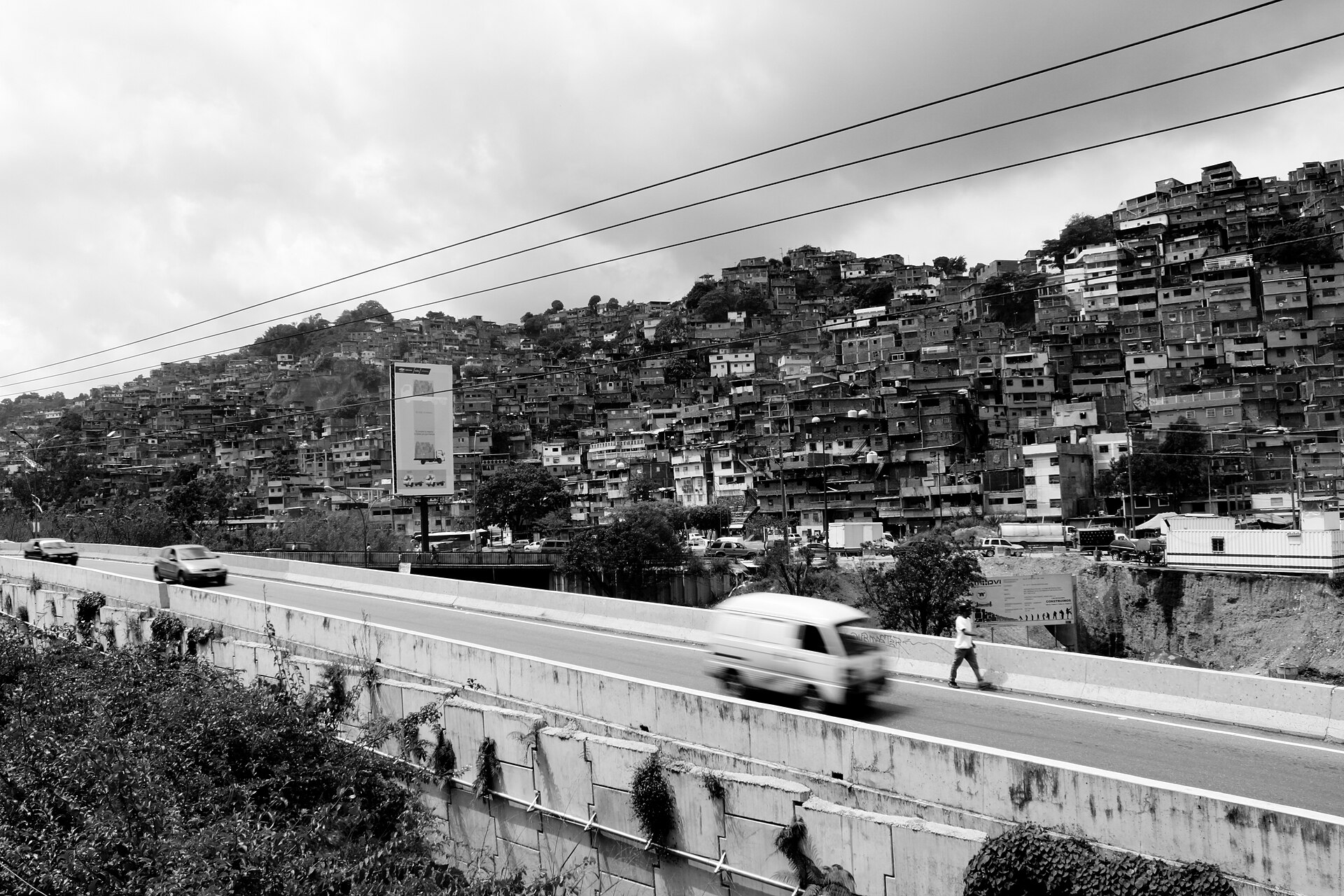
Wealth and power sit far apart in Venezuela. A 2025 household survey by the Andrés Bello Catholic University (UCAB) found 68.5% of households income-poor, down from 73.2% a year earlier.
Extreme poverty affected 31.7% of households, down from 36.5%, and multidimensional poverty, which looks beyond income, reached 55% of people. That is 16 points above 2014.
The survey covered 11,352 households in 22 of 24 states, from March to June 2025. It left out Amazonas, where 53.7% of Venezuelan-born residents were Indigenous in 2011, and Delta Amacuro, home of the Warao.
Foro Penal, a Venezuelan rights group, counted 322 political prisoners on 5 October 2026, 140 military and 182 civilians. The group counts 19,253 political arrests since 2014, and 170 of the current prisoners have not been convicted.
María Corina Machado, a Nobel Peace Prize laureate, said in Panama City on 10 October 2026 that the government blocks her return. Her political disqualification, which barred her 2024 run, still stands.
Dinorah Figuera leads the opposition team in the third round of talks, opened at the Hotel Meliá Caracas on 14 October 2026. Secretary of State Marco Rubio says she has Washington’s total support, while the talks do not include Machado.
Figuera represents the National Assembly elected in 2015, which the opposition won. UNHCR’s 2026 planning figure counts nearly 7.89 million Venezuelan refugees and migrants abroad, against 28.6 million at home, by UN estimates.
What It Means for US Readers
For investors, Venezuela is open only through Treasury licences, and General License 50C replaced a version dated 10 June 2026. Check each counterpart against the sanctions list on deal day, as removals on 1 April and 14 October 2026 show.
For Venezuelans in the United States, no election date exists to plan around. On Monday, 5 October 2026, the Supreme Court set aside a Ninth Circuit ruling in the Venezuelan Temporary Protected Status case.
Anyone with a pending case should check the US Citizenship and Immigration Services website for current status. Travellers should read the State Department’s Venezuela advisory before any trip, and more coverage sits on the Venezuela news page.
The wider political picture is in the guide to who holds power after Maduro. The people behind the numbers are in the guide to Venezuela’s population and ethnic groups.
What Prediction Markets Say
On Polymarket, bets give a 10.5% chance that Venezuela schedules a presidential election by 31 December 2026 (16 October, 10:09 a.m. ET). That market has traded about US$145,000, within an event worth about US$638,000.
Traders therefore see an election call before the end of 2026 as unlikely, even as the opposition marches for a date. These are bets, not polls, and they can move quickly with the talks.
Why we show this: prediction markets turn real-money bets into a live probability that moves within minutes of the news, which is why investors, campaigns and newsrooms in the United States now follow them closely. We show them next to polls and official results, never instead of them.
What Is Not Known
No presidential election date has been set, and no public timetable exists for renewing the Supreme Court or the electoral council. It is not known whether Machado’s disqualification will be lifted or when she can return.
No public data shows who owns the largest private fortunes or how much of the economy the armed forces control. It is also unknown whether the retirement of 88 Army officers is routine or part of a wider reshuffle.
State television called Cabello a sectoral vice-president on 7 October 2026, so the exact scope of his portfolio is unclear. It is also unclear who would succeed Rodríguez if she left office.
Frequently Asked Questions
Who runs Venezuela in 2026?
Delcy Rodríguez, Maduro’s former vice-president, has run the executive since US forces captured Nicolás Maduro on 3 January 2026. Her brother Jorge Rodríguez leads the National Assembly and the government’s negotiating team.
Who controls the Venezuelan military?
General Gustavo González López has been defence minister since 18 March 2026, replacing Vladimir Padrino López. Padrino moved to agriculture on 13 April 2026, and González López previously led the SEBIN intelligence service twice.
Which ethnic group rules Venezuela?
None rules as a bloc, because power runs mainly through the PSUV, the armed forces and family ties. The Constitution reserves three National Assembly seats for Indigenous peoples, who were 2.7% of residents in 2011.
Which regions hold the most political weight?
The PSUV won 23 of 24 governorships in May 2025, including the populous states of Zulia, Miranda and Carabobo. Zulia had 3.70 million residents at the 2011 census, the most of any state.
What role do churches and unions play?
The Catholic bishops speak on social issues but said in January 2026 they would take no political position yet. Unions are divided between government-aligned and independent groups, and the base salary is 130 bolívares.
How unequal is Venezuela?
A 2025 survey found 68.5% of households income-poor and 31.7% in extreme poverty. Multidimensional poverty affected 55% of people, 16 points above 2014.
When is the next presidential election?
No date has been set as of 16 October 2026. A third round of talks that began on 14 October 2026 covers the electoral calendar and the Supreme Court.
Sources: US Treasury OFAC, Venezuela-related designation removal, 14 October 2026; Federal Register, OFAC Venezuela general licenses incl. 50C, 30 September 2026; IMF DataMapper, Venezuela (World Economic Outlook, October 2026); Constitution of Venezuela, Articles 125 and 186; INE, Censo 2011, Monografía Total Nacional; INE, Indigenous population, 2011 census; UN DESA, World Population Prospects 2024; UNHCR, Venezuela situation, Global Appeal 2026; US State Department, 2023 Report on International Religious Freedom, Venezuela; US Supreme Court, order list of 5 October 2026; El Caribe, CNE bulletin on the 25 May 2025 governorships; Infobae, third round of talks, 15 October 2026; Infobae, Jorge Rodríguez delisted, 14 October 2026; Infobae, Army officers retired, 13 October 2026; Infobae, IMF roadmap, 15 October 2026; Primicias, González López named defence minister; El Diario, Padrino López named agriculture minister, 13 April 2026; teleSUR, Rodríguez at the Fedecámaras assembly, 8 October 2026; Finanzas Digital, Fedecámaras assembly, 8 October 2026; NTN24, Chevron plan, 2 September 2026; Vanguardia, minimum income raise, 1 May 2026; El Diario (Ecuador), workers’ marches in Caracas, 2 February 2026; ACI Prensa, Venezuelan bishops’ president, January 2026; El Diario, ENCOVI 2025 (UCAB), 8 May 2026; Finanzas Digital, ENCOVI 2025, 8 May 2026; El Diario, Foro Penal count, 9 October 2026; El Estímulo, Machado from Panama City, 10 October 2026; El Universal, Cabello on the Farmatodo case, 15 October 2026; VTV, Cabello on Farmatodo arrests, 7 October 2026; El Diario, Venezuela politics archive, 15 October 2026; MercoPress, Maduro and Flores torture charges, 9 October 2026; Foro Penal, political prisoners count, 16 October 2026; Noticiero Digital, defence minister on the oil deal, 1 September 2026; La Patilla, headline on Cabello and the bishops, 13 April 2026; Finanzas Digital, IMF projections, 13 October 2026; The Rio Times Latin America Power Index, October 2026 edition (all accessed 16 October 2026).
This article was produced by The Rio Times’ automated newsroom system. How we use AI · Report an error · Editorial responsibility: Matthias Camenzind, Editor-in-Chief
Expat Guide to Venezuela
What The Rio Times publishes for foreigners who live in or move to Venezuela.
Start here
- Healthcare in Venezuela for Expats: Clinics, Insurance and the Private Option
- Taxes in Venezuela for Expats: What Foreigners Pay During the Transformation
- Venezuela Visa and Residency 2026, Entry Rules and Steps
- Spain and Portugal Close Their Golden Visa Doors, Forcing LATAM Investors to Reroute
Understand Venezuela