Mexico’s CJNG Leaders Face US Charges, US$100 Million Bounty
Security: Michoacán
Key Facts
—Charges. On 5 August 2026, the US Justice Department unsealed criminal charges against five senior leaders of the Jalisco New Generation Cartel (CJNG).
—Accused. Prosecutors named Julio César Montero Pinzón, Carlos Andrés Rivera Varela, Hugo Gonzalo Mendoza Gaytán, Ricardo Ruiz Velasco and Julio Alberto Castillo Rodríguez, all described as fugitives; the charges are allegations yet to be tested in court.
—Allegations. The indictments allege decade-long conspiracies to traffic cocaine, methamphetamine, heroin and fentanyl to the United States, plus firearms offences carrying up to two consecutive life terms.
—Rewards. The State Department raised total reward offers to more than US$100 million for information on eight CJNG fugitives, with individual bounties of up to US$25 million.
—Backdrop. The move follows the February 2026 killing of CJNG founder Nemesio Oseguera, ‘El Mencho,’ in a Mexican military operation; Mexico’s government has ruled out a US troop presence on its soil.
US prosecutors have charged five CJNG leaders and offered more than US$100 million in rewards, escalating Washington’s pressure campaign against the Mexican cartel months after its founder was killed.
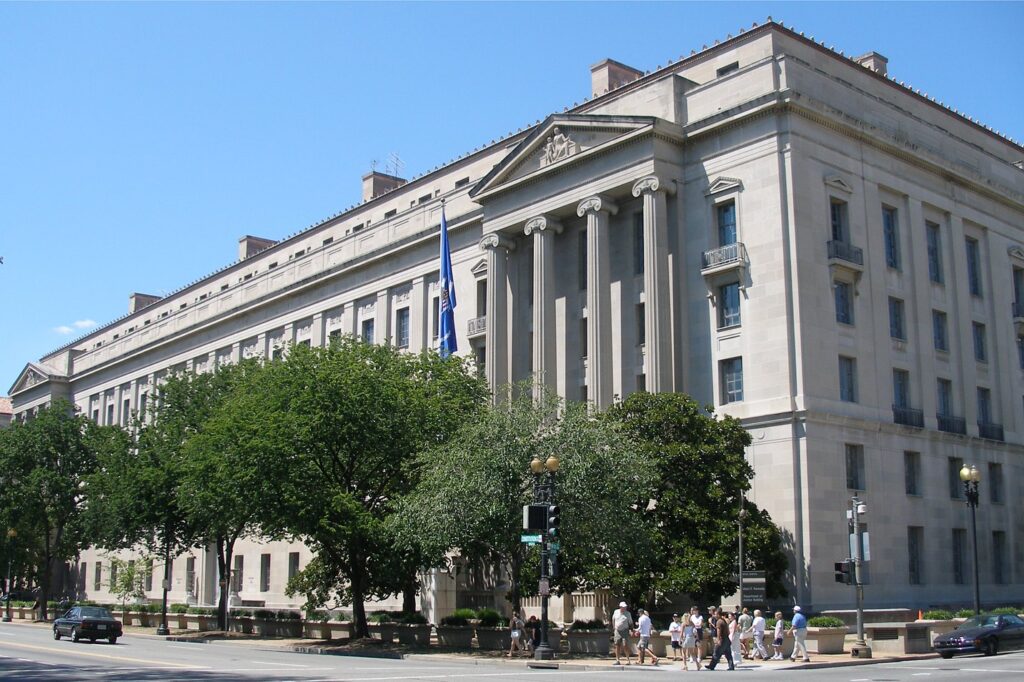
What US Prosecutors Announced
On 5 August 2026, the US Department of Justice said it had unsealed criminal charges against five senior leaders of the Cártel de Jalisco Nueva Generación, one of Mexico’s most powerful drug-trafficking organisations, in an announcement coordinated with the DEA, FBI, Homeland Security Investigations and other agencies.
‘Today’s unsealing of criminal charges against five high-ranking CJNG leaders marks another decisive step in our campaign to dismantle the cartels,’ acting Attorney General Todd Blanche said in the department’s statement. The defendants have not entered pleas and are presumed innocent unless proven guilty.
Who the Five Accused Are
According to court filings summarised by the department, prosecutors identify the five as Julio César Montero Pinzón, Carlos Andrés Rivera Varela, Hugo Gonzalo Mendoza Gaytán, Ricardo Ruiz Velasco and Julio Alberto Castillo Rodríguez. All remain at large.
The filings allege that Montero Pinzón and Rivera Varela founded and led an armed enforcement unit known as the ‘Grupo Elite,’ while Mendoza Gaytán — described as El Mencho’s godson — is accused of procuring weapons. Castillo Rodríguez is described as El Mencho’s former son-in-law. These remain unproven allegations.
The Charges and Potential Penalties
The unsealed indictments, filed in the District of Columbia, allege that the five took part in decade-long conspiracies to manufacture and distribute cocaine, methamphetamine, heroin and fentanyl destined for the United States, the department said.
The filings also allege the use of firearms, including machineguns and destructive devices, in furtherance of the trafficking. If convicted, each defendant would face up to two consecutive life sentences, according to the Justice Department.
Rewards and the Wider Crackdown
Alongside the charges, the State Department’s narcotics bureau announced it was raising total reward offers to more than US$100 million for information leading to the arrest or conviction of eight CJNG fugitives, with individual bounties ranging up to US$25 million.
The department framed the actions as part of a Homeland Security Task Force established under a Trump administration executive order, and noted that Washington designated the CJNG a foreign terrorist organisation in February 2025.
Michoacán and the Security Backdrop
Michoacán frames this story for a reason: the western state is one of the most violently contested corners of Mexico, where the CJNG has fought rivals such as Cárteles Unidos and La Familia Michoacana. Mexican security forces have surged into the state at various points in 2026.
The US role, however, is being exercised through indictments, rewards and intelligence and law-enforcement cooperation rather than boots on the ground. Mexican President Claudia Sheinbaum has publicly ruled out a US military deployment on Mexican territory, and no US combat presence in Michoacán has been confirmed.
The wider backdrop is the February 2026 killing of CJNG founder Nemesio Oseguera Cervantes, known as ‘El Mencho,’ in a Mexican military operation that US authorities said they supported with intelligence. His death set off a violent scramble for control.
What Comes Next
Because the five accused are fugitives, the charges are for now a pressure tactic: they globalise the manhunt, expose assets and raise the cost of sheltering the men. Any trial would depend on capture or extradition.
For Mexico, the sequence keeps security cooperation with Washington in the spotlight ahead of the 2026 World Cup, while testing how far the two governments will coordinate without crossing Mexico’s red line on sovereignty.
Background: our nearshoring mexico guide.
More: Mexico news in English, every day from The Rio Times.
Frequently Asked Questions
Who did the US charge in the CJNG case?
The Justice Department unsealed charges against five senior CJNG leaders: Julio César Montero Pinzón, Carlos Andrés Rivera Varela, Hugo Gonzalo Mendoza Gaytán, Ricardo Ruiz Velasco and Julio Alberto Castillo Rodríguez. The charges are allegations that must be proven in court.
How much reward money is on offer?
The State Department raised total reward offers to more than US$100 million for information on eight CJNG fugitives, with individual bounties of up to US$25 million, announced on 5 August 2026.
Are US troops deployed in Michoacán?
No US combat deployment in Michoacán has been confirmed. Mexico’s government has ruled out a US military presence on its soil; Washington’s role runs through indictments, rewards and intelligence and law-enforcement cooperation.
Sources
US Department of Justice · Reuters via U.S. News · France 24
Sources: US Department of Justice, Reuters, France 24, U.S. News.
This article was produced by The Rio Times’ automated newsroom system. How we use AI · Report an error
Read More from The Rio Times