
TANZANIA · CULTURE
Key Facts
- What is happening Tanzania’s culture runs from the Swahili language and Nobel winner Abdulrazak Gurnah to singers, painters, a film maker and Zanzibar’s March 2027 music festival.
- Why it matters UNESCO, the United Nations cultural body, lists seven Tanzanian World Heritage sites and made 7 July World Kiswahili Language Day in 2021.
- The numbers Kiswahili has more than 200 million speakers, Kondoa has over 150 painted shelters, and Sauti za Busara lists more than 400 artists for 2027.
- Who is who Gurnah won the 2021 Nobel Prize in Literature, Bi Kidude won a 2005 world music award, and Diamond Platnumz won at the 2023 MTV Europe Music Awards.
- What to watch Watch UNESCO’s decision on singeli music, nominated for 2026, and the 19 to 21 March 2027 Sauti za Busara festival in Zanzibar.
- What it means for you US readers can read Gurnah in English and visit Stone Town, but should check the State Department’s current Tanzania advisory before booking.
A Nobel novelist, a pioneering singer, a painter whose style became a school and a festival city shape Tanzania’s culture. Here are the names and places to know in 2026.
Tanzania culture in 2026 spans a Swahili-speaking coast, writers in two languages, singers, painters, a film maker and ancient heritage sites. This guide names the key figures and places a first-time reader should know.
The best-known name abroad is the novelist Abdulrazak Gurnah, who grew up on Zanzibar. Around him stand poets, singers, painters, a runner and festivals, each with dates from primary or twice-confirmed sources.
More country coverage sits on the Rio Times Tanzania page. No money amounts are used in this guide, so no exchange rate applies.
Tanzania Culture in One Page
The list gives each name or place in one line. Details and dates follow in the sections after it.
- Kiswahili: the language that UNESCO honours each year on 7 July, spoken by more than 200 million people.
- Abdulrazak Gurnah: novelist, born in Zanzibar in 1948, winner of the 2021 Nobel Prize in Literature.
- Shaaban Robert and Euphrase Kezilahabi: two Swahili-language writers, born in 1909 and 1944.
- Siti binti Saad and Bi Kidude: two Zanzibar singers, the first an early recording artist and the second a 2005 world music award winner.
- Diamond Platnumz: singer and label founder, winner of Best African Act at the 2023 MTV Europe Music Awards.
- Amil Shivji: film maker whose Tug of War premiered at the Toronto festival in 2021.
- Edward Saidi Tingatinga and George Lilanga: two painters, born in 1932 and 1934.
- Stone Town, Kilwa and Kondoa: three cultural sites on UNESCO’s World Heritage List, inscribed in 2000, 1981 and 2006.
- Sauti za Busara: music festival in Stone Town, Zanzibar, with its 24th edition set for 19 to 21 March 2027.
- Filbert Bayi: runner with an Olympic silver medal and a 1,500 metre best of 3:32.16.
Kiswahili, the Language That Binds the Coast
UNESCO proclaimed 7 July as World Kiswahili Language Day in 2021. Its General Conference adopted the decision as resolution 41 C/61.
UNESCO says Kiswahili connects more than 200 million speakers across East, Central and Southern Africa and beyond. It describes the day as a showcase for the language’s music, literature and history.
UNESCO’s site calls the 2026 event the fifth commemoration, and it names Tanzania among the countries marking it. The writers below all worked in or around this language.
Abdulrazak Gurnah, the Nobel Writer From Zanzibar
Abdulrazak Gurnah won the Nobel Prize in Literature for 2021, announced on 7 October 2021. The Nobel committee praised his uncompromising and compassionate penetration of the effects of colonialism.
The citation also refers to the fate of the refugee in the gulf between cultures and continents. Gurnah received the whole prize alone, the Nobel Prize site shows.
The Nobel biography says he was born in 1948 and grew up on Zanzibar. It adds that he left in the 1960s because of the persecution of citizens of Arab origin and settled in England.
His novel Paradise was shortlisted for the Booker Prize in 1994, the prize’s site shows. That shortlisting came 27 years before his Nobel Prize.
Shaaban Robert and Euphrase Kezilahabi, Swahili Voices
Shaaban Robert was born in 1909 in the Tanga region and died in Dar es Salaam on 20 June 1962. He wrote poetry, essays and tales in Swahili.
He wrote an autobiography, Maisha yangu, meaning My Life. He also wrote a biography of the Zanzibar singer Siti binti Saad, which links two figures in this guide.
Euphrase Kezilahabi was born on 13 April 1944 on Ukerewe Island and died in Dar es Salaam on 9 January 2020. He was a novelist, poet and scholar who wrote in Swahili.
His first novel, Rosa Mistika, appeared in 1971. Another novel, Kichwamaji, followed in 1974.
Music, From Siti Binti Saad to Diamond Platnumz
Siti binti Saad was born around 1880 in Fumba, Zanzibar, and died in 1950. She was the first East African vocalist to release commercial recordings.
Her first recording session took place in Bombay in March 1928, and she recorded more than 250 songs. She sang mainly in Swahili, in contrast to earlier vocalists who sang in Arabic.
Bi Kidude, born Fatuma binti Baraka around 1910, died on 17 April 2013 at about 102. The World Music Expo, WOMEX, gave her its 2005 award at Gateshead in England.
WOMEX called her Zanzibar’s most famous cultural ambassador. Her birth year is uncertain, and much of her life story is uncorroborated.
Naseeb Abdul Juma Issack, known as Diamond Platnumz, founded the WCB Wasafi record label. He won Best African Act at the 2023 MTV Europe Music Awards.
Tanzania’s official tourist board names ngoma, taarab and bongo flava among the country’s music and dance forms. UNESCO’s intangible heritage site shows Singeli music of Tanzania as an ongoing nomination for 2026.
The same site records a 2008 to 2009 UNESCO project called Songs of the Moon, a safeguarding effort for traditional Swahili music. It covered Unguja and Pemba, the two main islands of Zanzibar, and the Comoros.

Painters, Edward Saidi Tingatinga and George Lilanga
Edward Saidi Tingatinga was born in 1932 in southern Tanzania and was accidentally killed in 1972. He painted on Masonite board, and the Tingatinga Arts Cooperative Society kept his school alive after his death.
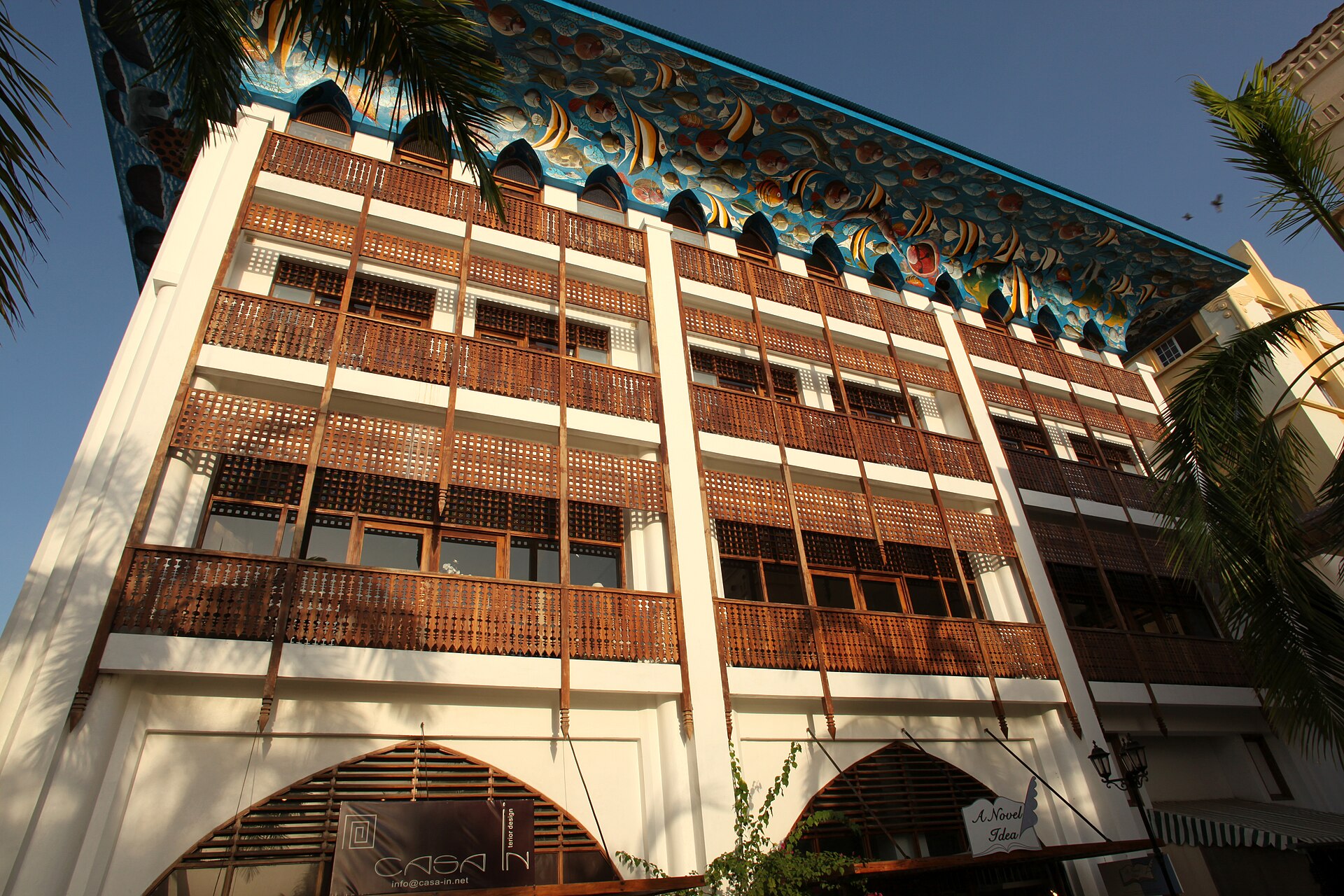
Tanzania’s tourist board lists Tingatinga painting and Makonde carving as the country’s visual arts. The building in the photo above wears a roof painted in that style.
George Lilanga was born in 1934 and died in Dar es Salaam on 27 June 2005. He began in the Makonde wood carving tradition and built his own style from its shetani figures.
His work toured Europe, Asia and Africa in the Africa Remix exhibition, from Düsseldorf in 2004 to Johannesburg in 2007. He moved between wood sculpture and painting.
Film and Festivals in Zanzibar
Amil Shivji directed Tug of War, known in Swahili as Vuta N’Kuvute, which premiered at the Toronto International Film Festival in 2021. It was submitted in 2022 as Tanzania’s first Oscar entry in 21 years.
The film is set in the final years of British colonial Zanzibar. A young freedom fighter named Denge meets Yasmin, an Indian-Zanzibari woman, and their relationship becomes romance and revolution.
Sauti za Busara is a music festival in Stone Town, Zanzibar, and its own site lists the 2027 edition as the 24th. It runs from 19 to 21 March 2027 and lists more than 400 artists.
The festival says it is dedicated to promoting and developing musicians and related professionals. It prioritises women, young and emerging talent from East Africa and focuses on music that originates in Africa.
The Zanzibar International Film Festival, ZIFF, calls itself one of the largest cultural events in East Africa. It is a non-governmental organisation that works to develop film and other cultural industries.
ZIFF was founded in 1997 and is also known as the Festival of the Dhow Countries. Its 2026 programme ran from 24 to 28 June 2026 at several venues in Zanzibar.
The Rio Times has a report on the Sauti za Busara 2027 dates and a guide to Swahili Fashion Week. Both help readers plan a cultural trip.
Stone, Rock and Ruins, UNESCO Heritage
UNESCO lists seven Tanzanian properties: Ngorongoro (1979), Kilwa (1981), Serengeti (1981), Selous (1982), Kilimanjaro (1987), Stone Town (2000) and Kondoa (2006). Three are cultural sites.
The Stone Town of Zanzibar is described as an outstanding example of a Swahili trading town. UNESCO says its buildings blend African, Arab, Indian and European influences developed over more than a millennium.
UNESCO cites the town’s role as a slave-trading port and a base for abolitionists, including David Livingstone. Stone Town was inscribed in 2000.
Kilwa Kisiwani and Songo Mnara are medieval Swahili port cities on small islands about 300 kilometres south of Dar es Salaam. Their wealth came from Indian Ocean trade between the 13th and 16th centuries.
UNESCO says gold and ivory were exchanged for goods such as Persian faience and Chinese porcelain. Kilwa Kisiwani has a Great Mosque and the Husuni Kubwa palace with an octagonal bathing pool.
Songo Mnara has five mosques, a palace complex and about 33 houses, UNESCO records. The site was inscribed in 1981.
UNESCO placed the property on the List of World Heritage in Danger in 2004. The World Heritage Committee removed it in 2014, at its session in Doha, so Kilwa is no longer listed as in danger.
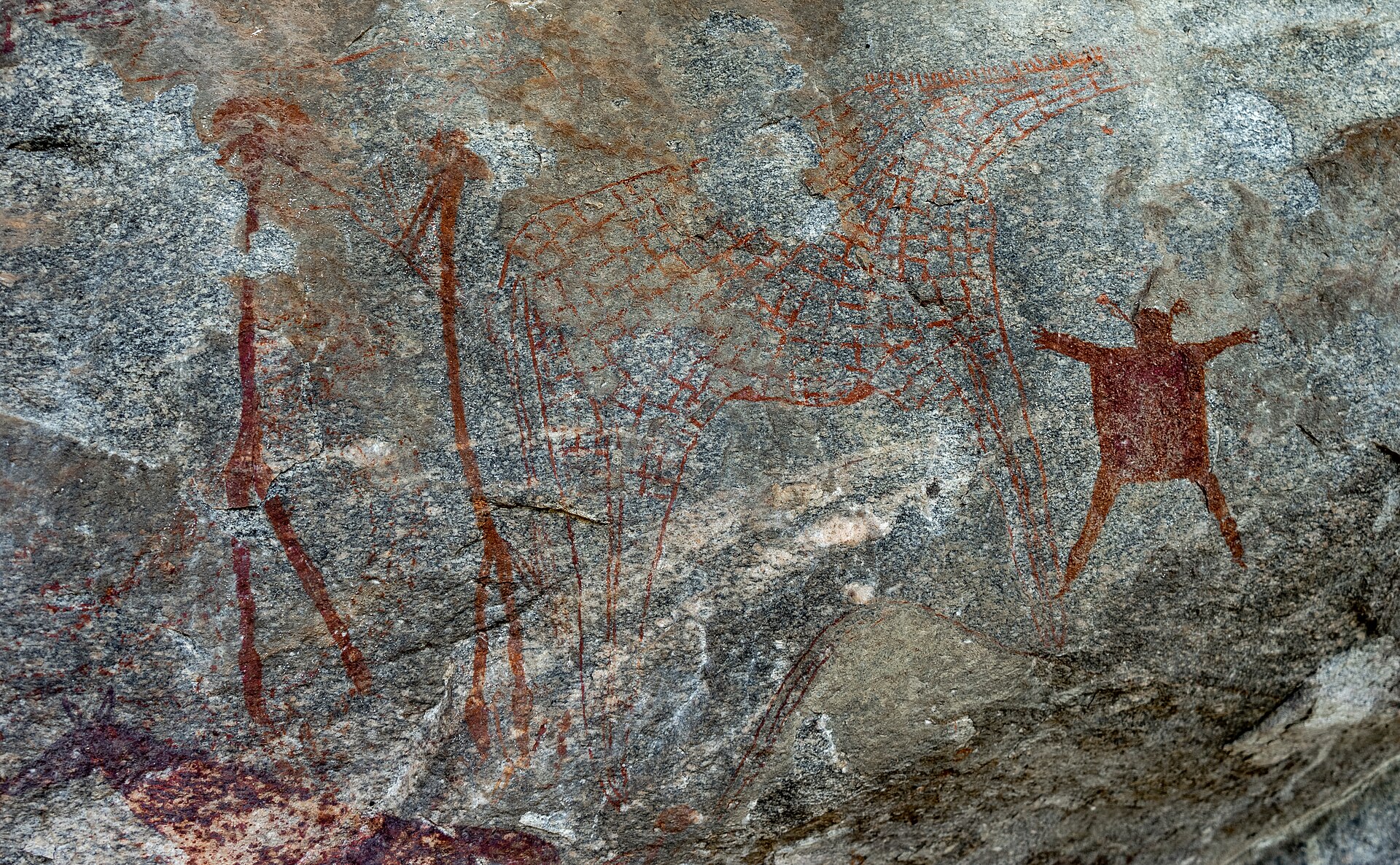
The Kondoa Rock-Art Sites, inscribed in 2006, lie on the eastern slopes of the Masai escarpment beside the Great Rift Valley. UNESCO counts over 150 painted shelters across 2,336 square kilometres.
The paintings track a shift from hunter-gatherer to farming and herding societies over at least two millennia. Some shelters still carry ritual meaning for nearby communities, such as rainmaking, divining and healing.
The Ngorongoro Conservation Area, set up in 1959 and inscribed in 1979, shares land between wildlife and semi-nomadic Maasai herders. UNESCO says Olduvai Gorge and Laetoli hold nearly four million years of human evolution evidence.
Laetoli holds fossil footprints about 3.6 million years old, and UNESCO added a cultural criterion for the area in 2010. Serengeti, Selous and Kilimanjaro are the three natural properties.
Sport, the Running Career of Filbert Bayi
Filbert Bayi represented Tanzania at three Olympic Games, the first at Munich in 1972, Olympics.com records. The International Olympic Committee’s site lists one silver medal and a birth year of 1953.
His personal best for 1,500 metres is 3:32.16, set in 1974, and for the 3,000 metre steeplechase 8:12.48, set in 1980. Other Tanzanian athletes are left out because their records were not confirmed.
More Guides on Tanzania
Rio Times guides give the current context, including the Tanzania explained guide, the politics key players guide and the geopolitics guide. They explain what sits behind the cultural scene.
What It Means for US Readers
US readers can find Gurnah’s novels in English and follow the Nobel Prize site for his biography. Film and music fans can follow the programmes of ZIFF and Sauti za Busara online.
The State Department raised Tanzania to Level 3, reconsider travel, in an advisory dated 31 October 2025. It cited unrest, violent crime and terrorism, with the highest terrorism risk in the Mtwara Region.
The advisory page could not be opened on 3 November 2026, so its current level is not confirmed here. Travellers should read the live page before booking and confirm conditions with their insurer and embassy.
What Is Not Known
The current State Department advisory level for Tanzania was not confirmed from the official page. Photos, awards and honours after 2025 for the people named were not checked.
UNESCO’s description of singeli and the date of its decision were not retrieved. The 2026 edition dates of Sauti za Busara and the number of tickets sold were also not confirmed.
Other figures, including further singers, film makers and media personalities, are left out because two independent sources were not found. Awards won by Tug of War were not confirmed here.
Whether Gurnah has any plans to visit Tanzania in 2026 is not known. No prediction market on Tanzanian culture with real trading was found, so none is shown.
Frequently Asked Questions
Who is Tanzania’s best-known novelist?
Abdulrazak Gurnah, born in Zanzibar, won the Nobel Prize in Literature for 2021. The Nobel committee praised his penetration of the effects of colonialism.
Who was Shaaban Robert?
A Swahili poet and essayist born in 1909 who died in Dar es Salaam in 1962. He wrote a biography of the singer Siti binti Saad.
Who were Siti binti Saad and Bi Kidude?
Siti binti Saad was the first East African vocalist to release commercial recordings, from 1928. Bi Kidude, who died in 2013, won the 2005 WOMEX award.
What is Sauti za Busara?
It is a music festival in Stone Town, Zanzibar. Its 24th edition is listed for 19 to 21 March 2027, with more than 400 artists.
Which Tanzanian sites are on UNESCO’s World Heritage List?
UNESCO lists seven: Ngorongoro (1979), Kilwa (1981), Serengeti (1981), Selous (1982), Kilimanjaro (1987), Stone Town (2000) and Kondoa (2006). Kilwa left the danger list in 2014.
What is Tingatinga?
Tingatinga is a painting style named after Edward Saidi Tingatinga, born in 1932 and killed in 1972. A cooperative society keeps the school going.
Who is Filbert Bayi?
A Tanzanian runner born in 1953 who competed at three Olympic Games from 1972. Olympics.com lists one silver medal and a 1,500 metre best of 3:32.16.
Sources: UNESCO World Heritage Centre, Tanzania ; UNESCO World Heritage Centre, Stone Town of Zanzibar ; UNESCO World Heritage Centre, Ruins of Kilwa Kisiwani and Songo Mnara ; UNESCO World Heritage Committee, decision 38 COM 8C.3 (Doha, 2014) ; UNESCO World Heritage Centre, Kondoa Rock-Art Sites ; UNESCO World Heritage Centre, Ngorongoro Conservation Area ; UNESCO World Heritage Centre, Serengeti National Park ; UNESCO intangible cultural heritage, Tanzania (Singeli nomination, Songs of the Moon) ; UNESCO, World Kiswahili Language Day ; Nobel Prize, Abdulrazak Gurnah facts ; Nobel Prize in Literature 2021, press release ; Booker Prizes, Paradise (1994 shortlist) ; Sauti za Busara festival, official site ; Zanzibar International Film Festival, official site ; Tanzania Tourist Board, culture ; Olympics.com, Filbert Bayi ; US State Department, Tanzania travel advisory (31 October 2025). Biographical dates for writers, singers and painters, and the Tug of War premiere, were each confirmed in at least two independent references.
This article was produced by The Rio Times’ automated newsroom system. How we use AI · Report an error · Editorial responsibility: Matthias Camenzind, Editor-in-Chief
Expat Guide to Tanzania
What The Rio Times publishes for foreigners who live in or move to Tanzania.
Start here
- Retire in Tanzania: Zanzibar vs. Mainland, Residency and Real Costs
- Bank Account in Tanzania for Foreigners: Permits, Tax Number, Deposits From 20,000 Shillings
- Taxes in Tanzania for Expats 2026 — Residence Tests, PAYE Rates and Deadlines
- Tanzania Residency Visa 2026 for Class A, B and C Permits
City guides
Coming up in Tanzania
- Soundscapes Zanzi Brings House to Zanzibar 21 Jan
- Kilimanjaro Marathon Adds Comrades Qualifier 7 Feb
- Sauti za Busara 2027 Runs in Zanzibar From 19 to 21 March 19 Mar
- Africa Cup of Nations 2027 Qualifiers: Standings, Dates, TV 19 Jun
Understand Tanzania