Surge in Argentina’s Unofficial Dollar: Politics or Panic?
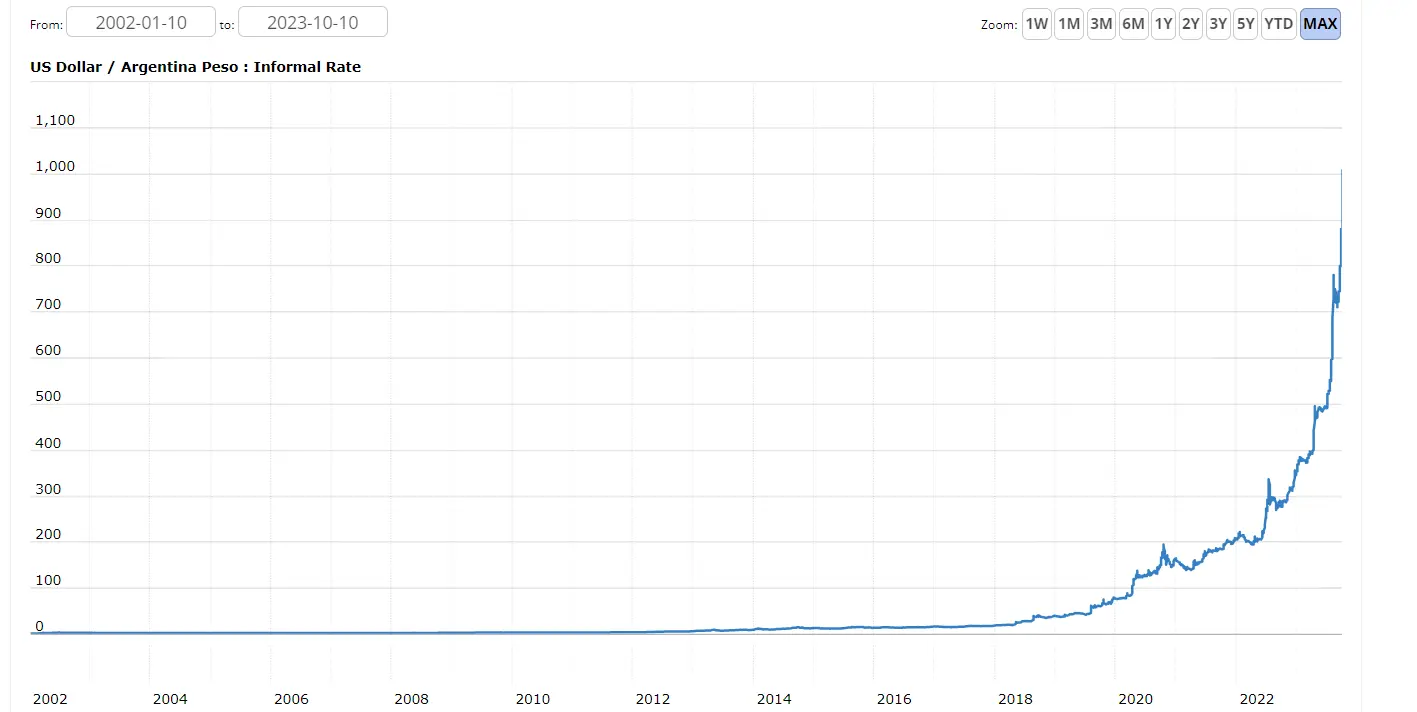
The unofficial dollar rate in Argentina recently surged, crossing 1,000 Argentine pesos. Many attribute this to comments from presidential candidate Javier Milei.
He advised people to avoid saving in pesos. Consequently, many Argentineans are exchanging their pesos for dollars.
In October alone, the unofficial dollar rate spiked by 30%. This has widened the gap with the official rate.
The National Bank sets the official rate at 347.5 for buying and 365.5 for selling.
Milei’s statements add fuel to Argentina’s existing currency issues. Following his remarks, the Central Bank reassured the public.
They insist that Argentine savings are safe and backed by insurance. Private banks have also spoken out. They urge political candidates to avoid causing public panic.
The rising dollar rate pressures the current government. Economy Minister Sergio Massa now faces additional challenges.
Experts believe the issue goes beyond government mistakes. They suggest that electoral tactics also play a part.
Milei remains a strong candidate in the 2023 primaries. He continues to push for converting Argentina’s economy to the dollar.
This recent dollar rate increase seems to favor his agenda.
Background
Argentina often sees currency shifts around political events. This isn’t new; past governments have faced similar challenges.
Election seasons often make the currency more volatile. Milei’s tactics echo past candidates who have used financial unrest to their advantage.
Quick reactions, like bank runs, are common among Argentineans when currency rates shift.
This unofficial rate hike can also impact international trade. It adds stress to Argentina’s already fragile economy.
Both public and private sectors are looking for stable governance to build confidence and stabilize the currency.
More: Argentina news in English, every day from The Rio Times.
This article was produced by The Rio Times’ automated newsroom system. How we use AI · Report an error · Editorial responsibility: Matthias Camenzind, Editor-in-Chief
In depth