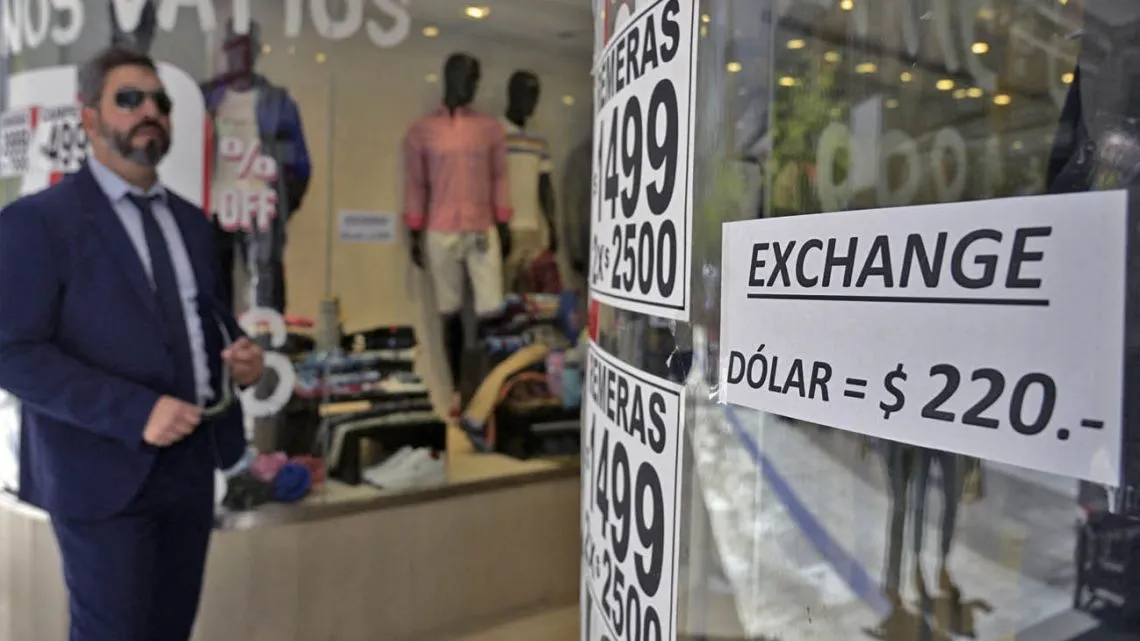
Argentina’s Federal Public Revenue Administration (AFIP) has consolidated three U.S. dollar rates into a single rate set at 731 pesos.
For spending overseas with cards, a 25% tax will apply. Now, there’s no monthly spending limit per person. Before, two rates existed based on your monthly spending.
The government aims to make tax collection fairer with these changes. Another dollar category, called the “savings dollar,” also faces multiple taxes.
This includes a 30% country tax and a 45% income tax. Additionally, a 25% tax on personal assets is applied.
Each person can buy up to $200 of this type of dollar per month. The new rate of 731 pesos is double the official rate of 365.5 pesos.
The official rate will stay the same until after the October 22 elections. This decision came after the unofficial dollar price surged by over 7%.
The increase was partly because of a statement by presidential candidate Javier Milei. A runoff election will happen on November 19 if no candidate wins 45% of the votes.
This second round will also occur if a candidate doesn’t get 40% of the votes with a 10% lead.
Background
This move to unify the dollar rates comes during a tense political period. Elections are around the corner, and currency stability is crucial.
Argentina has a history of currency fluctuation and economic crises. Hence, these new measures aim to prevent financial instability.
The rates are more than double the official dollar rate, which could affect public sentiment. High dollar rates have previously fueled inflation and reduced buying power.
It’s also worth noting that these measures follow a trend of tighter financial controls in Argentina.
How these changes affect the election and public trust in the long term remains to be seen.
More: Argentina news in English, every day from The Rio Times.
This article was produced by The Rio Times’ automated newsroom system. How we use AI · Report an error
In depth
Read More from The Rio Times