Who Runs Namibia’s Economy, the Key Players in 2026
NAMIBIA · ECONOMY
Key Facts
- —The country Namibia is a southern African republic on the Atlantic coast, with Windhoek as capital and the Namibia dollar tied one-to-one to the South African rand.
- —Who runs it President Netumbo Nandi-Ndaitwah leads the government, Ericah Shafudah is finance minister, and Ebson Uanguta is governor of the Bank of Namibia (October 2026).
- —Growth The Bank of Namibia puts growth at 1.7% in 2025 and 2.1% for 2026, with the repo rate at 6.75% and inflation at 4.4% in June 2026.
- —Biggest earner Uranium brought in N$28.1 billion (about US$1.7 billion) in 2025, 31% of export revenue, from three mines led by Chinese and Australian owners.
- —Diamonds The state owns half of Namdeb Holdings, the diamond miner it shares with De Beers, whose owner Anglo American is selling the group.
- —Oil TotalEnergies leads the Venus and Mopane discoveries offshore, but Venus still awaits a final investment decision and first oil is aimed at about 2030.
- —Money Capricorn Group, owner of Bank Windhoek, made N$1.87 billion (about US$113 million) in the year to June 2026, down 6.4%.
The Namibia economy runs on uranium, diamonds and fish, plus a state that owns the main port, the power utility and a big mobile operator. US readers should care because Namibia mined about 12% of the world’s uranium in 2024, and a huge offshore oil project awaits a go-ahead.
This guide names the companies, banks, families and ministers that decide where the money goes in October 2026.

Namibia Economy at a Glance
The Bank of Namibia, the central bank, put growth at 1.7% in 2025 and cut its 2026 forecast to 2.1% on 12 August 2026. Governor Ebson Uanguta said activity slowed in the first half of the year, as our Namibia country page also tracks.
Mining, manufacturing, electricity and transport were weaker, while farming and shops did better, the bank said. Private-sector lending grew 4.5% in the year to June 2026.
Inflation stood at 4.4% in June 2026, and the bank held its repo rate at 6.75% on 11 August. Its next rate decision is due on 26 and 27 October 2026.
The Namibia economy is small and open, and it sells mostly minerals and fish to the outside world. Uranium alone made up 31% of export revenue in 2025.
Fish exports earned N$4.6 billion (about US$277 million) in the second quarter of 2026, the statistics agency reported. All conversions in this guide use about N$16.6 to the US dollar, the October 2026 rate.
Who Sets the Rules, Ministers and the Central Bank
President Netumbo Nandi-Ndaitwah, of the ruling SWAPO party, was sworn in as president in March 2025. Elijah Ngurare is prime minister.
Ericah Shafudah, the finance minister, tabled the 2026/27 budget on 26 February 2026 under the theme People, Productivity and Prudence. It totals N$104 billion (about US$6.3 billion), of which about N$16.2 billion (about US$977 million) goes to interest.
Revenue is forecast at N$89.8 billion (about US$5.4 billion), with a deficit of 5.5% of output, according to Deloitte’s budget summary. Standard Bank Namibia’s economist Helena Mboti wrote in March 2026 that falling diamond receipts weigh on income.
Gold partly offsets them, and stronger uranium receipts could help.
Modestus Amutse has been minister of industries, mines and energy since 2 December 2025. His office issues the mining and oil licences, which makes him the most powerful single official for the biggest earners.
The Public Enterprises Governance Act of 2019 sets the rules for state-owned firms such as the power utility. Epangelo Mining is the state company that handles new strategic minerals.
The Bank of Namibia guards the one-to-one link between the Namibia dollar and the South African rand. That keeps the Namibia economy tied to Pretoria’s interest rates, whatever local growth looks like.
Uranium, the Biggest Export Earner
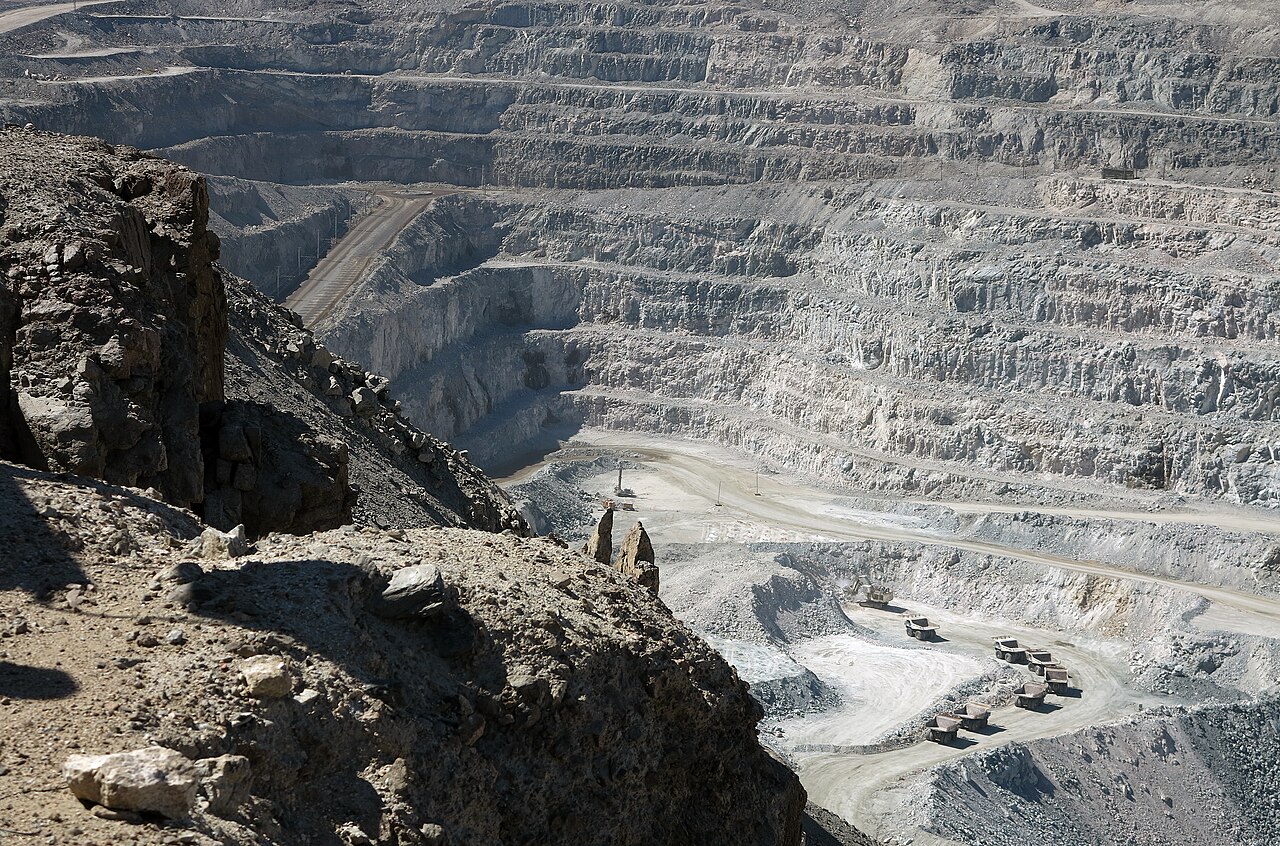
Uranium ore and concentrates earned N$28.1 billion (about US$1.7 billion) in 2025, or 31% of export revenue, The Namibian reported on 28 June 2026. Namibia ranks third in the world, behind Kazakhstan and Canada, with 12.18% of global output in 2024.
Three mines do the work. In 2024 Husab produced 4,437 tonnes, Rössing 2,205 and Langer Heinrich 691, or 7,333 tonnes in all, the World Nuclear Association reports.
Husab is run by Swakop Uranium and owned by China General Nuclear Power, with the state’s Epangelo Mining holding 10%. Rössing is majority-owned by China National Uranium Corporation, which bought it from Rio Tinto in 2019.
Langer Heinrich belongs to Australia’s Paladin Energy and restarted in March 2024 after almost six years on care and maintenance. China National Nuclear Corporation’s overseas arm bought a 25% stake in the project in 2014.
South Africa’s Industrial Development Corporation (IDC) is selling its 10.2% of Rössing. Prime Minister Ngurare said in March 2026 that ministers were discussing a bid, and lawmakers asked in September whether one had been filed.
The price helps all of them: uranium averaged about US$74 a pound in 2025 and stood at US$85.90 in late June 2026. Our own report on Namibia’s uranium exports tracks the monthly swings.
Diamonds, Gold and the De Beers Sale
Namdeb Holdings is split 50:50 between the Namibian state and De Beers. It owns Namdeb Diamond Corporation and Debmarine Namibia, the two companies that dig and dredge the stones.
The Namibia Diamond Trading Company sorts, values and sells part of the output, with a view to local cutting and polishing. Diamond income has been shrinking, and the finance ministry’s own economists list it as a drag on revenue.
Anglo American, the London-listed mining group, wants to sell De Beers, and Botswana holds 15% of it. Mining MX reported on 14 October 2026 that a group led by former De Beers chief Gareth Penny is preferred bidder.
The price discussed is about US$1 billion.
Namibia has weighed a stake of up to N$3 billion (about US$181 million), and cabinet had not decided as of June 2026. Economists quoted by The Namibian warned that De Beers has lost most of its value and that synthetic diamonds are eating the market.
Gold is the quiet helper, and the finance ministry’s own economists list gold receipts as an offset to falling diamond income.
Oil and Green Hydrogen, the Big Bets
No oil has been pumped yet, but the Orange Basin offshore has produced big discoveries for the Namibia economy to bank on. Our explainer on Namibia’s Orange Basin covers how the finds came about.
TotalEnergies, the French major, leads the Venus project (licence PEL 56) with 35.25%. Its partners are QatarEnergy 35.25%, Galp 10%, state oil company Namcor 10% and Impact Oil and Gas 9.5%.
Venus plans a floating production ship of about 150,000 barrels a day. It aims for first oil around 2030, subject to a final investment decision.
On 14 October 2026 a wire report said TotalEnergies and Namibia were still negotiating the Venus terms. A local-content policy, approved by cabinet on 4 August 2026, shapes who gets the contracts, The Namibian reported.
In a swap with Galp, TotalEnergies took over as operator of Mopane (licence PEL 83) with a 40% stake, and Galp took 10% of Venus. The ministry approved the Mopane change in July 2026, and Galp announced the completed deal on 3 September 2026.
Green hydrogen is smaller and nearer, with a 5 megawatt Walvis Bay plant from CMB.TECH and OL running since August 2026. Plans call for 250 and then 500 megawatts.
Our report on Namibia’s oil and hydrogen plans follows both.
Banks and the Stock Exchange
Capricorn Group, which owns Bank Windhoek, earned N$1.87 billion (about US$113 million) in the year to 30 June 2026, down 6.4%. Bank Windhoek supplies 71% of the group’s profit under chief executive David Nuyoma.
Its Bank Gaborone unit in Botswana suffered from that country’s mining slump.
Capricorn’s total assets stand at N$75.4 billion (about US$4.5 billion), with deposits of N$56.2 billion (about US$3.4 billion). Its share rose nearly 30% in the year to N$28.12, lifting its market value from about N$11 billion to about N$15 billion (about US$900 million).
Capricorn is the star of the Namibia Securities Exchange, the local stock market. Standard Bank Namibia Holdings, Namibia Breweries and the mobile operator MTC are listed there too, according to The Namibian’s July 2026 market report.
Fish, Beef and Beer
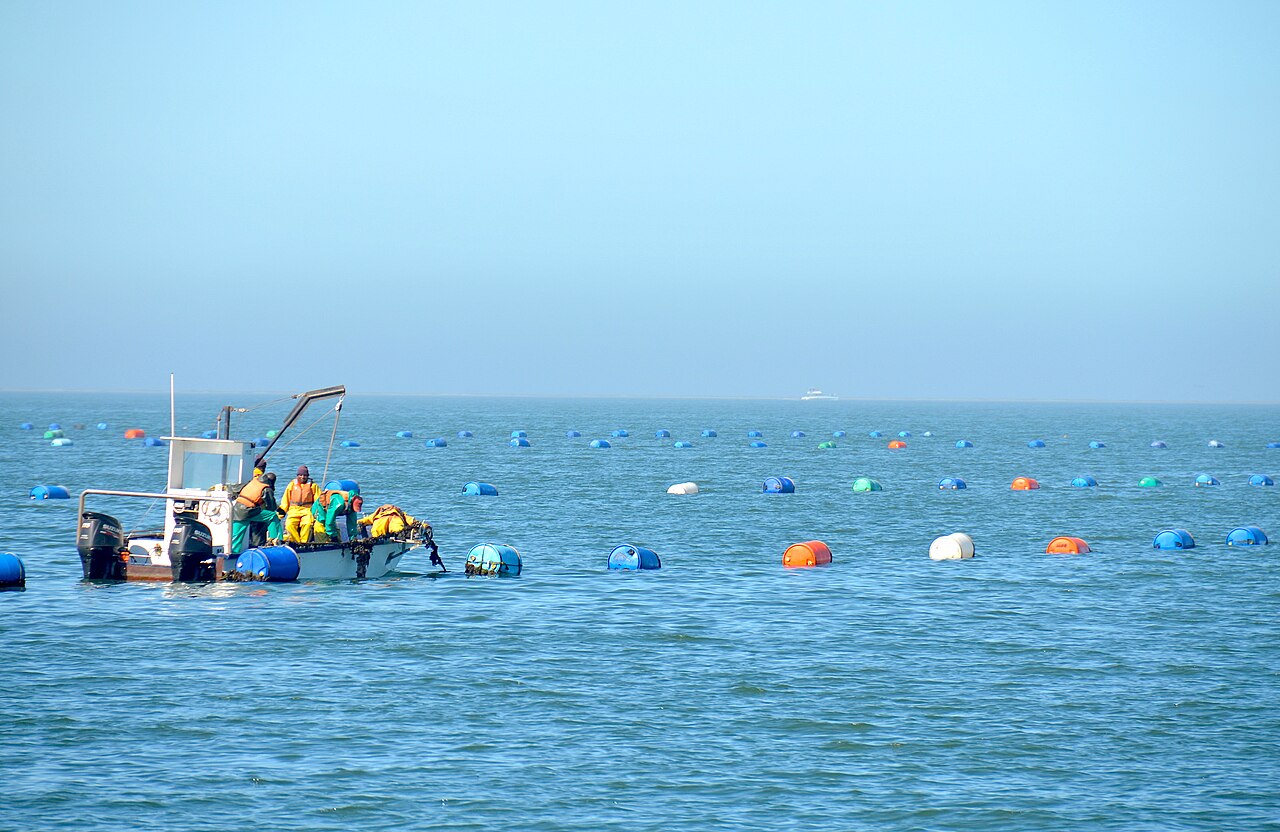
Fish and other sea products earned N$4.6 billion (about US$277 million) from exports in the second quarter of 2026, up 12.2% from a year earlier. Landings of quota species fell 1.1% to 101,546 tonnes, the statistics agency reported.
Horse mackerel made up over 61,000 tonnes of the catch and hake over 36,000 tonnes. Spain bought 27.8% of the fish, mainly frozen hake fillets, while Zambia took 23.8% and Congo 11.3%.
Beef is in trouble. The Meat Corporation of Namibia (Meatco) stopped exports after foot-and-mouth disease was found on a farm at Karasburg, and the veterinary service froze animal movements.
Meatco announced the stop on 25 September 2026. Our piece on Namibia’s beef and the EU suspension explains what is at stake.
Namibia Breweries made an operating profit of N$830 million (about US$50 million) in 2025, up 42% on revenue of N$4.8 billion (about US$290 million). In the first half of 2026 operating profit fell 21% to N$222 million (about US$13 million).
The cause was the end of a minimum supply deal with Heineken Beverages South Africa in April, which cut exports there by 38.2%. The brewer says the export volumes now rest on a structurally lower base.
OL, formerly Ohlthaver and List, is one of Namibia’s largest private groups and dates from 1919, with founders Herman Ohlthaver, Carl List and Werner List. It rebranded in May 2026 and is the local partner in the Walvis Bay hydrogen plant.
Ports, Power and Phones, the Big Public Names
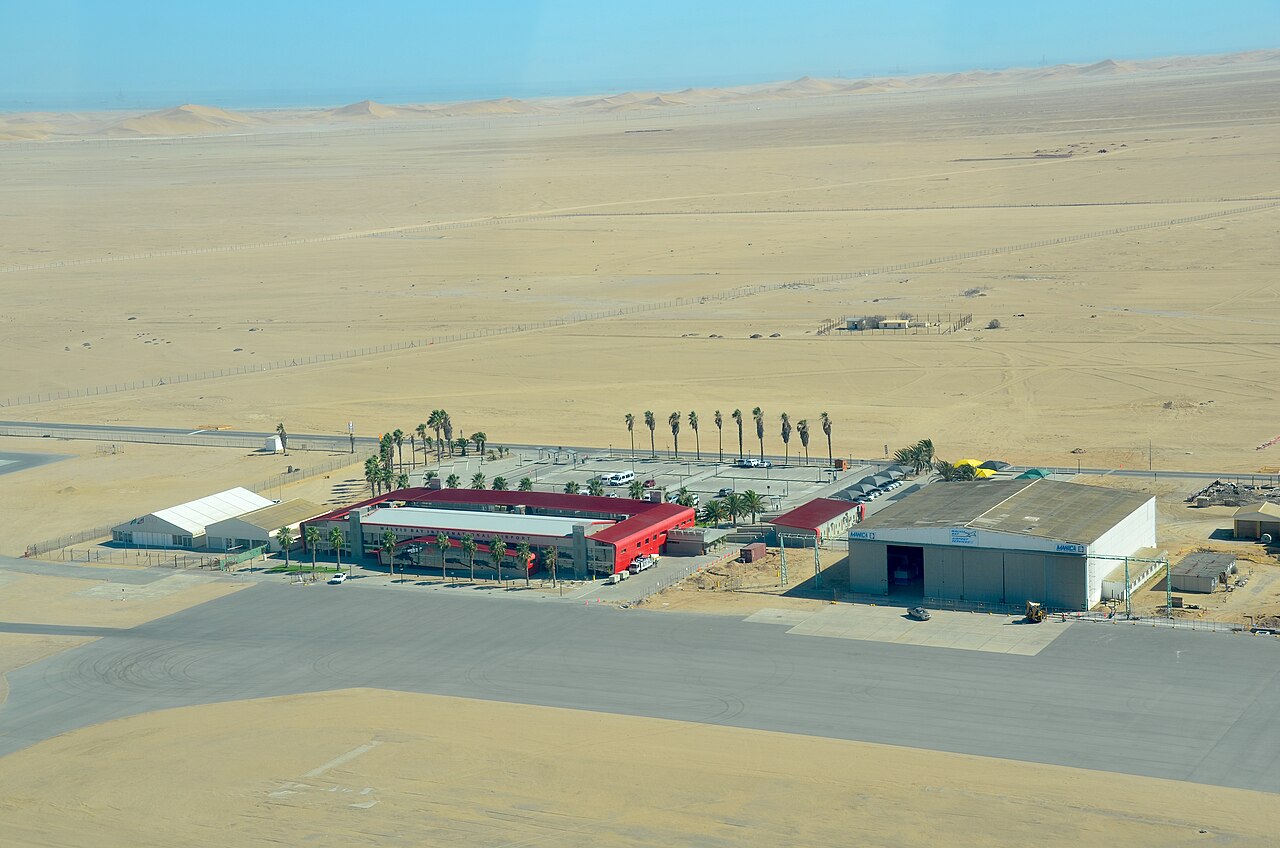
Namport, the Namibian Ports Authority, handles the Walvis Bay and Luderitz harbours. In the year to 31 March 2025 it reported 8.4 million tonnes of cargo, and container traffic jumped 48% to 253,996 boxes.
South Africa and Zambia accounted for about 69% of the cargo crossing borders through Namibian ports. That makes the Namibia economy a transit route for its landlocked neighbours.
Cargo giant MSC’s terminal arm, Terminal Investment Limited, was named winner of the concession to run the new Walvis Bay container terminal in October 2022. Namport said private operators helped lift the 2024/25 container figures.
NamPower, the state power utility, launched a new 2026 to 2030 business plan in September 2026 built on supply security and renewables. MTC is the listed mobile operator, and Namcor is the national oil company with 10% of Venus and Mopane.
Together these firms give the government a hand in transport, energy and communications, so ministers matter as much as chief executives. Our Namibia explainer and our guide to Namibia geopolitics place them in the wider picture.
What It Means for US Readers
Namibia is a supplier of reactor fuel, and two of its three uranium mines have Chinese state owners. Any change in the Rössing stake or in Chinese control could matter for Western buyers of enriched fuel.
Oil is the other watch point. A final decision on Venus would be among the largest private investments in the country’s history, and TotalEnergies, Galp and QatarEnergy would all be affected.
Investors can follow Namibia through the companies listed abroad, such as Paladin Energy and TotalEnergies, or through South African banks with Namibian arms. Travellers should note the foot-and-mouth restrictions on beef and animal movements that began in late September 2026.
The Namibia dollar moves with the South African rand, so US dollar swings in the rand carry straight over. Businesses pricing in dollars should watch the central bank’s 26 and 27 October rate meeting.
What Is Not Known
It is not known when TotalEnergies and Namibia will agree the Venus terms, or whether first oil will still arrive around 2030.
The buyer of De Beers, and the size of any Namibian stake, are not settled. Neither is the fate of the IDC’s 10.2% share in Rössing, which lawmakers raised in September 2026.
The length of the foot-and-mouth outbreak at Karasburg and its cost to beef exports are not yet clear. The full 2026 growth figure will come only after the statistics agency publishes its annual accounts.
Frequently Asked Questions
What drives the Namibia economy?
Mining leads: uranium alone brought in 31% of export revenue in 2025, and diamonds, gold and fish add more. Farming, tourism and trade also matter, and oil may join them after 2030.
Who owns Namibia’s biggest uranium mines?
Chinese state groups own Husab and a majority of Rössing, and Australia’s Paladin Energy owns Langer Heinrich. The state holds 10% of Husab through Epangelo Mining.
How much does Namibia earn from uranium?
Uranium ore and concentrates earned N$28.1 billion (about US$1.7 billion) in 2025, or 31% of export revenue. Namibia was third in the world in 2024, with 12.18% of output.
Has Namibia started producing oil?
No. TotalEnergies leads the Venus and Mopane discoveries, but Venus still awaits a final investment decision and first oil is aimed at about 2030.
Which banks matter most in Namibia?
Bank Windhoek, owned by Capricorn Group, is the biggest name, with Standard Bank Namibia also listed on the Namibia Securities Exchange. Capricorn made N$1.87 billion (about US$113 million) in the year to June 2026.
Is the Namibia dollar tied to another currency?
Yes, it is pegged one-to-one to the South African rand. The Bank of Namibia says it must protect that link when it sets interest rates.
Sources: Bank of Namibia, Monetary Policy Statement August 2026, 12 August 2026; The Brief (Namibia), BoN holds rates as growth slows and inflation outlook worsens, August 2026; The Namibian, Governor Uanguta at Bloomberg Media Initiative launch, 24 September 2026; The Namibian, Namibia tables N$104 billion budget, 26 February 2026; Deloitte Namibia, Namibian tax budget speech 2026, 26 February 2026; The Namibian, Shafudah walks fiscal tightrope as growth slows, 2 March 2026; The Namibian, Venaani presses Govt on Rössing stake, 15 September 2026; The Namibian, Govt discussing 10% stake in Rössing Uranium, 31 March 2026; The Namibian, Namibia in Numbers: Namibia’s uranium output, 28 June 2026; World Nuclear Association, Uranium in Namibia, 2025 data, accessed October 2026; The Namibian, Namibia considers N$3bn De Beers stake, 11 June 2026; Offshore Magazine, Namibia approves TotalEnergies takeover of Mopane operatorship, 29 July 2026; Yahoo Finance (MT Newswires), TotalEnergies and Namibia still negotiating Venus terms, 14 October 2026; pv magazine, Africa’s first PV-driven hydrogen hub powers up in Namibia, 28 August 2026; The Namibian, Over half of Capricorn’s income now comes from outside lending, 20 September 2026; The Namibian, Capricorn share price rises 30% despite profit decline, 19 September 2026; The Namibian, Capricorn Group remains star player on NSX, 14 July 2026; New Era, Fish exports earn N$4.6b despite lower catches (Namibia Statistics Agency data), 1 October 2026; The Namibian, Meatco puts beef exports on hold over FMD, 25 September 2026; Namibia Economist, Beer exports to South Africa drop following the end of Heineken supply deal, 30 September 2026; Namibia Economist, Namibia Breweries reports strong financial performance for 2025, 9 April 2026; Namibia Economist, Ohlthaver and List now OL, 22 May 2026; The Villager, South Africa, Zambia and Botswana dominated cross-border cargo in 2025, 18 May 2026; The Namibian, NamPower’s new strategic plan targets sustainable growth, 30 September 2026; Freight News, MSC company wins concession to run Walvis Bay container terminal, October 2022; The Brief (Namibia), Modestus Amutse appointed minister of industries, mines and energy, 2 December 2025; Galp, release on completion of the TotalEnergies swap (PEL 83 and PEL 56), 3 September 2026; Mining MX, Botswana nears deal on bigger De Beers stake, 14 October 2026; The Namibian, Presidency takes control of petroleum local content, 2 September 2026; The Namibian, Nandi-Ndaitwah in history books, sworn in as first woman president, 21 March 2025.
This article was produced by The Rio Times’ automated newsroom system. How we use AI · Report an error · Editorial responsibility: Matthias Camenzind, Editor-in-Chief
Expat Guide to Namibia
What The Rio Times publishes for foreigners who live in or move to Namibia.
Start here
Understand Namibia
Rotate for Best Experience
This report is optimized for landscape viewing. Rotate your phone for the full experience.
You've reached your free article limit
Subscribe to The Rio Times for unlimited access to our reporting from across Africa.
Expat Guide to Namibia
What The Rio Times publishes for foreigners who live in or move to Namibia.
Start here
Understand Namibia