
NAMIBIA · INVESTMENT
Key Facts
- —The country Namibia is a desert nation of 3.1 million people on Africa’s south-west coast, rich in minerals, with offshore oil not yet in production.
- —What happened US Ambassador John Giordano said on Wednesday 21 October that he pitched Namibia to investors in six cities.
- —The cities Washington, New York, Philadelphia, Singapore, Johannesburg and Cape Town, on three continents.
- —The message The US ambassador said the next era of energy will not belong to whoever finds the most oil.
- —The numbers No investment amount was announced; Giordano said in September that Africa’s projected purchasing power exceeds US$16 trillion.
- —What it means for you US investors are being invited into Namibian oil services, critical minerals and infrastructure, with no deal yet on the table.
- —Still open The statement names no company, project or signed agreement from the tour.
US Ambassador John Giordano pitched Namibia to American investors in a statement on Wednesday 21 October, after a tour of six cities on three continents. The US ambassador pitches Namibia as a place where American capital and technology can win business in energy, minerals and infrastructure.
Namibia is a stable democracy of 3.1 million people with big mineral exports and offshore oil finds that have not yet produced a barrel. For US readers, the pitch shows how Washington now ties its diplomacy in Africa to commercial deals.
A Six-City Sales Tour
Giordano is a lawyer named by President Donald Trump and confirmed by the US Senate on 7 October 2025. He presented his credentials to Namibian President Netumbo Nandi-Ndaitwah on 29 October 2025.
The US Embassy in Windhoek, the capital, published his account on Wednesday 21 October, and the daily The Namibian carried it. The US ambassador said he met government officials, company executives and investors in Washington, New York, Philadelphia, Singapore, Johannesburg and Cape Town.
Washington and New York
In Washington he spoke at a conference of the Center for Strategic and International Studies, a think tank, on US-Africa minerals diplomacy. He stressed Namibia’s potential in the supply chains for critical minerals, the metals used in batteries, electronics and defence equipment.
In New York he joined Nandi-Ndaitwah and business leaders at the US-Namibia Presidential Roundtable. The US Chamber of Commerce and its US-Africa Business Center organised the session, which covered investment, infrastructure and trade.
Philadelphia, Singapore and South Africa
In Philadelphia the city council and the Union League, a private civic club, recognised his public service, and he gave an interview to Forbes Africa. In Singapore he spoke at the Milken Institute summit, run by a US economic think tank, on Africa’s role in energy, minerals and infrastructure.
In South Africa he met energy, mining, engineering and infrastructure executives and joined an S&P Global Energy CERAWeek roundtable during African Mining Week. He also gave a keynote at African Energy Week in Cape Town, a yearly oil and gas conference.
The Message on Oil and Technology
Giordano said, “The next era of energy will not belong to whoever finds the most oil.” He argued that American companies, technology and capital can help Namibia move from oil discoveries to oil production.
The US ambassador said American companies “bring unmatched technology, expertise, and capability” and pointed to joint openings with Asian investors and resource-rich African economies. He added that trusted relationships, strong institutions and sound commercial judgment are essential.
Why Washington Wants Deals Now
Reporting his Washington speech of Tuesday 29 September, The Namibian quoted Giordano as saying that the era of dialogue alone is absolutely over. He said Africa’s projected purchasing power exceeds US$16 trillion, while US exports to sub-Saharan Africa make up less than 1% of US goods trade.
Giordano called that gap a commercial opportunity and described Namibia as an emerging petroleum country in which US companies such as Chevron take part. He warned that capital moves when investors believe rules are clear, institutions are reliable and contracts are respected.
What Namibia Is Offering
At the New York roundtable Nandi-Ndaitwah said Namibia is a small economy whose strategic value reaches far beyond its size. She presented the country as a gateway to the Southern African Development Community, a regional bloc that she said offers about 400 million consumers.
She listed nine critical minerals, among them uranium, lithium, rare earths, copper and cobalt, and said Namibia will not remain an exporter of raw materials. She added that the feasibility study for the Trans-Kalahari Railway to Botswana is complete and that a construction tender is expected soon.
Where the Oil Stands
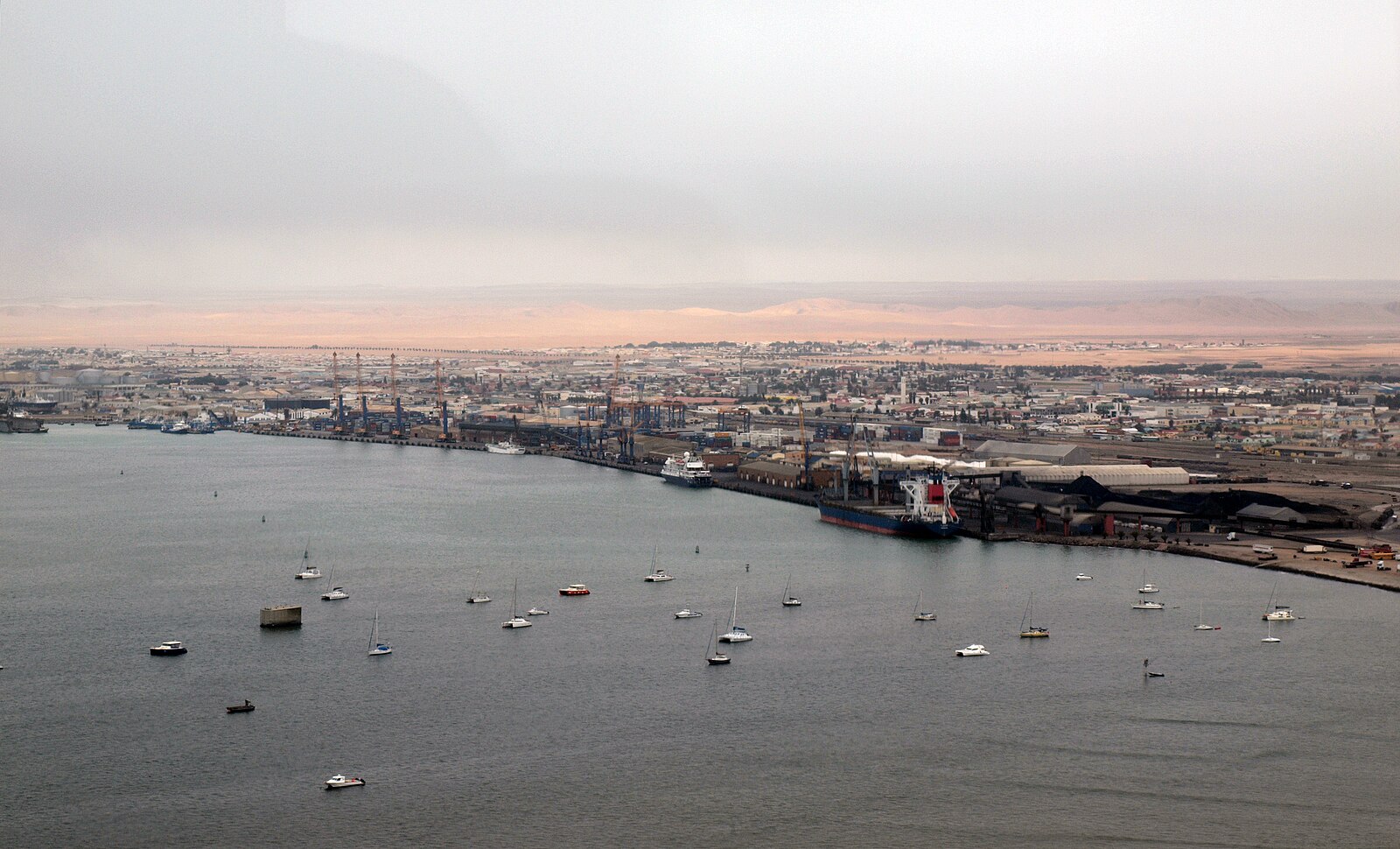
Namibia has made large offshore finds in the Orange Basin but has not yet pumped commercial oil. TotalEnergies, the French company running the Venus field, says it will approve the project once talks with the government end, as our earlier report explains.
Officials and operators point to first oil around 2029 or 2030, which is why the ambassador speaks of moving from discovery to production. The push sits beside a political one, since Windhoek confirmed in September that Washington had contacted it about the International Criminal Court.
What It Means for US Readers
For US investors the statement from the US ambassador is an invitation, not a deal, because it names no company, project or amount. The clearest openings are oil services, critical minerals processing, power and the planned railway.
The Namibia dollar is pegged one to one to the South African rand and traded at about 16.4 per US dollar on 22 October 2026. The economy produced roughly US$15.1 billion in 2025, so projects there are small by US standards, as our Namibia guide explains.
What Is Not Known
The statement gives no investment amount, no named company and no signed agreement from the six-city tour. It does not say which American firms attended the New York roundtable or what barriers they raised.
It is also unclear whether TotalEnergies will announce its Venus decision before the end of 2026. How the International Criminal Court dispute will affect commercial talks with Washington is not yet known.
More: Namibia news in English, every day from The Rio Times.
Frequently Asked Questions
Who is the US ambassador to Namibia?
John Giordano, a lawyer named by President Donald Trump, has been the US ambassador since the US Senate confirmed him on 7 October 2025. He presented his credentials to President Netumbo Nandi-Ndaitwah on 29 October 2025.
What did the US ambassador pitch to investors?
Giordano pitched Namibia’s energy, critical minerals, technology and infrastructure to American companies in six cities. He said US technology and capital can help the country move from oil discoveries to production.
Which cities did the ambassador visit?
He met officials, executives and investors in Washington, New York, Philadelphia, Singapore, Johannesburg and Cape Town. He has since returned to Namibia, the US Embassy said.
Is Namibia producing oil yet?
No, Namibia has made large offshore discoveries but has not started commercial production. Officials and operators point to first oil around 2029 or 2030.
Did the tour produce any deals?
The embassy statement announces no investment amounts, companies or agreements. It says the ambassador will keep connecting American businesses with Namibian partners.
What is the Namibia dollar worth?
The Namibia dollar is pegged one to one to the South African rand and traded at about 16.4 per US dollar on 22 October 2026. That rate comes from the open exchange-rate data used by this newsroom.
Sources: The Namibian, US ambassador pitches Namibia to American investors, 21 October 2026; US Embassy Windhoek, Ambassador Giordano advances American commercial and strategic interests in Namibia, 21 October 2026; The Namibian, President Nandi-Ndaitwah highlights Namibia-US investment opportunities, 22 September 2026; The Namibian, US shifts to commercial deals in Africa, 30 September 2026.
This article was produced by The Rio Times’ automated newsroom system. How we use AI · Report an error · Editorial responsibility: Matthias Camenzind, Editor-in-Chief