Namibia and Its Neighbours in Southern Africa
How Namibia deals with Angola, Botswana, Zambia and South Africa: the Orange River dispute, shared rivers, Walvis Bay corridors and green hydrogen.

GUIDES · NAMIBIA
Key Facts
- Where it sits Namibia borders Angola to the north, Zambia and Botswana to the east and South Africa to the south. Its whole western edge is Atlantic coast.
- Leader President Netumbo Nandi-Ndaitwah of SWAPO, the liberation movement that has governed since independence in 1990, holds office as of October 2026.
- Currency The Namibia dollar is pegged one to one to the South African rand. The Bank of Namibia quoted N$16.53 per US dollar on 13 October 2026.
- Trade In March 2026 Namibia exported goods worth N$13.2 billion (about US$800 million) and imported N$15.5 billion (about US$940 million), per the Namibia Statistics Agency.
- Blocs A member of SADC and of SACU, the customs union founded in 1910 whose secretariat sits in Windhoek.
- Open file The Orange River boundary with South Africa is still disputed. The two presidents plan a dedicated meeting in the first quarter of 2027.
The Namibia neighbourhood is a ring of four land borders, four great rivers and one Atlantic port that serves landlocked neighbours. Namibia, a country of desert and coast between Angola and South Africa, sells uranium to China and gold to South Africa.
For a US reader, its neighbours decide whether its minerals, green hydrogen and ports reach world markets. This guide sets out who the neighbours are, where relations work and where they are stuck.
Amounts are converted at the Bank of Namibia rate of N$16.53 per US dollar on 13 October 2026.
Where Namibia Sits in Southern Africa
Namibia has four land neighbours. Angola lies to the north, along the Kunene and Okavango rivers, and the narrow Zambezi region touches Zambia.
Botswana runs down the long eastern border, and South Africa lies across the Orange River to the south. The map still carries the marks of colonial deals.
South Africa ruled Namibia until independence in 1990. It kept the port enclave of Walvis Bay until 28 February 1994, almost four years after independence, The Namibian recorded.
That history explains why the Namibia neighbourhood leans south. South Africa was the main source of Namibia’s imports in March 2026, per the Namibia Statistics Agency (NSA), the official statistics office.
China, far away, was the biggest single export market, mainly for uranium.
South Africa: The Closest and Most Complicated Tie
South Africa is Namibia’s largest neighbour, its main supplier and the anchor of its money. In March 2026 Namibia ran a trade deficit of N$2.3 billion (about US$140 million) with South Africa, the NSA reported.
Non-monetary gold, 16.1 percent of all exports that month, went only to South Africa. The two governments meet in a Bi-National Commission, a standing summit of presidents and ministers.
Its fourth session ended in Pretoria on 17 July 2026, co-chaired by Nandi-Ndaitwah and South Africa’s President Cyril Ramaphosa. They welcomed seven agreements, including a bilateral air services deal, and agreed to speed up the Kudu Gas Power Project.
The sore point is the river itself. South Africa holds that the border follows the Orange River’s northern bank, under the 1890 Heligoland-Zanzibar Treaty between Germany and Britain.
Namibia argues that modern international law puts it in the middle of the river.A joint committee of experts was set up in 2016 and reported in 2017.
Ministers met again at Swakopmund in October 2024 without a deal, The Namibian reported. After the July 2026 session, the two presidents took over the file and planned a meeting for early 2027.
Nandi-Ndaitwah has said the dispute began in 1991 and that implementing what was agreed is the challenge. McHenry Venaani, president of the opposition Popular Democratic Movement (PDM), called the outcome “very disappointing”.
Angola: Power Lines, Drought and the Kunene Border
Angola is the northern neighbour and, for many Namibians in the north, the nearest big market. The Kunene River marks the western stretch of the border, and the Okavango the central stretch near Rundu.
The Trans-Cunene corridor carries road freight from Walvis Bay towards southern Angola. Electricity is the newest link.
On 14 April 2026 the two governments signed the Angola-Namibia interconnector deal in Luanda, The Namibian reported. The 160-kilometre, 400-kilovolt line will run from Cahama in Angola to the Kunene substation in Namibia.
The project costs N$4 billion (about US$240 million), financed by Namibia alone through its National Energy Fund. It should deliver 300 megawatts of firm power.
NamPower’s managing director, Simson Haulofu, called Namibia “a leader in regional energy security”.
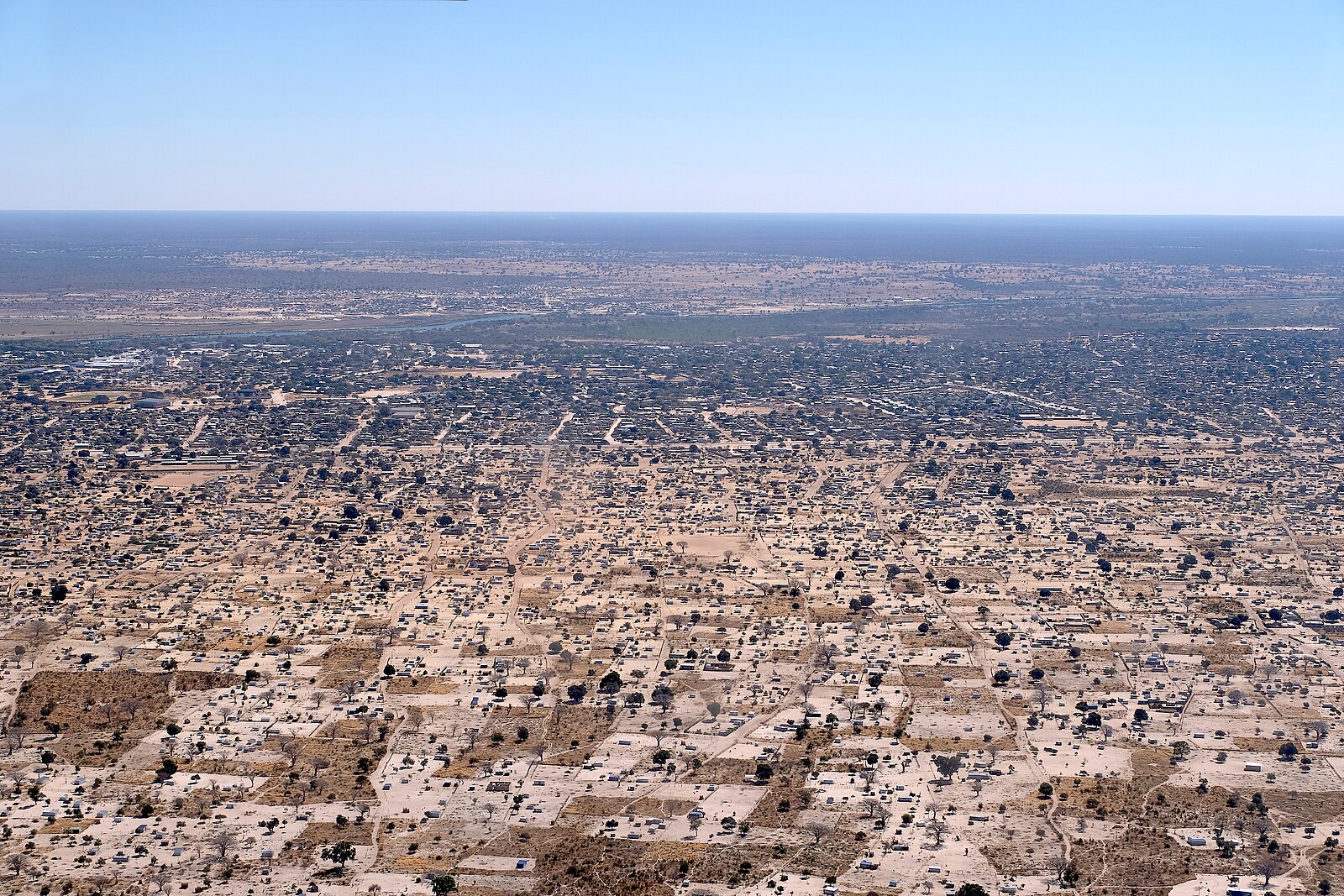
Drought has turned the border into a humanitarian issue. On 2 September 2026 Amnesty International said drought-displaced Angolans, mostly women and children, face abuses in northern Namibia.
They come mainly from Cunene, Huíla and Namibe provinces in southern Angola. Namibia’s Ministry of Home Affairs said more than 1,000 Angolans were returned in 2026.
Amnesty alleges expulsions without individual screening; officials had not responded to its request for comment when the report came out. These are allegations, not findings of any court.
Botswana and Zambia: Landlocked Partners on the Corridors
Botswana and Zambia have no coast, so Walvis Bay is one of their doors to the Atlantic. In May 2026 South Africa took 39.6 percent of Namibia’s exports to Africa, per NSA data reported by The Brief.
Zambia took 24.7 percent and Botswana 23.4 percent. With Botswana, the big plan is the Trans-Kalahari Railway, a 1,500-kilometre heavy-haul line from the Mmamabula area to Walvis Bay.
Its estimated cost is US$16 billion.A feasibility study by CPCS Transcom was delivered at the end of July 2026, Botswana’s Mmegi reported.
Botswana’s Transport Minister Noah Salakae said construction is targeted for 2027. The first phase is estimated to employ about 6,000 Batswana and 4,000 Namibians.
No financing package has been announced. In April 2026 the two countries also revived a joint airline idea, first floated by their presidents in 2025.
Namibia has had no national carrier since Air Namibia was liquidated in 2021 with about N$3 billion (about US$180 million) in debt. Old quarrels are settled.
On 13 December 1999 the International Court of Justice ruled that Kasikili/Sedudu Island in the Chobe River belongs to Botswana. In March 2026 Namibia ran an N$828 million (about US$50 million) trade surplus with Botswana, per the NSA.
Zambia trades through the Katima Mulilo border post in the Zambezi region. In July 2026 the regional governor said cargo through Katima Mulilo and the Ngoma post had risen sharply.
Namibia and Zambia have signed an agreement on a one-stop border post there, and the outcome of a revenue agency feasibility study is pending.
Shared Rivers: Orange, Kunene, Okavango and Zambezi
Namibia’s only year-round rivers run along its borders, so every one of them is shared. All four rise outside the country.
That makes water the quietest but most serious part of its foreign policy. The Okavango is managed through OKACOM, the Permanent Okavango River Basin Water Commission.
Angola, Botswana and Namibia set it up in 1994 to jointly manage the river, which ends in Botswana’s Okavango Delta. On the Orange, Namibia has used its veto.
It is withholding a “no-objection” letter for Phase II of the Lesotho Highlands Water Project, a Lesotho-South Africa scheme upstream. The Ministry of Agriculture, Water, Fisheries and Land Reform cites possible harm to downstream flows, The Brief reported in February 2026.
Phase II would cost R53 billion (about US$3.2 billion). It would raise transfers to South Africa from 780 million to 1.26 billion cubic metres a year.
Namibia wants South Africa to commit to a joint Noordoewer-Vioolsdrift Dam on the lower Orange first. The talks run through ORASECOM, the Orange-Senqu River Basin Commission, and the two countries’ own water commission.
Walvis Bay and the Trade Corridors
Walvis Bay is the asset that gives Namibia weight beyond its size. The Walvis Bay Corridor Group promotes four routes: Trans-Kalahari, Trans-Cunene, Trans-Oranje and Walvis Bay-Ndola-Lubumbashi.
The last one runs towards Ndola in Zambia and Lubumbashi in the Democratic Republic of Congo.
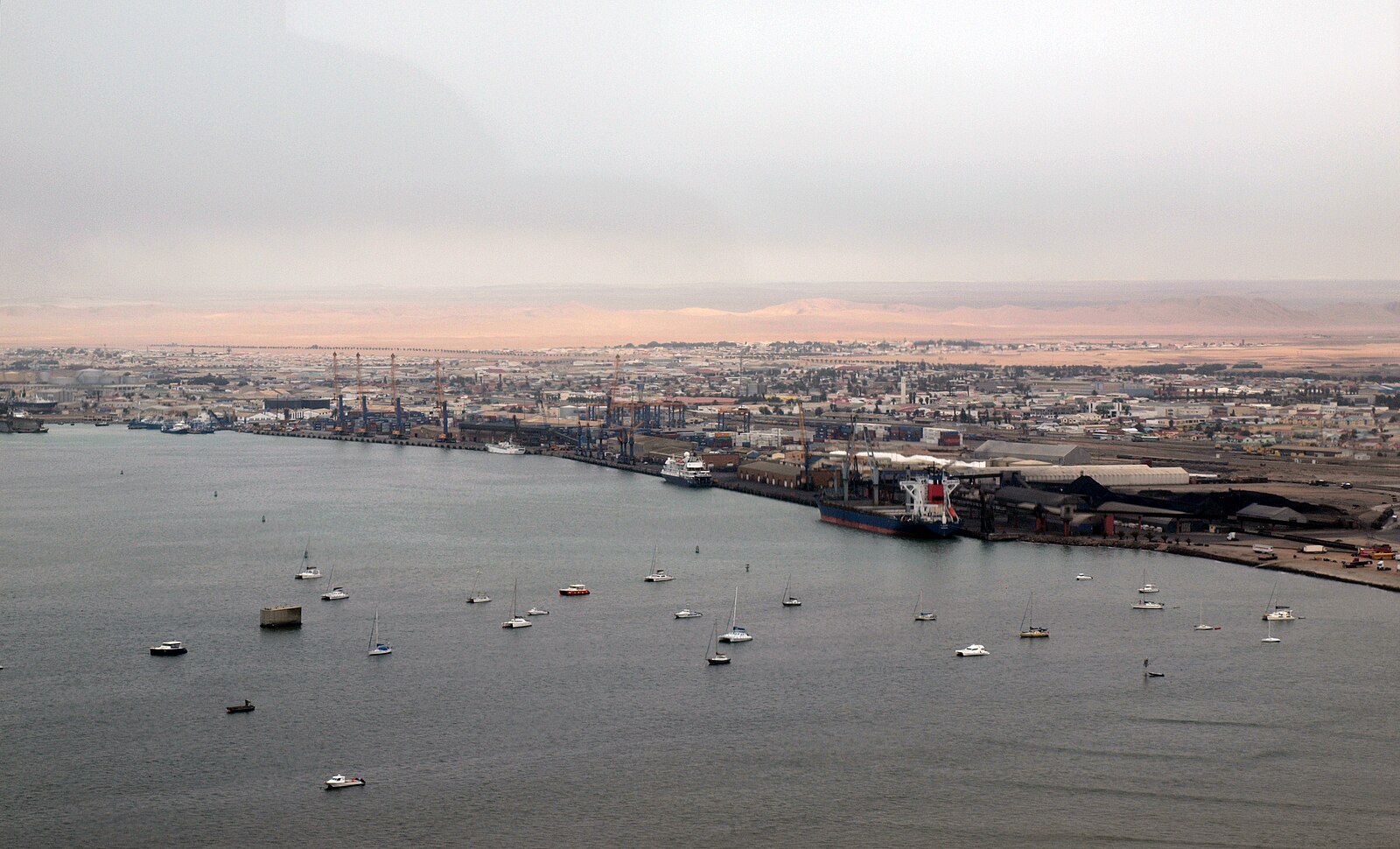
Namport, which runs Walvis Bay and Lüderitz, handled 8.4 million tonnes of cargo in 2024/25, up from 8 million, The Villager reported. Container traffic at the two ports reached 253,996 TEUs, the standard 20-foot container unit.
Fuel shows how the corridors work. In March 2026 petroleum oils re-exported from Namibia went mainly to Botswana and Zambia, the NSA said.
Nickel ores and concentrates arrived from Zambia and were shipped on to Canada and China.
Regional Bodies: SACU, SADC and the Rand Peg
SACU, the Southern African Customs Union, groups South Africa, Botswana, Lesotho, Eswatini and Namibia. It calls itself the oldest functioning customs union, formally established in July 1910.
Its secretariat is in Windhoek. In March 2026 SACU took 30.0 percent of Namibia’s exports and supplied 35.6 percent of its imports, per the NSA.
SACU also shares out customs revenue among its members, an important income line for Namibia’s budget. Monetary policy is tied south too.
The Bank of Namibia sets interest rates mindful of the need to safeguard the peg between the Namibia dollar and the rand. Namibian prices therefore move with South African ones; inflation reached 5.4 percent in September 2026.
SADC, the Southern African Development Community, is the wider political club. At its 46th summit in Durban on 17 August 2026, South Africa’s Ramaphosa became chair and Zambia was named incoming chair.
Eswatini’s King Mswati III chairs its security organ; Nandi-Ndaitwah attended.
Where Namibia Leads and Where It Follows
Namibia follows South Africa on money and much of its trade. It leads on two fronts: the corridors to the Atlantic, and the ambition to export clean fuels.
The flagship is Hyphen Hydrogen Energy, planned in the Tsau //Khaeb National Park near Lüderitz with a capital cost of US$10 billion. The government confirmed a 24 percent stake in June 2023.
A final investment decision for phase one is expected by the end of 2027. Phase one aims for 175,000 tonnes of green hydrogen a year, turned into one million tonnes of ammonia for Europe.
By September 2026 the African Development Bank had selected Hyphen for a prospective US$5.93 million grant. Namibia also guards its independence.
In April 2026 the president said of the US: “We work with them, but it does not mean we agree with what they are doing.” That line sums up how Windhoek handles big partners, from the US to China.
What It Means for US Readers
For investors, Namibia is a gateway as much as a market. Walvis Bay and its corridors are a short route from the Atlantic to Zambian and Congolese copper.
Watch the Trans-Kalahari Railway and the hydrogen decision in 2027. For exporters, AGOA, the US trade preference law, lapsed in September 2025 and was renewed only to 31 December 2026.
During the gap some Namibian exports faced US tariffs of up to 15 percent, The Brief reported in February 2026. The Ministry of International Relations and Trade’s executive director, Ndiitah Ngipondoka-Robiati, warned that a one-year renewal does not provide sufficient long-term certainty.
Anyone sourcing Namibian beef, fish or diamonds should plan for 2027 without assuming AGOA continues. For travellers, the US State Department has rated Namibia Level 2, “exercise increased caution”, in its advisory of 15 May 2026.
It cites crime and limited medical care outside cities. Overland trips into Botswana, Zambia or South Africa are routine, but check each border post’s hours before setting off.
For expats, life in Windhoek is priced in a currency that moves with the rand. A stronger dollar means cheaper rent and groceries for anyone paid in US dollars.
Connected Coverage
Namibia Explained: The Country, the Oil Hopes, the Economy and What to Watch
Angola and Its Neighbours in Southern Africa
Zambia and Its Neighbours in Southern Africa
Botswana’s US$16 Billion Railway Has a Study, a Route and No Start Date
Namibia Chases US$250 Million to Fund Its Green Industrialisation Plan
Namibia Travel Guide 2026 Covers Visas, Safety, Seasons
What Is Not Known
Nobody knows whether the 2027 meeting will settle the Orange River line, or whether South Africa will shift its position. It is also unclear when Namibia will issue its no-objection for Lesotho Highlands Phase II.
Financing for the Trans-Kalahari Railway has not been announced, and no construction start date is fixed. Hyphen’s investment decision depends on buyers and lenders that have not been named publicly.
The real number of Angolans displaced into Namibia by drought is unknown; Amnesty says no registration system captures it. Whether AGOA will be extended beyond 31 December 2026 is also undecided.
Frequently Asked Questions
Which countries border Namibia?
Namibia borders Angola to the north, Zambia and Botswana to the east and South Africa to the south. Its western side is Atlantic coast.
What is the Orange River border dispute?
South Africa says the border follows the northern bank of the Orange River under an 1890 treaty. Namibia says it runs through the middle. Unresolved as of July 2026, it now sits with the two presidents, who plan a meeting in the first quarter of 2027.
When did Walvis Bay become part of Namibia?
South Africa handed Walvis Bay to Namibia on 28 February 1994, almost four years after independence in 1990.
Which regional bodies does Namibia belong to?
Namibia belongs to SADC and to SACU, the customs union founded in 1910, whose secretariat is in Windhoek. It also sits on OKACOM, the Okavango river commission, with Angola and Botswana.
Is the Namibia dollar tied to the rand?
Yes. The Namibia dollar is pegged one to one to the South African rand. The Bank of Namibia quoted N$16.53 per US dollar on 13 October 2026.
What is the Trans-Kalahari Railway?
It is a planned 1,500-kilometre heavy-haul line from Botswana to Walvis Bay, estimated at US$16 billion. Construction is targeted for 2027, but financing has not been announced.
Sources
- Namibia Statistics Agency, International Merchandise Trade Statistics Bulletin, March 2026 (www.tralac.org)
- Bank of Namibia, daily exchange rates (www.bon.com.na)
- The Presidency of South Africa, joint communiqué of the fourth Namibia-South Africa Bi-National Commission, 17 July 2026 (www.presidency.gov.za)
- DIRCO, communiqué of the 46th SADC Summit, Durban (dirco.gov.za)
- SACU, history of the customs union (www.sacu.int)
- International Court of Justice, Kasikili/Sedudu Island (Botswana/Namibia) (www.icj-cij.org)
- OKACOM, Permanent Okavango River Basin Water Commission (www.okacom.org)
- Walvis Bay Corridor Group, corridors (www.wbcg.com.na)
- US State Department, Namibia travel advisory (travel.state.gov)
- Amnesty International, drought-displaced Angolans in Namibia, 2 September 2026 (www.amnestyusa.org)
- The Namibian, Orange River border dispute unresolved (www.namibian.com.na)
- The Namibian, Namibia funds power link with Angola (www.namibian.com.na)
- The Namibian, Walvis Bay 30 years after reintegration (www.namibian.com.na)
- The Namibian, Zambezi borders reach record values (www.namibian.com.na)
- The Namibian, criticism of ties with the US (www.namibian.com.na)
- The Brief, Namibia trade with Africa (NSA, May 2026) (thebrief.com.na)
- The Brief, Namibia flags water risks on Lesotho project (thebrief.com.na)
- The Brief, Namibia regains AGOA access (thebrief.com.na)
- The Villager, cross-border cargo through Walvis Bay (thevillager.com.na)
- Mmegi, Trans-Kalahari Railway feasibility study (www.mmegi.bw)
- ch-aviation, Namibia and Botswana moot joint airline (www.ch-aviation.com)
- Engineering News, Hyphen green hydrogen project update, 25 September 2026 (www.engineeringnews.co.za). All accessed 13 October 2026
This article was produced by The Rio Times’ automated AI newsroom. Editorial responsibility: Matthias Camenzind, Publisher and Editor-in-Chief. The Rio Times also runs Ask Rio Times, which answers from 100,000+ of our own articles, the daily Latin America Power Map, and prediction-market odds on elections and markets.. How we use AI · Report an error
Expat Guide to Namibia
What The Rio Times publishes for foreigners who live in or move to Namibia.
Start here
- Moving to Namibia: Living in Windhoek for Americans
- Namibia Visa and Residency Rules for Foreigners 2026
- Namibia Travel Guide 2026 Covers Visas, Safety, Seasons
City guides
Understand Namibia