Namibia Explained 2026: The Country, the Oil Hopes, the Economy and What to Watch
GUIDES · NAMIBIA
Key Facts
- —Capital Windhoek, in the central highlands. Namibia became independent on 21 March 1990, after 75 years of South African rule.
- —Population The 2023 census counted 3,022,401 people. The World Bank estimates about 3.09 million for 2025, in a country more than twice the size of Germany.
- —Currency The Namibia dollar, written N$, pegged one-to-one to the South African rand. It traded at about N$16.28 to the US dollar on 25 September 2026, on market data.
- —Language English is the only official language. Oshiwambo languages are spoken most widely at home, and Afrikaans and German are still common in business and towns.
- —Economy About US$15.1 billion of output in 2025, or roughly US$4,900 per person. Diamonds, uranium, gold, fish, beef and the customs union pay the bills; oil has been found but not yet produced.
- —Government A presidential republic. Netumbo Nandi-Ndaitwah of SWAPO, the former liberation movement, has been president since 21 March 2025.
Namibia explained for newcomers: a thinly populated desert state with sound institutions and big mineral exports. Its oil discoveries are not yet an oil industry.
Namibia explained in one line: a stable, mineral-rich democracy that may become an oil producer around 2030. Everything depends on decisions that have not been taken yet, and the country’s leaders know it.
What kind of country is this?
Namibia sits on the Atlantic coast of south-western Africa. It borders Angola, Zambia, Botswana and South Africa. It covers 824,290 square kilometres, much of it the Namib and Kalahari deserts.
Few people share that space. About 3.1 million live there, making Namibia one of the least densely populated countries on earth. Windhoek is the only large city. Most other Namibians live in the far north, near the Angolan border.
History explains a lot. Germany ruled the territory from 1884 until 1915. Its troops killed tens of thousands of Herero and Nama people between 1904 and 1908. Germany recognised those killings as genocide in 2021.
South Africa then ran the territory and imposed apartheid. SWAPO, the South West Africa People’s Organisation, fought a long liberation war. Independence came on 21 March 1990 under a United Nations plan.
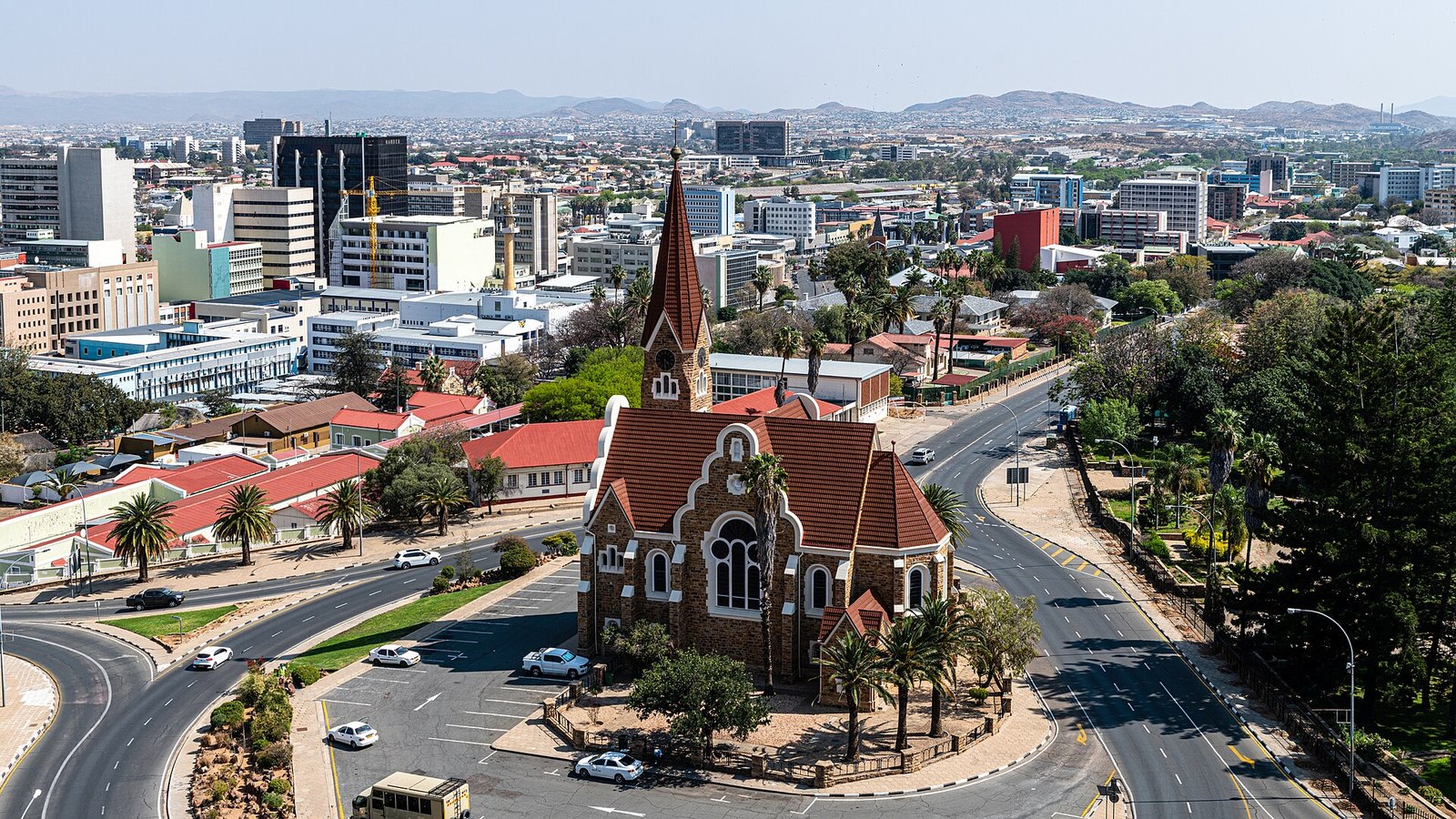
That past still shapes daily life. Land ownership is still a political issue, and German street names and churches sit beside liberation monuments. Any honest account of Namibia explained to outsiders has to start there.
Who runs Namibia and how
The president is directly elected, needs more than half the votes and may serve two five-year terms. The president is head of state and government. A prime minister leads government business in parliament.
SWAPO has governed since independence. In the election of 27 November 2024, extended to 30 November in some places, Netumbo Nandi-Ndaitwah won the presidency with 58.07 percent. She took office on 21 March 2025 as Namibia’s first woman president.
Her party did less well in parliament. SWAPO won 51 of the 96 elected National Assembly seats with about 53 percent, its weakest result since independence. The Independent Patriots for Change, the main opposition, won 20.
The president may add up to eight appointed members to the National Assembly, who cannot vote. A second chamber, the National Council, has 42 members, three from each of the 14 regions. It reviews bills passed by the Assembly and can send them back.
As of September 2026, Lucia Witbooi is vice-president and Elijah Ngurare prime minister. Ericah Shafudah is finance minister. The next presidential and parliamentary elections are due in 2029.
How the economy works
Mining is the backbone. Namibia produced 7,333 tonnes of uranium in 2024, about a tenth of world mine output, on World Nuclear Association figures. Chinese state companies control the two biggest mines, Husab and Rössing.
Diamonds come mostly from the seabed. Ships run by Debmarine Namibia, a 50:50 venture between the state and De Beers, recover them off the south coast. De Beers produced 1.09 million carats in Namibia in the first half of 2026, down 7 percent.
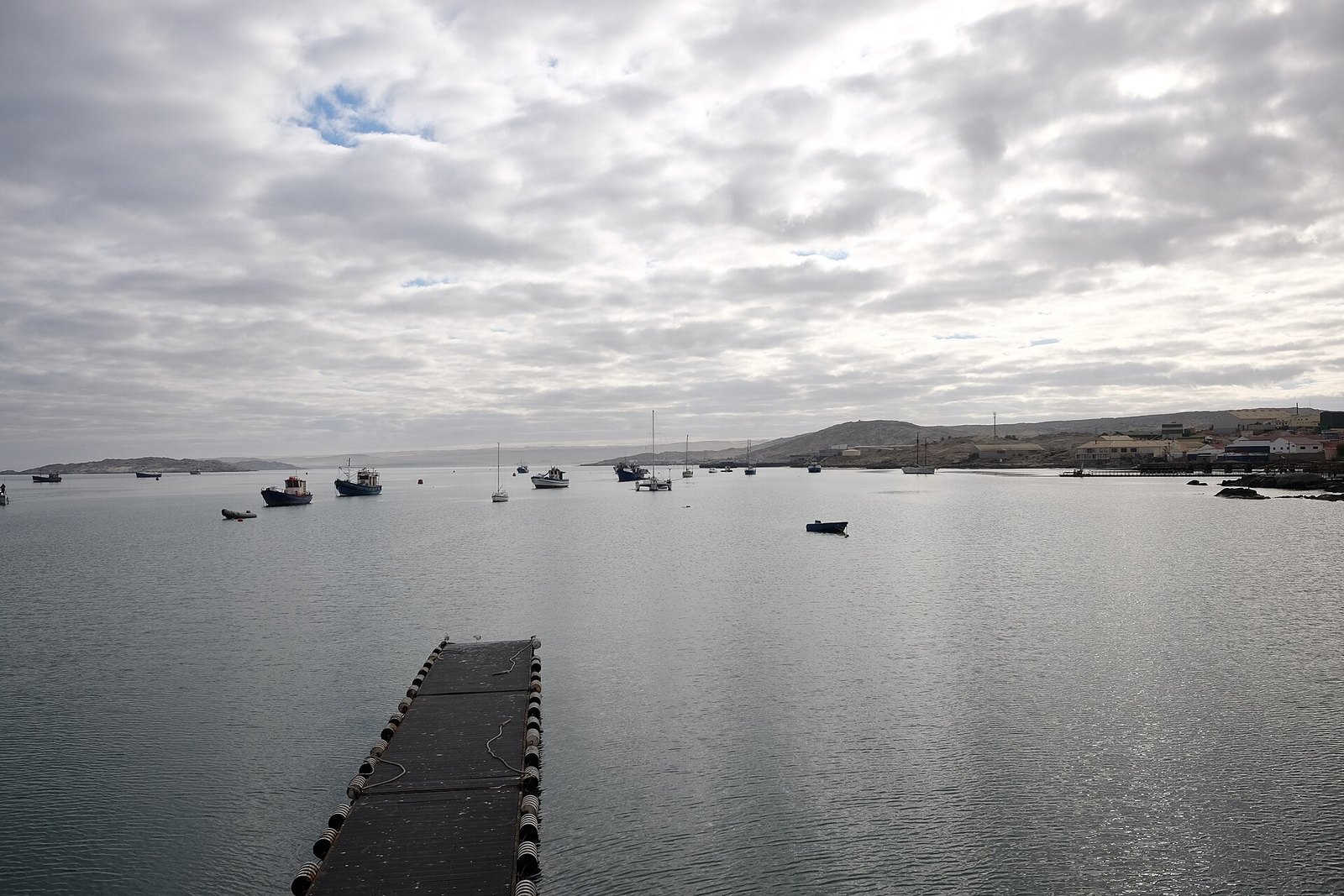
Fishing out of Walvis Bay and Lüderitz, beef exports and tourism make up much of the rest. Tourists come for the dunes of Sossusvlei and the wildlife of Etosha National Park.
The Southern African Customs Union, a customs pact with South Africa, Botswana, Lesotho and Eswatini, is a major source of government income. Namibia also belongs to the Common Monetary Area with South Africa. That is why the rand circulates freely beside the Namibia dollar.
The peg has a cost. The Bank of Namibia must keep enough reserves and keep its interest rates close to South Africa’s. In practice, Namibia imports much of its monetary policy from Pretoria.
What is happening right now
As of September 2026, the oil story dominates. Shell and TotalEnergies found oil in the offshore Orange Basin in 2022. Galp, a Portuguese company, added the Mopane discovery in 2024. No field has yet reached a final investment decision, the point at which companies commit the money to build.
Venus, operated by TotalEnergies, is the most advanced project. The company says it is technically ready, with output planned at about 150,000 barrels a day and first oil around 2030. It is waiting to agree fiscal terms with the government.
TotalEnergies also became operator of Mopane on 3 September 2026, with 40 percent. It plans three appraisal wells and aims to decide on Mopane in 2028. Shell, by contrast, wrote down about US$400 million on its Namibian block in January 2025.
The wider economy is slow. The central bank expects growth of 2.1 percent in 2026, after 1.7 percent in 2025, and cut its forecast in August. The finance ministry had forecast 3.1 percent in its February budget.
Inflation is rising but moderate. It reached 5.0 percent in August 2026, the highest since February 2024, driven mainly by fuel and transport costs. The Bank of Namibia raised its repo rate to 6.75 percent in June and held it on 12 August.
Public debt is high for the region. The February 2026 budget put debt at about 65 percent of output and planned a deficit of 5.5 percent in 2026/27. Revenue was forecast at N$89.8 billion (about US$5.5 billion).
There was good news in June. On 19 June 2026 the Financial Action Task Force, the global anti-money-laundering body, removed Namibia from its “grey list”. That list names countries under increased monitoring. Being on that list makes cross-border payments slower and costlier.
Then came a setback. Foot-and-mouth disease was confirmed on a farm in the Karasburg district in the south on 23 September 2026. That lies inside the zone whose disease-free status allows beef exports to Europe. Movement of cattle, sheep, goats, pigs and other cloven-hoofed animals was halted nationwide.
What to watch
The Venus decision comes first. TotalEnergies has said the decision should come before 2027, because contractor bids will not stay open indefinitely. Any fiscal agreement with the government would be the signal to look for.
The Bank of Namibia’s committee next meets on 26 and 27 October 2026. It weighs inflation against the peg to the rand. Its August statement weighed the need to narrow the rate gap with South Africa to stem capital outflows.
Watch the beef zone. Officials are considering splitting the disease-free area so unaffected farms can export again. How fast European buyers accept that will decide what the outbreak costs farmers.
Watch who buys De Beers, too. Anglo American is selling its 85 percent stake, and reports in 2026 said Namibia and Angola could join a bidding consortium. Namibia’s diamond income depends on the outcome.
What this means for foreigners
Entry rules changed on 1 April 2025. United States, British and most European Union passport holders now need a visa. They can apply online for an e-visa or buy a visa on arrival at main entry points, for N$1,600 (about US$98).
A tourist visa allows stays of up to 90 days and does not allow work. Passports need six months’ validity and, for Americans, three blank pages. Carry proof of accommodation, funds and onward travel.
Income tax is progressive. The revenue agency’s schedule starts at zero on the first N$100,000 (about US$6,100) a year. The top rate is 37 percent above N$1.55 million (about US$95,200).
The United States rates Namibia at Level 2, “exercise increased caution”, mainly because of crime. Pickpocketing and theft from cars are the common risks. Distances are huge and medical care outside the main towns is limited.
For investors, Namibia explained in practical terms means a stable state and a currency tied to the rand. It also means a government that insists on its own terms for oil. Expect local-content rules and state participation to shape any deal.
Connected Coverage
Botswana Explained 2026: Diamonds, Stability, the Economy and What to Watch
TotalEnergies Targets Namibia Oil FID as Venus and Mopane Fields Advance
TotalEnergies Says Its Namibian Oil Decision Cannot Wait
Namibia Approved an Oil Local-Content Policy That Binds Nobody Yet
Foot-and-Mouth Breaches Namibia’s Beef Export Zone, Halting Slaughter
Namibia’s Reserves Rose While Its Banks Got Tighter
Angola Explained: Oil, Politics, the Economy and What to Watch
South Africa Explained: The Country, the Coalition Government and What to Watch
Sources: Population from the Namibia Statistics Agency and the World Bank, monetary policy and growth forecasts from the Bank of Namibia, budget figures from the Ministry of Finance, election results from the Electoral Commission of Namibia, oil interests from TotalEnergies, and entry rules from the Ministry of Home Affairs and the US State Department.
- Bank of Namibia — Monetary Policy Statement, 12 August 2026
- Namibia Statistics Agency — CPI bulletin, August 2026
- Namibia Statistics Agency — 2023 census main report
- Electoral Commission of Namibia — 2024 presidential and National Assembly results
- TotalEnergies — entry as operator into PEL 83 (Mopane), 3 September 2026
- De Beers Group — production report, second quarter 2026
- World Nuclear Association — uranium in Namibia
- Namibia Revenue Agency — income tax
- Embassy of Namibia, Washington — new visa requirements from 1 April 2025
- US Department of State — Namibia country information
What Is Not Known
When, or whether, Venus is approved. TotalEnergies says it is ready, but the fiscal talks have run past earlier targets and neither side has published the sticking points. First oil around 2030 assumes a decision soon.
How much oil money Namibia would actually keep. That depends on the tax and royalty terms still under negotiation, on oil prices years from now and on how any revenue is saved.
How far the foot-and-mouth outbreak spreads. Only one farm had been confirmed when the halt was ordered. Tests and tracing will show whether the disease-free zone can be split and exports resumed quickly.
Whether growth recovers without oil. The central bank cut its forecast in August because mining, manufacturing and electricity were weak. Diamond prices remain low, and nobody can say when demand for natural stones will return.
Frequently Asked Questions
Who is the president of Namibia in 2026?
Netumbo Nandi-Ndaitwah of SWAPO, the party that has governed since independence in 1990. She won the November 2024 election with 58.07 percent and took office on 21 March 2025 as the country’s first woman president.
Does Namibia produce oil?
Not yet. Large discoveries were made offshore from 2022, but no field has reached a final investment decision. TotalEnergies says its Venus project is technically ready and could produce about 150,000 barrels a day, with first oil around 2030 if it is approved.
Do Americans and Europeans need a visa for Namibia?
Yes, since 1 April 2025. United States, British and most EU travellers need an e-visa or a visa on arrival at main entry points, costing N$1,600 (about US$98). It allows stays of up to 90 days and does not permit work.
What currency is used in Namibia?
The Namibia dollar, pegged one-to-one to the South African rand, which is also accepted everywhere. It traded at about N$16.28 to the US dollar on 25 September 2026.
Is Namibia safe for visitors?
Namibia is politically stable. The US State Department rates it Level 2, “exercise increased caution”, mainly for crimes of opportunity such as pickpocketing and theft from cars. The bigger practical risks are long distances, remote roads and limited medical care outside the main towns.
This article was produced by The Rio Times’ automated newsroom system. How we use AI · Report an error
Read More from The Rio Times