Mauritius Culture, the Key Figures to Know in 2026

MAURITIUS · CULTURE
Key Facts
- What is happening Mauritius blends Creole, Indian, African, Chinese and European roots in music, books, festivals and sport.
- Why it matters UNESCO, the United Nations cultural body, lists four living traditions and two World Heritage sites for Mauritius.
- The numbers UNESCO listed sega in 2014; about 500,000 indentured workers reached Aapravasi Ghat between 1834 and 1920.
- Who is who Kaya created seggae, Le Clézio won the 2008 Nobel Prize, and Bruno Julie took Olympic boxing bronze.
- What to watch Festival Kreol each December, Divali on 8 November 2026, and whether Chagos drumming gains young performers.
- What it means for you US readers can stream sega, read Le Clézio and Devi in English, and visit two World Heritage sites.
Mauritius is a small Indian Ocean island with a large cultural footprint. This guide names the musicians, writers, artists, athletes and festivals to know in November 2026.
Mauritius culture in 2026 is a mix of Creole sega music, Indian temple festivals, French-language literature and Olympic sport. This guide names the key figures a first-time reader should know, with dated facts.
Mauritius is an island republic in the Indian Ocean, with a culture shaped by slavery, indentured labour and sea trade. The names below show how that history became music, books, art and festivals.
More regional coverage sits on the Eastern Africa page. Daily Mauritius stories are collected on the Mauritius page.
Mauritius Culture in One Page
The list below gives each name and what to know in one line. Details and dates follow in the sections after it.
- Sega: the Creole music and dance of Mauritius, on UNESCO’s living-heritage list since 2014.
- Kaya (1960 to 1999): singer who created seggae, a blend of sega and reggae, in the late 1980s.
- Le Clézio (born 1940): novelist with Mauritian family roots and winner of the 2008 Nobel Prize in Literature.
- Ananda Devi (born 1957): Mauritian novelist who has published twelve novels in French.
- Bruno Julie (born 1978): boxer who won Mauritius’s first Olympic medal, bronze, in Beijing in 2008.
- Aapravasi Ghat and Le Morne: the two World Heritage sites that tell the story of indenture and escape from slavery.
- Festival Kreol and Maha Shivaratree: the Creole and Hindu celebrations that fill the calendar.
Sega and Seggae, the Sound of the Island
Traditional Mauritian sega entered UNESCO’s Representative List of the Intangible Cultural Heritage of Humanity in 2014. UNESCO calls it emblematic of the Creole community.
Sega songs are in a minor key and speed up gradually, and each soloist improvises lyrics in Creole. The words can be about love or everyday worries, and the dance often acts them out.
A frame drum, a box rattle and a triangle keep the rhythm. Women wear long skirts with petticoats, and men wear rolled-up trousers, bright shirts and straw hats.
UNESCO says sega crosses cultural and class lines and brings diverse groups together around a shared heritage. Singers, dancers and musicians pass the skills on, and some also make the instruments.
Two related drum traditions carry the sega name. Sega tambour of Rodrigues Island joined the Representative List in 2017, while Sega tambour Chagos entered the urgent safeguarding list in 2019.
Urgent safeguarding is the UNESCO label for traditions at risk of disappearing. Whether young performers take up Chagos drumming is therefore one of the island’s open cultural questions.
Bhojpuri folk songs, known as Geet-Gawai, joined the Representative List in 2016. Bhojpuri is a language of northern India, and its songs reached Mauritius with the indentured labourers of the nineteenth century.
Joseph Réginald Topize, known as Kaya, was born on 10 August 1960 in Roche-Bois, a district of Port Louis. He created seggae, a fusion of sega and reggae, in the late 1980s.
Kaya was arrested in February 1999 for smoking cannabis and died in police custody in Port Louis on 21 February, aged 38. His death set off several days of riots, Amnesty International recorded in its 2000 report.
Amnesty International said police claimed his injuries were self-inflicted, while an autopsy obtained by his family showed signs of beating. It added that an official inquiry had not finished by the end of 1999.
The Writers, Le Clézio and Ananda Devi
Le Clézio won the 2008 Nobel Prize in Literature as an author of new departures, poetic adventure and sensual ecstasy. He was born on 13 April 1940 in Nice, France, and writes in French.
His family descends from Bretons who emigrated to Mauritius in the eighteenth century. The Nobel Foundation says he lived in France and Mauritius at the time of the award.
His first novel, Le Procès-verbal, appeared in September 1963 and won the Prix Renaudot. His novel Désert won the French Academy’s Grand Prix Paul-Morand in 1980.
Ananda Devi was born in Mauritius in 1957 and has published twelve novels, plus short stories and poetry. Her US publisher, Feminist Press, lists her prizes in its author biography.
She won the Prix des Cinq Continents de la Francophonie in 2006 and the Prix Louis-Guilloux in 2010. In 2010 the French government also made her a Chevalier des Arts et des Lettres.
In 2014 the French Academy gave her its prize for the influence of the French language and literature. In 2018 she won the Prix Étonnants Voyageurs for her novel Manger l’autre.
Mauritius has other well-known writers in French, English and Hindi. Their careers could not be confirmed from primary sources for this guide, so they are not described here.
Heritage Sites That Shape the Culture
Aapravasi Ghat is a 1,640 square metre former immigration depot in Port Louis, and UNESCO lists it as a World Heritage site. Between 1834 and 1920 about half a million indentured workers from India arrived there.
Most of them worked on Mauritian sugar plantations, and others were sent on to other colonies. UNESCO says the wider indenture system moved more than two million labourers worldwide.

Le Morne Cultural Landscape, listed in 2008, is a rugged mountain that reaches into the Indian Ocean in southwestern Mauritius. In the eighteenth and early nineteenth centuries, runaway slaves known as maroons sheltered in its caves and on its summit.
UNESCO says the mountain became a symbol of the struggle for freedom. Together the two sites explain why Creole, Indian and African memory sits at the centre of Mauritian cultural life.
Two public holidays mark that history, Abolition of Slavery on 1 February and the Arrival of Indentured Labourers on 2 November. The 2026 calendar places them on a Sunday and a Monday.
Art and the Venice Biennale Pavilion
Mauritius showed a national pavilion at the 56th Venice Biennale, the large international art exhibition, in 2015. The show was titled From One Citizen You Gather an Idea and was held at Palazzo Flangini.
The curators were Alfredo Cramerotti and Olga Jürgenson, and the commissioner was pARTage. The Biennale lists the artists Djuneid Dulloo, Sultana Haukim, Nirmal Hurry, Alix Le Juge, Krishna Luchoomun and Kavinash Thomoo among its participants.
International names such as Laure Prouvost and Helge Leiberg also appear on the list. The Biennale archive does not say how many of the participants are Mauritian citizens.
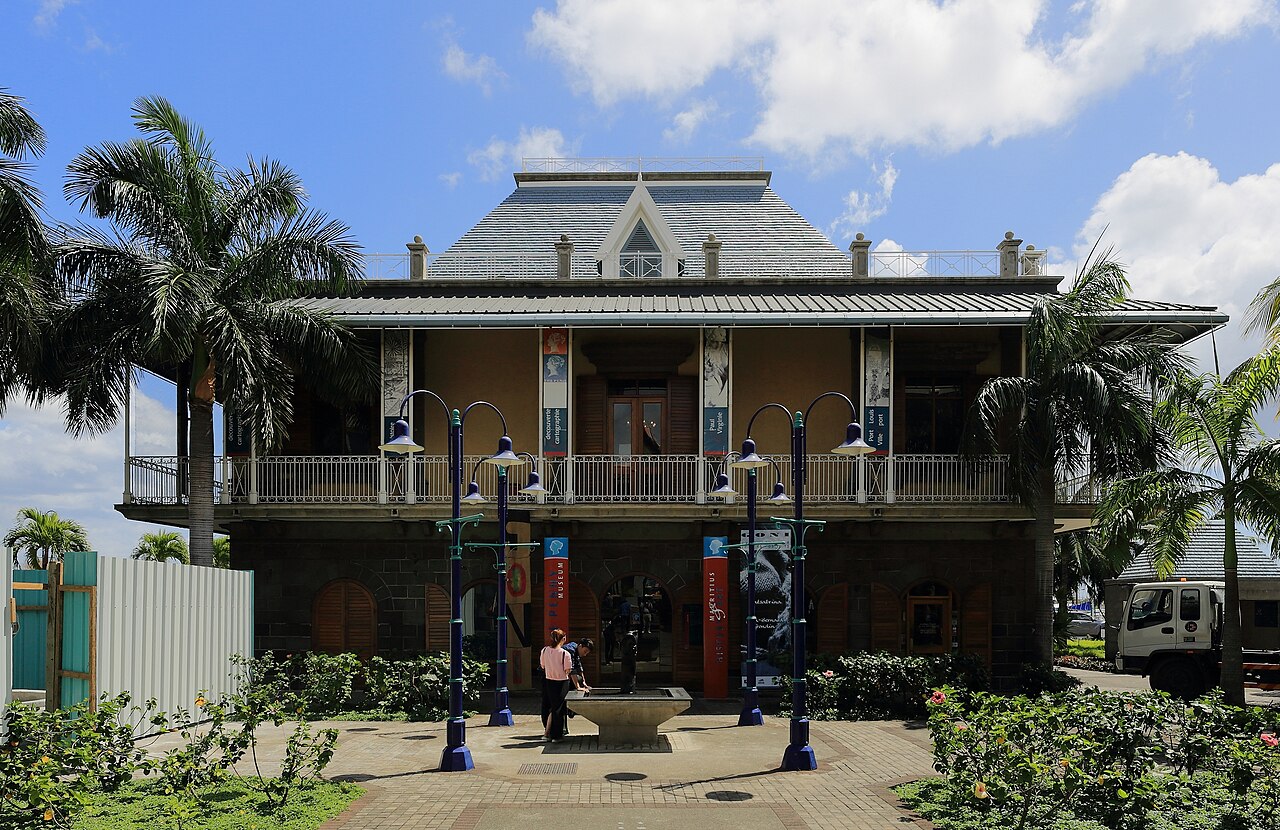
The Blue Penny Museum in Port Louis is shown above as an example of the island’s museum scene. Its collections and current exhibitions were not checked for this guide.
Sport, the Boxing Bronze of Bruno Julie
Bruno Julie, born in 1978 and from Beau Bassin-Rose Hill, won bantamweight bronze at the Beijing Olympics in 2008. It was the first Olympic medal in the history of Mauritius.
In the quarter-finals he beat Venezuela‘s Hector Manzilla, and in the semi-finals he lost 7-5 to Cuba’s Yankiel León. The Olympic movement’s athlete page calls him the most successful boxer Mauritius has produced.
He won the African title in 2007 and Commonwealth Games silver in 2006 and bronze in 2010. At the All-Africa Games he took bronze in 2007 and gold in 2011.
He did not qualify for London 2012 and attended as a mentor to the national team. His nicknames are the Mauritian Magician and the Creole Crusher.
Festivals and the Cultural Calendar
Festival Kreol, the island’s festival of Creole culture, ran from 12 to 22 December 2024, organised by the Ministry of Tourism. The opening ceremony took place at Le Morne on 12 December.
The 2024 theme was Créolité, boté nou mauricianisme, which the ministry translates as creolity, the beauty of being Mauritian. Events also took place in Mahébourg, Curepipe, Rose-Hill and Grand Baie.
International Creole Day falls on 28 October each year. It celebrates Creole languages and cultures.
Hindu and Chinese festivals are also public holidays. In 2026 Thaipoosam Cavadee fell on Sunday 1 February and Maha Shivaratree on Sunday 15 February.
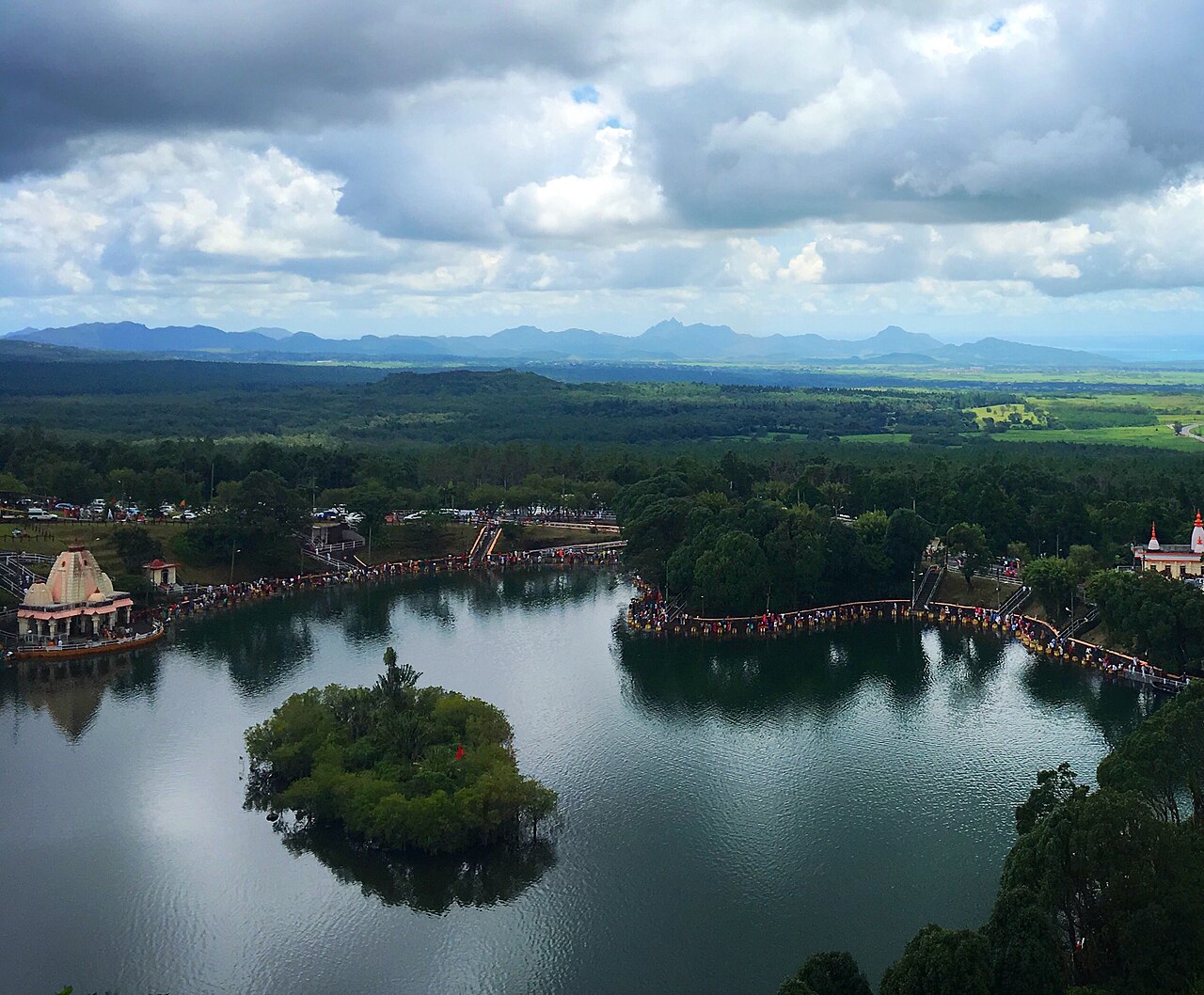
Maha Shivaratree is a Hindu night festival for the god Shiva. Pilgrims gather at the sacred lake of Grand Bassin, also called Ganga Talao.
Divali, the Hindu festival of lights, falls on Sunday 8 November 2026. The Chinese Spring Festival fell on Tuesday 17 February 2026 in the same public calendar.
What These Figures Say About Mauritius
Sega, Geet-Gawai and the two World Heritage sites all trace back to people who arrived by force or by contract. Their songs, languages and memories now belong to a shared national culture.
In April 2025 the arts and culture minister received Japan’s ambassador, and the embassy says they discussed music, arts and sports education. Cultural diplomacy is therefore an active part of the island’s foreign relations.
The Rio Times covers the island in its Mauritius explained guide and its Mauritius politics guide. The economy guide and the Indian Ocean neighbours guide give the wider context.
What It Means for US Readers
Le Clézio is widely available in English translation, and Feminist Press, a US publisher, carries Devi. A reader can start with them before turning to music or travel.
Sega and seggae make a good first playlist, and festival dates help travellers plan. Check current State Department travel advice and entry rules for Mauritius before booking.
Heritage travellers can visit Aapravasi Ghat in Port Louis and the Le Morne area, and boxing fans can trace Julie’s Beijing run. US museums, publishers and festival producers can approach the Ministry of Arts and Culture for partnerships.
What Is Not Known
Mauritian film, television and radio could not be confirmed from primary sources, so no director, actor or programme is named. Media figures are left out on purpose, and visual artists are covered only through the 2015 Venice list.
The writer Nathacha Appanah and other authors could not be confirmed from primary sources, so their prizes are not given. The current minister of arts and culture and the dates of Festival Kreol 2026 were also not verified for November 2026.
Public holiday dates come from a published 2026 calendar and should be checked with the Prime Minister’s Office. Some Muslim and Hindu dates depend on the moon and are confirmed shortly before the day.
No findings of the official inquiry into Kaya’s death were found, and Amnesty International said it was unfinished in 1999. Attendance, ticket prices and festival funding are unknown.
Frequently Asked Questions
What is sega music?
Sega is the traditional music and dance of Mauritius, sung in Creole over a frame drum, a box rattle and a triangle. UNESCO listed it as living heritage in 2014.
What is seggae?
Seggae is a fusion of sega and reggae created by the singer Kaya in the late 1980s. Kaya died in police custody in 1999, aged 38.
Which Nobel laureate has Mauritian roots?
Le Clézio, born in Nice in 1940, won the 2008 Nobel Prize in Literature. His family descends from Bretons who emigrated to Mauritius in the eighteenth century.
Who won the first Olympic medal for Mauritius?
Boxer Bruno Julie won bantamweight bronze at the Beijing Olympics in 2008. It was the first Olympic medal in the history of Mauritius.
Which Mauritian sites are UNESCO World Heritage?
Aapravasi Ghat in Port Louis and the Le Morne Cultural Landscape are the two World Heritage sites. They record indentured labour from India and the flight of escaped slaves.
When are the main Mauritian festivals?
Festival Kreol ran from 12 to 22 December in 2024, and Divali falls on 8 November 2026. Maha Shivaratree fell on 15 February in 2026.
Sources: UNESCO, Mauritius living heritage elements ; UNESCO, Traditional Mauritian Sega ; UNESCO World Heritage, Aapravasi Ghat ; UNESCO World Heritage, Le Morne Cultural Landscape ; Nobel Foundation, Le Clézio facts ; Nobel Foundation, Le Clézio biography ; Olympic movement, Bruno Julie profile ; La Biennale di Venezia, Mauritius Pavilion 2015 ; Feminist Press, Ananda Devi biography ; Amnesty International, Annual Report 2000, Mauritius ; Mauritius Tourism Promotion Authority, International Kreol Festival 2024 ; Embassy of Japan in Mauritius, courtesy call on the minister (8 April 2025) (all accessed on 4 November 2026).
This article was produced by The Rio Times’ automated newsroom system. How we use AI · Report an error · Editorial responsibility: Matthias Camenzind, Editor-in-Chief
Expat Guide to Mauritius
What The Rio Times publishes for foreigners who live in or move to Mauritius.
Start here
- Retire in Mauritius: Ten-Year Permit on US$24,000 a Year
- Mauritius Financial Hub Rebounds as India Tax Treaty Rewrite Ends Share Sale Exemptions
Coming up in Mauritius
- What to Do in Port Louis in November 2026: Diwali, Concerts 14 Nov
- Grand Diwali Night in Phoenix, Mauritius on 14 November 14 Nov
- Laflam Zilwa Sega Night in Belle Vue on 20 November 20 Nov
- Afro Bros Takeover in Mauritius, 21 November 2026 21 Nov
Understand Mauritius