Retire in Mauritius: Ten-Year Permit on US$24,000 a Year
MAURITIUS · RETIREMENT
Key Facts
- —Age threshold 50 or above for the Residence Permit for Retired Non-Citizens.
- —Financial test US$24,000 in a certified bank statement, or guaranteed income of US$2,000 a month.
- —Permit term Ten years, renewable for another ten. A 20-year permanent permit becomes available after five years.
- —The property price that unlocks residency US$375,000. Above it, a qualifying purchase carries residency for the buyer and dependants.
- —Income tax Zero on the first MUR 500,000, about US$10,650, then 10%, then 20% above MUR 1,000,000, about US$21,300.
- —No tax treaty for the US or Canada There is no Mauritius–United States tax treaty, and no Canadian one either.
Mauritius has built the most complete retirement offer in the Indian Ocean. It is clearly designed with one group of retirees in mind. Working out whether you are in that group takes about five minutes and saves a great deal of trouble.
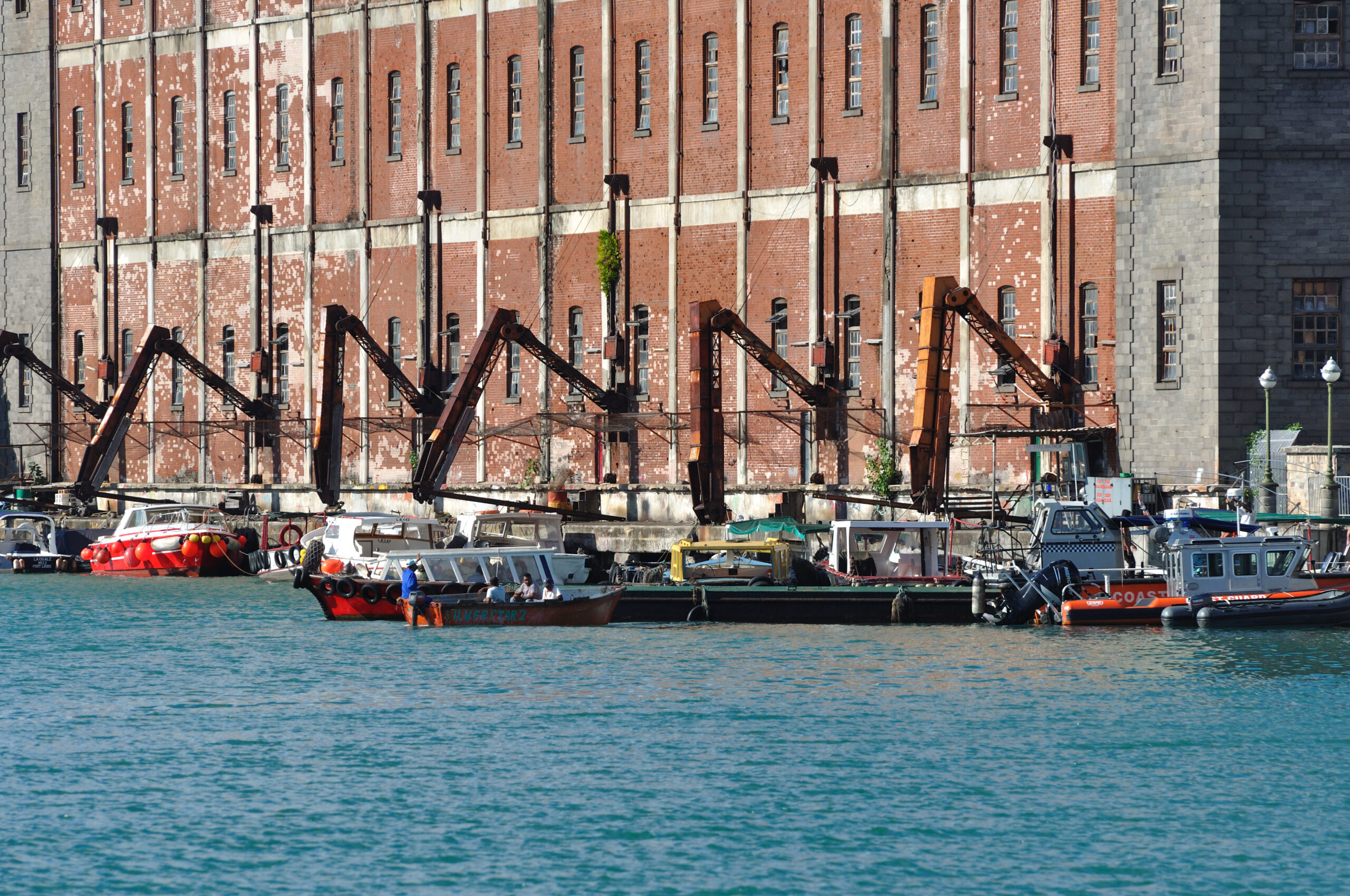
Mauritius offers a ten-year retirement permit on a modest income test. It also charges individuals no capital gains or inheritance tax. The climate is tropical, with only a 4.3 degree gap between summer and winter. A property route to residency. The fit depends almost entirely on which passport you hold.
Built for Some Passports, Not All
Mauritius sits in a competitive field of small, tourism-dependent economies that have built retirement and residency programmes to attract foreign capital, from the Caribbean to Southeast Asia. What sets it apart within that field is how deliberately its rules and its flight network point toward one set of source countries, rather than a global one.
That design is not a flaw, and it is not advertised as a filter either. A programme can be genuinely generous, well-run and transparent, and still fit some passports far better than others. Reading the retirement offer without checking the treaty and travel questions is reading only half of it.
How the Retirement Permit Works
The Residence Permit for Retired Non-Citizens is open to applicants aged 50 or above. At application, the financial test is a certified bank statement from the country of origin or residence. It must show either a minimum of US$24,000, or a guaranteed minimum income of US$2,000 a month.
The permit runs for ten years and is renewable for a further ten. But the renewal test differs from the entry test: it requires evidence of US$24,000 a year actually flowing into the applicant’s local bank account in Mauritius, not merely existing abroad.
The statutory fee is US$1,000. A US$50 non-refundable application fee applies to all occupation and retired residence permit applications, from 1 December 2025. Applying through the national e-licensing system is otherwise free, and the Economic Development Board charges no processing fee.
The permit carries a right to invest but not to work. A holder may invest in any business, provided they are not employed in it and derive no salary or employment benefit from it. Dependants covered are a spouse or common-law partner of the opposite sex, parents, and unmarried children not in gainful activity. Each dependant is covered for the same duration as the main permit.
The Premium Visa Is a Different Thing
The Premium Visa is a different instrument, and the two are routinely conflated. It grants temporary visitor status for six months to a year, renewable. It is free to apply for, with no financial threshold. It is designed for people staying beyond 180 days in a calendar year. Their main business and income must remain outside Mauritius.
Its tax treatment is favourable. Income earned remotely is taxed on a remittance basis, and money spent through foreign credit cards does not count as remitted. Bank deposits are taxable, unless taxes are declared as paid in the home country.
What it does not offer is permanence. There is no path from a Premium Visa to a permanent permit. No dependant framework of the kind the retirement permit provides. It also carries no immigration status behind it. Anyone intending to buy property and settle needs the retirement permit, not the visa.
The Property Routes and the Price That Unlocks Residency
Property acquisition and residency are linked, and the figure that links them is US$375,000. Under the Integrated Resort Scheme, the Real Estate Scheme and the Smart City Scheme, an acquisition at or above that level brings a residence permit for the holder and dependants.
The Property Development Scheme, made under 2015 regulations, is the current vehicle. Projects must contain at least six residential units, on freehold land of at least 0.4220 hectare. There is no minimum price on the unit itself. But an acquisition exceeding US$375,000 grants a residence permit for as long as the property is held, extending to spouse and children under 24.
Apartments outside the approved schemes are also available, in condominium developments of at least two levels above ground. Here there is a purchase floor: MUR 6 million, about US$127,800, simply to buy. Residency still requires US$375,000.
One scheme stands out for having no minimum acquisition price: the Senior Living Residence, a property development variant for people aged 50 and over, living independently in a peer environment with a clubhouse, health facilities and elderly-focused services. A retiree may acquire a unit or life rights there. Receives a permit for self and spouse, until the property is no longer owned or occupied.
Holders under the resort, real estate and development schemes are exempt from needing an occupation or work permit to invest and work. The scheme pages also state that owners may rent the property and become tax resident. They also face no restriction on repatriating sale or rental proceeds.
What the Transaction Costs
The duty structure is symmetrical and easy to remember. When buying from a development company, land transfer tax of 5% of property value is payable by the company at registration. Registration duty of 5% is payable by the purchaser.
On a resale between private holders the same two charges apply. It comes with land transfer tax of 5% falling on the seller and registration duty of 5% on the buyer.
So a foreign buyer pays 5% on the way in and 5% on the way out. Holders of a Mauritian diaspora scheme registration certificate pay no duty or tax on the deed of transfer.

How Mauritius Taxes Your Income
Individual income tax has three bands as of 1 July 2025. The first MUR 500,000 of chargeable income, about US$10,650, is taxed at zero. The next MUR 500,000 is taxed at 10%. Everything above MUR 1,000,000, roughly US$21,300, is taxed at 20%. This replaced an eleven-band structure and is a substantial simplification.
The solidarity levy remains in force. An individual whose leviable income exceeds MUR 3 million, about US$63,900, pays 25% of the excess. Leviable income means chargeable income plus dividends from a resident company, and share of dividend from a société. Lump sums by way of commutation of pension, death gratuity or consolidated compensation for death or injury are excluded. That matters to a retiree taking a pension commencement lump sum.
Residence is established by domicile, by presence of 183 days or more in an income year, or by an aggregate of 270 days or more across the two preceding income years. Once resident, the practical position is straightforward: Mauritius-source income is taxed in full. Foreign-source income is taxed only to the extent it is remitted to Mauritius.
The revenue authority’s own pages are worded inconsistently, describing worldwide taxation in one place and the remittance basis in another. Retirees should anchor on the remittance wording, check the pension article of any applicable double taxation agreement. Get a ruling rather than rely on an opinion.
Mauritius levies no capital gains tax, no inheritance tax and no wealth tax on individuals. The Registrar-General does administer a campement tax and campement site tax on coastal and holiday properties, with schedules updated in January 2026. Seaside buyers rarely hear about it until the bill arrives.
Why the US and Canada Are Different
Mauritius has concluded 45 tax treaties, including the United Kingdom, France, Germany, Italy, Belgium, Luxembourg, South Africa, India, China, Singapore, the United Arab Emirates and much of southern and eastern Africa. The India protocol was amended again in 2026.
There is no treaty with the United States. The United States appears only on the information exchange list. There is no Canadian treaty either, and the Australian treaty is partial. American and Canadian retirees therefore get no treaty relief on pension income — the single largest planning consideration for anyone from those two countries weighing the move.
The absence of a treaty compounds a second problem. Air Mauritius flies to London, Paris, Geneva, Johannesburg, Cape Town, Perth, Kuala Lumpur, Mumbai, Delhi, Chennai, Antananarivo, Réunion, Rodrigues and Dubai. There is no direct service to or from the Americas. The door-to-door journey from North America runs twenty-four to thirty hours. Add the flight time to the treaty gap, and Mauritius suits European, South African, Indian and Australian retirees considerably better than North American ones.
Healthcare and the Medical Screening
The public system works on a universal-access principle. It has five regional hospitals, and specialised institutions for cardiology, oncology, ophthalmology, ear nose and throat, mental health and respiratory disease. There is a nationwide emergency service, and a network of area and community health centres.
Private provision is substantial, with 29 private clinics regulated by the Medical Council of Mauritius. The facilities retirees are most often referred to include Wellkin Hospital at Moka, Fortis Clinique Darné at Floréal, Clinique du Nord at Tombeau Bay, La Clinique Mauricienne at Réduit, Clinique de Grand Baie and City Clinic in Port Louis.
Every non-citizen permit applicant faces compulsory medical screening: blood tests, urine and stool tests and a chest X-ray. It comes with results less than six months old. Three of these must be done in Mauritius. Yellow fever vaccination is not required from Europe, North America, Oceania or Asia, and there is no malaria risk. Medical insurance premium relief is capped at MUR 25,000, about US$530, for the taxpayer, and the same again for a first dependant.
Climate, Cyclones and Where to Buy
The climate is mild tropical maritime, with two seasons. A warm, humid summer runs from November to April. A cool, dry winter from June to September, with October and May as transition months. Mean summer temperature is 24.7 degrees and mean winter 20.4 degrees, a gap of only 4.3 degrees. That is why the island reads as comfortable rather than seasonal.
Long-term mean annual rainfall is 2,010 millimetres, of which 67% falls in summer. Coastal regions get seven and a half to eight hours of daily sunshine, against about five on the central plateau in winter. Curepipe and Vacoas are markedly cooler, wetter and cloudier than the coast. That difference should shape where a retiree buys more than the price does.
Cyclone season spans the austral summer. Warnings are keyed to gusts of 120 kilometres an hour. Class I is issued 36 to 48 hours ahead, Class II to allow twelve hours of daylight, Class III six hours of daylight. Class IV when such gusts are actually recorded. Any coastal purchase should be assessed for cyclone exposure and insured accordingly.
Cost of Living, and Why the Numbers Are Stale
The Economic Development Board publishes indicative costs in dollars, and they read as somewhat stale. Treat them as a shape, rather than a price list. A two to four bedroom house of 100 to 200 square metres is put at US$500 to US$1,000 a month. A larger villa with garden and pool runs US$1,200 to US$2,400.
Electricity runs US$20 to US$100 a month, water US$3 to US$6, and internet about US$30. A bus fare is US$1.00 and the metro US$1.25. Petrol is US$1.45 a litre and a mid-range dinner for two starts around US$30.
One cost is routinely missed and it is large. Car purchase carries 100% excise duty, which doubles the price of the vehicle. Anyone planning to run a car in Mauritius should budget for that before budgeting for the house.
For macro context, the Bank of Mauritius key rate stood at 4.75% in August 2026 and the overnight interbank rate at 3.40% in September.
Who Mauritius Actually Suits
Mauritius rewards a specific kind of retiree: European, South African, Indian, Australian or Gulf-based, arriving with pension income that a tax treaty will actually shelter. Comfortable with a long-haul flight that does not touch North America. For that retiree, the ten-year permit, the modest income test and the zero rate on capital gains and inheritance add up to one of the more complete offers available anywhere.
For an American or Canadian retiree, the calculation is different. That is not because the programme is worse. It is because the two pieces that matter most, the tax treaty and the flight time, are not there. That does not rule Mauritius out. It does mean getting a tax ruling on pension treatment before committing. Do not assume the remittance basis will apply as it would for a European arrival.
The Route to Permanence
After five consecutive years on the retirement permit, a holder becomes eligible for a twenty-year permanent residence permit, itself renewable for another twenty. The retired non-citizen criterion requires having held the permit for at least five years. It also requires having transferred, by instalments or otherwise, an aggregate of at least US$200,000 over the five consecutive years immediately preceding the application.
An investor, professional or self-employed permanent permit holder may switch into the retired category for the remainder of validity on showing disposable annual income of US$40,000. Dependants covered include spouse, common-law partner, children and parents.
Applications go to the Residence Permit Section at the Prime Minister’s Office in Port Louis. For a retiree arriving at 50 with the intention of staying, the sequence runs in three steps. A ten-year permit, a five-year qualifying period with money genuinely flowing into the island, and then a twenty-year status. Then a twenty-year status that outlasts most retirement horizons.
More: Africa guides and news, every day from The Rio Times.
Frequently Asked Questions
What are the requirements to retire in Mauritius?
Age 50 or above, plus a certified bank statement showing US$24,000 or guaranteed income of US$2,000 a month from outside Mauritius.
How long does the retirement permit last?
Ten years, renewable for a further ten. After five years a twenty-year permanent residence permit becomes available.
How much property must I buy to get residency?
US$375,000 under the resort, real estate, development and smart city schemes. The Senior Living Residence scheme has no price floor.
Is foreign pension income taxed in Mauritius?
Broadly, only to the extent it is remitted to Mauritius, and subject to the pension article of any applicable treaty. Get a ruling.
Is there a tax treaty with the United States?
No. Mauritius has 45 treaties but none with the United States or Canada, and the Australian one is partial.
Does Mauritius tax capital gains or inheritance?
No capital gains tax, inheritance tax or wealth tax applies to individuals. Coastal properties may attract campement tax.
Sources: Economic Development Board (residency.mu), Mauritius Revenue Authority, Bank of Mauritius, Mauritius Meteorological Services, Air Mauritius.
This article was drafted with automated assistance and reviewed before publication. How we use AI · Report an error · Editorial responsibility: Matthias Camenzind, Editor-in-Chief
Expat Guide to Mauritius
What The Rio Times publishes for foreigners who live in or move to Mauritius.
Start here
Coming up in Mauritius
- What to Do in Port Louis, 9 to 31 October 2026 31 Oct
- Rock Meets Classical Mauritius in Vacoas on 28 November 28 Nov
- Le Morne Beach Party in Mauritius on 28 November 28 Nov
- Hariharan Returns to Mauritius 28 Nov
Understand Mauritius