Who Runs Mauritius’s Economy, the Key Players in 2026
MAURITIUS · ECONOMY
Key Facts
- Growth The economy grew 3.5% in 2025, and the statistics office forecasts 3.0% for 2026.
- Prices Consumer prices rose 5.7% in the year to September 2026, up from 4.4% a year earlier.
- Trade In August 2026 imports were US$630 million and exports US$196 million, a gap of US$435 million.
- Top buyers The United States took 14.9% of goods exports in August 2026, ahead of South Africa at 14.5%.
- Bank profit MCB Group, a Mauritian bank group, earned Rs 20.1 billion (about US$422 million) in its 2025/26 year.
The Mauritius economy is a small Indian Ocean island economy that earns its living from tourism, finance, textiles, sugar, trade and services. It grew 3.5% in 2025, and the official forecast for 2026 is 3.0%.
This guide explains how the system works and which institutions and companies steer it, using official data from September and October 2026.

In Plain English: How the Mauritius Economy Works
Mauritius is an island nation of about 1.2 million people in the Indian Ocean, off the east coast of Africa. It has no oil and no big mines, so it sells services, holiday stays and a few goods.
Statistics Mauritius, the national statistics office, says the economy grew 3.5% in 2025 and forecasts 3.0% for 2026. The office also moved its measuring base to 2023, which lifted the level of output in earlier years.
The Economic Development Board, the state agency that promotes investment, put income per person at US$11,416 in 2023. That is one of the highest levels in Africa, though an average hides large differences between households.
- Economic Development Board: the state agency that courts investors and issues investment certificates.
- Bank of Mauritius: the central bank, which supervises the banks.
- Financial Services Commission: the regulator of the non-bank financial sector, including insurers and funds.
- Statistics Mauritius: the office that publishes growth, price, jobs and trade numbers.
Growth, Prices and Jobs in 2026
Output rose 4.2% in the second quarter of 2026 from a year earlier, the statistics office said on 30 September 2026. It measures this as gross value added, which is output before taxes.
Health added 0.8 percentage points to that growth, finance 0.5, public administration 0.5, trade 0.4 and education 0.4. Together these five areas explain most of the quarter.
Investment fell 9.7% in the quarter, while exports of services rose 8.0%. Exports of goods slipped 1.5%, so services are doing the heavy lifting abroad.
For the full year, the office expects value added to grow 3.1%. Finance and insurance should add 0.5 points, trade 0.4, transport and storage 0.3, and hotels and restaurants 0.2, the same as agriculture.
Inflation and Unemployment
Consumer prices rose 5.7% in the year to September 2026, against 4.4% a year earlier (release of 7 October 2026). The average of the last 12 months was 4.1%.
On 14 October 2026 the office forecast headline inflation of around 5.0% for 2026. Unemployment was 5.5% in the second quarter of 2026.
The Sectors That Carry the Island
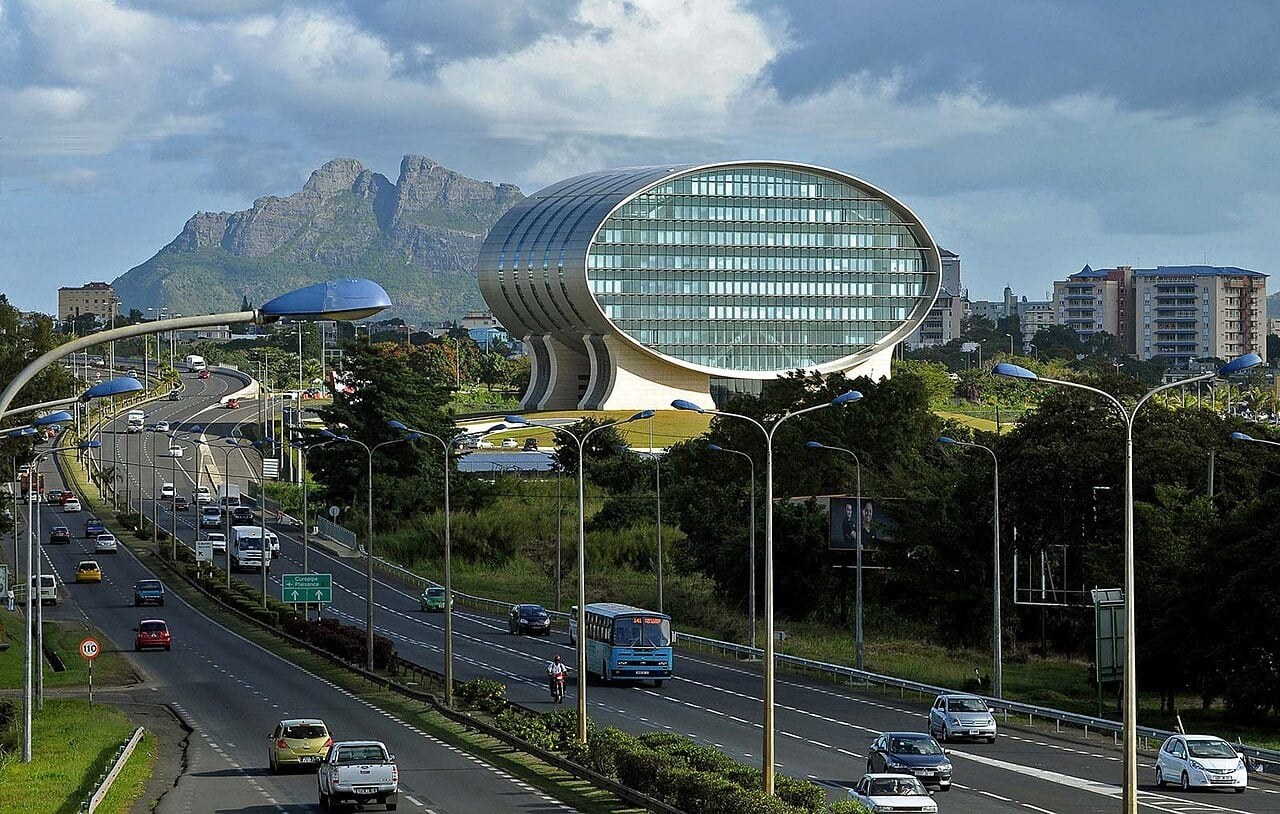
The Economic Development Board lists 13 key sectors for investors. They include agro-industry, the blue (ocean) economy, education, financial services, freeport and logistics, health care, information technology and life sciences.
The rest are creative industries, real estate and hospitality, renewable energy, manufacturing and the sports economy. The list shows where the government wants growth to come from.
The goods data show what the island actually sells. In August 2026 food made up Rs 2,236 million (about US$47 million) of exports.
Miscellaneous manufactured articles, mostly clothing, added Rs 1,538 million (about US$32 million). Anyone asking what drives the Mauritius economy should start with these lines.
Ship supplies and fuel for passing vessels added Rs 4,013 million (about US$84 million), more than any other single line. Newer areas such as health and education feed the 2026 growth figures.
Tourism, the Island’s Shop Window
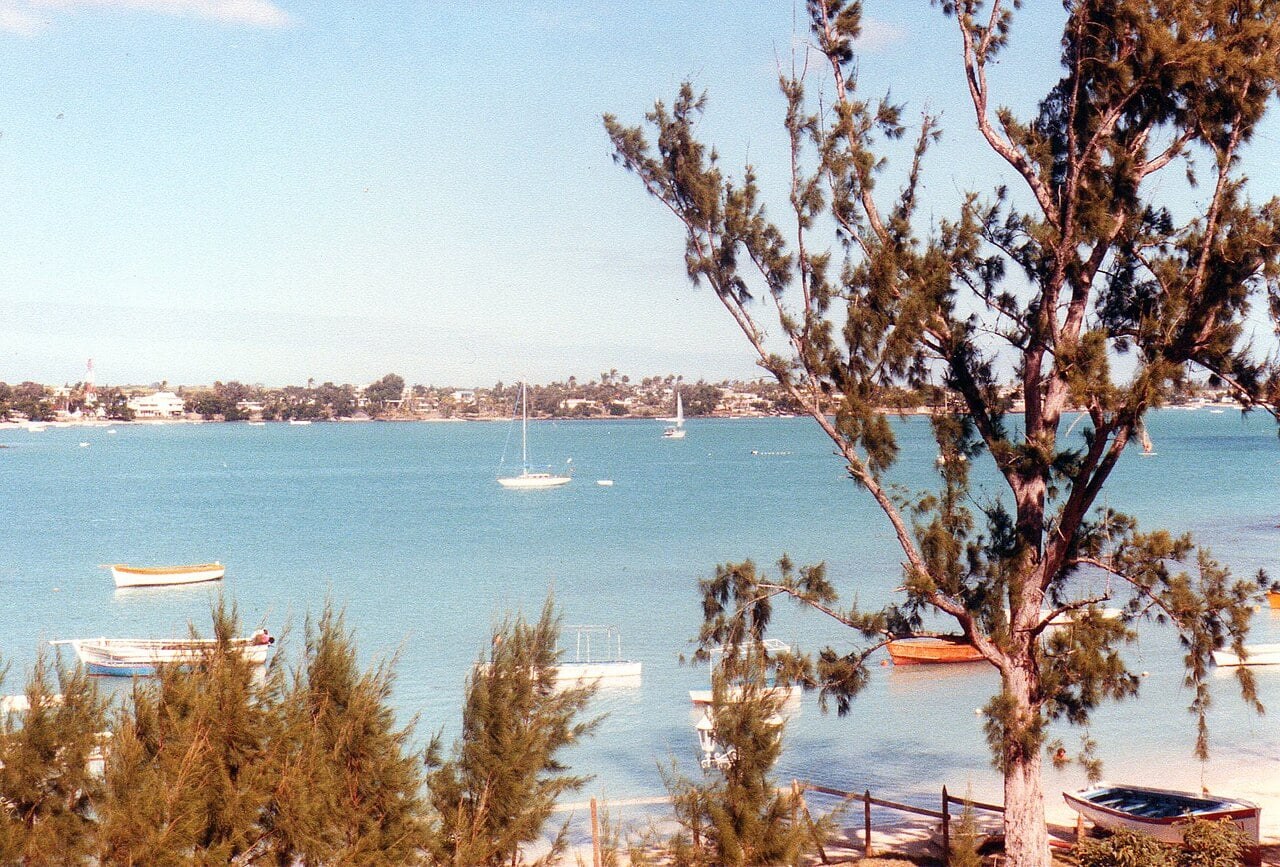
Hotels and restaurants are the visible face of the economy, from Grand Baie in the north to the coastal lagoons. The statistics office counts accommodation and food among the main contributors to 2026 growth, at 0.2 percentage points.
Tourism is a service export, so it brings in foreign currency that helps pay for imports. The surge in services exports in the second quarter of 2026 shows how much the island depends on it.
CIEL, a listed group, runs resorts through its Sunlife and Riveo brands. The group says it operates hotels and resort assets in Mauritius as one of its six clusters.
Finance and the Offshore Centre
Finance and insurance is the largest contributor to 2026 growth in the official forecast, at 0.5 percentage points. Ebene Cybercity, the business district south of Port Louis, is the island’s office hub.
Two bodies set the rules. The Bank of Mauritius supervises banks, and the Financial Services Commission licenses insurers, funds and offshore companies.
The Economic Development Board says its trade and investment agreements give preferential access to 68% of the world’s population. The Mauritius economy sells itself as a base for business with Africa and Asia.
Who Buys From Mauritius and Who Sells to It
Trade figures for August 2026, released on 16 October 2026 and still provisional, show imports of Rs 30,038 million (about US$630 million). Exports were Rs 9,331 million (about US$196 million), leaving a monthly deficit of Rs 20,707 million (about US$435 million).
The biggest buyers of Mauritian goods were the United States with 14.9% of exports and South Africa with 14.5%. The United Kingdom took 11.5%, Madagascar 8.7% and France 8.1%.
The biggest suppliers were China with 16.9% of imports and Oman with 14.5%. South Africa supplied 6.6%, the United Arab Emirates 6.5%, Singapore 6.5% and India 5.8%.
Mineral fuels were the largest import line at Rs 10,359 million (about US$217 million), over a third of the bill. For all of 2025 the visible trade gap equalled 28.4% of output.
The monthly gap is what income from tourism and finance has to cover. All conversions in this guide use 47.64 rupees to the US dollar, the rate on 31 October 2026.
The Business Groups and State Bodies Behind the Numbers
MCB Group, a Mauritian bank group, said on 28 September 2026 that operating income rose 11.6% to Rs 47,052 million (about US$988 million). Profit attributable to shareholders rose 11.3% to Rs 20,114 million (about US$422 million) in its 2025/26 year.
About 56% of the profit came from foreign-sourced income. The bank’s African business pillar produced Rs 24,919 million (about US$523 million) of operating income.
MCB holds its annual shareholder meeting on Friday 13 November 2026 in Quatre Bornes. The date shows where the island’s biggest private decisions are taken.
CIEL, founded in 1912, operates in six sectors: textiles, finance, health care, hotels, property and agribusiness. It employs more than 37,000 people and reports annual revenue of Rs 41.2 billion (about US$865 million).
The agribusiness cluster holds its interests in the sugar firms Alteo and Miwa Sugar. CIEL’s share price was Rs 7.48 (about US$0.16) on 30 October 2026.
The State Side
The Prime Minister’s Office and the Ministry of Finance set the budget and policy. The Economic Development Board handles investment applications.
Its Premium Investor Certificate needs a project of at least Rs 500 million (about US$10.5 million). The agency says the certificate brings incentives, rebates, exemptions and preferential rates.
The Stock Exchange of Mauritius runs the market where groups such as CIEL trade. Its main index, the SEMDEX, stood at 2,295.08 on Friday 30 October 2026.
The exchange has named Tim Hogben as chief executive from 2 December 2026, subject to regulatory approval. The appointment follows an announcement made on 12 October 2026.
How Power Over the Mauritius Economy Is Shared
On 16 October 2026 the Economic Development Board announced new work to strengthen links with Kenya in education, financial services and technology. It shows how the island pitches itself as a gateway for business between Africa and the wider world.
Power over the Mauritius economy sits in three circles. Ministers write the budget and tax rules, and regulators license banks and offshore firms.
Private groups such as MCB and CIEL employ many of the workers. Together the three circles decide where money and jobs go.
For the wider picture, see our guides to Mauritius’s role in Africa and Mauritius geopolitics. For banking, read about a Mauritian bank’s profit rise and the offshore reserve requirement, or browse the Africa hub.
What It Means for US Readers
The United States was the largest single buyer of Mauritian goods in August 2026, taking Rs 792 million (about US$17 million). US tariff changes can therefore reach the island’s exporters quickly.
A US-Africa Business Summit is listed for 6 to 9 December 2026 at the SVICC venue in Mauritius. Visitors should check the US State Department’s travel advisory before booking.
Anyone weighing a residence permit or a company should confirm the terms with the Economic Development Board. Rules on residence and company ownership can change.
What Is Not Known
The key interest rate, the 2026-27 budget figures and the market values of the biggest banks are not given here. The August 2026 trade figures are provisional and may be revised.
The names of the ministers and the central bank governor are not given. A current visitor count and the sector shares of output are also not given.
Frequently Asked Questions
How big is the Mauritius economy?
Statistics Mauritius says output grew 3.5% in 2025 and forecasts 3.0% for 2026. The Economic Development Board put income per person at US$11,416 in 2023.
What does Mauritius earn its money from?
Tourism, financial services, trade and logistics, textiles, sugar and food processing carry the economy. The investment agency also targets health care, education, technology and renewable energy.
Who are Mauritius’s biggest trading partners?
In August 2026 the United States, South Africa and the United Kingdom took the largest shares of goods exports. China, Oman and South Africa supplied the most imports.
How high is inflation in Mauritius?
Consumer prices rose 5.7% in the year to September 2026, up from 4.4% a year earlier. The 12-month average was 4.1%.
Why do investors use Mauritius?
The island offers a regulated financial centre and agreements that the investment agency says give preferential access to 68% of the world’s population.
Can a foreigner invest or live in Mauritius?
Yes, the investment agency lists a 10-year residence permit, residency by acquisition and a Premium Visa. A Premium Investor Certificate needs a project of at least Rs 500 million (about US$10.5 million).
Sources: Statistics Mauritius, National Accounts Estimates, September 2026 issue, 2026-09-30; Statistics Mauritius, Quarterly National Accounts, second quarter 2026, 2026-09-30; Statistics Mauritius, Consumer Price Index for September 2026, 2026-10-07; Statistics Mauritius, Consumer Price Index, third quarter 2026, 2026-10-14; Statistics Mauritius, Monthly External Merchandise Trade Statistics, August 2026 (provisional), 2026-10-16; Economic Development Board Mauritius, key sectors, market access and Premium Investor Certificate, 2026-10-16; MCB Group, results for the 2025/26 financial year, 2026-09-28; CIEL Group, group profile and share price, 2026-10-30; Stock Exchange of Mauritius, SEMDEX and announcements, 2026-10-30.
This article was produced by The Rio Times’ automated newsroom system. How we use AI · Report an error · Editorial responsibility: Matthias Camenzind, Editor-in-Chief
Expat Guide to Mauritius
What The Rio Times publishes for foreigners who live in or move to Mauritius.
Start here
- Retire in Mauritius: Ten-Year Permit on US$24,000 a Year
- Mauritius Financial Hub Rebounds as India Tax Treaty Rewrite Ends Share Sale Exemptions
Coming up in Mauritius
- What to Do in Port Louis in November 2026: Diwali, Concerts 14 Nov
- Grand Diwali Night in Phoenix, Mauritius on 14 November 14 Nov
- Laflam Zilwa Sega Night in Belle Vue on 20 November 20 Nov
- Afro Bros Takeover in Mauritius, 21 November 2026 21 Nov
Understand Mauritius
Brazil runoff date: Sunday, October 25, poll closing times and when results start · Brazil runoff polls: Flávio 51%, Lula 49% · Kalshi and Polymarket odds
Rotate for Best Experience
This report is optimized for landscape viewing. Rotate your phone for the full experience.
You've reached your free article limit
Subscribe to The Rio Times for unlimited access to our reporting from across Africa.
Keep reading for free
Your first article was on us. Register with your email address to read 6 free articles every month. You will also receive Africa Intelligence: African markets, politics and business, every weekday morning.
Expat Guide to Mauritius
What The Rio Times publishes for foreigners who live in or move to Mauritius.
Start here
- Retire in Mauritius: Ten-Year Permit on US$24,000 a Year
- Mauritius Financial Hub Rebounds as India Tax Treaty Rewrite Ends Share Sale Exemptions
Coming up in Mauritius
- What to Do in Port Louis in November 2026: Diwali, Concerts 14 Nov
- Grand Diwali Night in Phoenix, Mauritius on 14 November 14 Nov
- Laflam Zilwa Sega Night in Belle Vue on 20 November 20 Nov
- Afro Bros Takeover in Mauritius, 21 November 2026 21 Nov
Understand Mauritius