What Is Mauritius? Africa’s Offshore Hub, Its Tourism Economy and the Chagos Fight
AFRICA · MAURITIUS
Key Facts
- —The country Mauritius is an Indian Ocean island republic of about 1.26 million people, east of Madagascar.
- —Who governs Prime Minister Navin Ramgoolam has led a Labour-led coalition since November 2024.
- —The numbers The IMF expects growth of 2.8% in 2026, and public debt stood at 86% of GDP in mid-2025.
- —The catch Britain’s 2025 treaty handing over the Chagos Islands is stalled because President Trump opposes it.
- —Why it matters Its tax treaties and regulated fund industry make it a common base for investment into Africa.
Mauritius is small, stable and prosperous by African standards, but its growth is slowing and its debt is high. This guide explains how the island works, from tourism to Chagos, and what it means for outsiders as of September 2026.
Few African countries match Mauritius on income, democracy and stability, which is why investors and retirees keep arriving. Its biggest foreign-policy goal, sovereignty over the Chagos Islands, now depends on a decision in Washington.
Where Mauritius Is and Why It Matters
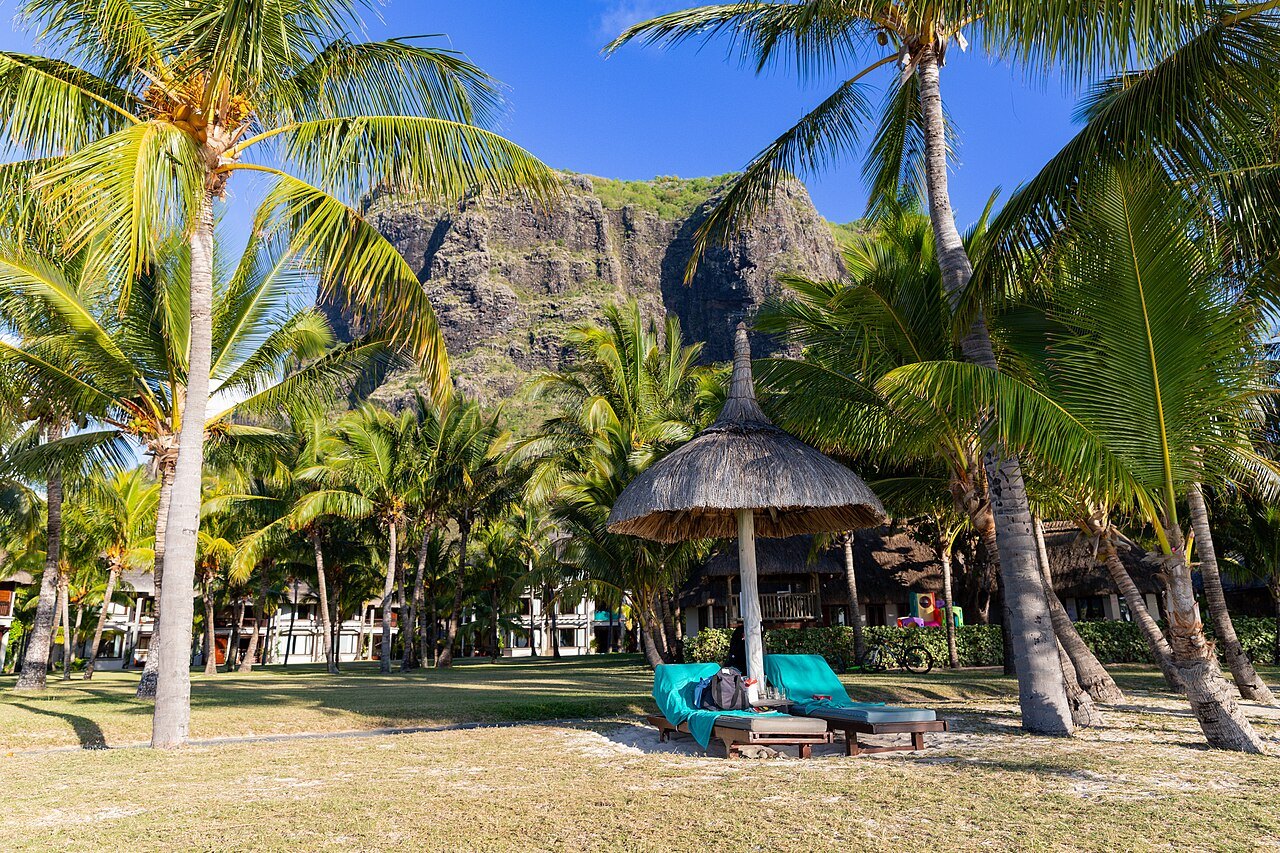
Mauritius lies in the south-western Indian Ocean, about 2,000 kilometres off the south-east coast of Africa and east of Madagascar. The country covers 2,040 square kilometres of land, including the outer islands of Rodrigues, Agaléga and St Brandon.
The International Monetary Fund (IMF) counts about 1.26 million people, most of them on the main island. Its exclusive economic zone, the sea area where it controls fishing and seabed resources, spans about 2.3 million square kilometres.
Port Louis is the capital and main port, and the currency is the Mauritian rupee. On 24 September 2026, Bank of Mauritius indicative rates stood at about 47.5 rupees per US dollar.
About two-thirds of Mauritians are of Indian descent, alongside large Creole, Chinese and Franco-Mauritian communities. Most people speak Mauritian Creole at home, and many also use French and English.
The World Bank classes Mauritius as a high-income economy, and the Economist Intelligence Unit rates it Africa’s only full democracy. Those rankings underpin its pitch to foreign investors, retirees and fund managers.
From Empty Island to Sugar Colony to Republic
Mauritius had no permanent population before Europeans arrived, and Dutch sailors reached it in 1598. The Dutch settled from 1638 but abandoned the island in 1710 after cyclones, droughts and repeated failures.
France took possession in 1715 and named it Isle de France. Governor Mahé de La Bourdonnais built Port Louis into a naval base from 1735.
Britain captured the island in 1810, and the Treaty of Paris confirmed British rule in 1814. Slavery ended on 1 February 1835, when 66,343 people were freed.
Planters then brought indentured labourers from India, most of them arriving between 1835 and 1924 to work the sugar estates. Their descendants form the island’s largest community today.
Mauritius became independent on 12 March 1968, with Seewoosagur Ramgoolam as its first prime minister. It became a republic on 12 March 1992, with a president as head of state.
Sugar dominated the economy for generations, and sugarcane long covered about 90% of cultivated land. From the 1970s, foreign textile investors, many from Hong Kong, built an export industry that overtook sugar in the 1980s.
Three years before independence, on 8 November 1965, Britain detached the Chagos Archipelago from Mauritius to make way for a US base. Mauritius has contested that decision ever since.
Who Holds Power in 2026
Mauritius is a parliamentary republic, and real power lies with the prime minister. Navin Ramgoolam, a physician born in 1947 and son of the first prime minister, has held it since 12 November 2024.
It is his third spell in office, after terms from 1995 to 2000 and from 2005 to 2014. He leads the Labour Party and, as of March 2026, also held the finance portfolio.
His Alliance du Changement coalition won 60 of the 62 directly elected seats in the November 2024 election. Turnout was 79.29%, and outgoing prime minister Pravind Jugnauth lost his own seat.
The campaign followed a scandal over leaked recordings of intercepted calls involving politicians, journalists and diplomats. The Jugnauth government blocked social media on 1 November but lifted the ban a day later after a public outcry.
Jugnauth, whose Militant Socialist Movement (MSM) led the last government, was arrested for alleged money laundering in February 2025. He was bailed the same day, and he is presumed innocent unless a court rules otherwise.
Ramgoolam has his own history with investigators, since police arrested him in a 2015 money-laundering case. The charges were later dropped for lack of evidence and because of prosecution delays.
The coalition was shaken on 20 March 2026, when Deputy Prime Minister Paul Bérenger resigned. He objected to Ramgoolam keeping the finance ministry and warned of a Moody’s downgrade and anti-money-laundering scrutiny.
In April Bérenger quit his Mauritian Militant Movement (MMM) to launch a new party. Arianne Navarre-Marie replaced him as deputy prime minister, and the government kept its majority.
The biggest public backlash came after the 2025-26 budget raised the pension age from 60 to 65. Thousands of workers, retirees and young people marched in Port Louis on 21 June 2025, according to the Civicus Monitor.
Unions rallied under the Creole slogan “Pa tous nou pension”, meaning “hands off our pensions”. Parliament adopted the Finance Act on 8 August 2025, and constitutional challenges followed.
The Civicus Monitor, which tracks civic freedoms worldwide, rates Mauritius as “narrowed” rather than open. It cites the September 2025 police raid on Scoop.mu journalist Narain Jasodanand after a defamation complaint, which the prime minister publicly criticised.
The Economy: Tourism, Textiles and a Heavy Debt Load
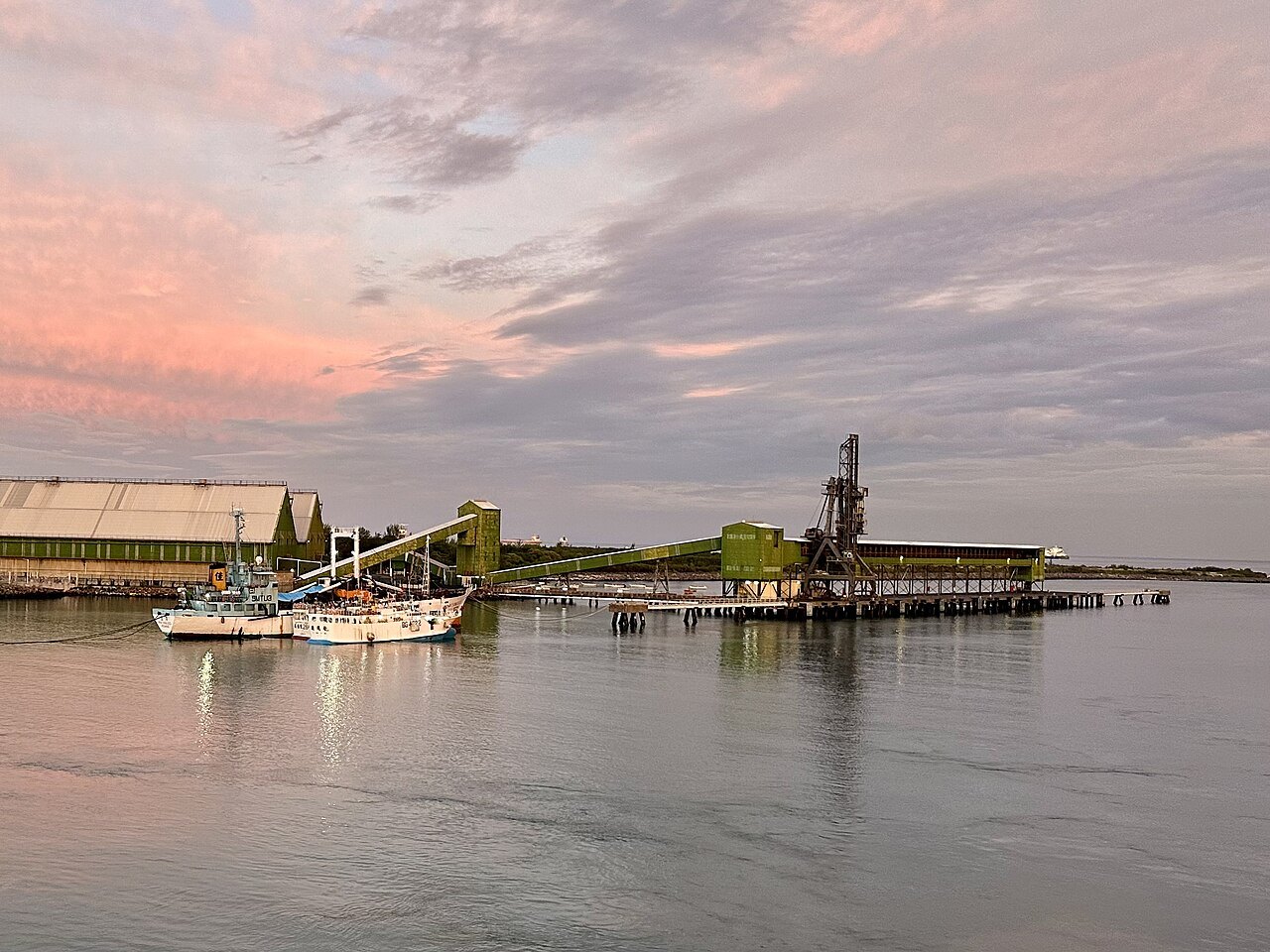
The IMF puts nominal output at about US$16.1 billion in 2025, or roughly US$12,900 per person. Services drive the economy, led by tourism and financial services, while construction contracted in 2025.
Growth slowed from 4.9% in 2024 to 3.2% in 2025, and the IMF projects 2.8% for 2026. The Fund blames the war in the Middle East, which has weakened tourism and pushed up commodity prices.
Tourism brought 1.44 million visitors in 2025 and earnings of Rs 103.4 billion (about US$2.2 billion), Tourism Review reported. Moody’s counted 348,000 arrivals in the first quarter of 2026, above the average for 2023 to 2025.
Clothing and textiles made up about 43% of exports in 2019, and some factories depend on duty-free access to the United States. A two-year extension of the US African Growth and Opportunity Act (AGOA) gave those exporters cover until the end of 2028.
Public finances are the main weakness. Public debt reached 86% of GDP at the end of June 2025, and the IMF expects it to stay high.
The overall budget deficit hit 10.6% of GDP in 2024/25 and an estimated 7.1% in 2025/26, IMF tables show. Moody’s noted that a December 2024 audit by the new government revealed larger deficits and debt than previously reported.
Moody’s, the US rating agency, rates Mauritius Baa3, its lowest investment grade, and turned the outlook negative in January 2025. Its May 2026 report confirmed that Mauritius still holds investment grade.
Inflation averaged 3.7% in 2025 and reached 3.6% year on year in April 2026. The IMF expects about 6.4% by the end of 2026, above the Bank of Mauritius target range of 2% to 5%.
The central bank raised its Key Rate in May 2026, citing inflation risks, and held it at 4.75% on 12 August. The IMF wants it ready to tighten further and urges swift legal changes to protect its independence.
Buffers remain large, with gross reserves of US$10.3 billion at the end of 2025, or 9.6 months of imports. Most public debt is held domestically, which reduces the risk of a sudden external funding squeeze.
How the Financial Centre Works
Mauritius built its international financial centre around global business companies (GBCs), firms licensed by the Financial Services Commission (FSC) to invest abroad. They must show local substance, such as resident directors, board meetings on the island and local spending.
For decades the main draw was a tax treaty with India that spared investors Indian capital gains tax. A rewrite ended that advantage, and gains on Indian shares became fully taxable in India from April 2019.
The centre has since turned toward Africa-focused private equity and infrastructure funds, as our analysis of the hub explains. The Financial Action Task Force (FATF), the global anti-money-laundering watchdog, removed Mauritius from its grey list in October 2021.
The European Union took Mauritius off its list of high-risk third countries in January 2022, law firm Dentons reported. The IMF still urges close monitoring of non-resident and global business flows, real estate exposures and virtual assets.
“For a small, open economy, reputational strength is a core asset,” wrote Ronak Gopaldas of the Institute for Security Studies (ISS). Writing for the South African think tank in February 2026, he warned that avoiding a downgrade requires continued fiscal consolidation.
Chagos and Diego Garcia
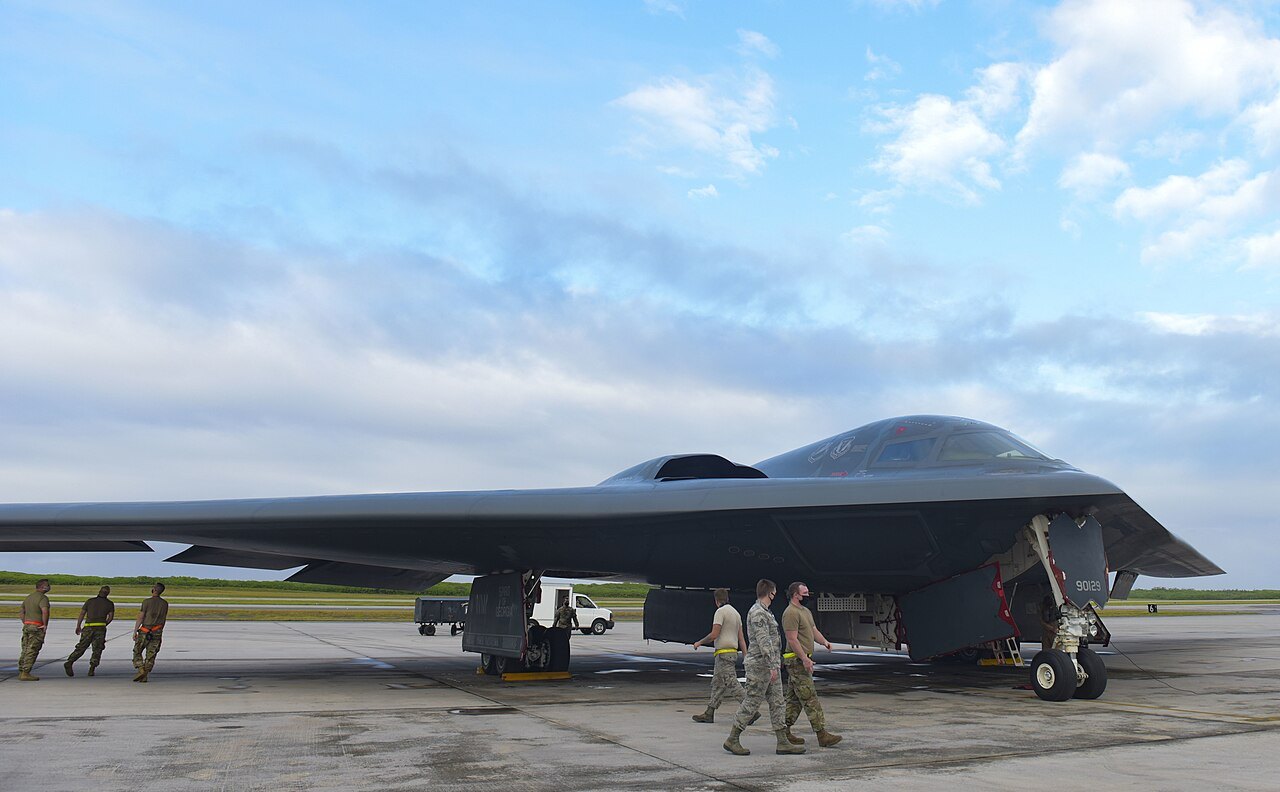
The Chagos Archipelago is a chain of more than 60 islands south of the Maldives, more than 2,000 kilometres from Mauritius. Its largest island, Diego Garcia, hosts a joint US-UK military base with about 2,500 mostly American personnel.
Between 1967 and 1973 Britain removed as many as 2,000 Chagossians, the islands’ inhabitants, so the base could be built. Washington calls Diego Garcia “an all but indispensable platform” for operations in the Middle East, South Asia and East Africa.
In 2019 the International Court of Justice (ICJ), the UN’s top court, advised Britain to end its administration as rapidly as possible. The UN General Assembly backed that view the same year with 116 votes.
Britain and Mauritius signed a treaty on 22 May 2025 that hands sovereignty to Mauritius. Diego Garcia would be leased back to Britain for at least 99 years so the base can keep operating.
Britain would pay £165 million (about US$218 million) a year at first, falling to £120 million (about US$159 million), ITV News reported. Defence Secretary Wes Streeting said in September 2026 that the payments would not go ahead “at this stage”.
Donald Trump, the US president, attacked the deal in January 2026, calling the transfer “an act of GREAT STUPIDITY”. Legislation to ratify it then ran out of time before the British parliamentary session ended in May, the Associated Press reported.
Trump called it “a terrible deal” on 22 September as he met Andy Burnham, Britain’s prime minister since July 2026. Burnham said his government would work hard to find a resolution between the different sides.
Streeting said the next day that the deal “can’t go ahead without American support” and would have to be revised. Conservative defence spokesman James Cartlidge said it “should be binned entirely”.
Ramgoolam answered on 24 September that “our sovereignty is non-negotiable”, Defimedia reported. He favours quiet diplomacy and planned talks in London with Jonathan Powell, Britain’s national security adviser.
Marc Weller of Chatham House, the London think tank, argues that ratification would not breach Britain’s 1966 base agreement with Washington. The Maldives has also asked Britain to reopen talks, citing its own historical ties to the islands.
The United Nations has voiced concern that Chagossians were not meaningfully consulted, according to the Civicus Monitor. The IMF lists a Chagos-related revenue windfall as an upside risk and wants any windfall used mainly to cut debt.
The dispute echoes far beyond the Indian Ocean, and Argentina has cited it in renewed demands for Falklands talks. Mauritius, meanwhile, won UN backing in July 2026 for 147,000 square kilometres of extra seabed off Rodrigues.
What It Means for Foreigners and Investors
Visitors will find a large resort industry, with hotel occupancy of 84% according to an AXYS industry report cited by Tourism Review. The IMF expects weaker tourism in 2026 because of the war, so flight schedules and prices may shift.
Foreigners aged 50 or over can get a ten-year retirement permit with US$24,000 in the bank or US$2,000 monthly income. Buying property worth at least US$375,000 under approved schemes also brings residence, as our retirement guide details.
The Premium Visa lets remote workers stay for six months to a year, and it can be renewed. The Economic Development Board (EDB), the state investment agency, administers these schemes.
Income up to Rs 500,000 (about US$10,500) is tax-free, and 20% applies above Rs 1 million (about US$21,000). The band in between is taxed at 10%, and individuals pay no capital gains, inheritance or wealth tax.
For investors, the main risks are fiscal, because a Moody’s downgrade would raise borrowing costs for the state and the banks. Bloomberg reported in July 2026 that a wave of new taxes threatens the profitability of Mauritian banks.
Exchange-rate moves are another factor, since the IMF wants a flexible rupee to act as a key shock absorber. Firms that earn rupees but pay in dollars or euros should plan for that.
What to Watch
The Chagos treaty is the biggest open question, and Britain is reviewing it to meet Trump’s objections. Any new text would need Mauritian approval, and Ramgoolam has ruled out concessions on sovereignty.
On the economy, watch whether inflation climbs toward the IMF’s 6.4% forecast and whether the central bank tightens again. The next Moody’s review will show whether fiscal consolidation has done enough to protect the investment grade.
Politically, watch how the coalition copes without Bérenger and whether the pension reform survives legal challenges. The money-laundering case against Jugnauth will also shape the opposition’s prospects.
It remains unclear what a revised Chagos deal would contain or whether Washington would accept any version. The full cost of the war to the 2026-27 tourist season is also not yet known.
Frequently Asked Questions
Who is the prime minister of Mauritius?
Navin Ramgoolam of the Labour Party has been prime minister since 12 November 2024. It is his third term, after spells from 1995 to 2000 and from 2005 to 2014.
What currency does Mauritius use?
Mauritius uses the Mauritian rupee. On 24 September 2026, Bank of Mauritius indicative rates stood at about 47.5 rupees per US dollar.
What is the Chagos deal?
It is a May 2025 treaty under which Britain would hand the Chagos Islands to Mauritius. Britain would lease back the Diego Garcia base for at least 99 years. As of September 2026 it is on hold because President Trump opposes it.
Can foreigners retire in Mauritius?
People aged 50 or over can get a ten-year retirement permit with US$24,000 in savings or US$2,000 monthly income. Property purchases of at least US$375,000 under approved schemes also bring residence.
Is Mauritius a tax haven?
Mauritius runs a regulated international financial centre with substance rules for global business companies. The FATF removed it from its grey list in 2021, and the EU dropped it from its high-risk list in 2022.
Why is the Mauritian economy slowing?
The IMF says the war in the Middle East has weakened tourism and raised commodity prices. It projects growth of 2.8% in 2026, down from 3.2% in 2025.
This article was produced by The Rio Times’ automated newsroom system. How we use AI · Report an error
Read More from The Rio Times