
PERU · ELECTIONS
The votes for Lima’s next mayor are all counted, yet the winning party may not be allowed to seat its leader. ONPE, Peru’s elections office, said the count for the capital’s city government reached 100% on Saturday 14 November, and a local panel must now name the mayor.
Rafael López Aliaga, founder of the conservative party Renovación Popular, was Lima mayor from 2023 to 2026. The JNE, the national electoral jury, ruled that a former mayor elected as first councillor (the top councillor on a list, who normally steps in if the mayor leaves) cannot take the mayoralty again.
No proclamation date has been published as of Tuesday 17 November. No US consequence is confirmed, so those affected are Lima’s residents, who rely on the city government for services, and the party.
Key Facts
- Result Renovación Popular won 27.685% of valid votes; Avanza País, a rival party, took 26.811%.
- Rule Peru’s electoral jury (JNE) bars ex-mayors elected first councillor from retaking the mayoralty.
- If applied Councillor Jeanette Alonzo Contreras becomes mayor; López Aliaga stays a councillor.
- As of Tuesday 17 November 2026, 1:30 p.m. ET.
- Power Index Peru ranks 5th of 14 in The Rio Times Latin America Power Index, with 53.9 points (November 2026 edition).
Peru’s capital has its vote count and a ruling that may keep the winning party’s leader out of City Hall. Who takes office now depends on a local electoral panel, and possibly the national jury.
The Big Picture
López Aliaga governed Lima from 2023 to 2026 and is one of the key players in Peruvian politics. His party’s mayoral candidate, Luis Rubio, withdrew on Tuesday 4 August 2026, so López Aliaga ran as first councillor on the list instead.
The JNE plenary, its highest decision body, adopted Resolution 4557-2026-JNE on Monday 2 November 2026, with two dissenting magistrates. It says a former mayor elected as first councillor cannot take the mayoralty after the mayoral candidate drops out, nor by succession, and the plenary reviewed 427 proclamation records.
Yessica Clavijo Chipoco, the JNE’s secretary general, said on Thursday 12 November that the Constitution allows no re-election in local elections. The resolution grounds the ban in Article 194, and she said it applies at the moment someone tries to take the mayoralty.
The JNE earlier ordered second councillors proclaimed mayors in the Lima districts of Independencia and El Agustino. Details are in our report on two councillors proclaimed mayors.
If the criterion is applied in Lima, Jeanette Alonzo Contreras, an accountant and Lima councillor since 2023, becomes mayor. López Aliaga would stay first councillor.
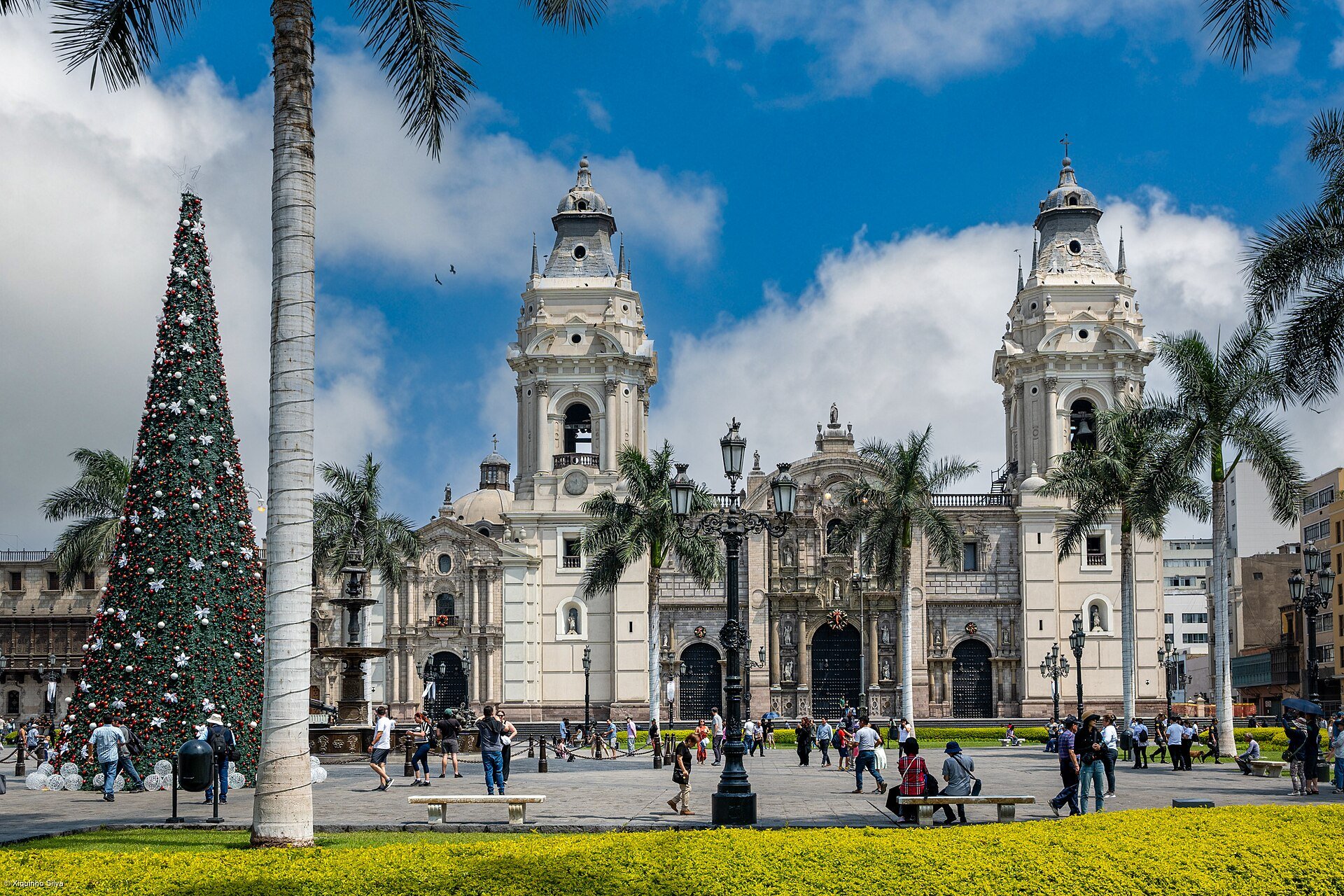
The Final Count
ONPE said on Saturday 14 November that the count reached 100% after the last held-up polling-station records were entered. Voting took place on Sunday 4 October across 26,351 polling tables, and 26 parties competed.
Only four of the 26 parties passed 5%, ONPE said. Renovación Popular won 1,554,928 votes (27.685% of valid votes) and Avanza País 1,505,835 (26.811%), while two smaller parties, Somos Perú and Podemos Perú, took 847,409 (15.088%) and 450,590 (8.023%).
The gap between the first two is 49,093 votes, or 0.874 percentage points of valid votes, by ONPE’s figures. Valid votes exclude blank and spoiled ballots, which is why Renovación Popular’s share of all votes cast is lower, at 25.580%.
How Proclamation Works
The Jurado Electoral Especial (JEE) Lima Centro, a local branch of the JNE, proclaims the winning list at a public hearing to which party representatives are called. Party delegates can then appeal, but only over numerical inconsistencies.
A plenary agreement announced on 29 October says the JNE will review the JEEs’ proclamation records ex officio, meaning on its own initiative, on numerical and general matters. Credentials of office follow once a proclamation is final.
No proclamation date has been published as of Tuesday 17 November. The JNE has not yet ruled on the reconsideration motion described below.
The Appeal and the Counter-View
On Tuesday 10 November, Renovación Popular filed a reconsideration motion asking the JNE to void the restriction or apply it only to future elections. López Aliaga wrote on social media: “The JNE is obliged to respect the expression of the people in the ballot boxes.”
Clavijo said the JNE plenary will evaluate the motion and that JNE rulings are final in electoral jurisdiction. The party also announced legal steps against the ruling.
The JNE’s reading is that the Constitution bars immediate re-election. Renovación Popular argues that the voters’ choice must stand.
Why It Matters
The race was decided by 49,093 votes (0.874 points, ONPE, 14 November), so who governs now rests on a legal rule, not on the margin. Residents who rely on the capital’s city government for municipal services, and Renovación Popular, are most affected.
We found no confirmed consequence for US readers or investors. The case shows how Peru’s electoral jury applies the constitutional ban on immediate re-election, and our Peru coverage follows the next steps.
What to Watch
ONPE says Peru holds a Second Regional Election, runoffs for governors in 15 regions, on Sunday 6 December 2026; Lima’s mayoral race is not part of that vote. The JNE agreement of 29 October sets Sunday 13 December 2026 as the date by which ONPE must hand over observed records for that vote.
The date of the JEE Lima Centro proclamation is not confirmed. No other dated checkpoint is confirmed.
What It Means for You
For people in Lima, the party that won the vote and the person who takes the mayor’s office may turn out to be different. Official notice of who governs will come from the JEE Lima Centro and, on any appeal, the JNE.
What Is Not Known
The proclamation date, whether the JNE rules on the reconsideration first, and whether the JEE follows the rule in Lima are not confirmed. Also open is the exact swearing-in date.
Frequently Asked Questions
Who won the Lima mayor election in 2026?
Renovación Popular led with 27.685% of valid votes, ahead of Avanza País at 26.811%, ONPE said on 14 November. Whether its leader can take the mayoralty is still open.
Can Rafael López Aliaga be Lima mayor again?
JNE Resolution 4557-2026-JNE, dated 2 November, bars former mayors elected first councillor from taking the mayoralty. His party asked the JNE on 10 November to void or soften the rule.
Who would become mayor if the JNE rule applies?
Jeanette Alonzo Contreras, a Lima councillor since 2023, would take the office. López Aliaga would stay first councillor.
When will the new Lima mayor be proclaimed?
No date has been published as of 17 November. A local panel, the JEE Lima Centro, proclaims the winning list at a public hearing.
Sources: ONPE, press note, 14 November 2026; JNE Resolution 4557-2026-JNE, 2 November 2026; JNE plenary agreement, announced 29 October 2026; ONPE note, 12 November 2026; statements of JNE secretary general Yessica Clavijo Chipoco (6 and 12 November 2026) and of Rafael López Aliaga (November 2026).
In depth
This article was produced by The Rio Times’ automated AI newsroom. Editorial responsibility: Matthias Camenzind, Publisher and Editor-in-Chief. The Rio Times also runs Ask Rio Times, which answers from 100,000+ of our own articles, the daily Latin America Power Map, and prediction-market odds on elections and markets.. How we use AI · Report an error
Living in or visiting Lima? See this month's events and our Lima city guide with rents, safety and upcoming concerts.