
GHANA · EDUCATION AND HEALTH
Ghana offers free basic education and public health insurance, and its 2027 budget gives 48 billion Ghanaian cedis (GH¢48 billion, about US$4.1 billion) to schools and GH¢40.3 billion (about US$3.4 billion) to health. This matters to US readers because many Americans have family ties to Ghana, and because health systems abroad draw on foreign-trained nurses.
All US dollar values here use the central bank’s (Bank of Ghana) 12 November 2026 interbank rate of GH¢11.71 per US$1. The cedi is Ghana’s currency, and GH¢ is its symbol.
Key Facts
- Schools GH¢48 billion (about US$4.1 billion) goes to the Ministry of Education in 2027.
- Health GH¢40.3 billion (about US$3.4 billion) goes to the Ministry of Health in 2027.
- Insurance Active NHIS (Ghana’s health insurance) membership rose from 56.3 percent in 2024 to 70 percent by August 2026.
- Classrooms More than 10,000 public basic schools in 13 regions had no classroom blocks, with 3,050,808 pupils.
- Spending Ghana spent 2.9 percent of national output (GDP), or US$70.3 per person, on health in 2023.
In Plain English
- NHIS The National Health Insurance Scheme, Ghana’s public health insurance.
- GETFund The Ghana Education Trust Fund, which pays for school buildings.
- Free SHS Free Senior High School, the policy that has made public secondary school free since 2017.
- BECE The Basic Education Certificate Examination, taken at the end of junior high school.
- CHPS Community-based Health Planning and Services compounds, which are community health posts.
- TVET Technical and vocational education and training, meaning job-skills schools.
How Ghana’s School System Works
Ghana’s school system starts with two years of kindergarten, six years of primary school and three years of junior high school, followed by three years of senior high school. Article 25 of the 1992 Constitution says basic education shall be free, compulsory and available to all.
At the end of junior high school, pupils sit the Basic Education Certificate Examination, known as the BECE. The 2027 budget sets aside GH¢169 million (about US$14 million) to pay the exam fees.
Results then feed a school placement system that matches pupils to senior high and technical schools. When results came out on 4 September 2026, it placed 527,932 candidates.
The Ghana Statistical Service, the national statistics office, counted 30,832,019 people in its 2021 census. The same service projects 34,378,768 people for 2026, which is the population these schools and clinics must serve.
For wider coverage of the country, see our Ghana news hub. It carries our latest reporting on Ghana.
Free Senior High School Explained
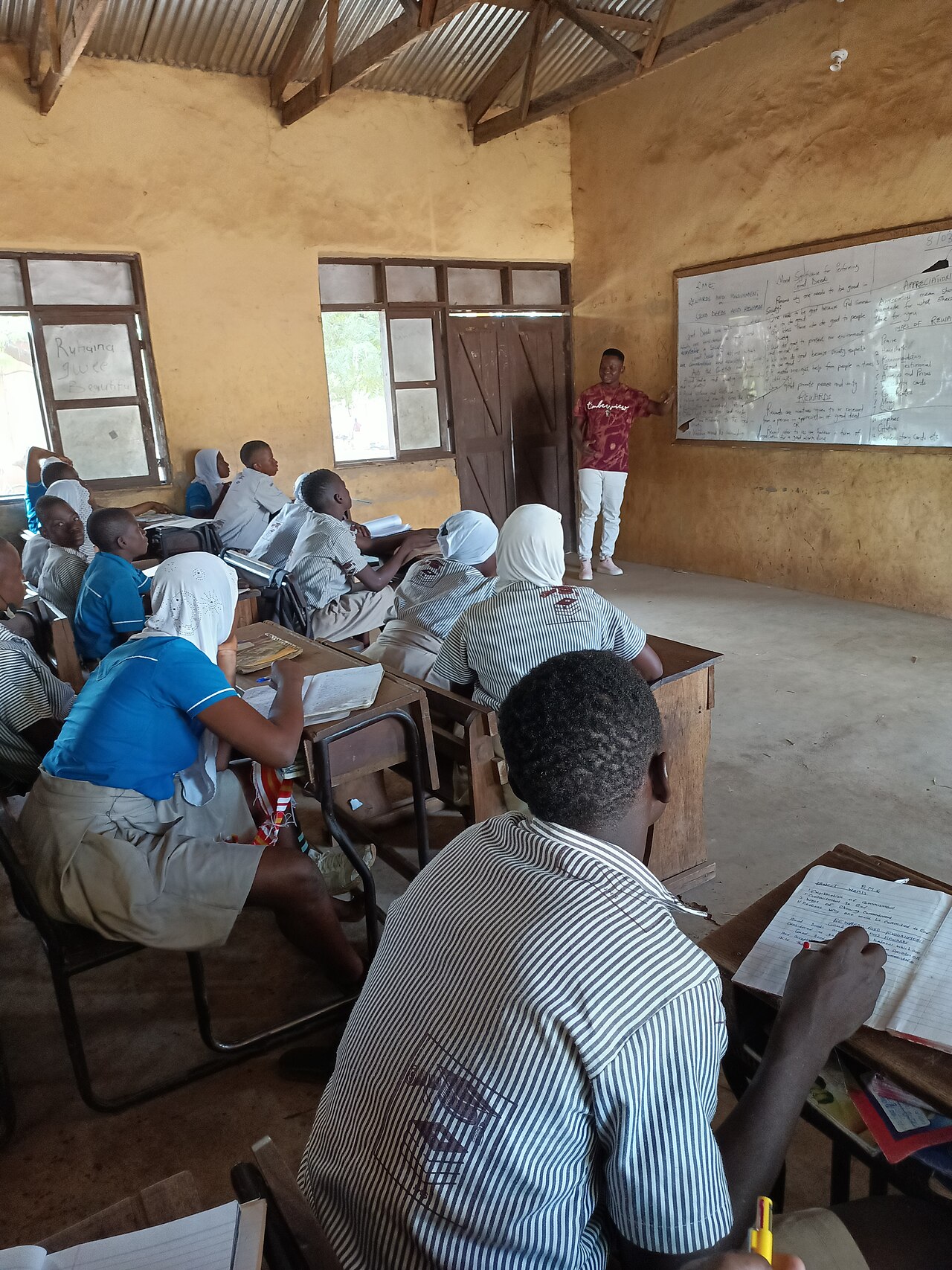
Free Senior High School, called Free SHS, has been in place since 2017. It follows the constitutional promise that secondary education be made generally available by the progressive introduction of free education.
For the 2026/27 school year, 85 private senior high schools join Free SHS. These are privately run schools that will now admit state-funded pupils.
The 2027 budget funds a ‘No Fees Stress’ policy for first-year students, with GH¢537 million (about US$46 million). It also names GH¢1.37 billion (about US$117 million) ‘to transform secondary education and eliminate double track’.
Double track is a shift system in which two groups of pupils alternate terms and share one school. Ending it is a stated aim of the 2027 budget.
The budget sets aside money aimed at ending ‘double track’ in secondary schools. The part we read gives no end date.
Final Free SHS enrolment for 2026/27 is not yet known. The placement results of 4 September 2026 show how many candidates were assigned to senior high and technical schools, not how many will finally enrol.
What the 2027 Budget Gives Schools
Finance Minister Cassiel Ato Forson read the Ministry of Finance’s 2027 Budget Statement and Economic Policy in Parliament on Thursday 12 November 2026. It allocates GH¢48 billion (about US$4.1 billion) to the Ministry of Education.
The largest named line is GH¢11.2 billion (about US$960 million) for GETFund, the Ghana Education Trust Fund, which pays for school buildings. The other lines are smaller and cover specific needs.
Where the Education Money Goes
- GETFund GH¢11.2 billion (about US$960 million) for school buildings.
- Secondary education GH¢1.37 billion (about US$117 million) to transform secondary education and end double track.
- No Fees Stress GH¢537 million (about US$46 million) for first-year students.
- Sanitary pads GH¢292 million (about US$25 million) for free sanitary pads.
- Teacher trainees GH¢227 million (about US$19 million) in allowances.
- BECE fees GH¢169 million (about US$14 million) for exam fees.
- Capitation Grant GH¢166 million (about US$14 million), a per-pupil grant to schools.
A further GH¢250 million (about US$21 million) goes separately to the Scholarship Secretariat, the state scholarship office. That sum sits outside the GH¢48 billion given to the Ministry of Education.
The School Feeding Programme fed 4.03 million pupils a day in 2024 and 4.53 million in 2026, in about 13,000 schools. The grant per child rose from GH¢1.50 (about US$0.13) to GH¢2.00 (about US$0.17), and the 2027 allocation is GH¢2.1 billion (about US$179 million).
The Auditor-General, the state’s chief public auditor, found in its 2025 report that more than 10,000 public basic schools in 13 regions had no classroom blocks, a finding the budget statement repeats. Those schools had 3,050,808 pupils, and lessons were held under trees, in sheds or in makeshift shelters.
A further 2,042 schools combine two or more classes for lack of space. The GETFund line pays for school buildings, but we did not find a classroom target in the budget text we read.
Teachers: Hiring, Pay and Migration
The government recruited and deployed 7,000 teaching and non-teaching staff to underserved schools. In 2027 it plans to recruit more teachers for basic schools, and instructors for senior high schools and technical and vocational (TVET) institutions.
The budget reports that 96,207 in-service teacher licences were renewed. It adds that 205,923 teachers took part in approved professional development.
The government is finalising a 20 percent special allowance for teachers in deprived communities, to start in 2027. We did not find the cedi cost of that allowance in the budget lines we read.
The budget gives no count of teachers who left for the United States or the United Kingdom. It reports only the planned Bahamas deployment.
Arrangements are under way to send about 300 Ghanaian teachers to The Bahamas. That is the only teacher deployment abroad that the budget quantifies.
How Ghana Pays for Health Care (NHIS)
The National Health Insurance Scheme, or NHIS, is Ghana’s public health insurance, and the National Health Insurance Authority runs it. The 2027 budget gives it GH¢10.2 billion (about US$870 million).
Active membership rose from 56.3 percent in 2024 to 70 percent as of August 2026. The budget credits the removal of the cap on the National Health Insurance Levy, a levy that funds the scheme, for the rise.
The government paid GH¢2.1 billion (about US$179 million) in NHIS claims between January and September 2026 to public, private and mission providers. Claims were processed in 25 days on average.
NHIS at a Glance
- Covered Inpatient services (general and specialist), outpatient consultations, maternity care including antenatal care, and eye care.
- Surgery Surgical operations are covered.
- Not covered VIP ward accommodation, and treatment abroad.
- Validity Membership is valid for twelve months.
The National Health Insurance Authority lists inpatient and outpatient care, maternity care and eye care among the benefits. It says surgical operations are covered, while VIP ward accommodation is excluded.
NHIS does not cover treatment abroad, the Authority says. Membership is valid for twelve months.
Some groups do not pay premiums: pregnant women, people above 70, the poorest (called indigents), certain differently-abled people, people with mental disorders, and SSNIT contributors and pensioners under 70. SSNIT is the state pension fund.
The Ghana Medical Trust Fund, called MahamaCares, pays for hospital treatment and equipment and gets GH¢2.6 billion (about US$222 million) in 2027. At Komfo Anokye Teaching Hospital in Kumasi it paid for 101 laparoscopic (keyhole) surgeries and 2,857 dialysis sessions.
The World Health Organization (WHO), the UN health agency, says Ghana spent 2.9 percent of GDP, or US$70.3 per person, on health in 2023. GDP, or gross domestic product, is the value of everything the economy produces in a year.
The same WHO page puts life expectancy at birth in 2023 at 65.1 years for men and 70.5 years for women. These are national averages, so individual experience will differ.
Hospitals and Clinics
The Ghana Health Service, the state agency that runs public health care, lists 4,447 facilities in its Free Primary Health Care programme, a state programme covering community health posts, health centres and polyclinics, as listed on its site on 13 November 2026: 3,774 CHPS compounds, 632 health centres and 41 polyclinics. A CHPS compound is a community health post, and these are programme facilities, not a national total.
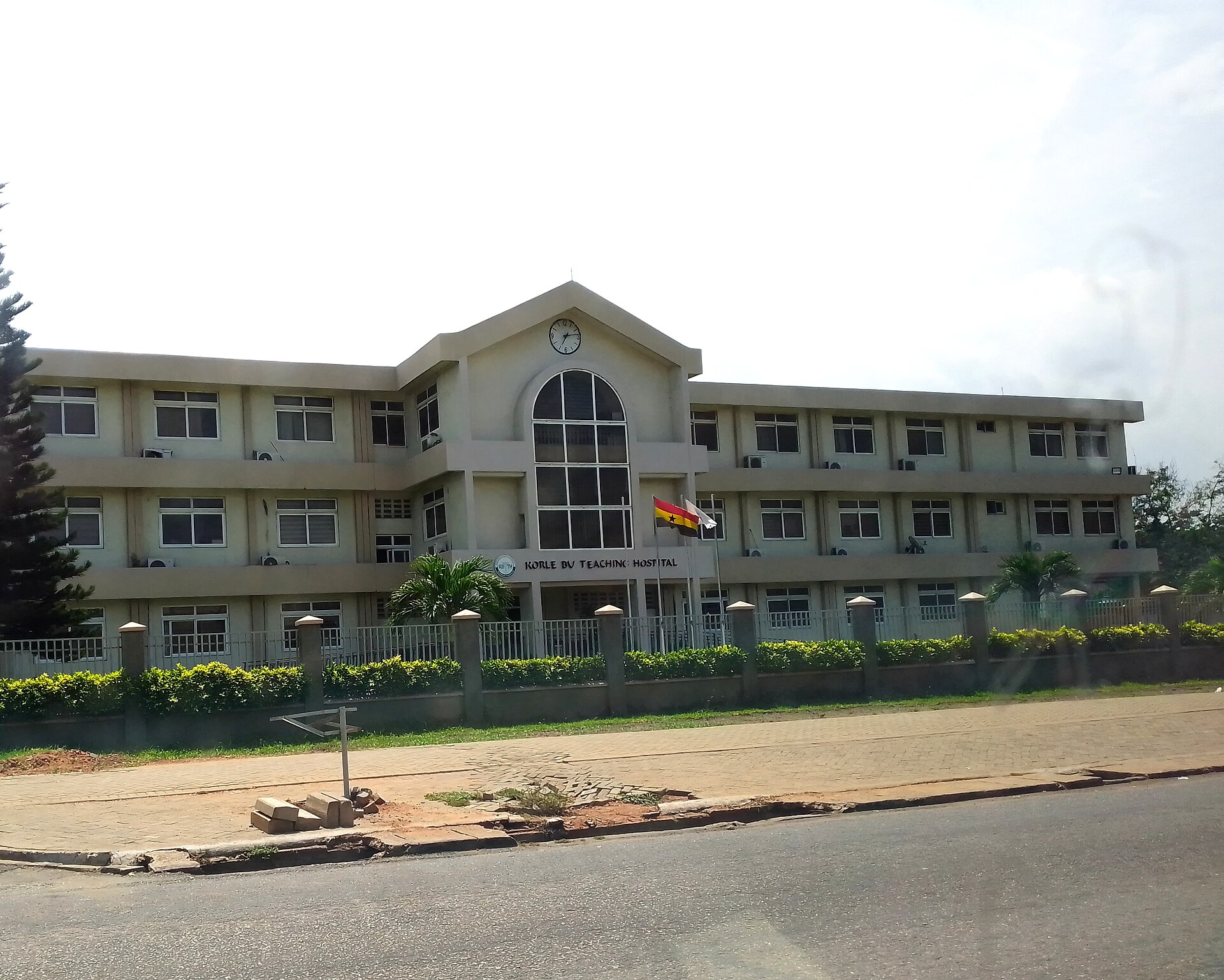
Korle Bu Teaching Hospital in Accra, the capital, kept its ISO 15189 accreditation, an international laboratory quality standard. It also opened a new cardiac catheterisation laboratory (for heart tests and procedures) funded by MahamaCares.
Komfo Anokye Teaching Hospital describes itself on its own site as a public teaching hospital in Kumasi, in the Ashanti Region, with 1,200 beds. Cape Coast Teaching Hospital did 210 cataract surgeries, and Tamale Teaching Hospital started livestreamed surgery training.
In 2027 the plan is two new cardiology centres and a 400-bed Mother and Child facility at Korle Bu. Work has started on six 160-bed regional hospitals in the Oti, Western North and Savannah regions.
An electronic bed management system is being piloted against the ‘no-bed syndrome’, where patients are turned away from emergency units for lack of beds. Its command centre sits at the Greater Accra Regional Hospital in Ridge.
The National Blood Service collected 105,683 units against a requirement of 154,000. The difference is a shortfall that hospitals must manage.
The Presidential Initiative on Maternal Health Emergency Response was launched in September 2026 under the slogan ‘No Woman Should Die While Giving Life’. The 2027 budget also sets aside GH¢200 million (about US$17 million) for ambulances.
Nurses, Doctors and the Brain Drain
The Ministry of Health obtained financial clearance to recruit 16,000 health professionals, 8,600 of them already on the government payroll. Between January and July 2026 it paid GH¢231.36 million (about US$20 million) in nursing training allowances to 82,629 trainees.
Unemployment stood at about 12.8 percent in 2025, and our report on Ghana’s youth jobs picture covers the younger workers’ side. Brain drain means the departure of trained people to work abroad.
Under the Ghana Labour Exchange Programme (GLEP), the state scheme that places Ghanaian workers abroad, the Labour Ministry deployed 90 nurses, 47 to Saint Kitts and Nevis and 43 to Jamaica. Ghana also signed two labour mobility agreements covering 249 Ghanaian health professionals in Jamaica, Saint Kitts and Nevis, Antigua and Barbuda and Grenada.
The National Labour Migration Policy is under revision. The budget gives no count of nurses who left for the US.
WHO’s safeguards list is guidance for recruiting countries, not a ban. It does not stop individuals from emigrating.
WHO keeps a Health Workforce Support and Safeguards List, published on 8 March 2023 for 55 countries. Listed countries have fewer than 49 doctors, nurses and midwives per 10,000 people and a low universal health coverage index, WHO’s measure of access to health services.
WHO asks rich countries to avoid actively recruiting health workers from listed countries. Ghana was on the 2023 list.
A WHO briefing to member states on 4 March 2026 says Ghana would come off the list in the 2026 update. It names Ghana among 10 African countries dropped, which would shrink the list from 55 to 36 countries.
WHO’s own notice calls the new list provisional, and we did not see a final one, so the change is not confirmed here. How UK health bodies would react to a change is not known.
The UK Nursing and Midwifery Council, which keeps the UK register of nurses and midwives, reports a record 867,935 professionals on its register at 31 March 2026. Internationally educated nurses and midwives were 26.4 percent of new joiners in 2025-26, against 39.1 percent the year before and 49.4 percent in 2023-24.
The Council’s data report says Ghana was the third largest international source of new UK joiners in 2025-26, with 1,391 joiners, a 22.0 percent decrease on the year before. It calls Ghana a ‘red list’ country, where active recruitment is prohibited by the relevant UK codes of practice.
What the 2027 Budget Gives Health
The 2027 budget allocates GH¢40.3 billion (about US$3.4 billion) to the Ministry of Health. The NHIS takes GH¢10.2 billion (about US$870 million) of it.
Where the Health Money Goes
- NHIS GH¢10.2 billion (about US$870 million).
- MahamaCares GH¢2.6 billion (about US$222 million).
- New hospitals GH¢6.8 billion (about US$581 million) to begin building 2 specialist hospitals, 6 regional hospitals, a Korle Bu mother and child centre and 2 district hospitals.
- Eastern and Western Regional Hospitals GH¢1 billion (about US$85 million) to finish them.
- Agenda 111 GH¢1 billion (about US$85 million) to finish 35 district hospitals in the government’s building programme.
- Ambulances GH¢200 million (about US$17 million).
- Nursing trainees GH¢434 million (about US$37 million) in allowances.
- Nursing colleges GH¢40 million (about US$3.4 million) for two training colleges.
Agenda 111 is the government programme to build district hospitals, and 35 of them are due to be finished with this money. The Eastern and Western Regional Hospitals get a separate GH¢1 billion (about US$85 million) to be completed.
The largest new item is GH¢6.8 billion (about US$581 million) to begin building 2 specialist, 6 regional and 2 district hospitals plus a Korle Bu mother and child centre. Building starts in 2027, so the results will come in later years.
What It Means for US Readers
For Ghanaian families in the United States, these systems shape life for relatives at home, and our explainer on the Ghanaian diaspora in the United States covers that community. NHIS membership is valid for twelve months, so the cover has to be kept up.
NHIS does not cover treatment abroad, so it gives a Ghanaian member no cover during a trip to the United States. Anyone planning a stay in Ghana should check their own insurance, and our guide to private care and NHIS for expats sets out the options.
The UK register shows how far rich countries lean on foreign-trained nurses, and WHO asks them to avoid actively recruiting from countries on its safeguards list. We have no US figure for Ghanaian nurses in this edition.
The size of these budgets also depends on the state’s finances, and our explainer on Ghana’s IMF programme completion covers how much room the budget has. The International Monetary Fund (IMF) is the global lender that backs national economic programmes.
What Is Not Known
Open Points
- Emigration We found no official count of Ghanaian teachers who moved to the US or UK, or of nurses who moved to the US.
- Caribbean only The deployments the budget counts are all in the Caribbean: 90 nurses, 249 health professionals and about 300 teachers to The Bahamas.
- Staff density Ghana’s number of doctors and nurses per 10,000 people is not confirmed from WHO or the Ministry of Health here.
- Free SHS Final 2026/27 enrolment and the date double track ends are not stated in the part of the budget we read.
The budget sets aside money to end double track but gives no date, and the 2026 WHO list is not confirmed in its final form. Both would change how we describe Ghana’s position.
The 2027 budget sets the plan for schools and hospitals. The coming year will show how much of it is built and how many more Ghanaians join the national health scheme.
Frequently Asked Questions
Is Education Free in Ghana?
The 1992 Constitution says basic education shall be free, compulsory and available to all. Free Senior High School has also been in place since 2017.
What Is the NHIS and Who Is Covered?
The NHIS is Ghana’s National Health Insurance Scheme. Active membership rose from 56.3 percent in 2024 to 70 percent as of August 2026.
How Much Does the 2027 Budget Give Schools and Health?
The Ministry of Education gets GH¢48 billion (about US$4.1 billion). The Ministry of Health gets GH¢40.3 billion (about US$3.4 billion).
What Does NHIS Cover?
It lists inpatient services, outpatient consultations, maternity care including antenatal care, and eye care. Surgical operations are covered, but VIP ward accommodation and treatment abroad are not.
Are Ghanaian Nurses Leaving for the US and UK?
The UK nursing regulator counted 1,391 new Ghana-trained joiners in 2025-26, down 22.0 percent. The 2027 budget gives no count for the US.
What Is Free SHS?
Free Senior High School, or Free SHS, began in 2017. For 2026/27, 85 private senior high schools join it.
Sources: Ghana Ministry of Finance, 2027 Budget Statement and Economic Policy, read in Parliament on 12 November 2026 (read 13 November 2026); Ghana Statistical Service, 2021 Population and Housing Census and 2026 projection (read 13 November 2026); National Health Insurance Authority, benefits and membership pages (read 13 November 2026); Ghana Health Service, Free Primary Health Care programme (read 13 November 2026); World Health Organization, Ghana country page (read 13 November 2026), and Health Workforce Support and Safeguards List 2023, published 8 March 2023; UK Nursing and Midwifery Council, register data to 31 March 2026, page updated 29 July 2026 (read 13 November 2026); Constitution of Ghana 1992, Article 25; exchange rate GH¢11.71 per US$1, Bank of Ghana interbank mid, 12 November 2026.
As of 13 November 2026
This article was produced by The Rio Times’ automated AI newsroom. Editorial responsibility: Matthias Camenzind, Publisher and Editor-in-Chief. The Rio Times also runs Ask Rio Times, which answers from 100,000+ of our own articles, the daily Latin America Power Map, and prediction-market odds on elections and markets.. How we use AI · Report an error
Expat Guide to Ghana
What The Rio Times publishes for foreigners who live in or move to Ghana.
Start here
- Moving to Ghana in 2026: A Practical Guide
- Best Places to Live in Ghana for Expats 2026
- Cost of Living in Ghana 2026 for Foreigners
- Retire in Ghana 2026 — Residency, Costs and Daily Life for Foreign Retirees
City guides
Coming up in Ghana
Understand Ghana