
GHANA · ECONOMY
Key Facts
- —The country Ghana has 34.4 million people and is Africa’s largest gold producer.
- —Who decides President John Mahama, Finance Minister Ato Forson, central bank governor Johnson Asiama.
- —What happened Growth was 6.0% in the second quarter of 2026; August inflation 5.0%.
- —The money Gold earned US$14.9 billion of US$22.4 billion goods exports, January–August 2026.
- —For US investors New York-listed Newmont, AngloGold Ashanti and Kosmos Energy operate in Ghana.
- —Prediction markets Kalshi bettors give the governing NDC a 61% chance of winning Ghana’s next parliamentary election (7 October, 5:07 a.m. ET).
From the presidency to the cocoa board and the Jubilee oil field, these are the people steering Ghana’s money in 2026.
The Ghana economy is run in 2026 by President John Mahama’s government, the central bank and two state commodity agencies. Foreign oil and mining companies, several of them listed in New York, run major gold mines and the offshore oil fields.
Gold, cocoa and oil earned about US$20 billion of Ghana’s US$22.4 billion goods exports in January–August 2026, central bank data show. More news on the country is collected on the Rio Times Ghana page.
How the Ghana Economy Is Run
John Mahama of the National Democratic Congress (NDC) became president again in January 2025, having first served from 2012 to 2017. The NDC is the centre-left party founded by former leader Jerry Rawlings.
The centre-right New Patriotic Party (NPP), which governed from 2017 to January 2025, is now the main opposition. Under the 1992 constitution, the president appoints ministers with the prior approval of parliament.
These office holders matter most for the economy, according to the presidency’s cabinet list and the ministries’ own websites:
- Cassiel Ato Forson, Minister for Finance, who prepares the budget and manages public debt and the IMF relationship.
- Thomas Nyarko Ampem, Deputy Minister for Finance.
- John Abdulai Jinapor, Minister for Energy and Green Transition, responsible for oil, gas and electricity.
- Emmanuel Armah-Kofi Buah, Minister for Lands and Natural Resources, whose ministry oversees mining.
- Elizabeth Ofosu-Adjare, Minister for Trade, Industry and Agribusiness.
- Eric Opoku, Minister for Food and Agriculture.
- Alhassan Iddrisu, the Government Statistician, who heads the Ghana Statistical Service (GSS) that publishes growth and inflation figures.
GSS projects Ghana’s population at 34.4 million for 2026. The World Bank puts 2025 output at about US$114 billion, or roughly US$3,260 per person.
That is less than 4% of the US figure of about US$90,000. For a fuller country profile, see Ghana explained for newcomers.
The Central Bank, the Cedi and the Banks
The Bank of Ghana (BoG), the central bank, is led by Governor Johnson Pandit Asiama. It sets interest rates, manages reserves and licenses banks.
Its Monetary Policy Committee held the benchmark rate at 14.0% at its meeting of 23–24 September 2026, by a unanimous vote. Inflation was 5.0% in August 2026, below the bank’s target of 8%, plus or minus two points.
Gross reserves were US$12.0 billion on 22 September 2026, enough to pay for 4.5 months of imports. The cedi had lost 9.5% against the dollar in 2026 by 18 September, at GH¢11.55 per US$1.
By 6 October 2026, the BoG interbank mid-rate stood at GH¢11.80 per US$1. Conversions in this article use that rate.
Banking assets reached GH¢500.2 billion (about US$42.4 billion) in August 2026. Non-performing loans fell to 15.7% of the total, from 20.8% a year earlier.
The lenders that matter most include these:
- GCB Bank, founded in 1953, which describes itself as Ghana’s largest bank and runs more than 183 branches.
- Société Générale Ghana, whose French parent is selling its 60.22% stake, subject to approvals in Morocco and Ghana.
- Attijariwafa bank, the Moroccan lender that agreed on 1 October 2026 to buy 55.22% of it, with the state pension fund SSNIT taking 5%.
- Other listed lenders, including Ecobank Ghana, Standard Chartered Bank Ghana, Access Bank Ghana and CalBank.
The details of that sale are in the Rio Times report on Attijariwafa’s purchase of Société Générale Ghana.

Gold, GoldBod and the Big Miners
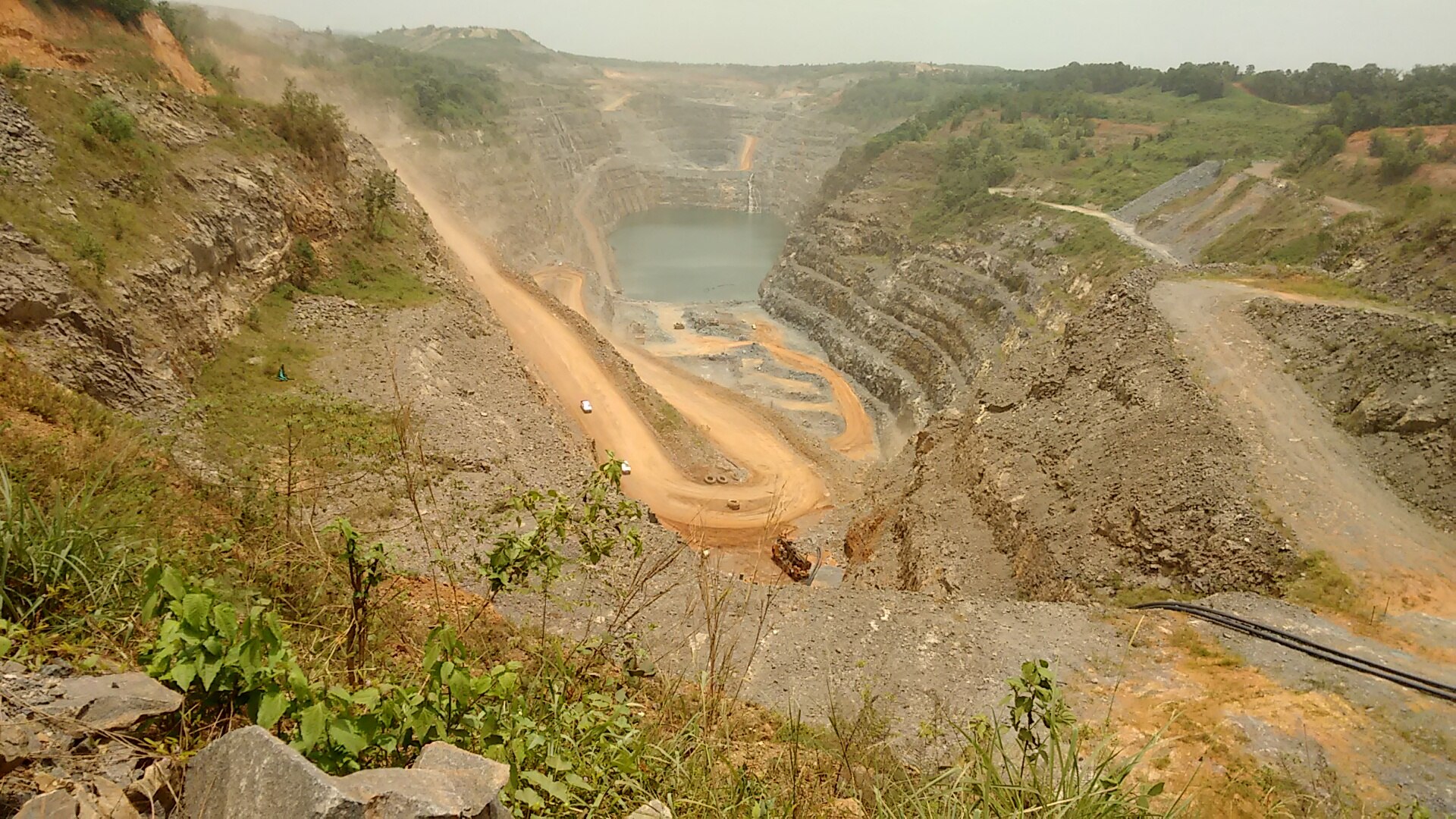
Ghana is Africa’s largest gold producer, with an estimated 150 tonnes in 2025, according to the US Geological Survey. South Africa mined about 90 tonnes.
Gold brought in US$14.9 billion from January to August 2026, two-thirds of all goods exports, BoG data show. The average price in August was US$4,408 an ounce.
The Ghana Gold Board (GoldBod), created by Act 1140 of 2025, has exclusive rights to buy and export gold from small-scale miners. Its chief executive is Sammy Gyamfi.
GoldBod says it buys, assays, refines and exports at least 3 tonnes of gold a week. The foreign currency it earns helps rebuild the central bank’s reserves.
Many large mines are run by foreign companies under licences overseen by Minister Buah’s ministry. Two of the best known are listed in New York:
- Newmont, the only gold producer in the S&P 500 index, which manages the Ahafo South and Ahafo North mines.
- AngloGold Ashanti, headquartered in Greenwood Village, Colorado, which runs the Obuasi and Iduapriem mines.
How the gold price lifted growth, and what it means for reserves, is covered in Ghana grows 6% as gold lifts exports.
Cocoa, COCOBOD and the Farmgate Price
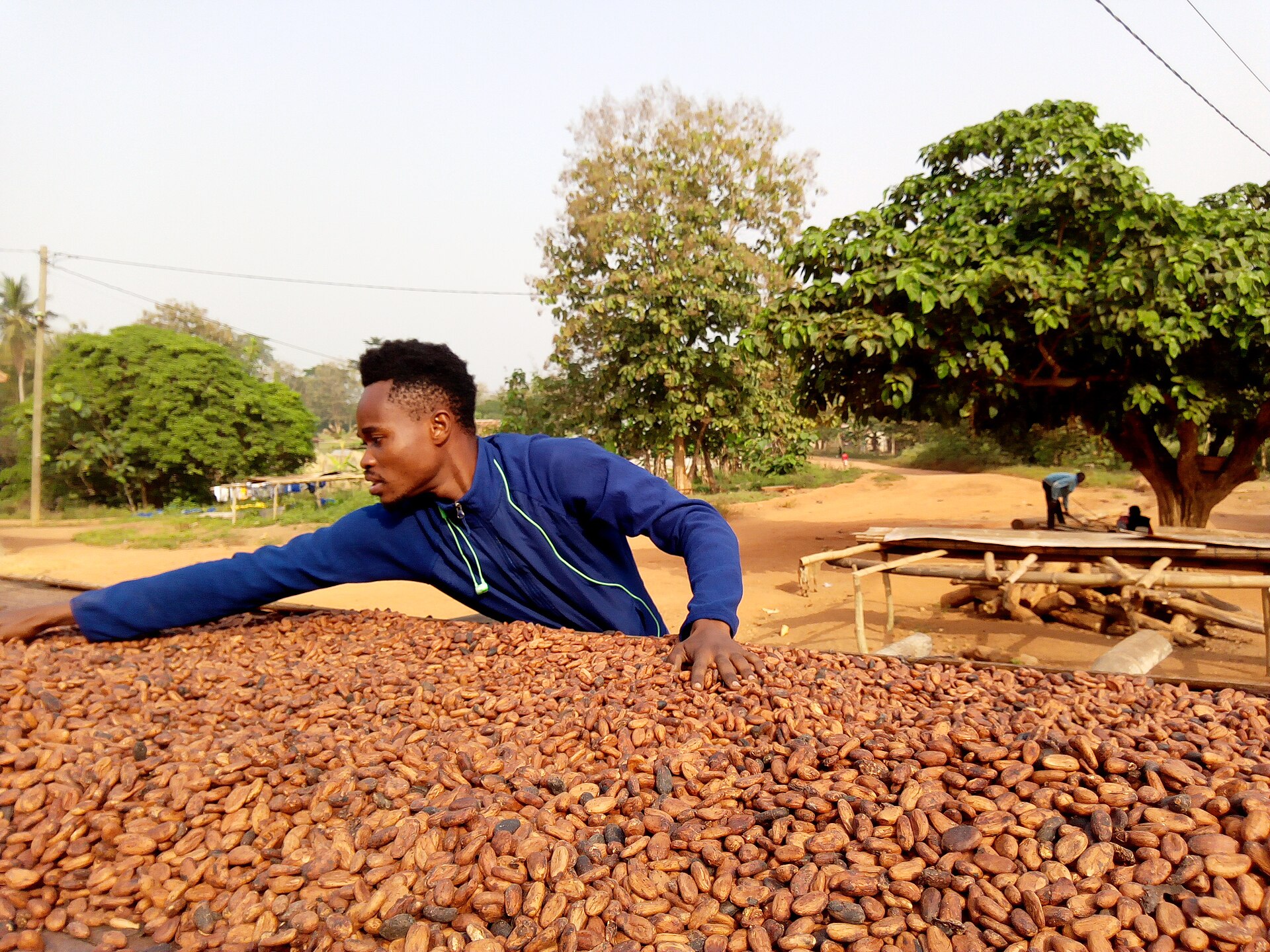
The Ghana Cocoa Board (COCOBOD) is the state agency that regulates the crop and sets the price paid to farmers. Its chief executive is Ransford Anertey Abbey.
On Friday, 25 September 2026, COCOBOD set the 2026/27 producer price at GH¢42,400 a tonne (about US$3,590). That is GH¢2,650 (about US$225) per 64-kilogram bag.
The previous price was GH¢41,392 a tonne (about US$3,510). COCOBOD says the new price gives farmers 71.18% of the crop’s gross free-on-board value, the export price at the port.
A new Ghana Cocoa Board Act, 2026, guarantees farmers at least 70% of that value. COCOBOD also says it is fighting cocoa smuggling to neighbouring countries.
To fund purchases, its subsidiary Cocoa Capital PLC announced a GH¢16.3 billion (about US$1.38 billion) note programme on 25 September 2026. It combines GH¢14 billion (about US$1.19 billion) of short-term paper and GH¢2.3 billion (about US$195 million) of bonds for legacy debt.
The Securities and Exchange Commission approved the issue, and repayment is backed by forward cocoa sales. Cocoa exports earned US$2.76 billion from January to August 2026, the second-biggest export after gold.
Oil: Jubilee, Tullow and Kosmos
Ghana’s oil comes from offshore fields in the Gulf of Guinea. Jubilee was discovered in 2007 and began producing in late 2010, according to partner Kosmos Energy.
The partners in Jubilee, according to both Tullow and Kosmos, are these:
- Tullow Oil, the London-listed operator, with 38.98%.
- Kosmos Energy, based in Dallas and listed in New York, with 38.61%.
- Ghana National Petroleum Corporation (GNPC), the state oil company, with 19.69%.
- PetroSA, South Africa’s state oil company, with 2.72%.
Jubilee pumped 70,800 barrels a day gross in the first half of 2026, Tullow reported on Monday, 28 September. The smaller TEN fields, also run by Tullow, added 14,800 barrels a day.
Tullow, led by chief executive Ian Perks, says Parliament ratified the extension of both licence areas to 31 December 2040. On Wednesday, 30 September 2026, an International Chamber of Commerce tribunal upheld a US$196.5 million Ghana tax assessment against Tullow.
The Ghana Revenue Authority, the national tax agency, puts the total with penalties at about US$393 million, the Ghana News Agency reported. Tullow said it was disappointed; a second Tullow tax case is due to be heard in 2027.
Oil exports earned US$2.42 billion from January to August 2026, BoG data show. Energy Minister Jinapor oversees the sector for the government.
Tullow’s latest figures are in Tullow’s first cash-positive first half since 2021.
The Stock Exchange and MTN Ghana
The Ghana Stock Exchange (GSE) in Accra is small but has rallied in 2026. Its Composite Index stood at 14,221.20 on 6 October 2026, up 62.15% since January.
Listed companies were worth GH¢285.6 billion (about US$24.2 billion) in August 2026, according to BoG data.
MTN Ghana, listed as Scancom PLC, is the local arm of South Africa’s MTN Group, in Ghana for 30 years. It reported service revenue of GH¢14.96 billion (about US$1.27 billion) for January to June 2026.
Profit after tax was GH¢5.13 billion (about US$435 million), with active data users up 17.0%. Chief executive Stephen Blewett credited data and mobile money, MyJoyOnline reported.
On 2 October 2026, MTN Ghana received notice of a spectrum award in the 700 MHz and 3 GHz bands. More on that is in MTN Ghana’s 5G spectrum deal.
Debt, the IMF and the Recovery
Ghana’s 2022 debt crisis led to a 39-month IMF Extended Credit Facility of about US$3 billion, approved in May 2023. The IMF board completed its sixth and final review on Monday, 27 July 2026.
It also approved a 36-month Policy Coordination Instrument, an IMF monitoring arrangement that carries no loan. The Ghana News Agency reported that total disbursements reached about US$3 billion.
Public debt was GH¢733.9 billion (US$62.8 billion), or 45.9% of GDP, at the end of July 2026, central bank data show. The Finance Ministry says it settled a US$700 million Eurobond payment ahead of schedule in July 2026.
Growth reached 6.0% year on year in the second quarter of 2026, according to GSS. The central bank’s policy rate has come down from 28.0% in May 2025 to 14.0%.
What It Means for US Readers
Three New York-listed companies, Newmont, AngloGold Ashanti and Kosmos Energy, have large stakes in Ghana’s gold and oil output. Their results depend partly on Ghanaian tax, licence and currency decisions.
Ghana is a major cocoa supplier, so COCOBOD’s prices and financing can affect bean supply for US chocolate makers. Gold sales through GoldBod also feed a global market priced in dollars.
For visitors and remote workers, a weaker local currency means dollars buy more, though prices rose 5.0% in the year to August. Ghana’s ties with Washington, Beijing and the Gulf are covered in Ghana geopolitics explained.
What Prediction Markets Say
Kalshi is a US betting exchange regulated by the Commodity Futures Trading Commission (CFTC). On its market for Ghana’s next parliamentary election, bettors priced the NDC at 61.0% and the NPP at 36.0%.
Prices were taken at 5:07 a.m. ET on 7 October 2026; trading volume was not available. These are bets on a vote due in 2028, not polls; an NDC win would point to policy continuity.
Why we show this: prediction markets turn real-money bets into a live probability that moves within minutes of the news, which is why investors, campaigns and newsrooms in the United States now follow them closely. We show them next to polls and official results, never instead of them.
What Is Not Known
GSS was due to publish September 2026 inflation in the second week of October. The date of the 2027 budget statement had not been confirmed.
The IMF said in August 2026 that talks with some external commercial creditors were still under way. Tullow’s next steps after the tax ruling and the approvals for the Attijariwafa deal are also pending.
Gold is now two-thirds of goods exports, so a fall in the gold price would hit export earnings and reserves together. How long the 2026 price boom lasts is unknown.
Frequently Asked Questions
Who controls Ghana’s economic policy?
President John Mahama and Finance Minister Cassiel Ato Forson set fiscal policy, and parliament approves the budget. The Bank of Ghana under Governor Johnson Asiama sets interest rates.
What is Ghana’s biggest export?
Gold. It earned US$14.9 billion from January to August 2026, about two-thirds of goods exports, ahead of cocoa and oil.
What is the Bank of Ghana’s interest rate?
The policy rate is 14.0%, held at the September 2026 meeting. Inflation was 5.0% in August 2026, below the 8% target.
Who pumps Ghana’s oil?
Tullow Oil operates the offshore Jubilee and TEN fields. Its partners include Kosmos Energy of Dallas, the state firm GNPC and South Africa’s PetroSA.
What does Ghana pay cocoa farmers?
From 25 September 2026, the producer price is about US$3,590 a tonne. COCOBOD says that is 71.18% of the gross export value.
Is Ghana still in an IMF programme?
Its US$3 billion loan programme ended with a final review on 27 July 2026. Ghana now has a Policy Coordination Instrument, an IMF monitoring deal with no loan.
Sources: Bank of Ghana, MPC Decision Statement, September 2026; Bank of Ghana, Summary of Economic and Financial Data, September 2026; Bank of Ghana, interbank FX rates (6 October 2026); Ghana Statistical Service; Presidency of Ghana, cabinet; Ministry of Finance; Ministry of Lands and Natural Resources; COCOBOD, 2026/27 producer price; COCOBOD, cocoa notes programme; Ghana Gold Board; Ghana Stock Exchange; IMF Country Report No. 26/212; US Geological Survey, Gold 2026; World Bank data; Tullow Oil, 2026 half-year report; Tullow Oil, Ghana; Tullow Oil, Ghana tax arbitration update (30 September 2026);Kosmos Energy, Ghana; Newmont operations; AngloGold Ashanti; Attijariwafa bank, press release (1 October 2026); GCB Bank; MTN Ghana, spectrum notice; MyJoyOnline (MTN Ghana results); Ghana News Agency (IMF review); Ghana News Agency (GRA on Tullow ruling) (all accessed 7 October 2026).
This article was produced by The Rio Times’ automated newsroom system. How we use AI · Report an error · Editorial responsibility: Matthias Camenzind, Editor-in-Chief
Part of our ongoing coverage
Africa: The New Scramble — the great-power contest over the continent.