Ghana Explained 2026: The Country, the Mahama Government and What to Watch
GUIDES · GHANA
Key Facts
- —Capital Accra, in the Greater Accra Region, which overtook Ashanti as the most populous region at the 2021 census.
- —Population 34.38 million on the statistical service’s 2026 projection. The last actual count, in 2021, recorded 30.83 million, so treat this as a projection.
- —Currency The cedi, written GH¢. The central bank’s interbank reference rate was about 11.57 to the US dollar on 23 September 2026.
- —Language English is the official language. Twi, Ewe, Ga, Dagbani and several dozen others are spoken daily, and English carries a foreigner everywhere in business.
- —Economy Gold above all, then cocoa and crude oil. Gold exports alone reached US$12.50 billion in the first half of 2026, more than two-thirds of export receipts.
- —Government A unitary presidential republic under the 1992 constitution. Four-year terms, a maximum of two, and ministers must be vetted and approved by parliament.
Ghana explained for newcomers: what the 2022 default actually changed, why the cedi swung so violently, and what a gold boom does and does not fix.
Ghana explained in 2026 is a recovery story with a wobble in it. The country defaulted in 2022, restructured, and by 2025 had inflation falling and a currency that gained against the dollar for the first time in three decades. In 2026 the cedi has given back much of that, and the question is whether the rest holds.
What kind of country is this?
Ghana sits on the Gulf of Guinea in West Africa, with a coastal south, a forest belt through the middle where the cocoa and gold are, and a drier savannah north. The Volta river system and the lake behind the Akosombo dam dominate the east and supply much of the country’s power. Any Ghana explained guide starts there, because the power supply follows the rain.
Accra on the coast is the capital and the commercial centre. Greater Accra overtook the Ashanti Region as the most populous at the 2021 census. Kumasi, the Ashanti capital inland, is the second city and the historic seat of a kingdom that predates the modern state and still carries real social weight.
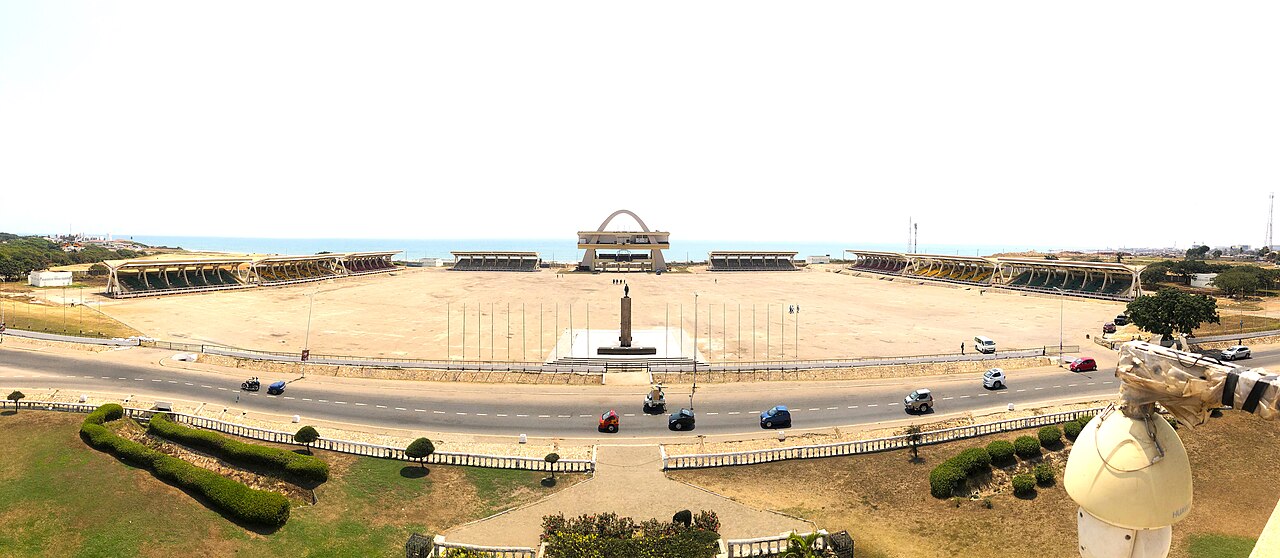
Ghana became independent in 1957, the first sub-Saharan African country to decolonise, under Kwame Nkrumah. That precedence still shapes how Ghanaians present the country and how the diaspora relates to it. After coups and military governments, the constitution of 1992 restored civilian rule, and power has since alternated peacefully between the two main parties more often than almost anywhere else on the continent.
Who runs Ghana and how
John Dramani Mahama of the National Democratic Congress has been president since 7 January 2025. He won the election of 7 December 2024 with 6,328,397 votes, or 56.55 percent, against 4,657,304 for Mahamudu Bawumia of the New Patriotic Party. Turnout was 60.9 percent, and Bawumia conceded the day before the official declaration.
This is a second, non-consecutive term: Mahama was previously president from 2012 to 2017. The constitution sets four-year terms with a maximum of two, and whether that maximum bars only two consecutive terms or two in total is now before the Supreme Court in two pending cases. No ruling date has been set.
The president is directly elected and cabinet ministers must be vetted and approved by parliament, which gives the legislature a real gatekeeping role that many presidential systems lack. The governing party holds a supermajority of roughly 183 to 186 of 276 seats, though the exact figure has moved through a contested re-collation, a polling-station re-run and a by-election, and reputable sources still disagree on it.
What matters for a newcomer is the pattern rather than the arithmetic. Ghana alternates governments peacefully, the courts are used and generally respected, and policy therefore swings with elections rather than being locked in. A commitment made by one administration is not automatically binding on the next.
How the economy works
Gold is the economy’s centre of gravity and 2026 has been extraordinary for it. Gold exports reached US$12.50 billion in the first half of 2026, up 49.0 percent on the same period of 2025, driven by a 49.7 percent rise in the average realised price to US$4,463.80 a fine ounce. Gold accounted for more than two-thirds of all export receipts in the period.
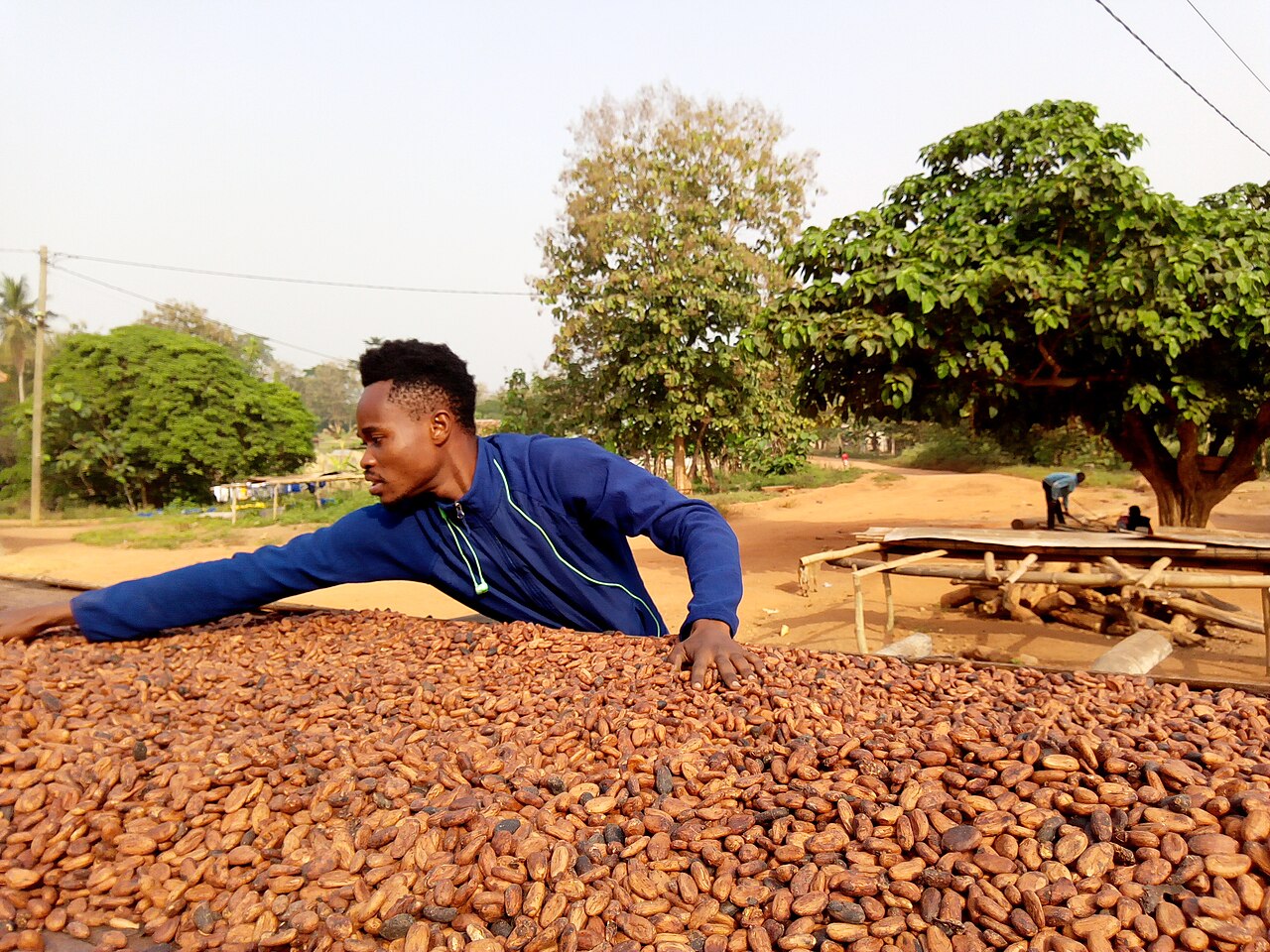
Cocoa is second and flat. Exports of beans and products were US$2.29 billion in the first half of 2026 against US$2.17 billion a year earlier, with higher prices offsetting falling volumes. Crude oil is third and the weakest of the three: full-year 2025 earnings fell 32.3 percent to US$2.62 billion, and output dropped 23.2 percent, dragging industrial growth down.
The macro story is the 2022 default and what followed. Ghana restructured its debt and ran an International Monetary Fund programme. It is now under a Policy Coordination Instrument, whose first review falls in October 2026. That review is the first real test of post-bailout credibility, and markets will read it closely.
Inflation has come down a long way and has started to turn. It was 5.0 percent in the year to August 2026, up from 4.6 percent in July but 6.5 points below the 11.5 percent of August 2025. Month on month, prices actually fell 1.0 percent. Services inflation at 8.6 percent runs far above goods at 3.8 percent, and locally produced goods and services account for 86.2 percent of the total, with imported inflation at just 2.2 percent.
The currency is the live problem. The cedi ended 2025 at 10.45 to the dollar, its first annual gain since at least 1994, after starting that year near 15.30. In 2026 it has reversed: depreciation reached 9.5 percent over the first nine months, and the interbank rate sat around 11.57 in late September. Forex bureaux were quoting close to 12, and that widening gap between official and street rates is what to watch rather than the headline rate itself.
What is happening right now
As of 24 September 2026 the central bank’s Monetary Policy Committee is concluding its 132nd meeting, with a press conference announcing the decision. The rate going in is 14.0 percent, cut by 150 basis points in March 2026 and held unanimously at the two meetings since. This guide does not state the outcome, because it had not been published when the guide was written.
The governor framed the question publicly. Is 14.0 percent still the right anchor for inflation expectations, now that inflation has begun rising again from below the target floor? Against that sit a reserve cover down to about 4.2 months and a current account projected into deficit in the third quarter.
The cedi is the second story and it connects to the first. Depreciation of 9.5 percent over nine months, bureau rates near 12 against an interbank reference near 11.57, and a reported reduction in the central bank’s September intervention target to US$500 million all point the same way. A gold windfall has not insulated the currency.
Third is the constitutional question hanging over the presidency. Two writs ask the Supreme Court whether the two-term limit bars a third consecutive term or a third term outright. Mahama has said publicly that he reads the constitution as clear. Until the Court rules, the 2028 field is genuinely unsettled.
What to watch
The first review under the Policy Coordination Instrument falls in October 2026, without a published date. It is the first accountability test since the bailout ended, and it will matter more to Ghana’s borrowing costs than any single month of inflation.
The statistical service publishes consumer prices in the first days of each following month, which puts the September reading in early October. It has not published the exact date. One brokerage forecast September headline inflation at 5.1 percent, give or take half a point.
On the fiscal side, regional budget hearings for all metropolitan, municipal and district assemblies run from 5 to 16 October 2026 as part of preparing the 2027 budget. Those hearings are where local spending is actually set, and they are published in the finance ministry’s own guidelines.
What this means for foreigners
Ghana’s draw for foreigners is unusual in the region and largely diaspora-driven. The country has deliberately courted people of African descent to visit, invest and settle, and that has produced a visible community of returnees in Accra and along the coast. It also means the practical infrastructure for arrivals is better developed than the raw economic figures would suggest.
English as the official language removes the single largest friction most foreigners face elsewhere on the continent. Contracts, courts, banking and government business all run in English, and a newcomer is not dependent on translation for anything official.
The currency is the thing to plan around, not the prices. The cedi gained about 40 percent in 2025. It has given back 9.5 percent in the first nine months of 2026. Any dollar figure quoted a year ago is therefore unreliable. Budget in cedis against local costs, and treat conversions as a snapshot.
On the wider picture, inflation at 5.0 percent is low by both Ghanaian and regional standards, but the composition matters: services inflation at 8.6 percent is more than double goods at 3.8 percent, and services are what a resident buys. Ghana explained honestly means saying that headline disinflation has not yet reached rents, schooling and professional fees.
Connected Coverage
Sources: Population from the Ghana Statistical Service, inflation from its consumer price index, the policy rate and exchange rates from the Bank of Ghana’s own releases, the 2024 election result from the Electoral Commission, and the 2027 budget timetable from the finance ministry’s guidelines.
- Ghana Statistical Service — population dashboard and projections
- Ghana Statistical Service — inflation rate
- Bank of Ghana — daily interbank exchange rates
- Bank of Ghana — notice of the 132nd Monetary Policy Committee meeting
- Bank of Ghana — July 2026 Monetary Policy Committee press release
- Electoral Commission of Ghana — 2024 presidential election results
- Constitution of the Republic of Ghana, 1992
- Ministry of Finance — 2027 to 2030 budget preparation guidelines
- Ghana Statistical Service — 2021 census provisional results
What Is Not Known
The central bank’s September 2026 rate decision. The 132nd committee meeting concluded on the day this guide was written and the outcome had not been published. The rate going in was 14.0 percent, held unanimously at the two previous meetings. The governor’s own remarks pointed both ways, and at least one brokerage saw little case for a change. Check the bank’s site rather than relying on this guide for the current rate.
The exact composition of parliament. Reputable sources give the governing party 183, 185 or 186 seats of 276, with the opposition on 86 to 88 and four independents. The numbers genuinely moved through a contested re-collation of nine seats in December 2024, a re-run in nineteen polling stations in July 2025 and a by-election in September 2025. The supermajority is not in dispute; the precise figure is.
Whether the president is eligible to stand again. Two writs before the Supreme Court ask whether the two-term limit in the 1992 constitution bars a third consecutive term or a third term in total. No ruling date has been found. The answer determines whether the incumbent can contest 2028, which makes it the single most consequential open question in Ghanaian politics.
Ghana’s population. The figure of 34.38 million is a 2026 projection by the statistical service. The last actual count, on census night in June 2021, recorded 30.83 million in the final report against 30.79 million in the provisional release. The projection implies growth of about 2.2 percent a year, slightly above the rate used in Fund staff projections.
The size of the 2025 gold windfall. The central bank’s own monetary policy report gives full-year 2025 gold export earnings of US$20.98 billion, while the national gold board, citing an earlier bank release, says about US$20 billion. The roughly one-billion-dollar gap is probably provisional against revised data, but neither figure has been reconciled publicly.
Frequently Asked Questions
Who is the president of Ghana?
John Dramani Mahama of the National Democratic Congress, sworn in on 7 January 2025. He won the December 2024 election with 56.55 percent against 41.61 percent for Mahamudu Bawumia, and this is a second, non-consecutive term after his first from 2012 to 2017.
What does Ghana export?
Gold above all, then cocoa and crude oil. Gold exports were US$12.50 billion in the first half of 2026 alone, more than two-thirds of export receipts, after a 49.7 percent rise in the average realised price to US$4,463.80 a fine ounce.
Is the Ghanaian cedi stable?
Not currently. It gained sharply in 2025, ending the year at 10.45 to the US dollar after starting near 15.30, which was its first annual gain since at least 1994. In 2026 it reversed, with depreciation reaching 9.5 percent over nine months and the interbank rate near 11.57 in late September.
What language is spoken in Ghana?
English is the official language and is used in contracts, courts, banking and government. Twi, Ewe, Ga, Dagbani and several dozen other languages are spoken daily, but a foreigner does not need them for official business.
Has Ghana recovered from its 2022 default?
Partly. It restructured its debt, completed an International Monetary Fund programme and is now under a Policy Coordination Instrument, whose first review falls in October 2026. Inflation has fallen from 11.5 percent a year earlier to 5.0 percent, but reserve cover has slipped to about 4.2 months and the currency has weakened through 2026.
What is inflation in Ghana?
5.0 percent in the year to August 2026, up from 4.6 percent in July but far below the 11.5 percent of a year earlier. The composition matters: services inflation runs at 8.6 percent against 3.8 percent for goods, and services are what a resident actually buys.
This article was produced by The Rio Times’ automated newsroom system. How we use AI · Report an error
Read More from The Rio Times