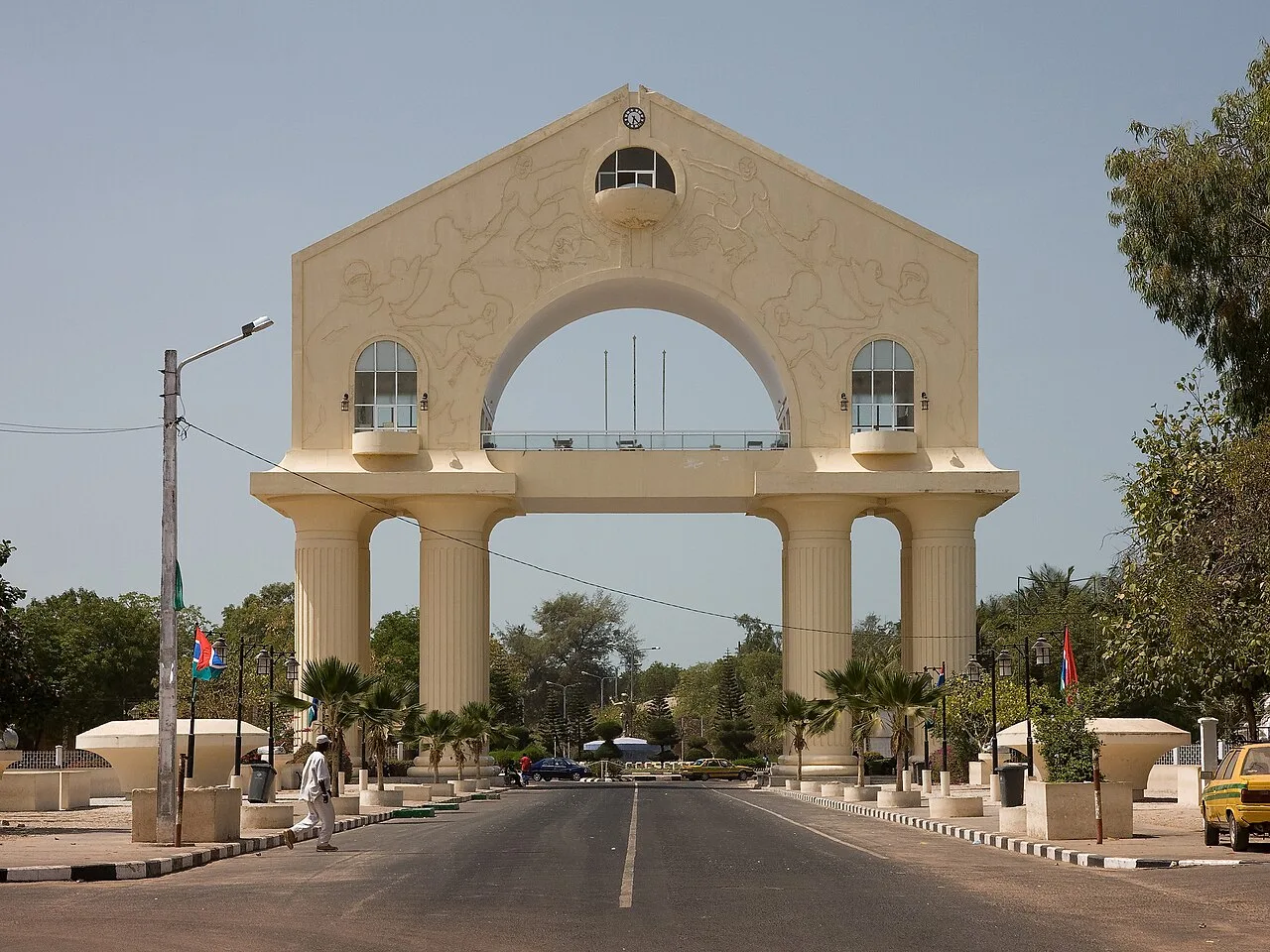
A women’s group in The Gambia has taken its case for more female political leaders to the European observers who will watch the country’s presidential vote. The MAA Foundation for Women, a Gambian women’s empowerment non-profit, said on 18 November 2026 that it met European Union (EU) election observers.
Voters go to the polls on Saturday 5 December 2026, and President Adama Barrow, in office since 2017, is seeking a third term. The foundation says women must be “supported, equipped and given the platforms” to influence decisions.
Key Facts
- Who The MAA Foundation for Women, a Gambian women’s empowerment non-profit, met EU election observers.
- Vote Gambians choose a president on Saturday 5 December 2026; campaigning is under way.
- Gap Women are about 56% of registered voters but hold 5 of 58 parliamentary seats.
- Observers The EU observer mission, led by Austrian lawmaker Reinhold Lopatka, reports first on Monday 7 December.
- Prediction markets Polymarket puts Adama Barrow at 85.5% to win (18 November 2026, 2:08 p.m. ET).
Women are most of the electorate but a small minority in parliament. One Gambian group wants that gap on the record before the vote.
The Big Picture
The Gambia, a small West African country, votes on Saturday 5 December 2026, and Barrow is seeking a third term, as our report on his filing explains. The Independent Electoral Commission (IEC), the body that runs the vote, accepted nine candidates after nominations closed on Saturday 14 November, according to its briefing that day.
The IEC said on 14 November that of 27 nomination forms issued, 11 were withdrawn, 16 filed and 7 rejected. The field includes the independent Lamin J. Darbo, whose bid we covered.
The IEC chairman, Joseph Colley, said on Tuesday 3 November 2026 that 1,146,474 people are registered at 1,773 polling stations. From the commission’s regional table, we calculate that women are about 56% of those voters.
The National Assembly’s members page, which we read on 18 November 2026, lists 5 women among 58 members of the current parliament, the 6th Legislature, about 8.6% by our calculation. We found no gender quota in the electoral rules we read.
The foundation’s “Her” Agenda 2026 and Beyond brings religious leaders, parties, youth and women leaders together to prevent electoral violence. Its line is that “investing in women’s political leadership is equally an investment in peace.”
What the Foundation Said
The foundation said the meeting followed an earlier institutional engagement. It named Cristina Hurduiala and Daniel Kerekes as the observers, without giving their titles.
It also named its Founder and CEO, Fatoumata Jawara. Its Network of Women in Politics and Leadership, set up after the 2023 local government elections, brought together 58 women from different parties and spans all seven regions.

Who Is Watching the Vote
The EU Election Observation Mission, a team the European Union sends to assess elections, is led by Reinhold Lopatka, an Austrian member of the European Parliament. The EU’s foreign-policy chief, Kaja Kallas, appointed him.
A core team of nine analysts arrived in Banjul, the capital, on Wednesday 21 October, and 16 long-term observers deployed on Thursday 5 November, the mission says. Twenty short-term observers join before polling.
The observers come from EU states plus Canada, Switzerland, Norway and the United Kingdom, with a seven-member European Parliament delegation. It says it does not certify results, and it will assess the “participation of women, youth and disadvantaged groups, including people with disabilities”.
Why It Matters
By our calculation from the IEC’s table, women are about 56% of voters, yet the Assembly’s members page, read on 18 November 2026, shows 5 of 58 seats. That gap is the baseline the foundation wants observers to see.
The mission’s mandate already includes women’s participation, so a group that reaches them before polling speaks to people who will report on it. Their first public assessment comes on Monday 7 December 2026.
What Prediction Markets Say
Polymarket, a market where users bet real money on outcomes, showed US$20,466 traded on its Gambia winner market at 2:08 p.m. ET on Wednesday 18 November 2026. It priced Adama Barrow at 85.5%, Ousainou Darboe at 13.5% and Talib Ahmed Bensouda, a candidate of the UNITE party, at 0.9%.
These prices are implied probabilities from bets, not polls. They show what traders expect, not what voters have said.
Why we show this: prediction markets turn real-money bets into a live probability that moves within minutes of the news, which is why investors, campaigns and newsrooms in the United States now follow them closely. We show them next to polls and official results, never instead of them.
What to Watch
Campaigning is under way, and voting follows on Saturday 5 December 2026. The EU mission’s preliminary statement is due on Monday 7 December.
Our guide to what the 1996 law bans on voting day sets out the election-day rules. Our report on the poll lead shows where the race stood before the campaign began.
What It Means for You
For readers in the United States, this story is about whether observers hear women’s voices before the vote, not about a change in who is expected to win. More coverage is on our Gambia page.
What Is Not Known
We could not confirm the meeting independently with the EU mission, and the foundation’s account gives no date for it. We also do not know the titles of the two named observers.
We have no count of women among the candidates, and we do not state any candidate’s gender. The IEC homepage lists eight candidates while its 14 November briefing lists nine, and we use the briefing’s figure.
Frequently Asked Questions
When is The Gambia’s presidential election?
It is on Saturday 5 December 2026. Campaigning is under way.
What did the MAA Foundation for Women say?
It said it met European Union election observers in a follow-up to an earlier engagement. It argues that investing in women’s political leadership is an investment in peace.
When will the EU observers report?
The mission’s preliminary statement is due at a press conference in Banjul on Monday 7 December 2026. A final report follows one to three months after the process ends.
How many women sit in the National Assembly?
The Assembly’s members page lists 5 women among 58 members, about 8.6% by our calculation, read on 18 November 2026. We found no gender quota in the electoral rules we read.
Sources: MAA Foundation for Women, statement of 18 November 2026; Independent Electoral Commission, nomination briefing of 14 November 2026 and statement of its chairman of 3 November 2026; EU Election Observation Mission, mission page and factsheet. National Assembly of The Gambia, members page (read 18 November 2026); Polymarket market page (read 18 November 2026).
This article was produced by The Rio Times’ automated AI newsroom. Editorial responsibility: Matthias Camenzind, Publisher and Editor-in-Chief. The Rio Times also runs Ask Rio Times, which answers from 100,000+ of our own articles, the daily Latin America Power Map, and prediction-market odds on elections and markets.. How we use AI · Report an error