Ecuador Security and Crime Explained
Gangs, crowded prisons, a curfew and a vote this weekend all shape Ecuador's security story. Here is what the official numbers say, what the government only claims, and where the open questions sit.

Pillar: Ecuador
President Daniel Noboa declared an “internal armed conflict” against criminal gangs on 9 January 2024, and declared a new internal armed conflict in decree 424 on 18 June 2026. On 4 September 2025 US Secretary of State Marco Rubio announced that two of them, Los Choneros and Los Lobos, are designated terrorist organisations.
That US label lets Washington target the bank accounts and property of gang members, which gives American readers a direct stake, and Ecuador holds local elections on 29 November 2026. This guide explains the gangs, prisons, homicide data, curfews, illegal mining and travel advice, using official figures and naming who says what.
Key Facts
- Power Index. Ecuador ranks 8th of 14 in The Rio Times Latin America Power Index, with 37.2 points (November 2026 edition).
- Who. President Daniel Noboa’s government and gangs it calls terrorists, such as Los Choneros.
- What. Police counted 7,026 violent deaths to 9 November 2026, 11.5% fewer than a year earlier.
- Where. Eight provinces, including Guayas and Manabí, are under a state of exception (emergency rule).
- When. Local elections on 29 November 2026; emergency rule ends about mid-December 2026.
Gangs, crowded prisons, a curfew and a vote this weekend all shape Ecuador’s security story. Here is what the official numbers say, what the government only claims, and where the open questions sit.
Gangs and a Declared War
Decree 111, signed by President Daniel Noboa on 9 January 2024, recognised an “internal armed conflict”. It named 22 gangs, among them Los Choneros, Los Lobos, Los Tiguerones and Mafia 18 (Ecuadorian street and prison gangs), as terrorist organisations and “non-state belligerent actors”.
The decree ordered the armed forces and police to act against them within international humanitarian law, the rules that govern armed conflict. Jaime Vela, then head of the Armed Forces Joint Command, the military’s top operational body, said in January 2024, in our translation from Spanish: “Every terrorist group identified in the decree has become a military target.”
Noboa signed decree 424 on 18 June 2026, which replaced decree 111 and the later decrees that renewed it. The new text keeps the conflict status but no longer lists gangs by name, and it provides for international cooperation and legal immunity for foreign agents.
On 4 September 2025 Rubio announced in Quito that Los Choneros and Los Lobos are Foreign Terrorist Organizations and Specially Designated Global Terrorists, two US legal labels that allow sanctions and asset freezes. Rubio said: “This time, we’re not just going to hunt for drug dealers in the little fast boats and say, ‘Let’s try to arrest them.’”
The label lets the US target the property and bank accounts of members and associates and eases intelligence sharing, according to Rubio’s remarks in Quito on 4 September 2025. That makes Ecuador’s gang war a matter of American sanctions law as well.
Ecuadorians voted on 16 November 2025 on lifting the constitutional ban on foreign military bases, and about 61% said no, according to the electoral council’s final count of 1 December 2025. Noboa said on 28 August 2026 that about 80,000 armed people belong to criminal groups, a claim we could not verify.
Overcrowded Prisons, Open Riots
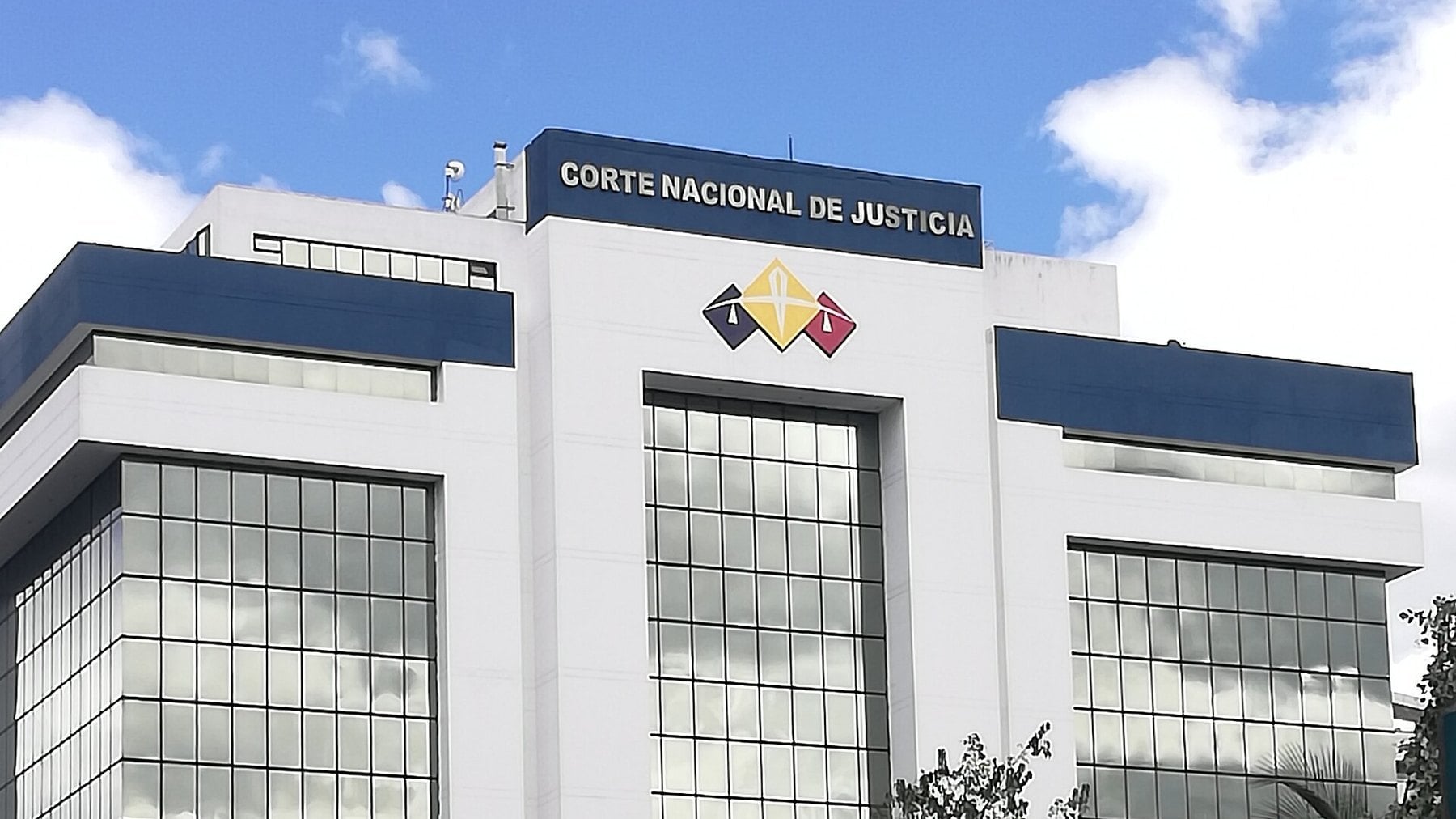
SNAI, the national prison service, counted 39,300 inmates in 33 prisons in August 2026, in space built for 27,631. That is a shortfall of 11,669 places, or overcrowding of 42.23%.
The same SNAI count found that 16,155 of them, or 41.11%, had no sentence yet, so more than two in five inmates were still waiting for a verdict. Interior Ministry open data show 78 homicides inside prisons from January to September 2026.
On 9 November 2025 SNAI reported 31 dead in the Machala prison. El Encuentro, a maximum-security prison in Santa Elena province, began operating on 10 November 2025 with about 300 inmates, among them former vice president Jorge Glas, who is serving prison sentences for corruption.
On 22 October 2026 simultaneous riots at Cotopaxi No. 1 prison in Latacunga and El Inca prison in Quito, two of the country’s state prisons, left eight dead, as our report on the prison riots shows. Interior Minister John Reimberg linked the riots to the arrest of Luisa González, a former presidential candidate of the opposition Citizen Revolution movement of former president Rafael Correa.
That link is the minister’s claim. We found no independent finding on who ordered the riots.
Where the Killing Is Concentrated
The Interior Ministry counted 9,216 intentional homicides in 2025, or 50.91 per 100,000 people, using a population of 18,103,660 from INEC, the national statistics institute. That was 32% more than in 2024 and the highest on record, according to the ministry.
The National Police counted 6,964 violent deaths in 2024, or about 38.8 per 100,000, and about 8,200 in 2023, though sources for 2023 range from 8,004 to 8,248. Police “violent deaths” and ministry “intentional homicides” are different series with different definitions, so they should never be mixed.
The National Police recorded 7,026 violent deaths from 1 January to 9 November 2026, according to figures published in Ecuador’s national press on 12 November, against 7,941 in the same period of 2025, a fall of 11.5%. Our report on the 11.5% fall in killings sets out the detail.
The fall is uneven in the police monthly counts. June and July 2026 were both higher than in 2025, before October fell back to 572 against 783.
Interior Ministry intentional homicides for January to September 2026 were 6,285, against 6,838 a year earlier, a fall of 8.1%. We found no figures on missing persons.
The Interior Ministry counted 190 massacres, meaning three or more victims, with 667 deaths from January to September 2026, against 202 massacres and 767 deaths a year earlier. The coastal provinces of Guayas, Manabí, El Oro and Los Ríos account for most of them.
The Presidency’s government balance put drug seizures at 214 tons in 2025, down from a record 294.61 tons in 2024. We found no official 2026 tonnage.
A Curfew With Critics
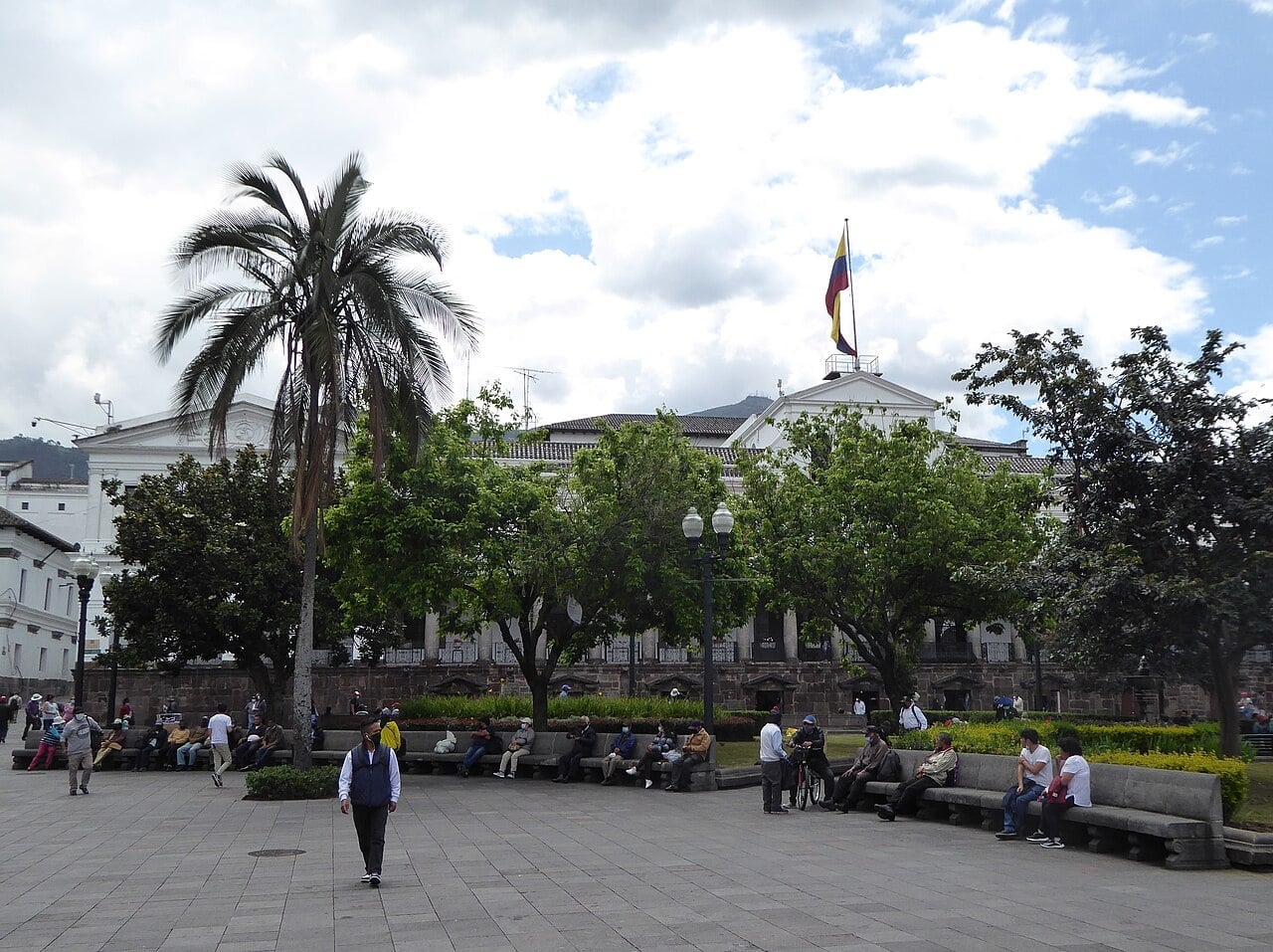
Decree 498, signed on 15 September 2026, declared a 60-day state of exception, an emergency regime that suspends some rights. Decree 532, signed on 11 November 2026, renews it for 30 days on the same terms in El Oro, Esmeraldas, Guayas, Los Ríos, Manabí, Pichincha, Santa Elena and Santo Domingo de los Tsáchilas.
The rights suspended are the inviolability of the home and of correspondence, the usual protection against searches and the opening of private mail. Decree 532 runs for 30 days, which puts its end at about mid-December 2026 by our calculation, because the decrees do not give a date in the reports we read.
Decree 519, signed on 15 October 2026, set a curfew from 00:00 to 05:00 from 1 to 10 November 2026 in Guayas, Manabí, Los Ríos, El Oro and Esmeraldas, with Santa Elena exempt. It was the fourth curfew, after one from 17 to 30 September in four provinces, and it has ended.
The National Police counted 167 violent deaths from 1 to 9 November 2026 against 320 a year earlier, a fall of 47.8%, as our report on the end of the curfew notes. Noboa, whose own count to 10 November was 178 deaths against 342 a year earlier, said in our translation from Spanish: “It is a 48% reduction in the ten most violent days.”
Noboa also claimed 40% fewer crimes during the September curfew, a government claim that is not independently verified. Byron Sanmiguel, a security specialist, was quoted in an Ecuadorian daily on 12 November 2026 questioning how success is judged, in our translation: “The success of a security policy is not measured only by how many homicides fall over ten days”, and he said it also depends on whether the State can prevent a rise afterwards.
Javier Gutiérrez, a security analyst, was quoted in the same report, in our translation: “We have to reinforce, not settle for a percentage drop one year and then see it rise the next.” The June and July counts in the police data fit that warning.
Illegal Gold, Travel Warnings and the Next Vote
The Defence Ministry said its operations from 1 January to 10 September 2026 destroyed 1,119 illegal mining camps and 1,748 mine shafts, disabled 590 excavators, 537 ore-sorting machines and 395 dredges, and seized 54,954 sacks of ore. The ministry estimates US$4.659 billion of damage to criminal groups, a government estimate we could not verify.
On 13 October 2025 in Buenos Aires, in Imbabura, 500 troops with a Super Tucano, a light attack aircraft, and helicopters moved into a mining zone, and Defence Minister Gian Carlo Loffredo said: “Illegal mining is over in this sector, no more.” That is a government claim, and operations continued afterwards.
Legal mining is growing, as the Central Bank of Ecuador reported mining exports of US$3.84 billion for January to September 2026, up 33.4%, in our report on mining overtaking bananas. We found no official estimate of how much gold from illegal mines enters that trade.
The US State Department rates Ecuador Level 2, “Exercise Increased Caution”, in an advisory reissued on 18 August 2026 with no change to the national level. We could not open that page, so we do not list the higher-risk areas it names.
The Government of Canada, in an update on 9 November 2026, advises a “high degree of caution” nationwide and says to avoid all travel within 20 km of the Colombian border in Carchi (except the main highway to the Tulcán crossing), Esmeraldas and Sucumbíos. It also advises against non-essential travel to areas including Esmeraldas province, Machala, Huaquillas, Durán, Milagro, east Guayaquil, Babahoyo, Quevedo, Manta, Portoviejo, La Libertad and Santa Elena.
For the Galápagos, Canada’s wording is “normal security precautions”. We found no US government statement on the islands.
Ecuador votes on 29 November 2026 for mayors, prefects, who lead provinces, and the citizen-participation council known as CPCCS, a state body that selects senior public officials, as our election guide explains. The National Electoral Council (CNE) set up a security table on 15 September 2026.
On 9 November 2026 three people were killed at a campaign rally, among them mayoral candidate Ronald Farfán, a former mayor of Huaquillas, and council candidate Cristhian Rugel. The Organization of American States (OAS) Electoral Mission said on 10 November that Ecuadorians should be able to vote in “a climate of peace and civic coexistence”.
The next fixed date is the vote on 29 November 2026, held while the state of exception under decree 532 remains in force. That decree runs out about mid-December 2026, and the government can renew it, which will show whether emergency rule stays the main tool.
Frequently Asked Questions
Is Ecuador at war?
The government recognised an “internal armed conflict” in a decree of January 2024 and treats named gangs as terrorist organisations. Whether that framing is working is disputed, as the curfew critics show.
Has the US designated Ecuadorian gangs as terrorists?
Yes. Secretary of State Marco Rubio announced in September 2025 that Los Choneros and Los Lobos are Foreign Terrorist Organizations, which lets the US target members’ property and bank accounts.
Is violence in Ecuador falling?
Police counts for 2026 are lower than for 2025 overall, yet June and July were higher than a year earlier. Police and Interior Ministry series use different definitions.
What do governments advise about travel to Ecuador?
The US State Department keeps Ecuador at Level 2, “Exercise Increased Caution”, and Canada advises a high degree of caution with named areas to avoid. Each government’s own advisory page has the full list.
When does the state of exception end?
Decree 532, signed on 11 November 2026, runs for 30 days, so about mid-December 2026, and it can be renewed. Local elections fall before that, on 29 November 2026.
Sources: National Police of Ecuador; Interior Ministry of Ecuador; SNAI, the national prison service; Presidency of Ecuador, decrees 111, 424, 498, 519 and 532; National Electoral Council of Ecuador; Defence Ministry of Ecuador; Central Bank of Ecuador; Government of Canada travel advisory for Ecuador; US State Department; statement of the US Secretary of State, 4 September 2025.
This article was produced by The Rio Times’ automated AI newsroom. Editorial responsibility: Matthias Camenzind, Publisher and Editor-in-Chief. The Rio Times also runs Ask Rio Times, which answers from 100,000+ of our own articles, the daily Latin America Power Map, and prediction-market odds on elections and markets.. How we use AI · Report an error
Expat Guide to Ecuador
What The Rio Times publishes for foreigners who live in or move to Ecuador.
Start here
- Best Places to Live in Ecuador for Expats 2026
- How to Get Residency in Ecuador in 2026: Visas From US$1,446 a Month
- Cost of Living Cuenca, Ecuador — Rent, Bills and Doctors, Priced in Dollars
- Healthcare in Ecuador for Foreigners: Costs & Steps
City guides
Coming up in Ecuador
- Ecuador Voting Weekend Rules for Expats on 29 November 2026 29 Nov
- Camilo Ecuador 2027: Quito and Cuenca Shows Move to 9 and 10 April 9 Apr
Understand Ecuador