Ecuador Blackout Case: Businessman Linked to Progen Power Deals Arrested in Spain
POLITICS · ECUADOR
Key Facts
- —The country Ecuador, a dollarised Andean nation, endured long daily power cuts during the 2024 drought. Emergency power contracts signed in that crisis are now before the courts.
- —What happened On 30 September 2026 Interpol arrested businessman José Walther Manrique Suárez in Spain, Interior Minister John Reimberg said. He is charged in the Progen, or “Blackout”, case.
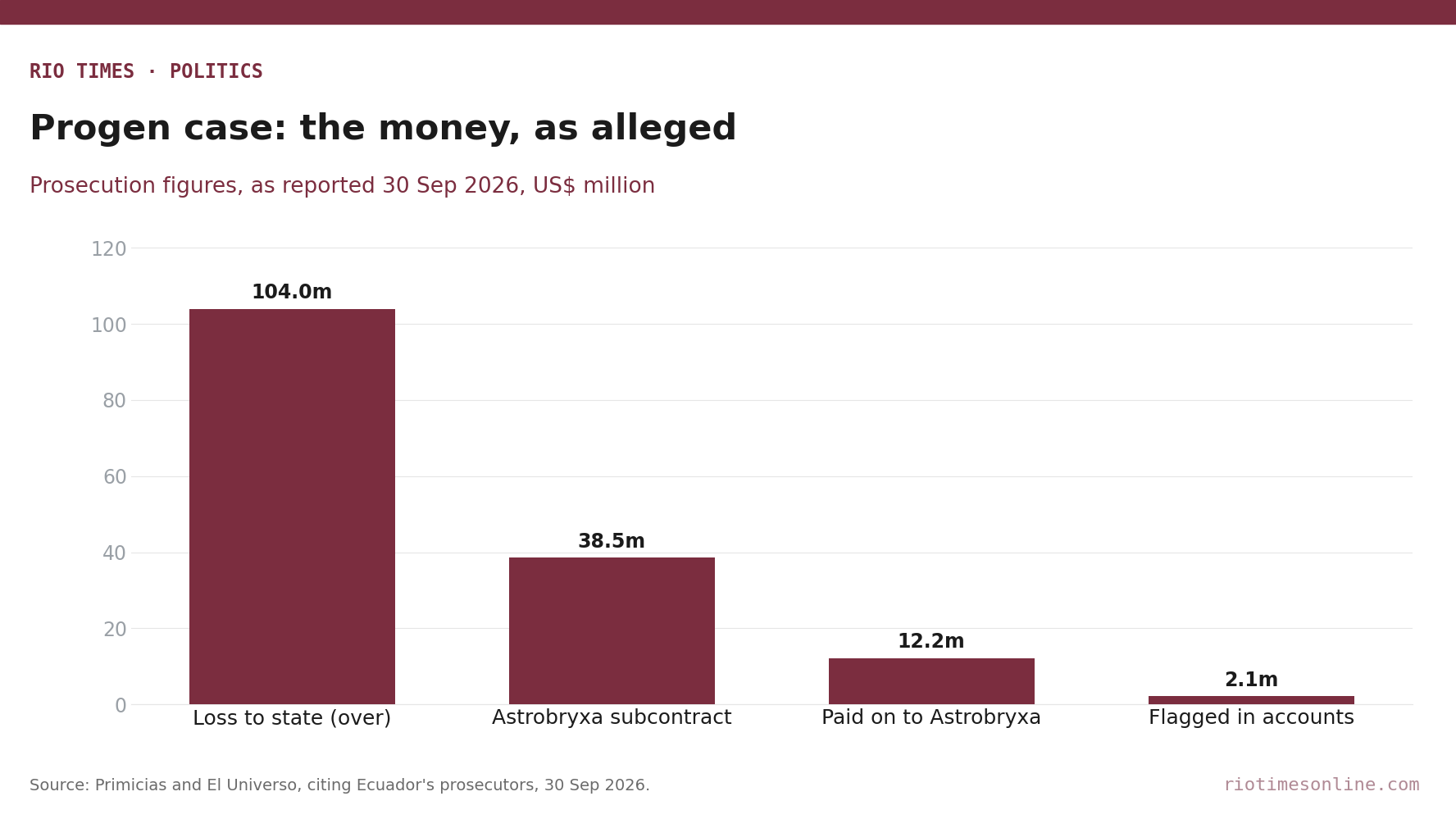
- —The numbers Prosecutors put the state’s loss at over US$104 million and say his firm received US$12.2 million indirectly (Primicias, El Universo, 30 September). Thirty defendants remain.
- —What it means for you Ecuador now has to win an extradition ruling in Spain. Spanish courts, not Quito, will decide when he can be tried at home.
- —Still open Whether Spain extradites him, how it handles the asylum request he and his wife filed, and when the 30 defendants reach a preparatory trial hearing.
The Ecuador blackout case has one of its main private suspects in custody. Interpol arrested businessman José Walther Manrique Suárez in Spain on Wednesday, 30 September, Interior Minister John Reimberg said.
Prosecutors accuse Manrique of embezzlement over emergency power contracts signed during Ecuador’s 2024 electricity crisis. He denies the charges, and he and his wife have asked Spain for asylum.

Who Manrique is and what he is accused of
Manrique, 47, is an engineer from Jipijapa, in the coastal province of Manabí. He runs Astrobryxa S.A., a construction firm in which he holds 60 percent, Primicias reported.
Prosecutors describe him as the local logistics coordinator for Progen Industries LLC, the US supplier. In an e-mail of 6 September 2024, a Progen vice-president named his team as its official representatives.
The contracts covered 49 generators for two thermal plants, at Salitral and Quevedo, El Universo reported. Prosecutors say the machines failed technical requirements and put the state’s loss at over US$104 million.
Witnesses told investigators that Manrique physically stopped officials from recording that the engines dated from 2009. They had been offered as new, according to Primicias.
Where the money went, according to prosecutors
Progen handed operational control of the works to Astrobryxa through a US$38.5 million contract, now the subject of a separate civil suit. Through that firm, Manrique allegedly received US$12.2 million indirectly.
That money came from payments by CELEC, the state power corporation, to Progen. Ecuador’s financial intelligence unit (UAFE) also flagged unusual movements of US$2.1 million in his accounts.
Manrique has rejected the charges in person in Quito. He says Astrobryxa only carried out a private civil works contract for the US supplier.
A slow road to extradition
The arrest is only a first step. Ecuador must now see its extradition request through the Spanish courts.
The precedent is not quick. Manrique’s wife and co-defendant, Karla Saud, was detained in Spain on 9 July and released soon afterwards while her extradition was processed.
On 11 September, Astrobryxa’s lawyers told a federal court in Florida that the couple had sought political asylum in Spain. They cited intense media, political and judicial pressure in Ecuador.
Reimberg struck a firm note on X. “They will all fall, one by one,” he wrote.
How the Ecuador blackout case has grown
The case opened on 23 May, when a judge of the National Court, Ecuador’s highest ordinary court, jailed 19 of 21 accused pending trial. Ten more defendants were added in August, Manrique on 24 August.
On 28 September prosecutors declined to charge former energy minister Antonio Gonçalves, leaving 30 defendants. That decision fed concern that Ecuador anti-corruption checks are thin as the prosecutor won’t charge the ex-energy minister.
The arrest also lands as power supply is again under strain in the dry season. A new Ecuador power decree fast-tracks plants of up to 100 MW to add generation faster.
What Is Not Yet Known
It is not clear when Spain’s courts will rule on the extradition request, or how the asylum claims will weigh on it. Saud’s own case has been open since July.
Reports on 30 September gave no date for the preparatory hearing of the 30 defendants. The prosecution’s figures remain allegations that no court has yet tested at trial.
Sources: Primicias (30 September 2026, arrest report and profile); El Universo (30 September 2026); Interior Minister John Reimberg, statement on X (30 September 2026), as quoted by both outlets.
Read More from The Rio Times