DR Congo Police Block Funeral of Activist Who Died After Constitution March
DR Congo · POLITICS
Key Facts
- —The country DR Congo is Africa’s second-largest country, with about 113 million people. Its economy, about US$91 billion, is roughly Luxembourg’s size, yet it mines about three quarters of the world’s cobalt.
- —Why it matters President Félix Tshisekedi is in his second and, under the current constitution, final term. Opponents accuse him of planning constitutional change to stay on after the 2028 election.
- —Why now An opposition march against that change on 15 September turned violent in Kinshasa. The opposition says one activist, Manassé Lomboto, died of his injuries.
- —What happened On Saturday 26 September, dozens of police stopped his body leaving a Kinshasa hospital morgue. A prosecutor ordered it held until investigations end.
- —Who is involved C64, or Coalition Article 64, an opposition alliance against changing the constitution. Leaders at the hospital included Martin Fayulu, Jean-Marc Kabund, Franklin Tshiamala and Delly Sessanga.
- —What it means for you Kinshasa remains tense but functioning. Visitors and businesses should expect sudden police deployments around opposition gatherings, funerals and marches.
- —Still open When the body will be released, whether an autopsy is ordered, and how prosecutors handle the opposition’s criminal complaint against senior officials.
Police in DR Congo’s capital have stopped the burial of an activist who died after a march against constitutional change.
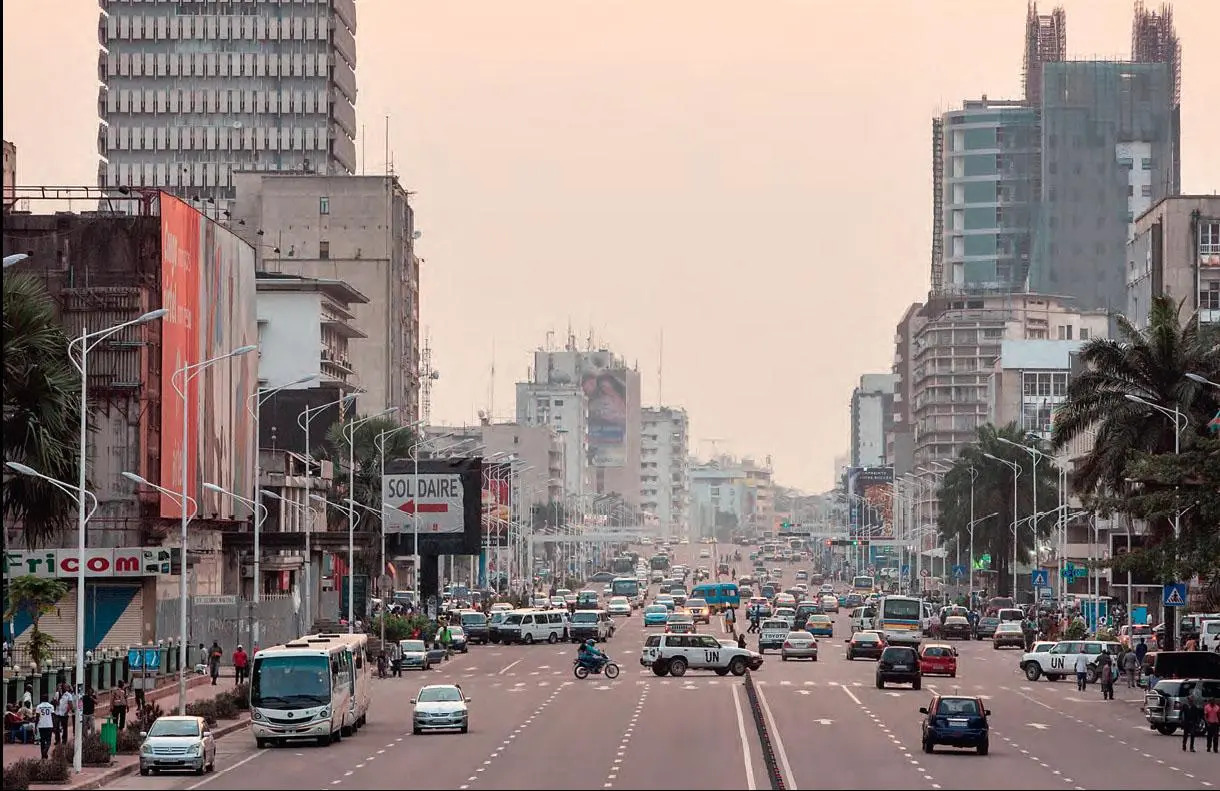
Police in Kinshasa, the capital of the Democratic Republic of Congo, blocked an opposition funeral on Saturday 26 September. The dead man, Manassé Lomboto, was an activist who died after a 15 September march against constitutional change.
The march was called by C64, short for Coalition Article 64, an alliance of opposition parties and figures. It accuses President Félix Tshisekedi of preparing to rewrite the constitution so he can seek a third term.
What happened at the hospital
Family and supporters held a wake on Friday 25 September. The body was due to leave the morgue of the Cinquantenaire university hospital on Saturday for burial.
Instead, dozens of police were waiting with a written order, RFI reported. C64 leaders Martin Fayulu, Jean-Marc Kabund, Franklin Tshiamala and Delly Sessanga were at the scene.
The order came from the public prosecutor’s office for Kinshasa’s Kalamu district. It told the hospital to “continue to keep the body” until judicial investigations are complete, according to Actualite.cd, a Kinshasa news site.
The family wept and argued with officers, but the burial was postponed indefinitely. The C64 had been paying for the funeral.
Who Manassé Lomboto was
Lomboto was an official of ADD Congo, a small opposition party led by Prince Epenge. Epenge is also a leading voice in the C64 coalition.
The opposition says Lomboto was badly injured in Kinshasa’s Limete district and died later in hospital. His party announced his death on the day of the march and blames supporters of the ruling party.
The authorities have disputed that account. The city government’s casualty figures for 15 September did not list any death, and RFI’s sources said he bore no visible marks of blows or blood.
The prosecutor’s order describes an inquiry opened into his death “during the march organised by the C64” on 15 September.
Why the timing angered the opposition
Epenge told Actualite.cd that about 80 armed police sealed the hospital and morgue entrances. “They let us spend for two weeks,” he said, noting nobody objected during the wake.
RFI reported that the order was signed on Saturday, a non-working day for Congolese administration. A senior judicial source told RFI the order was late and ill-timed.
The same source noted that the body had already been embalmed. That, the source said, limits what a forensic examination can now establish.
The ruling party wants an autopsy
Augustin Kabuya, secretary-general of Tshisekedi’s UDPS (Union for Democracy and Social Progress) party, demanded an autopsy in remarks reported on 27 September. He urged the authorities not to let the C64 bury the activist first.
Kabuya also questioned how the body had moved between locations since the march. He accused the opposition of hiring street gangs, known locally as “kulunas”, to attack property on 15 September.
His comments followed a criminal complaint filed by C64 lawyers, reported on 26 September. It targets Interior Minister Jacquemain Shabani, Kinshasa governor Daniel Bumba, city police chief Israël Kantu and Kabuya himself.
The complaint alleges murder, attempted murder and restriction of the opposition’s political rights. Kabuya called it “very good news” and said evidence from both sides should be tested in court.
What C64 is and what it wants
The coalition takes its name from Article 64 of DR Congo’s 2006 constitution. That article obliges every citizen to resist anyone who takes or exercises power in violation of the constitution.
Its best-known figure is Martin Fayulu, runner-up in the 2018 presidential election, which he says he won. Kabund is a former UDPS leader turned critic; Sessanga is a veteran opposition lawmaker.
The 15 September march sought the withdrawal of a referendum bill, which C64 sees as a route to a third term. Tshisekedi has not formally announced any plan to run again.
Police broke up the Kinshasa march with tear gas, as our report on the constitution protests described. The citizen movement Lucha later accused a pro-government group of helping police, as covered in our follow-up on the march.
Why outsiders should care
DR Congo supplies most of the world’s cobalt, a key battery metal, and is a major copper producer. Political instability in Kinshasa feeds into the wider contest over critical minerals described in Africa: The New Scramble.
The mines sit far from the capital, in the south-east, and street protests there rarely halt production. The bigger risk for investors is a long constitutional fight before the 2028 election.
For visitors and residents, the practical effect of the opposition funeral standoff is local. Opposition events in Kinshasa now draw heavy police deployments, and roads near them can close at short notice.
What to watch next
The first test is whether prosecutors order an autopsy and release the body for burial. A long delay would keep the opposition funeral dispute in the headlines.
The second is the fate of the C64 complaint, and of the inquiry the justice minister ordered into the 15 September violence. Rights bodies, including the national human rights commission, say they are also investigating.
Frequently Asked Questions
Why was the opposition funeral in Kinshasa blocked?
A prosecutor ordered the Cinquantenaire hospital to keep the body of activist Manassé Lomboto until judicial investigations into his death are complete. Police enforced the order on 26 September.
What is C64?
C64, or Coalition Article 64, is an alliance of DR Congo opposition figures. It opposes any change to the constitution that could let President Félix Tshisekedi seek a third term.
How did Manassé Lomboto die?
The opposition says he was badly injured in the Limete district during the 15 September march and died later in hospital. The authorities dispute that account, and investigations are under way.
Is it safe to travel to Kinshasa?
Kinshasa is functioning normally, but opposition events can bring sudden police deployments and road closures. Visitors should avoid gatherings and follow their government’s travel advice.
Sources
- RFI
- Actualite.cd: funeral blocked
- Actualite.cd: C64 complaint
- Actualite.cd: Kabuya autopsy call
- World Bank: DR Congo data
- USGS: cobalt 2025
This article was produced by The Rio Times’ automated newsroom system. How we use AI · Report an error
Read More from The Rio Times