
GUIDES · DR CONGO
Key Facts
- —The country DR Congo is Africa’s fourth most populous country, with 112.8 million people in 2025, and its second largest by area, at 2.35 million square kilometres.
- —The economy The economy produced US$91.0 billion in 2025, about 4.1% of Sub-Saharan Africa’s output, and grew 5.8% that year.
- —The minerals DR Congo mined about 73% of the world’s cobalt and about 14% of its copper in 2025.
- —The blocs It has been a member of the African Union and its predecessor since 25 May 1963, and belongs to the Southern African Development Community. It became a full member of the East African Community on 11 July 2022.
- —The peace tracks As of October 2026, two peace tracks run in parallel: the Washington track with Rwanda and the Doha track with the AFC/M23 rebel alliance.
- —The UN force The United Nations peacekeeping mission, MONUSCO, is authorised to keep up to 11,500 military personnel in the country until 20 December 2026.
DR Congo is one of Africa’s biggest countries by people and land, yet one of its poorest per head. This guide shows how that weight, its minerals and its wars shape its place in the African Union and the regional blocs.
The DR Congo continent story starts with scale: 112.8 million people, 2.35 million square kilometres and most of the world’s cobalt. Yet income per person is low, and war in the east keeps it reliant on African and American mediators.
It matters to US readers because battery metals, peace diplomacy and a new US partnership all run through Kinshasa. Every figure below carries its date, and the facts are current as of 19 October 2026.
DR Congo by the Numbers in Africa
DR Congo had 112.8 million people in 2025, according to the World Bank, which makes it the fourth most populous country in Africa. Only Nigeria (237.5 million), Ethiopia (135.5 million) and Egypt (118.4 million) are larger.
Its territory of 2.35 million square kilometres is the second largest in Africa. Algeria is larger at 2.38 million, and Sudan comes third at 1.88 million, based on World Bank surface-area data for 2024.
The economy is smaller than the territory suggests. It produced US$91.0 billion in 2025, or about US$807 per person, according to the World Bank.
That is about 4.1% of Sub-Saharan Africa’s output but 8.5% of its people, and income per head across the region averaged US$1,673 in 2025. Real growth was 5.8% in 2025 and 6.1% in 2024, the World Bank estimates.
The IMF said in May 2026 that growth stayed above 5.5% in 2025 and 2026 and that inflation had held at 2.5% or below since October 2025. Wealth still does not reach most people, since 85.3% of Congolese lived on less than US$3.00 a day in 2020, the latest World Bank survey estimate.
Regional Blocs It Has Joined and Two It Has Not
DR Congo sits where Central, Eastern and Southern Africa meet. The African Union places it in its Central Africa regional group.
Its oldest regional anchor is SADC, the Southern African Development Community, which it joined in the late 1990s. The bloc’s summit in Durban on 17 August 2026 voiced solidarity with DR Congo and backed coordinated efforts for peace.
The East African Community, or EAC, is the newer link: DR Congo acceded to its treaty on 8 April 2022 and became a full member on 11 July 2022. The community now has eight partner states, a headquarters in Arusha, Tanzania, and an estimated 331.1 million people.
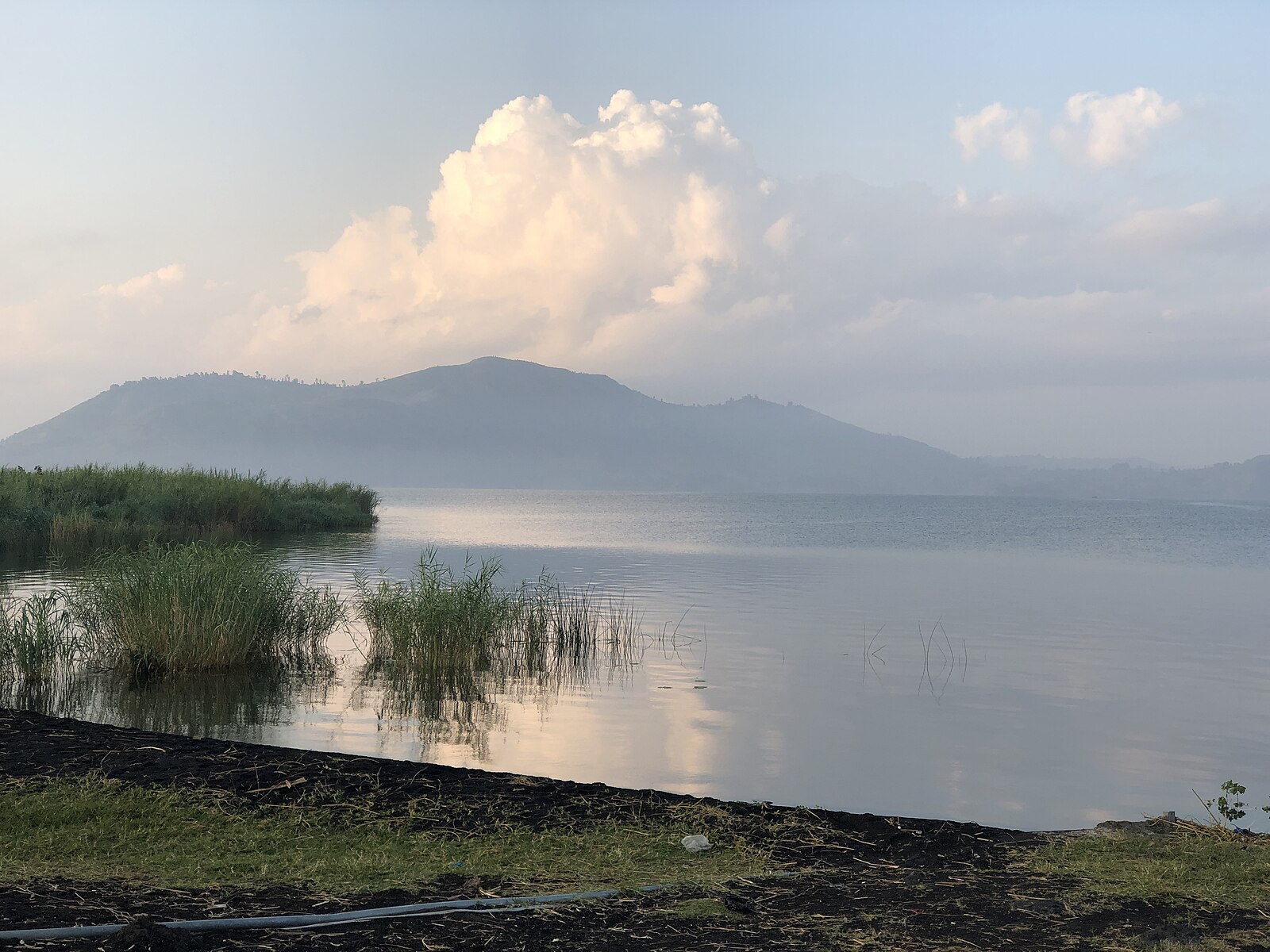
The African Union recognises eight regional economic communities, including ECOWAS in West Africa and the Arab Maghreb Union in the north. DR Congo has not joined either of those two, but it does belong to ECCAS and COMESA.
Overlapping membership of SADC and the EAC means Kinshasa can raise the same crisis in two regional forums. It has also deposited its ratification of the African Continental Free Trade Area, one of 50 countries to have done so by 4 September 2026.
The African Union and Its Mediators
DR Congo is listed as a member since the founding of the Organisation of African Unity, the AU’s predecessor, on 25 May 1963. Its president, Félix Tshisekedi, chaired the AU for 2021 and handed over to Senegal’s Macky Sall on 5 February 2022.
In 2026 the AU Assembly is chaired by Burundi’s president, Évariste Ndayishimiye, who took over from Angola’s João Lourenço at a summit that ended on 15 February 2026. Mahmoud Ali Youssouf leads the AU Commission, the Union’s executive arm.
The AU also runs a Panel of Facilitators for eastern DR Congo. Its delegation to Goma and Kigali on 5 and 6 October 2026 included former presidents Sahle-Work Zewde of Ethiopia, Uhuru Kenyatta of Kenya and Mokgweetsi Masisi of Botswana, Al Jazeera reported.
Togo serves as the AU’s mediator in the security talks between Kinshasa and Kigali, alongside the United States, Qatar and the AU Commission. An AU high-level meeting on the east took place in Gaborone, Botswana, on 24 and 25 July 2026.
Minerals, Money and Trade Routes
Minerals give DR Congo its weight in Africa and beyond. It mined an estimated 230,000 tonnes of cobalt in 2025, about 73% of the world total, according to the US Geological Survey.
Indonesia was second with 14%, and China remained the leading refiner and consumer of cobalt. In October 2025 Kinshasa replaced a temporary export ban with quotas of up to 96,600 tonnes a year for 2026 and 2027.
DR Congo is also Africa’s top copper producer and the world’s second after Chile, with an estimated 3.2 million tonnes in 2025. That was about 14% of world mine output of 23 million tonnes.
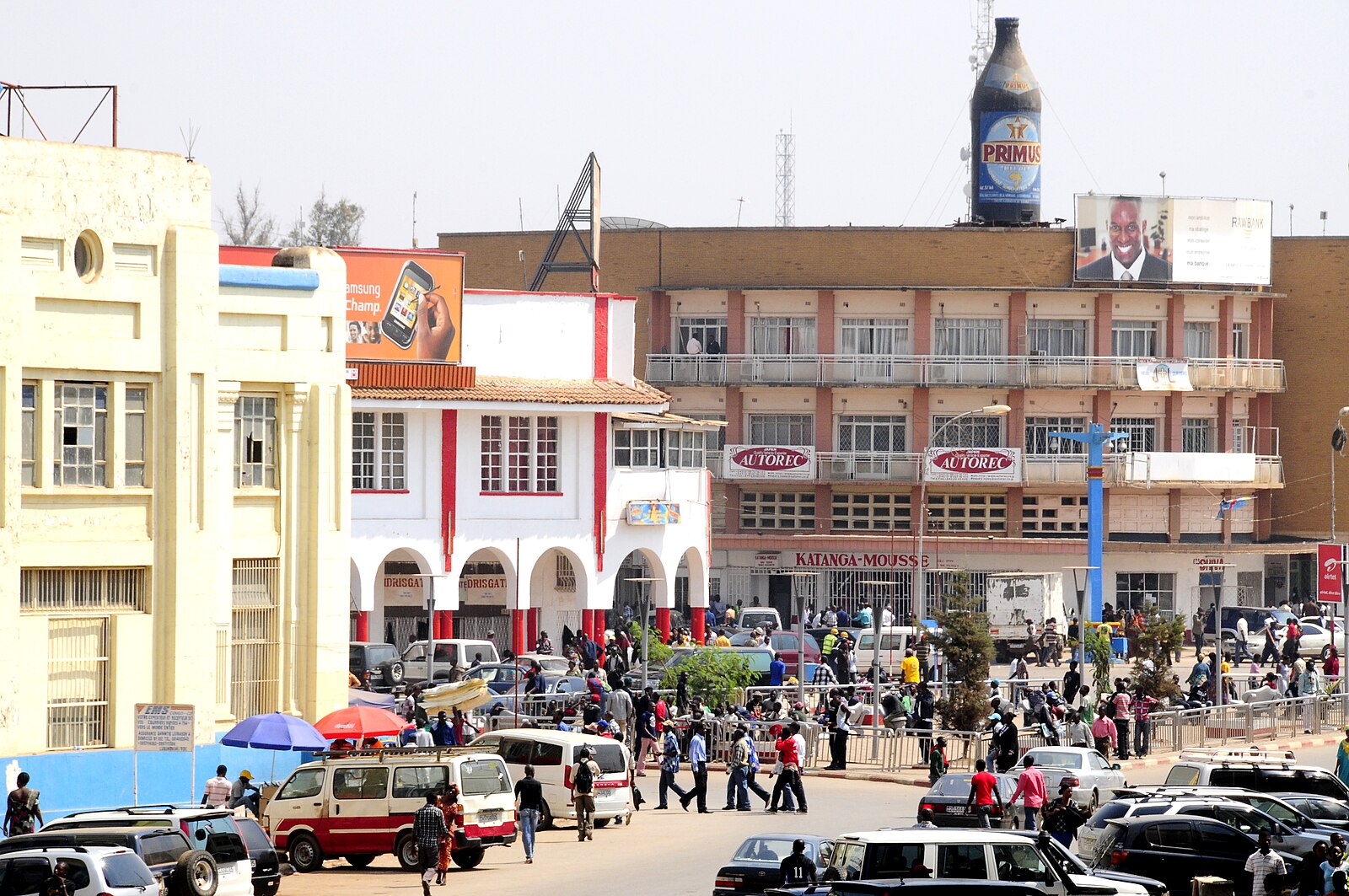
The IMF said international reserves stood at US$8.8 billion at the end of March 2026, slightly below three months of imports. The central bank cut its policy rate from 17.5% to 15% in January 2026 and to 13.5% in April 2026.
Trade routes matter as much as mines. On 26 August 2026 Mota-Engil, a Portuguese construction group, signed a 30-year concession for the 1,037-kilometre Dilolo-Sakania section of the Lobito Corridor railway.
The company puts the investment at about US$1.8 billion, and the line links mines in Lualaba and Haut-Katanga to the Angolan port of Lobito. A US-DR Congo accord of 4 December 2025 sets five-year goals of sending 50% of copper and 30% of cobalt exports along that route.
War in the East and the Peace Tracks
Since 2025 the eastern provinces have been DR Congo’s main security test. The AFC/M23 rebel alliance also took the town of Uvira in December 2025, the IMF noted.
Two peace tracks now run in parallel. The Washington track covers DR Congo and Rwanda, and the Doha track covers Kinshasa and the AFC/M23.
The Washington track began with a peace agreement signed on 27 June 2025. Presidents Tshisekedi and Paul Kagame of Rwanda then signed the Washington Accords on 4 December 2025, at a ceremony hosted by US President Donald Trump.
Kinshasa accuses Rwanda of backing the AFC/M23, which Kigali denies. Rwanda says Kinshasa supports the FDLR, a Rwandan armed group in DR Congo that Kigali treats as a security threat.
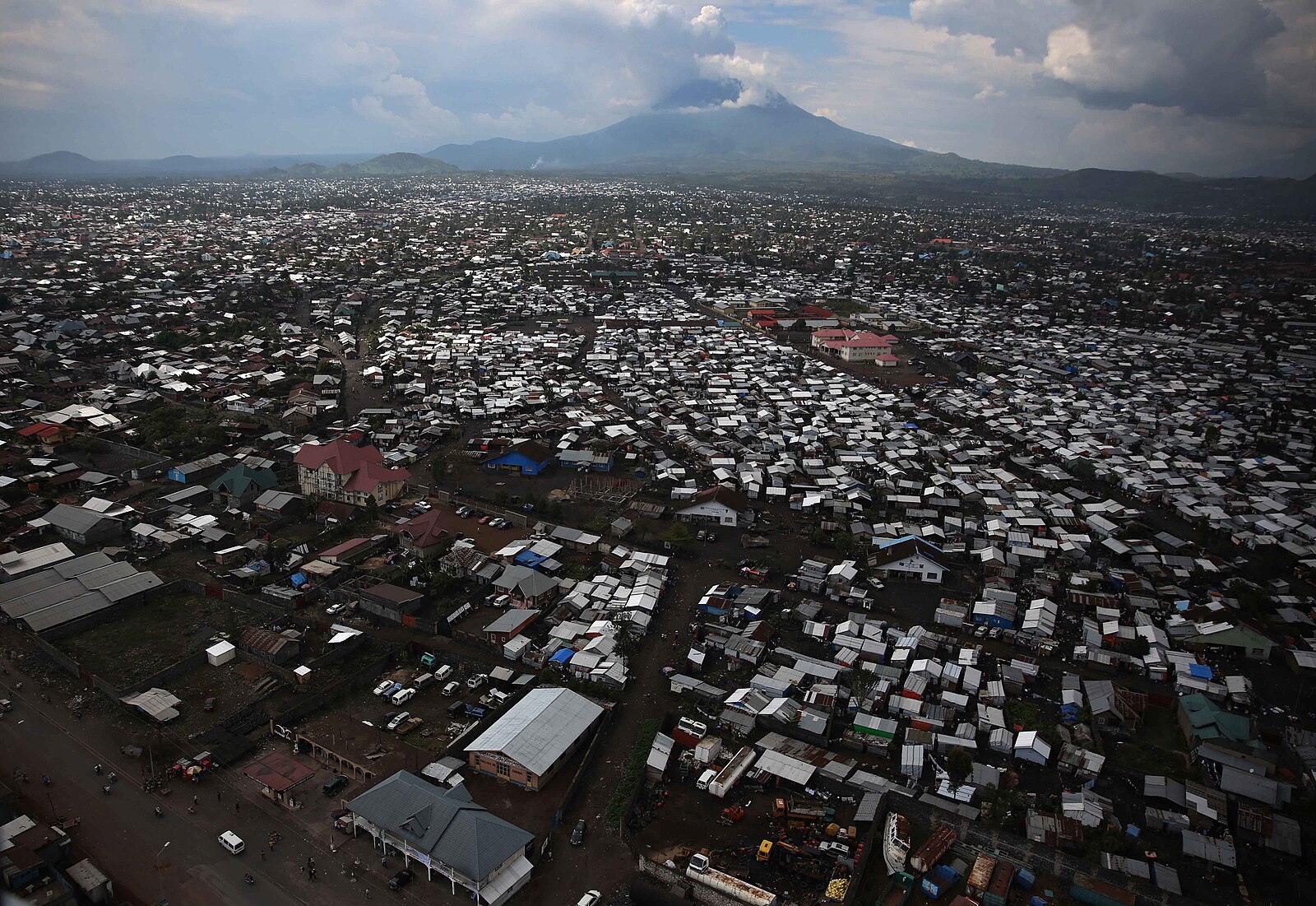
A joint security mechanism of both countries, the United States, Qatar, Togo and the AU Commission met for a sixth time in Geneva on 12 and 13 August 2026. It agreed to hold a trilateral planning conference in October 2026 and heard Kinshasa’s plan to disarm and reintegrate FDLR fighters.
The Doha track produced a framework signed on 15 November 2025 by the Congolese government and the AFC/M23 under Qatari mediation. It is meant as the basis for talks on security arrangements and ceasefire monitoring.
The UN Security Council renewed the MONUSCO mission on 19 December 2025 until 20 December 2026, in Resolution 2808. It keeps the ceiling at 11,500 military personnel and backs the Doha ceasefire agreement.
SADC once deployed its own force, SAMIDRC, but its heads of state ended the mission at an extraordinary summit on 13 March 2025. Withdrawal began on 29 April 2025, and the South African, Malawian and Tanzanian contingents were sent home.
Neighbours, Alliances and Outside Powers
DR Congo’s alliances are shaped by its borders and its minerals. Angola is the key corridor partner, since the Lobito railway ends at its coast, and its president chaired the AU in 2025.
Zambia is the second corridor partner, and its president is the incoming SADC chair. Kinshasa’s southern trade therefore depends on friendly ties with both Luanda and Lusaka.
Rwanda, Burundi, Uganda and Tanzania all share the EAC with DR Congo, so the dispute with Kigali plays out inside a bloc both belong to. Burundi’s president also chairs the AU in 2026, which gives a direct neighbour a visible seat in continental diplomacy.
Outside Africa, the United States is now the most visible partner, through a strategic partnership signed on 4 December 2025. It gives US firms a first right of offer on selected mineral assets and requires notice to Washington of changes to cobalt export quotas.
Qatar mediates the Doha track, and Togo mediates for the AU. China, the leading refiner and consumer of cobalt, depends on Congolese supply, which gives it a stake in any deal.
How DR Congo Compares With Its Peers
Among the four most populous African countries, DR Congo is the poorest per head. In 2025 income per person was US$807, against US$933 in Ethiopia, US$1,224 in Nigeria and US$3,086 in Egypt, according to the World Bank.
Its output of US$91.0 billion is close to Tanzania’s US$90.1 billion and below Ghana’s US$114.2 billion, Angola’s US$122.2 billion and Kenya’s US$135.9 billion. South Africa, at US$427.2 billion, is more than four times larger.
Where DR Congo leads is in raw materials and size. It mines more cobalt than every other country combined, and it ranks second in Africa for land and fourth for people.
Its 5.8% growth in 2025 was faster than Nigeria’s 4.0%, Egypt’s 4.4% and South Africa’s 1.1%, but slower than Ethiopia’s 9.8%. Fast growth from a low base has not lifted most people out of poverty, as the 2020 survey shows.
What It Means for US Readers
Investors should treat DR Congo as a cobalt and copper story with security risk attached. The US Geological Survey said the 2025 export-ban announcement likely contributed to a sharp rise in US imports and industry stocks.
Quota decisions in Kinshasa can therefore move battery-metal supply, and the US partnership gives American buyers a first right of offer on some assets. Rail and port deals along the Lobito Corridor are the next place to watch for contracts.
Travellers should check current State Department and CDC guidance before any trip. Fighting continues in the east, and the SADC summit in August 2026 called for support against an Ebola outbreak of the Bundibugyo virus.
Companies and expats should expect regional politics to touch daily business, from rail concessions to export quotas. Anyone with Congolese exposure should follow African Union, SADC and EAC statements as closely as Kinshasa’s own.
What Is Not Known
It is not known whether Rwanda will withdraw its forces or whether the October 2026 planning conference will produce a revised operations order. A meeting of the security mechanism was scheduled for 16 and 17 September 2026 in Geneva, and its outcome is unconfirmed.
It is also unclear how the Washington and Doha tracks will fit together, since the AFC/M23 is not a party to the Washington agreement. Nor is it known how many foreign buyers will use their first-right-of-offer terms, or whether quotas will change after 2027.
Frequently Asked Questions
Which regional blocs does DR Congo belong to?
It is a member of the African Union, SADC, ECCAS, COMESA and, since 11 July 2022, the East African Community. It is not a member of ECOWAS or the Arab Maghreb Union.
How big is DR Congo compared with other African countries?
It is the second largest African country by area, at 2.35 million square kilometres, and the fourth most populous, with 112.8 million people in 2025. Its economy produced US$91.0 billion in 2025, less than Ghana, Angola or Kenya.
Why does DR Congo matter to the world economy?
It mined about 73% of the world’s cobalt and about 14% of its copper in 2025, according to the US Geological Survey. Cobalt export quotas of up to 96,600 tonnes a year apply in 2026 and 2027.
What role does the African Union play in the eastern DR Congo conflict?
The AU runs a Panel of Facilitators and supplies Togo as mediator in the security talks. It also held a high-level meeting in Gaborone on 24 and 25 July 2026.
Who are DR Congo’s main partners?
Angola and Zambia are key corridor partners, while Qatar mediates the Doha talks and the United States leads the Washington track. A strategic partnership signed with the United States on 4 December 2025 covers minerals.
Is there still a UN force in DR Congo?
Yes, the MONUSCO mandate runs until 20 December 2026 under Resolution 2808. Its ceiling is 11,500 military personnel.
Sources: World Bank, indicators for DR Congo (population, GDP, growth, poverty, surface area; Nigeria, Ethiopia, Egypt, South Africa, Angola, Kenya, Tanzania, Ghana, Sub-Saharan Africa); US Geological Survey, Mineral Commodity Summaries 2026, cobalt; US Geological Survey, Mineral Commodity Summaries 2026, copper; IMF, press release 26/139, 6 May 2026; East African Community, overview; African Union, member states list; African Union, regional economic communities; African Union, 39th Assembly conclusions, 15 February 2026; African Union, handover of the chairmanship, 5 February 2022; SADC, communique of the 46th Summit, 17 August 2026; SADC, DR Congo member page; SADC, SAMIDRC withdrawal, 12 June 2025; US Institute of Peace, Washington Accords; Qatar Ministry of Foreign Affairs, joint statement on the sixth JSCM meeting, 13 August 2026; MONUSCO, Security Council renewal, 19 December 2025; UN Security Council, Resolution 2808 (2025); IEA policy database, DRC-US Strategic Partnership Agreement; Mota-Engil, announcement of 26 August 2026; tralac, status of AfCFTA ratification, 7 September 2026; Al Jazeera, 13 October 2026. All accessed 19 October 2026.
Editorial responsibility: Matthias Camenzind, Editor-in-Chief · Editorial standards · Report an error
Part of our ongoing coverage
Africa: The New Scramble — the great-power contest over the continent.