Djibouti Earns Its Living From One Neighbour and One Map
DJIBOUTI · GEOPOLITICS
Key Facts
- —The dependency Over 75% of Djibouti’s GDP depends on Ethiopian trade; Ethiopia is landlocked with 130 million people.
- —The debt Djibouti’s external debt was about US$3.0 billion in 2024; Chinese lenders held nearly half.
- —The moratorium Djibouti reached a debt-service moratorium with China’s Export-Import Bank; IMF calls it temporary relief.
- —The projects Chinese firms built Doraleh Multipurpose Port, a railway to Ethiopia, and a US$3.5 billion free trade zone.
- —The bases Five foreign powers lease military bases in Djibouti, a steady revenue source.
- —The catch Djibouti depends on Ethiopian transit trade, but Ethiopia seeks other sea routes.
Servicing Ethiopian trade generates more than 75 percent of Djibouti’s gross domestic product, analysts who track the corridor say. Djibouti is less a trading nation than a toll gate with a flag.
Djibouti’s external debt totalled about US$3.0 billion in 2024, and Chinese lenders held close to half of it. Ethiopia, meanwhile, has begun looking for other routes to the sea.
What the Djibouti Ethiopia corridor actually is
Ethiopia has more than 130 million people, no coastline and a growing appetite for imports. Djibouti sits on the Bab el-Mandeb strait with a deep-water coastline and little else.
The arrangement that follows is simple but consequential. More than 75 percent of Djibouti’s GDP comes from handling Ethiopian cargo through its ports, railway and roads.
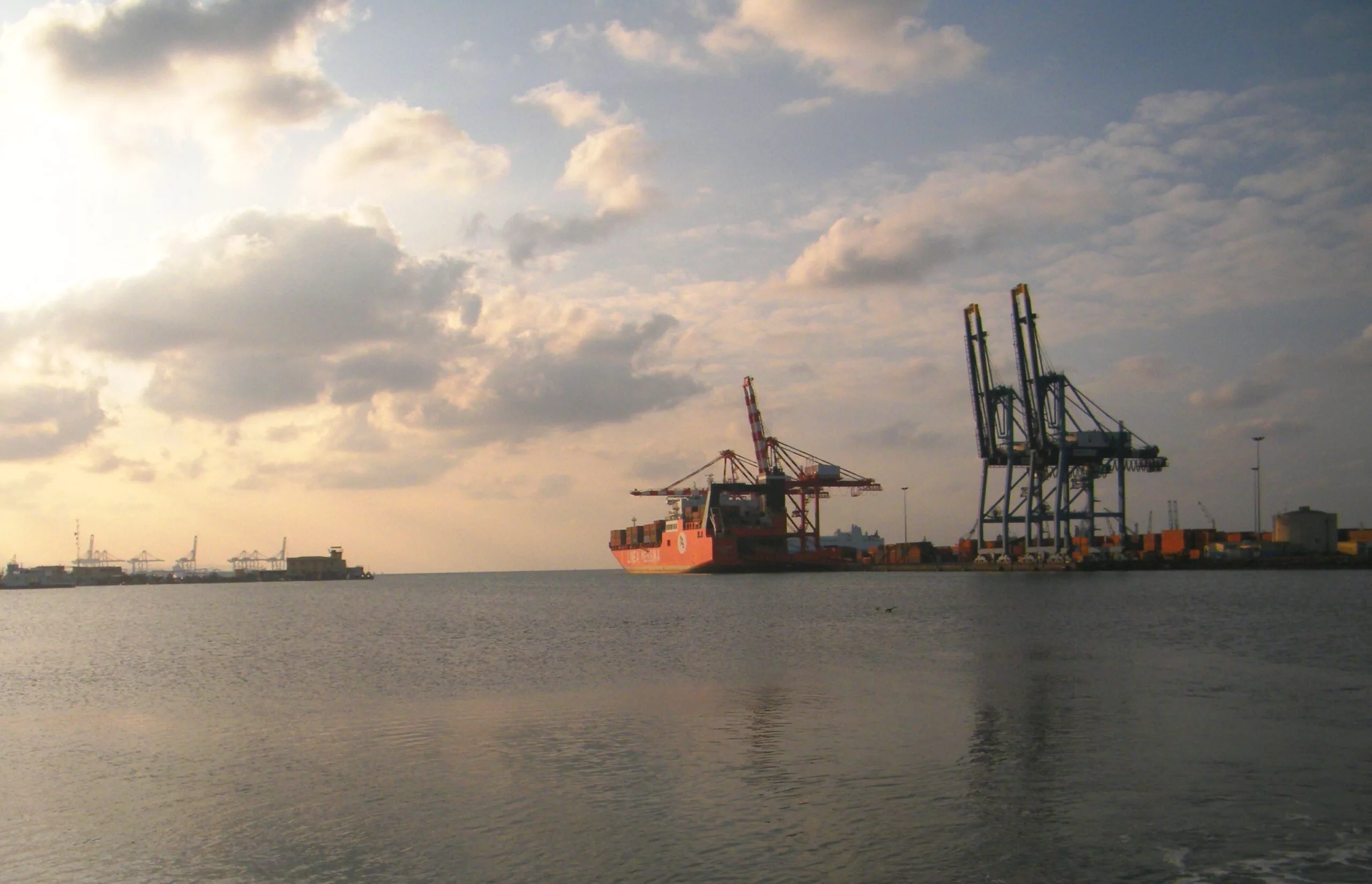
Chinese firms built most of the infrastructure that makes this possible. It includes the Doraleh Multipurpose Port, an electrified railway to Addis Ababa, and a pipeline carrying drinking water from Ethiopia.
The result is a country whose income depends heavily on a neighbour’s import demand. That is an unusually direct exposure for any sovereign state.
Djibouti has fewer than 1.2 million people and little arable land, according to the World Bank, a global development lender. There was never a realistic alternative economic model to build.
The debt that came with the concrete
Djibouti’s total external debt stood at about US$3.0 billion in 2024, roughly 70 percent of GDP, according to the IMF. Chinese lenders held close to half of it, London School of Economics researchers found.
In late 2022, Djibouti suspended repayments to China after global interest rate rises pushed up its debt-servicing costs. It later reached a moratorium with China’s Export-Import Bank, its largest creditor.
The moratorium caps interest on the railway and water-pipeline loans at about US$20 million through 2027. That is down from a projected US$276 million, the IMF says.
The Fund calls this temporary relief, not a fix for Djibouti’s underlying debt.
Beijing has kept investing political capital regardless. Xi Jinping and President Ismaïl Omar Guelleh raised ties to a comprehensive strategic partnership in September 2024, a top China tier.
Rent from geography
Djibouti’s second business is renting out its location. Five foreign powers lease military bases there: the United States, France, China, Japan and Italy.
The fees are a steady line in government revenue. Officials in Djibouti describe geography as the country’s oil.
The bases also buy diplomatic insurance. A country hosting several world powers at once is unlikely to be abandoned by any one of them.
But the Red Sea has become a contested waterway. Rents can rise with tension, and so can the risk of being pulled into it.
Attacks on shipping near the Bab el-Mandeb have already pushed vessels to reroute around Africa’s Cape of Good Hope. A corridor economy loses twice when ships avoid its waters.
Ethiopia is shopping around
The dependency runs both ways, and Addis Ababa has grown uncomfortable with it. Ethiopian officials have repeatedly raised the sea-access question, calling it a matter of regional cooperation.
In April, at the third Red Sea and Gulf of Aden Dialogue in Addis Ababa, Ethiopian officials called sea access a “win-win.” They linked it to shared management of regional waterways.
That is diplomatic language for wanting another option. Berbera in Somaliland is the most advanced alternative, where DP World runs the port and Ethiopia holds a 19 percent stake.
Assab in Eritrea and Lamu in Kenya have also been discussed. Egypt, meanwhile, has been building its own relationships around the Horn, including with Djibouti, which we covered in August.
Why this is a Latin America story too
Corridor economies exist across the Americas too. Panama earns steadily from its canal.
Paraguay and Bolivia negotiate for river and port access from neighbours. Chilean ports handle Bolivian cargo under a long-running dispute.
The lesson is similar everywhere. A transit state gains reliable income but gives up some strategic independence, because its client can always seek another route.
The debt pattern is familiar too. Infrastructure financed by a single creditor tends to concentrate both the asset and its use.
For investors the practical question is throughput. Corridor economies are priced on cargo volumes, and volumes are decided by the neighbour, not the host.
What to watch next
The first signal is any binding Ethiopian commitment to an alternative corridor. That would reprice Djibouti’s entire economy.
The second is whether the free trade zone attracts real tenants. A US$3.5 billion project needs businesses, not just announcements.
The third is what happens when the debt moratorium expires in 2027. It could become a fuller restructuring, or repayments could simply resume.
Frequently Asked Questions
How dependent is Djibouti on Ethiopia?
More than 75 percent of Djibouti’s GDP depends on servicing Ethiopian trade through its ports, railway and roads, analysts estimate.
How much does Djibouti owe China?
Djibouti’s external debt totalled about US$3.0 billion in 2024. Chinese lenders held close to half of it, and a 2022 repayment suspension has since become a temporary moratorium.
What is the Djibouti International Free Trade Zone?
It is a US$3.5 billion project built with Chinese partners. Djiboutian and Chinese officials describe it as aiming to become the largest free trade zone in Africa.
Why do foreign militaries base in Djibouti?
The country sits on the Bab el-Mandeb strait at the entrance to the Red Sea. Base fees from five countries are a steady source of government revenue.
Is Ethiopia looking for other ports?
Yes. Ethiopian officials have pressed the sea-access question repeatedly, and Berbera in Somaliland is currently the most advanced alternative.
Connected Coverage
- Egypt’s moves around the Horn cover the regional manoeuvring near Djibouti. A companion piece looks at how Djibouti prices its airspace.
- Both belong to the contest we track in Africa: The New Scramble.
More Africa news: Nigeria | South Africa | Kenya | Egypt | Ghana | Morocco | DR Congo | Angola | Ethiopia | Tanzania
This article was produced by The Rio Times’ automated newsroom system. How we use AI · Report an error · Editorial responsibility: Matthias Camenzind, Editor-in-Chief
Horn of Africa and the Red Sea
- Horn of Africa 2026: Why It Matters and Who Backs Whom
- Ethiopia’s Neighbors Explained, Ports, Eritrea, Somalia
- Eritrea Explained 2026, a Red Sea Country Guide
- Somalia Explained: Al-Shabaab, Somaliland, the Ports and the Fight Over a 2026 Vote