COSTA RICA · RELIGION
Key Facts
- —The country Costa Rica is a Central American republic of about 5.2 million people (2023 estimate) whose 1949 constitution makes Roman Catholicism the state religion.
- —Who believes what Half of adults (49.8%) call themselves Catholic and nearly a third (30.8%) evangelical, in a National University survey of 1,302 people in October 2024.
- —The big shift In the same 2024 survey, adults aged 18 to 24 were more often evangelical (41%) than Catholic (35%).
- —Biggest gathering The Romería, a walk to the basilica in Cartago before 2 August, drew about 2 million people in 2026, according to a Catholic Church estimate.
- —Holidays Holy Thursday, Good Friday, 15 August and Christmas Day are paid public holidays; 2 August, the patron saint’s day, is also a holiday.
- —Politics The constitution bans campaigning that invokes religion; the evangelical-linked Nueva República party won no seats in the 2026-2030 Legislative Assembly.
- —Still open Whether the Catholic share keeps falling among the young, and whether Article 75 is ever changed, remain open as of October 2026.
Costa Rica religion shapes the calendar, the law and the daily manners American visitors meet, from Holy Week closures to marriage rules. Catholicism remains the state religion, but a 2024 university survey counts only half of adults as Catholic and nearly a third as evangelical.

Costa Rica Religion in Numbers
A detailed national picture comes from the National University (UNA), one of Costa Rica’s public universities. Its Institute for Social Studies in Population (Idespo) and its Ecumenical School of Religious Sciences surveyed 1,302 adults from 18 to 31 October 2024.
Half of respondents (49.8%) said they were Catholic and 30.8% evangelical, according to the survey data published in the university’s journal Siwo. Another 16% called themselves believers without a religion, with a margin of error of 2.8 points.
The same team’s 2018 survey had counted 52.5% Catholics and 27.1% evangelicals. In six years, the Catholic share fell by almost three points while the evangelical share rose by nearly four.
Belief itself is close to universal in Costa Rica. In the UNA study, 96% said they believe in God, a deity or a higher force.
The real divide is age. Among people aged 55 and over, 62% are Catholic, but among 18- to 24-year-olds the share falls to 35%.
In that youngest group, 41% call themselves evangelical and 20% believers without a religion, according to CR Hoy and Semanario Universidad. Evangelicals are therefore the largest faith group among young adults.
Geography matters as well. Cartago province is the most Catholic, at 68%, while Limón on the Caribbean coast is the least, at 31%.
An older benchmark comes from a November 2016 telephone poll by the University of Costa Rica. In it, 71.8% of people who called themselves religious were Catholic.
The key figures from the October 2024 survey:
- Catholic: 49.8% of adults (52.5% in 2018)
- Evangelical: 30.8% of adults (27.1% in 2018)
- Believers without a religion: 16%
- Raised Catholic as children: 72.9%
- Catholics who attend Mass every week: 34%
- Evangelicals who attend worship every week: 48%
A Catholic State With Freedom of Worship
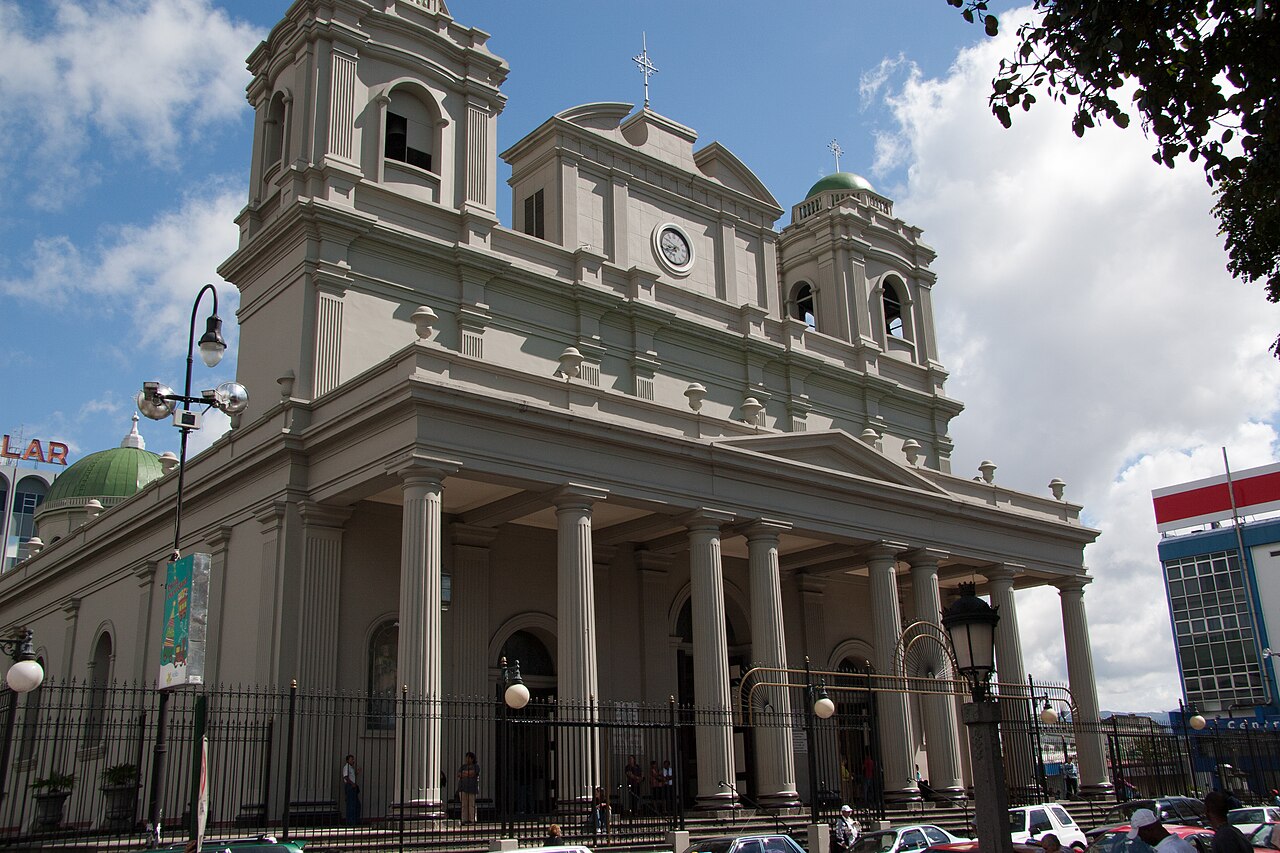
Article 75 of the 1949 constitution makes the Roman Catholic faith the religion of the state, which “contributes to its maintenance”. The same article protects the free exercise of other faiths that respect “universal morality” and “good customs”.
The constitution also requires presidents, vice-presidents, ministers and Supreme Court judges to be laypeople. Article 28 bans any political campaigning, by clergy or lay people, that invokes religion or uses religious beliefs.
The church’s privileges are concrete. The US State Department’s 2023 religious freedom report says the government may give free land only to the Catholic Church.
The same report reads the lay-person rule as a bar on Catholic clergy only. It also notes that public schools must offer non-sectarian Christian religious instruction in all grades.
Only Catholic priests and public notaries can perform marriages the state recognises. Weddings held in other churches must be made legal through a separate civil step.
The Catholic Church is organised in one archdiocese, San José, and seven dioceses. That structure is listed by the Episcopal Conference of Costa Rica, the national body of Catholic bishops.
The seven dioceses are Alajuela, Cartago, Ciudad Quesada, Limón, Puntarenas, San Isidro and Tilarán-Liberia.
Public support for the official church was broad in 2016. In that year’s University of Costa Rica poll, 60% favoured keeping Catholicism as the religion of the state.
Opinion has shifted since then. In the 2024 UNA survey, 56% agreed that Costa Rica should have a secular state, CR Hoy reported.
La Negrita and the Romería to Cartago
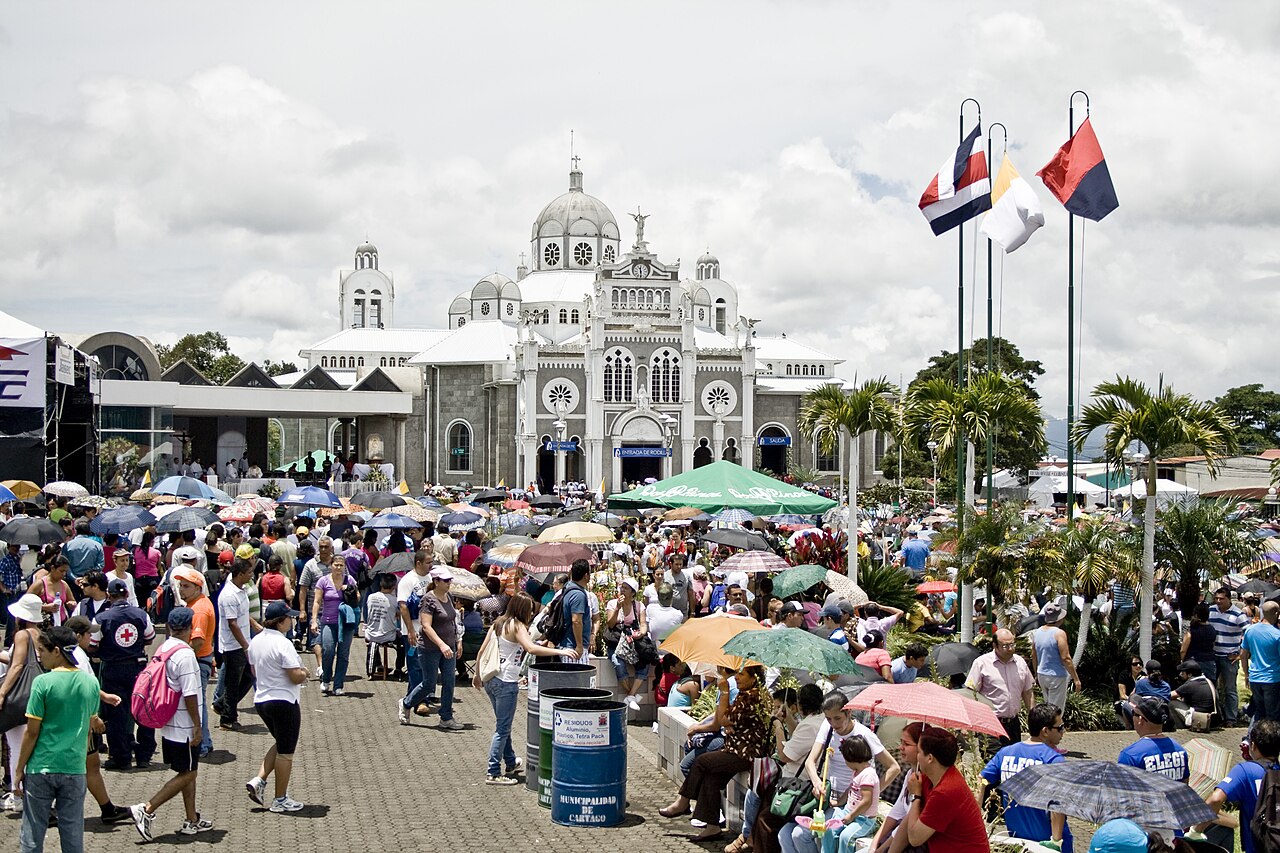
Costa Rica’s patron saint is venerated as La Negrita, a small figure of the Virgin Mary carved in dark stone. It is about 20 centimetres (eight inches) tall, according to CR Hoy.
Tradition holds that a young woman named Juana Pereira found the image on 2 August 1635, near Cartago.
A shrine built for the image grew into the Basilica of Our Lady of the Angels. Its first stone was laid on 7 September 1912, and the image received a papal coronation on 25 April 1926.
A constituent congress declared the Virgin of the Angels patron saint of Costa Rica on 24 September 1824. The decree was signed by head of state Juan Mora Fernández, Teletica recalls.
Each year, in the days before 2 August, pilgrims walk to the basilica from across the country. This walk is known as the Romería.
About 2 million people walked to the basilica between 25 July and 2 August 2026, the Catholic Church estimated, El Observador reported. By midday on 2 August, the Costa Rican Red Cross had treated 1,681 people, 31 of whom were taken to a medical centre.
The Red Cross runs first-aid posts along the routes, according to Trece Noticias, the public broadcaster’s news service.
Police also reinforce traffic control on the main routes, and emergency services advise reflective clothing at night. The Rio Times has a practical Romería guide and a report on how trains and buses ran to Cartago in 2026.
Religious Holidays That Close Offices
Costa Rica’s Labour Ministry (MTSS) sets out the holiday rules each year under the Labour Code. Its 2026 holiday list shows how closely Costa Rica religion shapes the working year.
Mother’s Day has fallen on 15 August, the feast of the Assumption of the Virgin Mary, since a 1932 decree, La República recalls.
The religious dates on the 2026 list:
What the Rules Mean for Workers
Under the ministry’s rules, no worker can be forced to work on these days, and refusing cannot be punished. The other holidays, such as 1 May and 15 September, are civic dates.
For visitors, Holy Week matters most. Plan government errands and paperwork around Holy Thursday and Good Friday, when most employees are entitled to stay home.
- Holy Thursday and Good Friday (2 and 3 April in 2026): paid public holidays
- 2 August, Day of Our Lady of the Angels: public holiday, with pay not obligatory (a Sunday in 2026)
- 15 August, Mother’s Day, which falls on the Catholic feast of the Assumption: paid public holiday
- 25 December, Christmas Day: paid public holiday
The Rise of Evangelical Churches
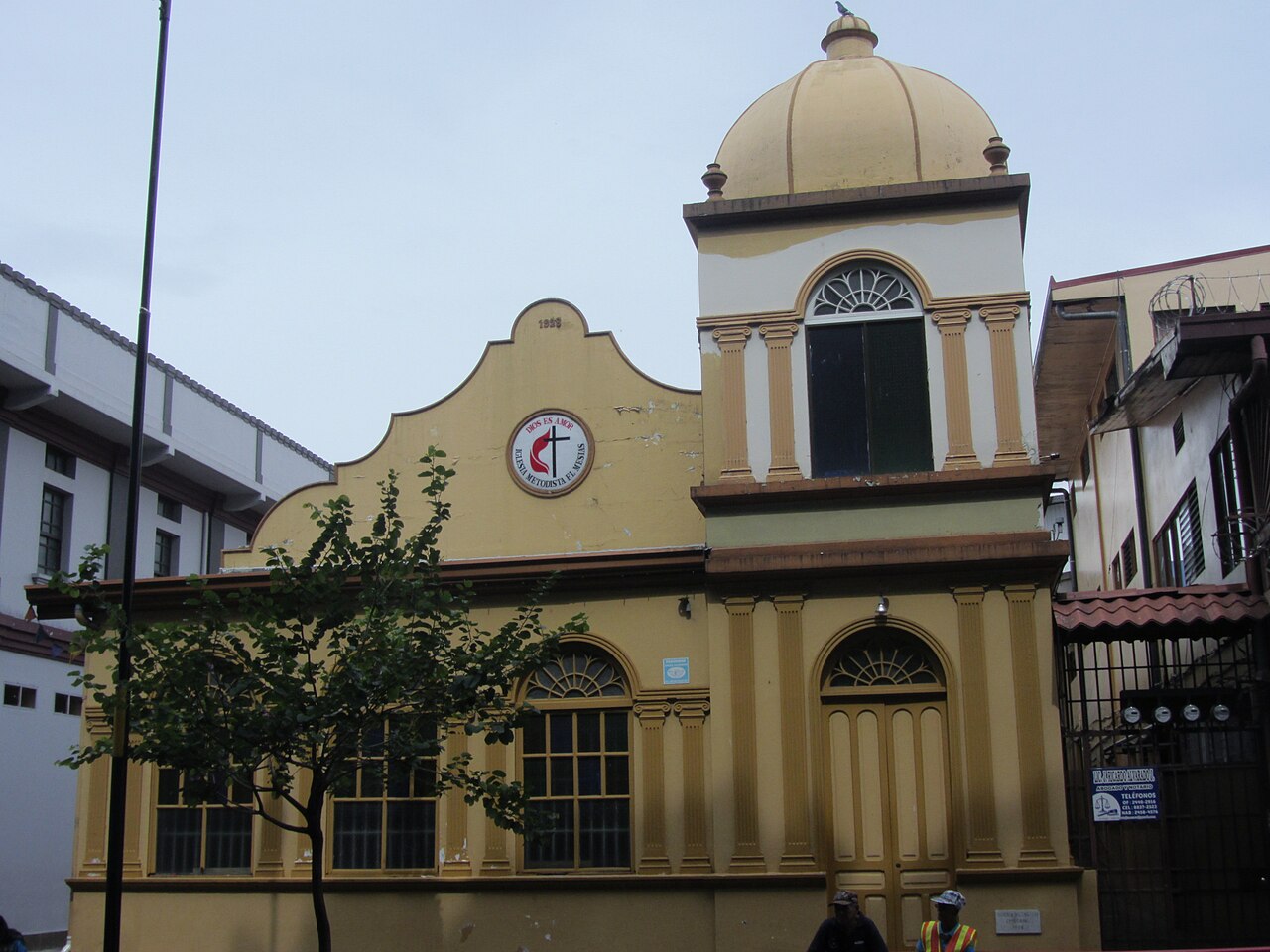
Evangelical churches are the clearest sign of change in Costa Rica religion. Most Protestants are Pentecostal, with smaller Lutheran and Baptist churches, according to the State Department report.
Their members are also the most loyal. The UNA survey found that 80% of people raised evangelical keep that faith, against 67% of those raised Catholic.
They attend more often, too. Some 48% of evangelicals go to worship every week, against 34% of Catholics who go to Mass weekly.
Giving is part of church life. Seven in ten church members give money as offerings or tithes, and 65% help collect food or goods for people in need.
That weight reached politics. Nueva República, a party with ties to evangelical groups, held seven of 57 seats in the 2022-2026 Assembly, the State Department noted.
Parties linked to evangelical groups had held 14 seats in the 2018-2022 term, the same report adds. Costa Rica’s Legislative Assembly is a single chamber of 57 deputies.
The Supreme Electoral Tribunal’s final count of the 1 February 2026 election gave Nueva República no seats, El Observador reported. Religious conservatives did not leave the Assembly, however.
At least five deputies of the governing Pueblo Soberano party are pastors, religious leaders or directly linked to the evangelical alliance, La República found. They form a conservative bloc inside the largest caucus.
Pueblo Soberano is the governing party of President Laura Fernández, whose term runs from 2026 to 2030. It began the term with 31 of the 57 seats, the largest governing caucus in 44 years, according to La República.
Smaller Faiths and Expat Communities
Costa Rica religion also includes small but settled minorities beyond the two large churches. Most figures below are the communities’ own estimates, as cited in the State Department’s 2023 report.
How Congregations Register
Registration is light: groups need not register to worship, only to raise funds, own property or handle money, the State Department report says.
A group of at least 10 people can form an association with legal status at the Justice Ministry’s public registry. Opening a place of worship requires an application to the local municipality.
- Latter-day Saints: 58,373 members in 81 congregations at the end of 2025, according to the Church of Jesus Christ of Latter-day Saints, with a temple in San José since 2000
- Jehovah’s Witnesses: about 32,000, mostly on the Caribbean coast
- Muslims: about 7,500, according to the Muslim Cultural Center
- Jews: between 3,000 and 3,500, according to the Israelite Zionist Center
- Quakers: about 1,000, living near the Monteverde cloud forest reserve in Puntarenas
- Smaller groups: Baha’is, Taoists, Hare Krishna devotees, Scientologists and followers of Tenrikyo
- Indigenous spiritual practices: followed by some members of Indigenous groups, the report notes
How Faith Shapes Daily Life and Social Norms
Costa Rica religion is lived more in private prayer than in the pews. In the UNA survey, 75% named personal prayer among their main practices, against 31% for Bible study.
One in five people (21%) send religious messages by mobile phone. Almost nobody consults tarot readers or folk healers: 95% and 97% say they never do.
Among Catholic activities in the previous year, rosary prayers came first, named by eight in ten respondents. Confession (53%) and communion (52%) followed.
Women are more regular churchgoers than men: 40% against 27% among Catholics, and 51% against 43% among evangelicals. Attendance rises sharply with age in both churches.
Churches also act as a local safety net. In the survey, 72% said churches help in emergencies and natural disasters, and 69% that they offer family counselling.
Faith sits alongside other traditions in daily life, from food to festivals. The Rio Times guides to Costa Rican people and daily life and to Costa Rica’s culture and traditions cover the wider picture.
What It Means for US Readers
Costa Rica religion touches American visitors and retirees mostly through the calendar and everyday courtesy. Plan around Holy Thursday and Good Friday, when most workers have the days off by law.
Expect heavy foot traffic on the roads into Cartago in the days before 2 August, and crowds at the basilica. Drivers should take care at night, when walkers are urged to wear reflective clothing.
For a destination wedding, note that only a Catholic priest or a public notary can perform a marriage the state recognises. A ceremony in another church needs a separate civil step.
Expats of minority faiths will find organised communities. There is a Latter-day Saint temple in San José, Jewish and Muslim centres, and Quakers near Monteverde.
Freedom of worship is broad, and groups need not register simply to meet and pray.
For the wider move, see the Rio Times guide to the best places to live in Costa Rica and its relocation ranking. More coverage sits in the Costa Rica section.
What Is Not Known
Costa Rica religion shares in this guide come from university surveys, which carry margins of error of several points. Minority numbers, such as those for Muslims and Jews, are community estimates rather than official counts.
Romería turnout is a Church estimate for a walk spread over several days. Whether evangelical growth among young adults continues, and whether Article 75 is ever amended, is open as of October 2026.
Frequently Asked Questions
What is the main religion in Costa Rica?
Roman Catholicism. It is the state religion under Article 75 of the constitution, and 49.8% of adults called themselves Catholic in a National University survey in October 2024.
Is Costa Rica a secular country?
No. The constitution names Catholicism as the state religion, which the state helps to maintain, but it also guarantees freedom of worship for other faiths.
How big are evangelical churches in Costa Rica?
In the October 2024 National University survey, 30.8% of adults identified as evangelical, up from 27.1% in 2018. Among 18- to 24-year-olds the share was 41%, ahead of Catholics at 35%.
What is the Romería in Costa Rica?
It is the annual pilgrimage on foot to the Basilica of Our Lady of the Angels in Cartago, before the patron saint’s day on 2 August. The Catholic Church estimated 2026 turnout at about 2 million people.
Which religious days are public holidays in Costa Rica?
Holy Thursday, Good Friday, 15 August (Mother’s Day and the feast of the Assumption) and 25 December are paid public holidays. The 2 August feast of Our Lady of the Angels is a holiday without obligatory pay.
Can foreigners marry in a church in Costa Rica?
Yes, but only Catholic priests and public notaries can perform marriages the state recognises. A wedding in another church needs a separate civil step to be legally valid.
Are there Jewish and Muslim communities in Costa Rica?
Yes. Community estimates cited in the US State Department’s 2023 religious freedom report put the Jewish population at 3,000 to 3,500 and the Muslim population at about 7,500.
Sources: Universidad Nacional (UNA), Percepción de la población costarricense sobre valores y prácticas religiosas 2024, 2025-02-06; Siwo (Universidad Nacional), Laicidad ambivalente: Religión, opinión pública y límites a la politización de la fe en Costa Rica (EECR-Idespo survey data 2018-2024), 2026-05-08; Constitución Política de la República de Costa Rica (TSE edition), 1949-11-07; Ministerio de Trabajo y Seguridad Social, Aplicación de feriados del año 2026, 2025-12-04; US Department of State, 2023 Report on International Religious Freedom: Costa Rica, 2024-06-26; Conferencia Episcopal de Costa Rica, Diócesis, 2026-10-10; The Church of Jesus Christ of Latter-day Saints, Costa Rica facts and statistics, 2025-12-31; Presidencia de la República de Costa Rica, 2026-10-10; La República, Así será la Asamblea Legislativa, 2026-05-01; Universidad de Costa Rica (CIEP), Costarricenses son mayoritariamente católicos y conservadores, 2017-01-18; Semanario Universidad, Jóvenes evangélicos ya superan a los católicos, 2025-02-07; CR Hoy, 389 años del hallazgo de la Virgen de Los Ángeles, 2024-08-02; Teletica, Virgen de los Ángeles declarada patrona, 2019-09-24; Trece Noticias (Sinart), Romería 2026, 2026-07-16; CR Hoy, UNA: Católicos enfrentan problemas para retener a feligreses, 2025-02-06; El Observador, Números de la Romería 2026 (Catholic Church estimate, Red Cross figures), 2026-08-02; El Observador, TSE emite declaratoria oficial para diputados 2026-2030, 2026-03-23; La República, Historia del día de la madre en Costa Rica, 2026-08-10; CR Hoy, Estudio UNA: 56% está de acuerdo con un Estado laico en Costa Rica, 2025-02-06.
This article was produced by The Rio Times’ automated newsroom system. How we use AI · Report an error · Editorial responsibility: Matthias Camenzind, Editor-in-Chief
Rotate for Best Experience
This report is optimized for landscape viewing. Rotate your phone for the full experience.
You've reached your free article limit
Subscribe to The Rio Times for unlimited access to our news, expat and nomad guides and market intelligence on Latin America and Africa.