Cost of Living in Burkina Faso 2026
Prices look low on paper, yet food and fuel are getting dearer, cash is hard to find and two governments warn their citizens off the country. Read the official advisories before you plan a move.

Expat Guide: Burkina Faso
Living in Burkina Faso costs less than in most Western capitals, but prices are rising and the risks are unusually high. Consumer prices were 3.6% higher in September 2026 than a year earlier, the National Institute of Statistics and Demography (INSD), the government statistics office, said in its monthly index note.
Diesel rose to 750 West African CFA francs a litre (US$1.26) on Monday 10 August 2026, up from 675 francs (US$1.13). For a US reader the prices matter less than the warnings: the UK government advises against all travel to the country, and the US State Department, Washington’s foreign ministry, rates it Level 4, its highest warning, Do Not Travel.
Key Facts
- Inflation. Consumer prices rose 3.6% in the year to September 2026, against 0.4% in March.
- Fuel. Diesel costs 750 francs a litre (US$1.26) since 10 August, up from 675 (US$1.13).
- Rent. Four-bedroom flats in Ouaga 2000, a district of Ouagadougou, are listed at US$1,006 to US$1,341 a month.
- Safety. The UK advises against all travel; the US State Department rates it Level 4, Do Not Travel.
- Cash. Bring US dollars: cards work in few Ouagadougou hotels and ATMs take Visa only.
Prices look low on paper, yet food and fuel are getting dearer, cash is hard to find and two governments warn their citizens off the country. Read the official advisories before you plan a move.
The Big Picture: Cheap Rents, Rising Prices
Inflation in Burkina Faso has moved from almost nothing to a pace households notice. INSD’s index note for March 2026 put annual inflation at 0.4%, and its note for September 2026 put it at 3.6%, with the index at about 106.9 against 103.1 a year earlier.
The sharpest rises were in food, led by meat, fish and vegetables. In the September note meat cost 17.5% more than a year earlier and fish 11.7% more, while bread and cereals were 7.3% cheaper.
The government raised diesel on Monday 10 August 2026, and Abdou-Salam Gampéné, secretary general of the prime minister’s office, announced it on state television on 9 August. Sidwaya, a Burkinabè daily, reported on 11 August that the increase aims to curb an annual loss of 70 billion francs (about US$117 million) for the state budget.
Prices slipped 0.06% from August to September, so the climb may be levelling off. The INSD notes do not compare Burkina Faso with its neighbours, and we have not found a sourced regional comparison.
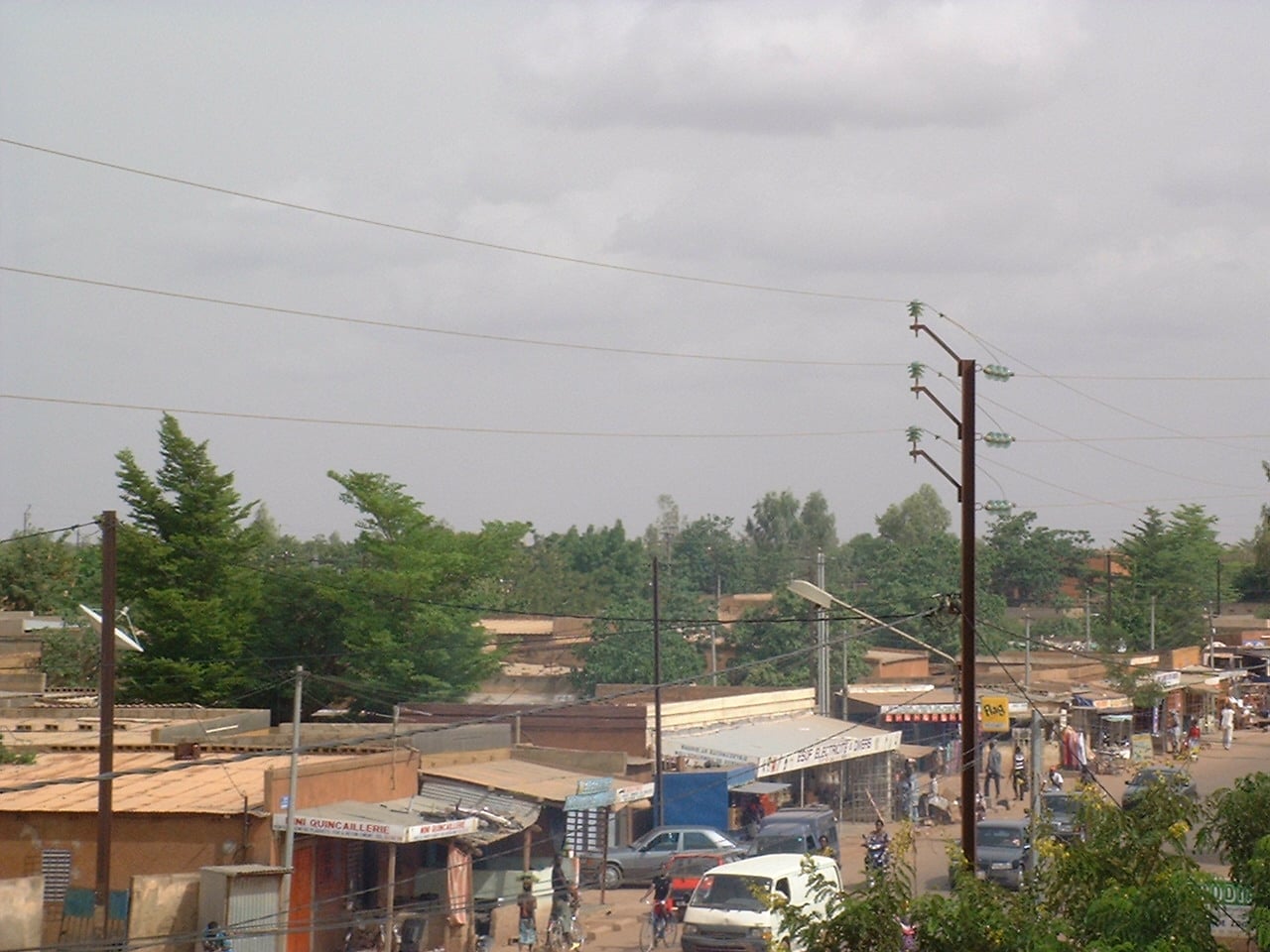
Rent in Ouagadougou
Burkina Faso has no official rent statistic that we could find, so the best guide is what landlords ask. Listings on the housing portal Expat.com, read on 19 November 2026, showed a four-bedroom flat of 200 square metres in Ouaga 2000, a residential district of the capital Ouagadougou, at 800,000 francs a month (about US$1,341).
A second four-bedroom flat in Ouaga 2000 was listed at 600,000 francs (about US$1,006), and a two-bedroom flat with a pool in an area the listing calls Ouaga Trame d’Accueil at 400,000 francs (about US$671). A four-bedroom flat in Bilbalogho, an older central quarter of the capital, was listed at 300,000 francs (about US$503).
These are asking prices, posted between two and seven months before we read them, so they are a guide and not a market average. Our fuller guide to the country, Moving to Burkina Faso, covers housing and health in more detail.
Food and Daily Spending
Food and non-alcoholic drinks make up 29% of the INSD price basket (a weight of 2,904 out of 10,000), so food prices drive the household bill. In the September note this group was 3.4% dearer than a year earlier, even though bread and cereals fell.
Fresh vegetables grown for their fruit, such as tomatoes, cost 21.2% more than a year earlier. We could not confirm shelf prices for a standard grocery basket, or an official minimum wage, so we do not give a monthly budget.
Fuel and Getting Around
The 75-franc diesel rise equals about US$0.13 a litre and 11% on the old price of 675 francs. Burkina Faso has no coast, so its fuel arrives overland, a dependence we explain in our report on the six borders that decide Burkina Faso’s fuel and in our note on Ghana’s share of the supply.
The UK Foreign Office (FCDO), the British foreign ministry, says vehicle hold-ups are increasing on roads outside Ouagadougou and that travellers should avoid driving at night. It names the road from Ouagadougou to Bobo-Dioulasso, the second city, among routes with a danger of armed attacks, and we could not confirm bus fares.
Security and Travel Advisories
The FCDO, whose advice was updated on 26 October 2026 and still current on 19 November, advises against all travel to Burkina Faso. It reports a high terrorism threat throughout the country, “including increasingly in the capital, Ouagadougou”, and a very high threat of kidnapping.
A state of emergency applies in eight regions, among them Centre-Est, Est, Centre-Nord, Nord, Boucle du Mouhoun, Sahel, Hauts-Bassins and Cascades. The Ouagadougou region is not on that list.
The US State Department rates Burkina Faso Level 4, Do Not Travel, in an advisory dated 4 May 2026 that cites crime, kidnapping, terrorism and health. The FCDO also says Britain has no embassy in Burkina Faso and that consular help comes from Accra, Ghana, without in-person assistance.
The FCDO adds that the death penalty returned in October 2026 for offences including terrorism and espionage. For the political background, see our explainer on Burkina Faso’s role in Africa.
Visa, Health and Cash
The FCDO says visitors must have a visa, a passport valid for the whole stay and two blank pages. The official portal, Visa Burkina, offers an e-visa for a stay of under 90 days, but the pages we read gave no fee and did not say whether US citizens can use it.
Entry also needs a yellow fever vaccination certificate, the FCDO says. The US Centers for Disease Control and Prevention (CDC) updated a notice on 9 November 2026 on yellow fever outbreaks in the Nando Region of Burkina Faso, and its country page recommends antimalarial medicine for travellers.
The FCDO calls medical facilities “very limited” and says serious cases need evacuation to Europe. It says a few ATMs in Ouagadougou accept only Visa cards, that few larger hotels take credit cards, and that the best option is to bring US dollars in cash.
What It Means for You
For a US reader the franc is the safest part of the budget: the BCEAO (Central Bank of West African States) fixes the West African CFA franc at 655.957 per euro, which at about 597 francs to the dollar on 19 November 2026 implies a euro near US$1.10. A stronger euro would make dollar savings buy fewer francs, and a 3.6% price rise already trims them.
The larger costs are the ones no rent listing shows, namely evacuation cover and the risk of travelling against two governments’ advice. Anyone weighing a move should read the official advisories first and treat the figures above as a guide, not as a budget.
What Is Not Known
We could not confirm the current minimum wage, the pump price of petrol, bus fares or the e-visa fee. Rents come from listings and not from a statistics office.
The date of the next INSD index note, for October 2026, is not confirmed. The same applies to any change in the US advisory after 4 May 2026.
Frequently Asked Questions
How much does it cost to live in Burkina Faso?
Inflation was 3.6% in September 2026, and four-bedroom flats in Ouaga 2000 are listed at US$1,006 to US$1,341 a month. We could not confirm a minimum wage or a standard grocery basket.
What is the exchange rate for the CFA franc?
The BCEAO fixes the West African CFA franc at 655.957 per euro. On 19 November 2026 one US dollar bought about 597 francs.
Is it safe to move to Burkina Faso?
The UK government advises against all travel, and the US State Department rates the country Level 4, Do Not Travel. Both cite terrorism and kidnapping.
Do I need a visa for Burkina Faso?
Yes, the UK government says visitors must have a visa, and the official portal offers an e-visa for stays of under 90 days. We could not confirm the fee or whether US citizens can use it.
Can I use cards and cash machines in Ouagadougou?
A few cash machines in Ouagadougou accept only Visa cards, and a few larger hotels and restaurants take credit cards. The UK government says the best option is to bring US dollars in cash.
Sources
INSD, consumer price index notes, March and September 2026 · BCEAO, exchange rates of 18 November 2026 · UK Foreign Office, Burkina Faso travel advice, updated 26 October 2026 · US State Department, Burkina Faso travel advisory, 4 May 2026 · US CDC, Burkina Faso travel health notice, 9 November 2026 · Visa Burkina, official e-visa portal · Sidwaya, diesel price increase, 11 August 2026 · Expat.com, Ouagadougou rental listings, read 19 November 2026
More on the country: all Rio Times coverage of Burkina Faso. Exchange rate: about 597 francs to US$1 on 19 November 2026 (RT market data).
This article was produced by The Rio Times’ automated AI newsroom. Editorial responsibility: Matthias Camenzind, Publisher and Editor-in-Chief. The Rio Times also runs Ask Rio Times, which answers from 100,000+ of our own articles, the daily Latin America Power Map, and prediction-market odds on elections and markets.. How we use AI · Report an error