Burkina Faso in Africa, Its Role, Weight and Alliances
AFRICA · BURKINA FASO
Key Facts
- The place Burkina Faso is a landlocked country in West Africa with 24.1 million people in 2025, led by Captain Ibrahim Traoré.
- The weight It holds 1.8 percent of sub-Saharan Africa’s people and 1.2 percent of its output, with US$1,148 of income per person in 2025.
- The clubs A member of the African Union since 1963 and of the continental free trade area since 2019, but it has left the West African bloc ECOWAS.
- The new bloc Traoré is the president in office of the Confederation of Sahel States (AES), a three-nation union with Mali and Niger.
- The talks The confederation and ECOWAS held the first session of their ministerial dialogue in Dakar on 17 October 2026.
- The partners Burkina Faso cut ties with France on 26 June 2026, signed an accord with Russia on 12 February 2026 and opened talks with Türkiye in October.
Burkina Faso, a landlocked country of 24.1 million people, gets its weight on the continent from politics, gold and security. Its economy is small.
This guide shows where it sits among Africa’s clubs, which it has left and which powers it courts, as of October 2026.

Burkina Faso and the African Continent in Plain English
Burkina Faso lies in the Sahel, the dry belt south of the Sahara, between Mali, Niger, Benin, Togo, Ghana and Ivory Coast. Its capital is Ouagadougou and its second city is Bobo-Dioulasso.
A military government has run the country since a coup, with Captain Ibrahim Traoré as head of state in October 2026. Rimtalba Jean Emmanuel Ouédraogo is prime minister.
This guide builds on our country hub and our Sahel neighbourhood guide. It uses official figures from 2025 and 2026.
- African Union (AU): the 55-member organisation of African states, based in Addis Ababa, Ethiopia.
- ECOWAS: the Economic Community of West African States, the regional bloc that Burkina Faso, Mali and Niger have left.
- AES: the Confederation of Sahel States, the union that Burkina Faso, Mali and Niger formed in its place.
- WAEMU (also called UEMOA): the West African Economic and Monetary Union, the group of countries that share the CFA franc.
- AfCFTA: the African Continental Free Trade Area, a continent-wide deal to cut tariffs between African countries.
- Sub-Saharan Africa: the World Bank’s grouping of Africa south of the Sahara, without the north African states.
How Big Burkina Faso Is Next to the Continent
The World Bank counted 24,074,580 people in 2025, which is 1.8 percent of sub-Saharan Africa’s 1.32 billion. The population grows by 2.2 percent a year, and only 28.9 percent of people live in towns and cities.
Its economy produced US$27.6 billion in 2025, or 1.2 percent of the sub-Saharan total of US$2.21 trillion. Income per person was US$1,148, about 69 percent of the regional average of US$1,673.
Growth was 5.3 percent in 2025, and consumer prices fell by 0.6 percent over the year. Exports of goods and services were 35.0 percent of output, so the country lives from what it sells abroad.
How Burkina Faso Compares With Its Peers
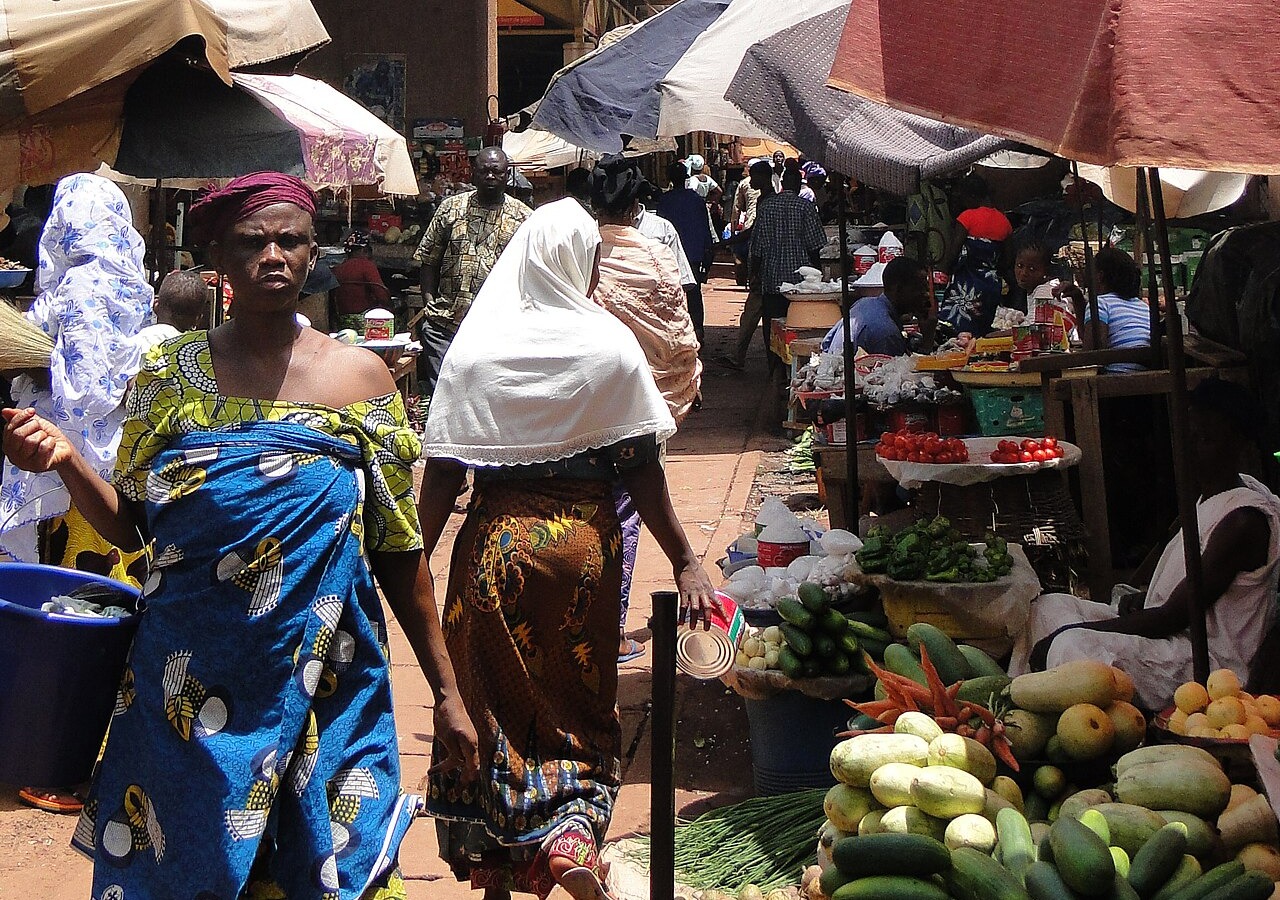
On the African continent, Burkina Faso is mid-sized in population and small in output next to its richer southern neighbours. Ghana and Ivory Coast earn more than two and a half times as much per person.
The figures below are World Bank data for 2025. They give population, output, income per person and growth in that order.
- Burkina Faso: 24.1 million people, US$27.6 billion, US$1,148 per person, growth 5.3 percent.
- Mali: 25.2 million people, US$30.1 billion, US$1,193 per person, growth 5.6 percent.
- Niger: 27.9 million people, US$21.6 billion, US$775 per person, growth 7.0 percent.
- Togo: 8.6 million people, US$11.9 billion, US$1,384 per person, growth 6.3 percent.
- Ghana: 35.1 million people, US$114.2 billion, US$3,257 per person, growth 6.0 percent.
- Ivory Coast: 32.7 million people, US$99.8 billion, US$3,050 per person, growth 6.5 percent.
Burkina Faso in the African Union and the Free Trade Area
Burkina Faso joined the African Union’s predecessor, the Organisation of African Unity, on 25 May 1963, the AU says. The AU counts 55 member states on the continent in 2026.
Burkina Faso signed the continental free trade agreement on 21 March 2018 and ratified it on 27 May 2019. It deposited its papers two days later, on 29 May 2019, according to the AU’s list of 22 May 2026.
That puts Burkina Faso among the 49 countries that have completed ratification, while Benin had not by that date. Mali and Niger completed theirs earlier, in February 2019 and June 2018.
The Sahel Confederation and the Break With ECOWAS
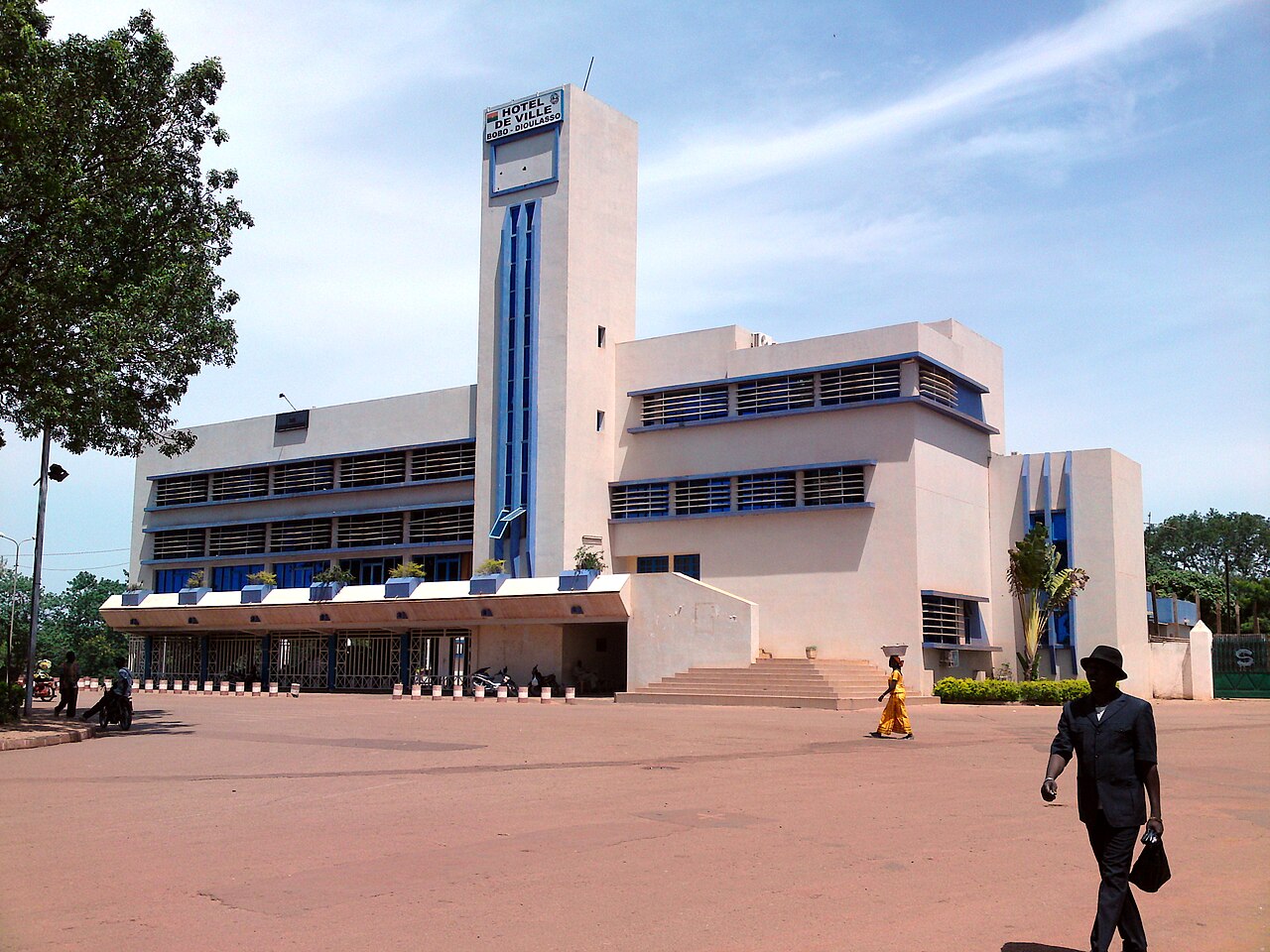
Burkina Faso, Mali and Niger are run by military governments, and they left ECOWAS in January 2025. They built the Confederation of Sahel States instead, with three pillars: defence and security, diplomacy and development.
Traoré is the confederation’s president in office, according to the Burkinabè government on 16 October 2026. The other two leaders are General Assimi Goïta, the transition president of Mali, and General Abdourahamane Tiani, the president of Niger.
On 17 October 2026, ECOWAS and the confederation held the first session of their ministerial dialogue in Dakar, Senegal. Karamoko Jean-Marie Traoré, Burkina Faso’s foreign minister, led the confederation team, and Cheikh Niang, Senegal’s foreign minister, led the ECOWAS side.
Both sides agreed to set up joint working groups, aiming at a framework cooperation agreement. The date and place of the next meeting will be fixed through diplomatic channels, the joint statement says.
Before the talks, the confederation’s ministers said they want a partnership that keeps the gains of regional integration. They also said it should protect the interests of West African populations.
Money, Customs and the Defence Force
Burkina Faso has not left the currency club. It remains in the West African Economic and Monetary Union, whose Commission scored its 2025 reforms at 88.7 percent, rated very satisfactory.
Its currency is the CFA franc, tied to the euro, at about 587 to the US dollar in October 2026. Monetary policy is set by the regional central bank, not in Ouagadougou.
The confederation is building its own trade rules. On 15 October 2026, customs chiefs of the three states and Togo met in Ouagadougou to finish a customs union text.
On defence, the three defence ministers met in Ouagadougou on 10 July 2026 to review a draft statute for a unified force. They describe the force as the base of a common army.
Its development bank, the BCID-AES, signed a framework memorandum with VEB.RF, a Russian state development company, on 28 October. Burkina Faso’s prime minister asked for a first joint project within twelve months.
Alliances With Russia, Türkiye and Others
Russia is the partner Burkina Faso talks about most. The two countries signed an accord on the basis of their relations on 12 February 2026.
Prime Minister Ouédraogo represented Traoré at the third Russia-Africa summit in Moscow on 28 and 29 October 2026. On 29 October he and a Nigerien delegation met Mali’s Goïta to review the commitments made with Russia.
Our report on Mali’s Moscow ties shows the same pattern next door. Goïta was in Moscow for the same summit.
The break with France is the sharpest turn. Burkina Faso ended diplomatic relations on 26 June 2026, and its 12 Paris diplomatic staff were home by 13 July 2026.
On 27 October the prime minister said the country left one type of cooperation for another. He also said it has nothing against the French people.
Türkiye is a quieter partner. In Ankara on 20 and 21 October 2026, officials held first political consultations covering schools, scholarships and aid.
The Maarif Foundation, a Turkish state education body, already runs schools in Ouagadougou and Bobo-Dioulasso. For foreign bases and arms, see our guide to foreign bases in Africa and our report on arms in the Sahel.
Gold and the New Refinery
Gold is where Burkina Faso is putting its money to build weight on the continent. On 28 September 2026 Traoré opened the first national gold refinery, RAFFINOR-BF, which refines 164 tonnes a year in its first phase.
The state put in more than 11 billion CFA francs (about US$18.7 million) through its precious-substances company, with national private partners. The plan is to refine gold from industrial and small-scale mines, and to reach 515 tonnes a year later.
Traoré said the country no longer wants to be one that digs up raw material and sends it abroad. Energy and mines minister Yacouba Zabré Gouba called it the day the country takes back the keys to its own house.
The refinery is meant to process the whole national output, from industrial and small-scale mines. The confederation’s bank and customs union are the tools that could extend such projects across the three states.
What It Means for US Readers
The most direct US link is travel. A proclamation signed on 16 December 2025 fully suspended entry of Burkina Faso nationals as immigrants and visitors, with exceptions and waivers.
The text cites terrorist activity, high visa overstay rates and the country’s past refusal to take back its removable nationals. It orders a review of the list every 180 days.
Investors and analysts should watch gold, because a state-run refinery changes who captures the profit. They should also watch the CFA franc zone, which Burkina Faso has not left.
For security, see our reports on explosives seizures and Ivory Coast geopolitics. Readers can compare the Guinea guide and our Africa section.
What Is Not Known
No date has been set for the second round of talks, and the shape of a final deal is open. Whether trade and free movement stay as easy as before is also open.
Official 2026 gold output figures and the refinery’s actual first-year volume are not yet known. How much the Moscow summit will change aid and arms in practice is also unclear.
The US reviews the entry restrictions every 180 days, and any change would come from the White House. Anyone planning travel should check the State Department before booking.
Frequently Asked Questions
How big is Burkina Faso compared with the rest of Africa?
Burkina Faso has 24.1 million people, 1.8 percent of sub-Saharan Africa, and an economy of US$27.6 billion, 1.2 percent of the region’s total. Income per person is US$1,148, below the regional average.
Is Burkina Faso still in ECOWAS?
No. Burkina Faso, Mali and Niger left the West African bloc in January 2025 and formed their own confederation. They held a first ministerial dialogue session with ECOWAS in Dakar on 17 October 2026.
What is the Confederation of Sahel States?
It is a union of Burkina Faso, Mali and Niger, all run by military governments. It rests on three pillars, defence and security, diplomacy, and development, and Traoré is its president in office.
Does Burkina Faso still use the CFA franc?
Yes, it remains in the West African Economic and Monetary Union, which shares the CFA franc, a currency tied to the euro. About 587 CFA francs buy one US dollar in October 2026.
Which countries is Burkina Faso allied with now?
Its closest tie is the confederation with Mali and Niger, and it has deepened ties with Russia. It cut relations with France on 26 June 2026 and opened political talks with Türkiye in October.
Can Burkina Faso citizens travel to the United States?
A proclamation signed on 16 December 2025 fully suspended entry for Burkina Faso nationals, with listed exceptions and waivers. It is reviewed every 180 days, so check the State Department for current rules.
Sources: World Bank, World Development Indicators for Burkina Faso, Mali, Niger, Togo, Benin, Ghana, Ivory Coast, Senegal, Guinea and sub-Saharan Africa (population, output, income per person, growth, inflation, exports, urban share, 2025), 2026-11-01; African Union, list of member states with dates of joining, 2026-11-01; African Union, list of countries that have signed and ratified the continental free trade agreement, 2026-05-22; Government of Burkina Faso, press release of the AES ministerial steering committee, Ouagadougou, 16 October 2026, 2026-10-16; ECOWAS and the Confederation of Sahel States, joint communiqué of the first ministerial dialogue session, Dakar, 17 October 2026, 2026-10-18; Government of Burkina Faso, president’s audience with the AES customs directors and Togo’s revenue office, 16 October 2026, 2026-10-16; Government of Burkina Faso, prime minister leaves for the third Russia-Africa summit, 26 October 2026, 2026-10-26; Government of Burkina Faso, BCID-AES and VEB.RF memorandum signed in Moscow, 28 October 2026, 2026-10-29; Government of Burkina Faso, political consultations with Türkiye, Ankara, 20 and 21 October 2026, 2026-10-22; Government of Burkina Faso, foreign ministry on the break with France, 13 July 2026, 2026-07-13; Presidency of Burkina Faso, inauguration of the national gold refinery, 28 September 2026, 2026-09-28; Government of Burkina Faso, audience with the WAEMU Commission president on the 2025 annual review, 5 May 2026, 2026-05-05; The White House, proclamation restricting and limiting the entry of foreign nationals, 16 December 2025, 2025-12-16; Government of Burkina Faso, AES defence ministers review the draft statute of the unified force, 10 July 2026, 2026-07-10; Government of Burkina Faso, prime minister meets the Malian head of state in Moscow, 29 October 2026, 2026-10-30; Government of Burkina Faso, prime minister reaffirms refusal of any tutelage, 28 October 2026, 2026-10-28.
This article was produced by The Rio Times’ automated newsroom system. How we use AI · Report an error · Editorial responsibility: Matthias Camenzind, Editor-in-Chief
Brazil runoff date: Sunday, October 25, poll closing times and when results start · Brazil runoff polls: Flávio 51%, Lula 49% · Kalshi and Polymarket odds
Rotate for Best Experience
This report is optimized for landscape viewing. Rotate your phone for the full experience.
You've reached your free article limit
Subscribe to The Rio Times for unlimited access to our reporting from across Africa.
Keep reading for free
Your first article was on us. Register with your email address to read 6 free articles every month. You will also receive Africa Intelligence: African markets, politics and business, every weekday morning.