Kinshasa Says No One in Rebel-Held Congo Should Pay for Primary School
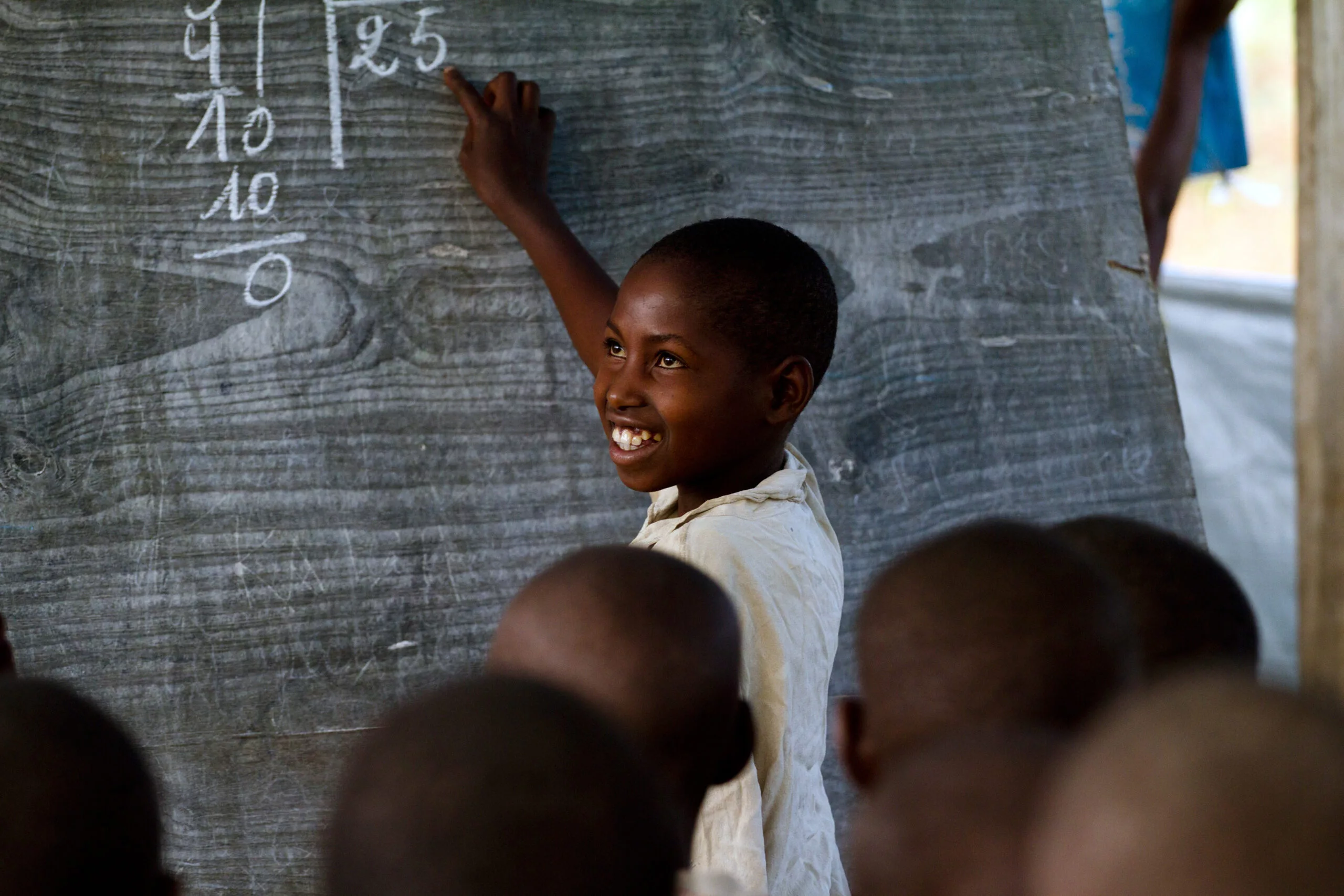
DR CONGO · SOCIETY
Key Facts
The decree: A document dated 28 August, issued by the AFC/M23 administration, sets contributions for the 2026-27 school year in public and approved private schools.
The amounts: At primary level the contributions range from 5,000 to 45,000 Congolese francs (US$2.20 to US$19.60) per pupil per term.
Kinshasa’s answer: An education ministry communiqué dated 4 September says no fee or mandatory contribution of any name may be required of public primary parents.
The wording: The ministry names the euphemisms it will not accept, including school fees, social support and support for free education.
The policy at stake: Free primary education has been government policy since 2019 and is one of the most visible commitments of the past decade.
Who is caught: Parents in AFC/M23-controlled areas of North Kivu face one authority charging and another forbidding the charge.
The unanswered question: The ministry says the state keeps paying the salaries and bonuses of the teachers concerned, along with running costs, across the whole country.
The catch: Kinshasa can forbid the fees but cannot collect or police anything in territory it does not hold.
Congo school fees have reappeared in the parts of North Kivu held by the AFC/M23, through a decree dated 28 August that sets primary contributions of between 5,000 and 45,000 Congolese francs a term. Kinshasa’s education ministry replied on 4 September that no such payment may lawfully be demanded of any public primary parent.
Two authorities, one classroom
The document circulating in North Kivu is dated 28 August and purports to establish contributions payable by parents for the 2026-27 school year. It covers public schools and approved private schools.
At primary level the amounts run from 5,000 to 45,000 Congolese francs (US$2.20 to US$19.60) per pupil per term, according to reporting by Actualite.cd and Reporter.cd. Higher levels carry larger sums.
The Congolese education ministry responded with a communiqué dated 4 September. No fee or mandatory contribution, whatever its name, may be required of parents of public primary pupils.
The ministry names the euphemisms
What makes the communiqué unusual is its specificity. It lists the labels it will not accept, including school fees, social support and support for free education.
That level of detail exists because the practice it targets is well established. Where budgets fail to arrive, schools find other names for the same payment.
The ministry is therefore fighting on two fronts at once: an armed administration collecting openly, and an informal practice that predates the conflict.
Why the Congo school fees question is political
Free primary education has been government policy since 2019 and is among the most visible commitments any Congolese government has made. It is also chronically underfunded.
Charging for it in occupied territory does two things at once. It raises revenue, and it demonstrates that the occupying administration, not Kinshasa, decides what services cost.
Kinshasa’s insistence on the rule is therefore about sovereignty as much as about school budgets. It is asserting jurisdiction over a policy it cannot presently fund there.
The question nobody answers
The ministry says the state keeps paying those teachers’ salaries and bonuses. The opposition politician Delly Sesanga made the same point on 4 September.
In practice teachers in such areas are often paid partly by parents, partly by irregular state transfers, and partly not at all. That is how a formal ban and an informal charge coexist.
Any honest account of this dispute has to include that gap. Declaring a fee unlawful does not make a salary appear.
Who carries the cost
A contribution of 45,000 Congolese francs a term is significant for a displaced household in North Kivu, where incomes have collapsed alongside the security situation. Multiplied across siblings, it becomes a decision about which child continues.
The children most likely to drop out are the ones already displaced. That is the group free primary education was designed to protect.
The measurable consequence will show up in enrolment data months from now, if anyone is able to collect it.
What this tells you about the wider conflict
Armed groups that levy formal contributions and issue dated decrees are behaving administratively rather than only militarily. That is a marker of consolidation.
It also creates a parallel fiscal system, which is far harder to dismantle than a checkpoint. Revenue collection builds constituencies.
For anyone assessing eastern Congo’s trajectory, decrees are a better indicator than communiqués. They show what is actually being governed.
The economics behind the headline
Eastern Congo’s minerals fund a great deal of the region’s parallel economy, and schooling is one of the services that parallel economy is now pricing. The link between the two is not incidental.
Every service an occupying administration provides gives it a claim to legitimacy and a revenue base. Schools are the most visible of them.
That is why an education communiqué belongs in a business section as much as a social one.
What to watch
The first marker is enrolment at the start of the school year in AFC/M23-held areas. A sharp fall would confirm the fees are binding.
The second is whether Kinshasa manages to move teacher salaries into those areas at all. Payment is the only enforcement mechanism it has left.
The third is whether humanitarian agencies step in to cover fees, which would resolve the immediate problem and entrench the system charging them.
Frequently Asked Questions
What did the AFC/M23 decree say?
A document dated 28 August sets contributions payable by parents for the 2026-27 school year in public and approved private schools. At primary level the amounts range from 5,000 to 45,000 Congolese francs per pupil per term.
What is Kinshasa’s position?
An education ministry communiqué dated 4 September states that no fee or mandatory contribution of any name may be required of parents of public primary pupils. It specifically rejects labels such as social support or support for free education.
Is primary education free in DR Congo?
Free primary education has been government policy since 2019. It has been chronically underfunded, and informal charges have persisted in many areas.
Who pays teachers in rebel-held areas?
The ministry says the state still pays their salaries, bonuses and school running costs. In practice payments into contested areas are irregular.
Why does this matter beyond education?
An armed administration that issues dated decrees and levies formal contributions is governing rather than only fighting. That creates a parallel fiscal system which is difficult to dismantle.
Connected Coverage
We have covered Congo using phone movement data to get ahead of Ebola, and the divergent counts of Ebola deaths in the country. Eastern Congo’s minerals and its governance run together in Africa: The New Scramble.
More Africa news: Nigeria | South Africa | Kenya | Egypt | Ghana | Morocco | DR Congo | Angola | Ethiopia | Tanzania
This article was produced by The Rio Times’ automated newsroom system. How we use AI · Report an error · Editorial responsibility: Matthias Camenzind, Editor-in-Chief