Ebola Deaths in DR Congo Pass 3,000, and Counts Differ
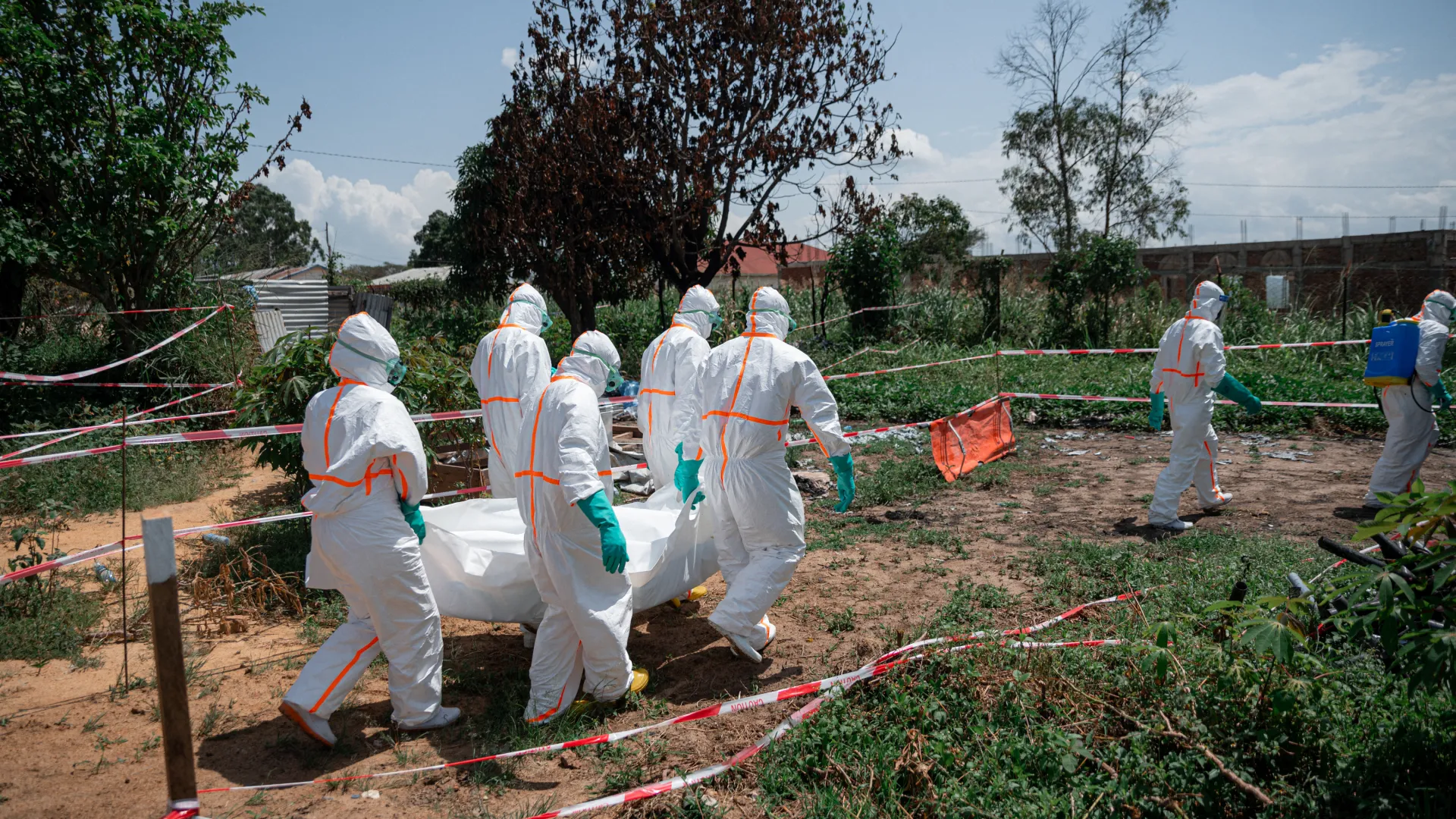
DR Congo · HEALTH
Key Facts
- —DRC toll The DRC government reported 3,007 deaths from 6,186 confirmed cases as of 31 August 2026, via a communiqué relayed on 2 September.
- —Africa CDC toll Africa CDC Director-General Jean Kaseya reported 3,009 deaths from 6,206 confirmed cases on 2 September 2026.
- —WHO data WHO Disease Outbreak News 616, dated 28 August, reported 2,786 deaths from 5,794 confirmed cases as of 26 August.
- —Epicenter Ituri province accounts for 4,802 of 5,794 confirmed cases (83%) and 28 of 36 health zones, per WHO data from 26 August.
- —Virus strain The outbreak is caused by Bundibugyo virus, for which no licensed vaccine or treatment exists.
- —Record toll With over 3,000 deaths, this is DR Congo’s deadliest Ebola outbreak ever, surpassing the 2018-2020 Kivu toll of 2,280 deaths.
Ebola has killed over 3,000 people in DR Congo. But the toll varies by institution, and the virus strain has no vaccine.
Ebola has now killed more than 3,000 people in the Democratic Republic of Congo. But the exact toll depends on which health authority you ask.
The Congolese government reported 3,007 deaths from 6,186 confirmed cases as of 31 August, in a communiqué relayed on 2 September. Africa CDC reported 3,009 deaths from 6,206 cases on the same day.
The WHO published its own figures on 28 August: 2,786 deaths from 5,794 confirmed cases, as of 26 August. These numbers differ because they are updated at different times.
The outbreak is caused by Bundibugyo virus, which has no licensed vaccine or treatment. This is DR Congo’s 17th Ebola outbreak and its deadliest on record.
Official Figures Differ by Date
The DRC government’s communiqué, relayed by Ministry of Communication and Media on 2 September 2026, reported 3,007 deaths and 6,186 confirmed cases. That data runs to 31 August.
Africa CDC Director-General Jean Kaseya gave a slightly higher tally on 2 September: 3,009 deaths and 6,206 confirmed cases. This covers the same period but includes updated reports.
WHO’s DON616 reported 2,786 deaths from 5,794 cases in DR Congo as of 26 August. The case fatality rate was 48.1%.
The WHO notes that increases in cases likely reflect expanded surveillance, enhanced laboratory testing, improved diagnostic capacity, and periodic data backlog reconciliation.
Why the Numbers Diverge
Health authorities often update their counts at different times. A death reported in one province may not yet appear in another institution’s database.
The WHO’s language about reporting delays suggests differences arise from data backlog processing. No single number is wrong; they just reflect different cut-off dates.
Independent groups also keep their own caseloads. MSF reported that it had admitted over 2,000 patients as of 20 August, but it does not publish a death tally.
These variations are normal in large outbreaks, but they can confuse the public and journalists. Always check the date and source of any figure.
A Deadly Outbreak in Ituri
Ituri province is the epicenter. WHO data from 26 August shows Ituri accounts for 4,802 of 5,794 confirmed cases (83%) and 28 of 36 health zones.
The outbreak has spread across six provinces: Ituri, North Kivu, South Kivu, Haut-Uele, Tshopo, and Bas-Uele. In total, 60 health zones are affected.
North Kivu has reported 868 cases and 589 deaths, per DRC data from 31 August. South Kivu has had only three cases and has gone 92 days without a new infection.
The affected area covers about 240,000 square kilometres, according to Africa CDC. This makes response coordination difficult across remote regions.
No Vaccine for This Strain
This outbreak is caused by Bundibugyo virus (BDBV), one of several Ebola species. No licensed vaccine or treatment exists for BDBV.
The WHO states it is not known whether the licensed Ervebo vaccine, which targets the Zaire strain, protects against BDBV in humans. An Ervebo trial is underway.
On 20 August, the group allocated 70,000 doses. 20,000 went to a phase 3 trial, 50,000 to frontline workers.
More than 16,000 doses arrived on 22 August, and health-worker vaccination began on 27-28 August. No cumulative doses-administered figure has been published.
Response and Funding
MSF has more than 1,400 staff, six treatment centres, and over 400 beds across five provinces. It has admitted over 2,000 patients as of 20 August.
WHO declared a global emergency on 16 May, one day after the outbreak. Africa CDC declared a continental emergency on 18 May.
An African Union high-level meeting on 18 June produced US$910 million in pledges. The Pandemic Fund committed US$220.6 million.
The United States announced an additional US$242 million in August. These funds support treatment, surveillance, and vaccination trials.
Worse Than 2018-2020
This outbreak has already surpassed the 2018-2020 Kivu outbreak, which was DR Congo’s deadliest until now. That one killed 2,280 people out of 3,470 cases.
The current outbreak has done this in under four months, compared to two years for the previous one. It is now the second largest on record globally, behind West Africa 2014-16.
WHO emergency director Marie Roseline Belizaire said on 19 June that 75 health workers had been infected and 17 had died. This highlights the risk to responders.
The outbreak was declared on 15 May, but transmission likely started weeks earlier. Delays in detection and response likely contributed to its scale.
Why It Spreads So Fast
Armed conflict is the main driver. Ituri and North Kivu have suffered decades of violence, displacement, and weak health systems.
US CDC analysis found that 59% of deaths occur outside treatment units. Only 10.6 contacts are traced per case, against a target of 20 or more.
Only 49% of health zones have burial teams, and just 15-20% of new cases arise among known contacts. This suggests undetected chains of transmission.
Le Monde reports that the outbreak is spreading in regions with little state presence. La Croix calls Ituri a ‘deprived province weakened by decades of armed conflict.’
Cross-Border and International Spread
Uganda reported 20 confirmed cases and 2 deaths, according to WHO DON614, which declared the outbreak over on 28 July 2026. The US CDC reports 21 confirmed and probable cases and 3 deaths.
These figures differ because they count cases differently; the US CDC includes probable cases, while WHO counts only confirmed cases. Both should be reported separately.
One imported case occurred in France, where the patient recovered and was discharged on 4 July 2026. Two recovered patients were also treated in Germany.
No other neighbouring countries have reported cases, but the risk remains high due to regional mobility. Health authorities are on alert.
More: DR Congo news in English, every day from The Rio Times.
Frequently Asked Questions
What is the official death toll in DR Congo?
The DRC government reported 3,007 deaths from 6,186 confirmed cases as of 31 August 2026, via a communiqué on 2 September.
How does Africa CDC’s tally differ?
Africa CDC Director-General Jean Kaseya reported 3,009 deaths from 6,206 confirmed cases on 2 September 2026.
What does the WHO say?
WHO’s DON616, dated 28 August, reported 2,786 deaths from 5,794 cases. The case fatality rate was 48.1%.
Is there a vaccine for this outbreak?
No. The outbreak is caused by Bundibugyo virus, for which no licensed vaccine exists. An Ervebo trial is underway, but protection is not confirmed.
Has the outbreak spread to other countries?
Yes, Uganda had cases, declared over on 28 July. France and Germany treated imported cases, but no ongoing transmission is reported outside DR Congo.
Connected Coverage
Sources: WHO Disease Outbreak News 616; Africa CDC; DRC Ministry of Communication and Media via Anadolu Agency; US CDC; Le Monde; RFI; MSF; La Croix
This article was produced by The Rio Times’ automated newsroom system. How we use AI · Report an error · Editorial responsibility: Matthias Camenzind, Editor-in-Chief