Tolima Seismic Swarm: M4.5 Tremor Shakes Central Colombia
Colombia · Disasters
Key Facts
—The peak. A magnitude 4.5 tremor struck near Chaparral, in Colombia’s Tolima department, at 3:09 p.m. local time on Wednesday 23 September 2026, at shallow depth, and was felt in Pereira, Armenia and Bogotá.
—The swarm. It was the strongest of at least ten tremors recorded around Chaparral on Wednesday alone, part of a sequence running since Sunday that included a magnitude 4.1 event among 32 movements logged in under 24 hours on Monday.
—The source. All figures come from the Servicio Geológico Colombiano (SGC), the state geological service, which classifies the episode as an “enjambre sísmico” — a seismic swarm with no single mainshock.
—The response. Schools in Chaparral and neighbouring Roncesvalles suspended classes on Monday as a precaution; no injuries or structural damage have been reported so far.
—The context. Colombia is still counting the cost of the magnitude 7.4 Chocó earthquake of 10 August, which killed 321 people — a separate fault system, but one that has left the country sensitive to every new tremor.
Central Colombia has been shaking for days. A seismic swarm around Chaparral, in the coffee-growing department of Tolima, peaked on Wednesday afternoon with a magnitude 4.5 tremor felt as far away as Bogotá — and the state geologists say the sequence is not over.
What Happened in Tolima
The Servicio Geológico Colombiano recorded the day’s strongest shock at 3:09 p.m. local time on Wednesday: magnitude 4.5, shallow depth, with its epicentre near the municipality of Chaparral in southern Tolima. The nearest towns were Roncesvalles at 20 kilometres, San Antonio at 22 and Chaparral itself at 24.
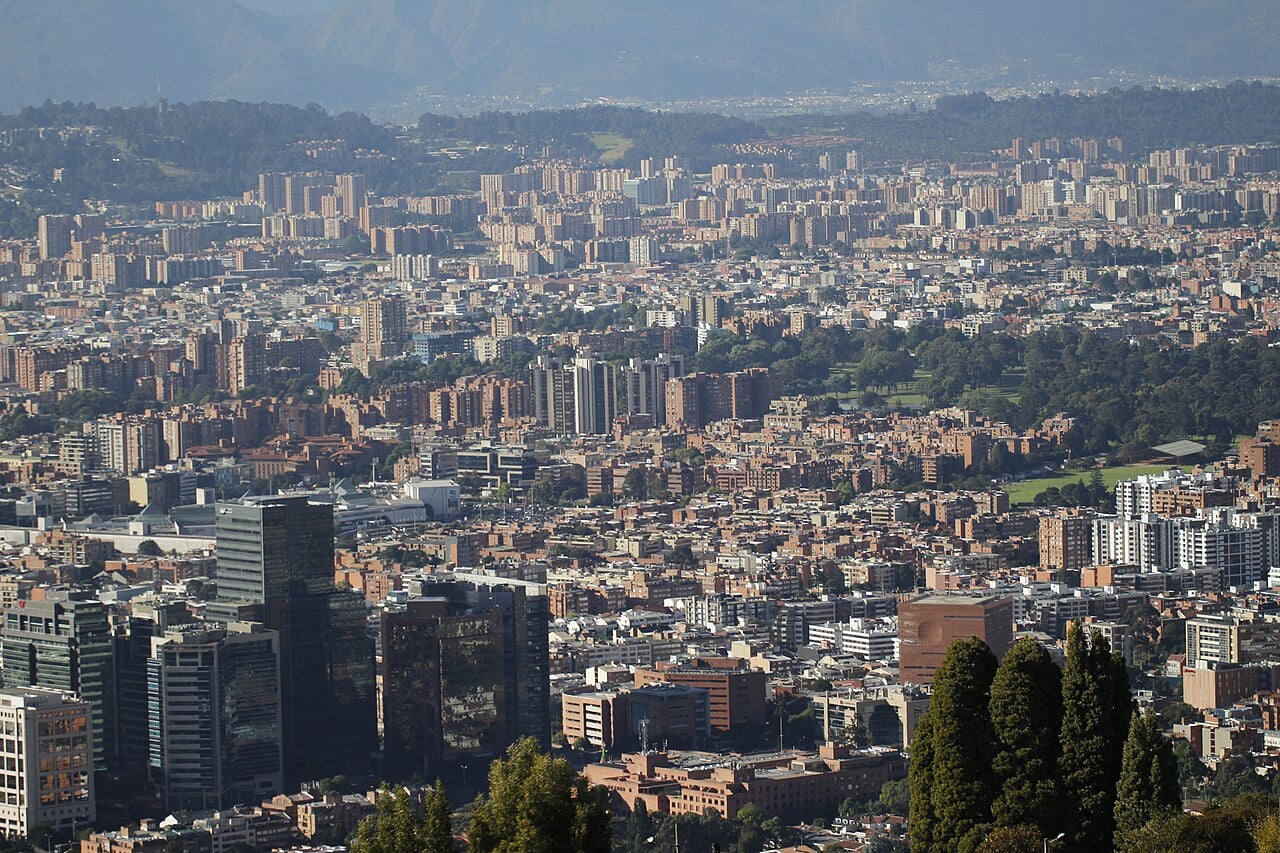
The tremor was felt well beyond the epicentre. Residents reported shaking in Pereira and Armenia, the coffee-axis capitals to the northwest, and in Bogotá, more than 150 kilometres away — enough to send the word “temblor” trending across Colombia within the hour.
It did not come alone. SGC bulletins show at least ten events around Chaparral on Wednesday between late morning and mid-afternoon, most between magnitude 3.1 and 3.7, before and after the 4.5 peak. The latest bulletin at the time of writing logged a magnitude 4.1 event at 9:34 p.m. local time.
A Swarm, Not a Single Quake
The sequence began on Sunday 20 September, when the SGC registered a magnitude 4.1 tremor near Chaparral in the early hours, followed by smaller shocks through the morning. Monday brought the busiest day so far: 32 movements in the region in under 24 hours, including another magnitude 4.1.
The SGC’s own analysis describes the episode as an enjambre sísmico — a seismic swarm. In a swarm there is not necessarily one mainshock followed by aftershocks; instead, frequency rises and falls over days or weeks, and the largest event can arrive well into the sequence. That is why Wednesday’s 4.5, four days in, does not close the episode.
Local authorities moved early. Classes were suspended at schools in Chaparral and Roncesvalles on Monday as a safety precaution, and the SGC has asked residents to log what they feel through its Sismo Sentido platform, which maps reported intensity across the country.
Why Tolima Shakes
Colombia sits on the Pacific Ring of Fire, where the Nazca Plate dives beneath South America. Tolima lies in the Central Cordillera, home to the Nevado del Tolima volcano, and the department is no stranger to either tectonic or volcanic tremors.
Wednesday’s events were shallow — the SGC lists them as superficial — which is why moderate magnitudes were felt so widely. Shallow shocks dissipate less energy with depth and tend to rattle a broader area than deeper events of similar size.
The swarm is unrelated to the aftermath of the magnitude 7.4 Chocó earthquake of 10 August on the Pacific coast, which killed 321 people and has generated more than 1,300 aftershocks. But that disaster, barely six weeks old, is the backdrop against which every new Colombian tremor is now read — and one reason Wednesday’s tremor dominated search traffic within minutes.
What It Means for Residents and Travellers
For now, the practical impact is precautionary rather than destructive. No injuries or structural damage have been reported from the Tolima sequence, and the SGC has issued no evacuation order beyond the school closures in the two municipalities nearest the epicentre.
Residents in the coffee axis and Bogotá should expect further perceptible tremors while the swarm continues. The standard guidance applies: drop, cover and hold on; stay away from façades and steep slopes on the region’s mountain roads; and follow SGC bulletins rather than social-media rumours for magnitude and location.
Travellers heading to or through Tolima — a region popular for its coffee fincas and the Combeima canyon — should check with local operators and allow for short-notice changes, particularly if the swarm intensifies.
What We Could Not Confirm
Whether any injuries or damage have occurred in the Tolima sequence — none were reported in the bulletins and coverage we reviewed. Whether classes in Chaparral and Roncesvalles remain suspended on Thursday. How long the swarm will run or whether a larger event will follow; the SGC has made no such forecast. And whether the swarm carries any volcanic component linked to the Nevado del Tolima — SGC bulletins so far list only location, magnitude and depth.
Frequently Asked Questions
How strong was the Tolima earthquake on 23 September 2026?
The strongest event was magnitude 4.5 at 3:09 p.m. local time, at shallow depth near Chaparral, Tolima, according to the Servicio Geológico Colombiano. It was felt in Pereira, Armenia and Bogotá, and a magnitude 4.1 followed at 9:34 p.m.
What is a seismic swarm?
A seismic swarm — enjambre sísmico in Spanish — is a sequence of tremors in one area without a clear single mainshock. Frequency rises and falls over days or weeks, and the largest event can arrive well into the sequence, as Wednesday’s 4.5 did four days in.
Is the Tolima swarm linked to August’s Chocó earthquake?
No. The magnitude 7.4 Chocó earthquake of 10 August struck a different region on the Pacific coast and has its own aftershock sequence. The Tolima events are in the Central Cordillera, hundreds of kilometres away, on separate fault structures.
Are there casualties or damage in Tolima?
None have been reported so far. Schools in Chaparral and Roncesvalles suspended classes on Monday as a precaution, and the SGC continues to monitor the swarm around the clock.
{“@context”: “https://schema.org”, “@type”: “FAQPage”, “mainEntity”: [{“@type”: “Question”, “name”: “How strong was the Tolima earthquake on 23 September 2026?”, “acceptedAnswer”: {“@type”: “Answer”, “text”: “The strongest event was magnitude 4.5 at 3:09 p.m. local time, at shallow depth near Chaparral, Tolima, according to the Servicio Geológico Colombiano. It was felt in Pereira, Armenia and Bogotá, and a magnitude 4.1 followed at 9:34 p.m.”}}, {“@type”: “Question”, “name”: “What is a seismic swarm?”, “acceptedAnswer”: {“@type”: “Answer”, “text”: “A seismic swarm — enjambre sísmico in Spanish — is a sequence of tremors in one area without a clear single mainshock. Frequency rises and falls over days or weeks, and the largest event can arrive well into the sequence, as Wednesday’s 4.5 did four days in.”}}, {“@type”: “Question”, “name”: “Is the Tolima swarm linked to August’s Chocó earthquake?”, “acceptedAnswer”: {“@type”: “Answer”, “text”: “No. The magnitude 7.4 Chocó earthquake of 10 August struck a different region on the Pacific coast and has its own aftershock sequence. The Tolima events are in the Central Cordillera, hundreds of kilometres away, on separate fault structures.”}}, {“@type”: “Question”, “name”: “Are there casualties or damage in Tolima?”, “acceptedAnswer”: {“@type”: “Answer”, “text”: “None have been reported so far. Schools in Chaparral and Roncesvalles suspended classes on Monday as a precaution, and the SGC continues to monitor the swarm around the clock.”}}]}
Sources
Servicio Geológico Colombiano · Caracol Noticias · Pulzo · La FM
Connected Coverage
Colombia is still rebuilding after August’s deadly Chocó earthquake — a separate disaster on a separate fault system.
A Month After Colombia’s Earthquake, 321 Dead and 1,300 Aftershocks
Sources: Servicio Geológico Colombiano; Caracol Noticias; Pulzo; La FM.
This article was produced by The Rio Times’ automated newsroom system. How we use AI · Report an error
Read More from The Rio Times