A Month After Colombia’s Earthquake, 321 Dead and 1,300 Aftershocks
COLOMBIA · RECONSTRUCTION
Colombia latest: Colombia news — latest coverage · US Keeps Million Bounty on Cabello After Clearing Venezuela…
Key Facts
- —One month The 7.4 magnitude earthquake struck on 10 August with its epicentre at San José del Palmar, Chocó.
- —The toll 321 dead, according to the national disaster agency.
- —Still moving More than 1,300 aftershocks recorded by the Servicio Geológico Colombiano since 10 August.
- —The reach 16 departments and 498 municipalities affected, with major damage in Pereira, Quibdó, Cali and Manizales.
- —The response Eleven decrees for reconstruction, including a Fondo Patria Milagro and energy-continuity measures through FONDES.
- —The pension route Affected territories authorised to draw exceptionally on the national territorial pension fund for emergency needs.
A month after the ground moved, Colombia has counted 321 dead and written eleven decrees. The aftershocks have not stopped.
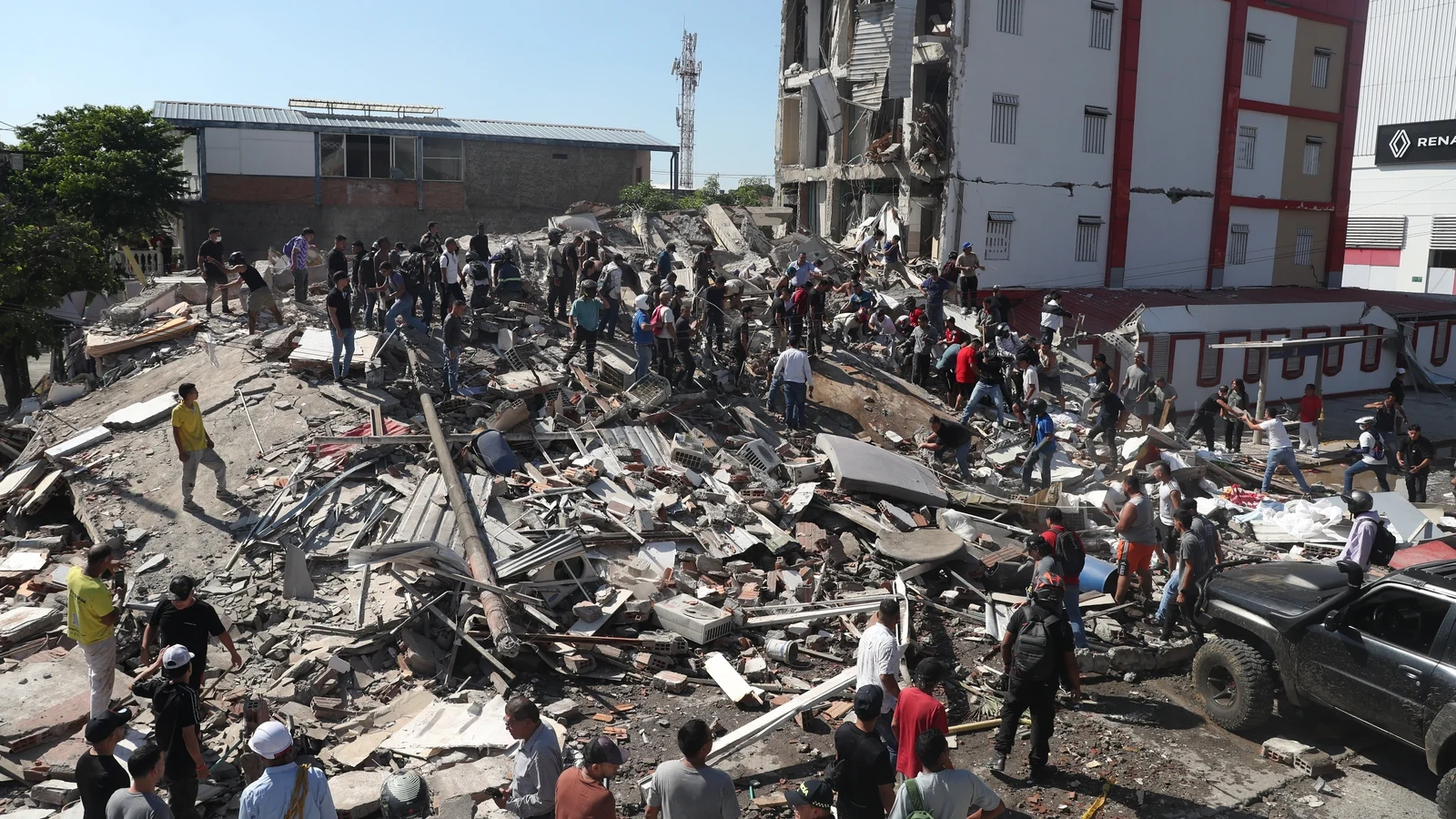
Colombia marked one month since the Chocó earthquake on Thursday with a death toll of 321, more than 1,300 recorded aftershocks and a reconstruction programme now running to eleven decrees.
The Scale
The earthquake registered magnitude 7.4 with its epicentre at San José del Palmar in Chocó, on 10 August 2026.
Sixteen departments and 498 municipalities were affected. The heaviest structural damage was recorded in Pereira, Quibdó, Cali and Manizales.
The national disaster management agency puts the death toll at 321 as of the one-month mark. The Servicio Geológico Colombiano has recorded more than 1,300 aftershocks since the main event.
The Eleven Decrees
The reconstruction package announced by the president includes a Fondo Patria Milagro, energy-continuity measures channelled through FONDES, an obras por impuestos mechanism allowing companies to discharge tax obligations through reconstruction works, rules for investment across jurisdictional boundaries, exceptional access to DANE data, and measures to keep schools running.
Separately, affected territories were authorised to draw exceptionally on the Fondo Nacional de Pensiones de las Entidades Territoriales for emergency needs. That is a significant instrument: it converts municipal pension reserves into immediate liquidity.
It is also a decision with a cost that arrives later. Money taken out of a territorial pension fund is money a municipality will have to replace.
Outside Help
Qatar delivered 23 tonnes of humanitarian aid and a fully equipped field hospital, sent through the Qatar Fund for Development and flown in by Qatari Armed Forces aircraft. The delivery was announced on 9 September.
Colombian Foreign Minister Omar Bula Escobar acknowledged the contribution publicly.
What the Next Month Looks Like
The immediate phase is over. What follows is the harder part: housing for displaced families, structural assessment of buildings that survived, and the reconstruction of a road and power network across terrain that was difficult before the earthquake.
Chocó is among Colombia’s poorest departments and among its least connected. The recovery there will be slower than in Pereira or Cali, and the eleven decrees do not change that.
Why Chocó Was the Worst Place for It
Chocó is Colombia’s poorest department by most measures and among its least connected. Much of it is reachable only by river or air, road density is minimal, and the terrain is dense rainforest cut by rivers.
That geography shaped the first month of the response. Aid moved slowly because the routes to move it along did not exist, and assessment teams could not reach some affected communities for days.
It will shape the second year more. Rebuilding housing and public buildings in a place where every sack of cement arrives by boat costs several times what it costs in Pereira, and takes longer.
The epicentre at San José del Palmar sits in exactly this terrain, on the western cordillera between Chocó and Valle del Cauca.
The Damage Outside the Epicentre
The heaviest structural damage was recorded not at the epicentre but in the cities. Pereira, Quibdó, Cali and Manizales all took significant losses, and between them they hold several million people.
That pattern is normal for a large earthquake in the Andes. Energy propagates along the mountain chain, and the losses concentrate wherever the building stock is weakest relative to the shaking it receives.
Colombia has had seismic building codes since 1984 and strengthened them after the 1999 Armenia earthquake, which killed around a thousand people in the coffee region. Buildings constructed since then generally performed. Older ones did not.
Sixteen departments and 498 municipalities recorded effects, which is roughly half the country by administrative area.
What the Aftershock Count Means
More than 1,300 aftershocks in a month is not unusual for a magnitude 7.4 event. Aftershock sequences decay on a well-understood curve, with frequency falling roughly in inverse proportion to the time since the main shock.
The practical consequence is for damaged buildings. A structure weakened by the main shock but still standing can fail in an aftershock a fraction of its size, which is why structural assessment before reoccupation matters more than the headline magnitude.
It also has a human cost that does not appear in the damage statistics. Populations living through a month of continuing tremors do not return to normal routines, and displacement extends well beyond the buildings actually destroyed.
The sequence will continue at declining frequency for months.
More: Colombia news in English, every day from The Rio Times.
The big picture: Colombia explained — economy, politics, society and daily life in one read.
Frequently Asked Questions
How many people died?
321, according to Colombia’s national disaster management agency, as of the one-month mark.
Where was the earthquake?
Magnitude 7.4, epicentre at San José del Palmar in Chocó, on 10 August 2026.
How many aftershocks?
More than 1,300 recorded by the Servicio Geológico Colombiano since the main event.
What is being done?
Eleven reconstruction decrees, including a dedicated fund, energy-continuity measures and an obras por impuestos mechanism, plus exceptional access to territorial pension reserves.
Who has sent aid?
Qatar delivered 23 tonnes of humanitarian aid and a fully equipped field hospital, announced on 9 September.
Sources: Semana, Infobae, UNGRD, Servicio Geológico Colombiano.
This article was drafted with automated assistance and reviewed before publication. How we use AI · Report an error · Editorial responsibility: Matthias Camenzind, Editor-in-Chief
In depth