
COLOMBIA · GEOPOLITICS
Key Facts
- —The country Colombia, 53 million people, holds a UN Security Council seat until 2027.
- —What happened Conservative Abelardo de la Espriella took office on 7 August 2026.
- —The shift Israel ties restored, Iran ties cut, US minerals deal signed.
- —The numbers US bought 29.6% of exports; China supplied US$19.4 billion in 2025.
- —The friction US rated Colombia’s drug fight a failure on 15 September 2026.
- —Still open No formal exit yet from China’s Belt and Road memorandum.
A new conservative government is pulling Colombia back towards Washington and Israel, while China remains its biggest supplier.
Colombia geopolitics in 2026 is the story of a sharp turn. Since 7 August, President Abelardo de la Espriella has steered the country of 53 million towards the United States and Israel.
That reverses four years under Gustavo Petro and makes Colombia a test case for US influence against China in South America.
Colombia Geopolitics After the Petro Years
De la Espriella, a conservative, won the presidential runoff on Sunday, 21 June 2026, by less than one percentage point. The Registraduría, Colombia’s electoral authority, put him at 49.66% against 48.70% for Iván Cepeda.
Cepeda was the candidate of the Historic Pact, Petro’s left-wing coalition. Those figures come from the preliminary count, as reported by Forbes Colombia and El Tiempo.
De la Espriella was sworn in on Friday, 7 August 2026, at a ceremony in Cali. Guests included King Felipe VI of Spain and presidents Javier Milei of Argentina and Daniel Noboa of Ecuador.
His vice-president is José Manuel Restrepo. His foreign minister, Omar Bula Escobar, is a former senior United Nations official with posts across Europe, Africa and the Middle East.
Bula has given Congress six goals for foreign policy. They range from defending sovereignty and fighting transnational crime to rebuilding strategic alliances and winning trade and investment.
The plan favours countries that share democracy, freedom and the rule of law. It also promises a clear line against regimes seen as a threat to regional stability.
For the personalities behind the shift, see the Rio Times profiles of Abelardo de la Espriella and Gustavo Petro. Ongoing coverage sits on the Colombia news page.
The United States, Partner and Pressure Point
The United States is Colombia’s largest single export market. It bought 29.6% of Colombian exports in 2025, worth US$14.9 billion, according to DANE, the national statistics office.
A free trade deal, the US-Colombia Trade Promotion Agreement, has been in force since 15 May 2012. It removes most tariffs and opens Colombian services markets to US firms, according to the US Trade Representative.
US Secretary of State Marco Rubio visited Barranquilla on 8 and 9 September 2026. The two governments signed a framework on supply chains for critical minerals and rare earths, plus a civil nuclear memorandum.
Colombia’s foreign ministry stressed that both documents are non-binding. It also said they respect Colombian sovereignty over natural resources.
The friction has not vanished. On 15 September 2026 the White House listed Colombia among four countries that “failed demonstrably” on counternarcotics, with Afghanistan, Bolivia and Burma.
Colombian broadcaster NTN24 reported that the US determination blamed the Petro years. It also noted De la Espriella’s promise of an aggressive campaign against coca.
Security ties run deep. NATO says Colombia became one of its global partners in 2017, and the alliance’s first partner in Latin America.
The new ambassador in Washington is María Consuelo Araújo, a former foreign minister. She was sworn in on Friday, 4 September 2026.

China, the Supplier Colombia Cannot Ignore
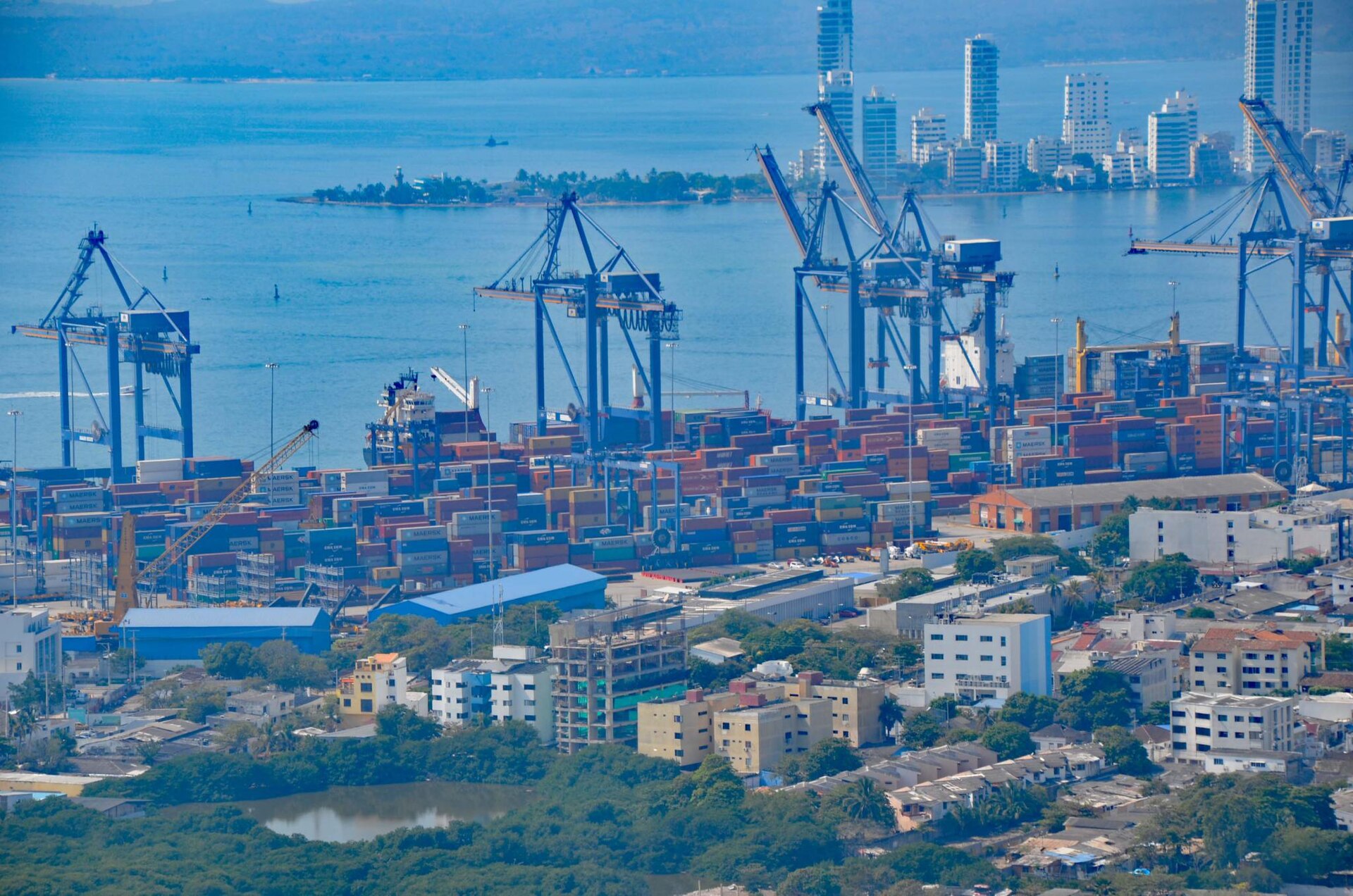
China sold Colombia goods worth US$19.4 billion in 2025, DANE import data show. That was more than the US$16.2 billion that came from the United States.
The flow runs mostly one way. China bought only US$1.65 billion of Colombian exports in 2025, about 3.3% of the total.
The gap kept growing in 2026. From January to July, imports from China reached US$13.3 billion, against US$10.5 billion from the United States.
Petro signed up to the Belt and Road Initiative, Beijing’s global infrastructure and lending programme, in May 2025. The memorandum covered areas from renewable energy to electric vehicles, Colombian business daily Portafolio reported.
In August 2026, Nate Morris, Trump’s nominee for US ambassador to Colombia, told senators the president-elect had pledged to exit that memorandum. El Colombiano and Portafolio reported his testimony.
The foreign ministry had published no withdrawal notice by 7 October 2026. Practical ties continue: on 22 September the ministry formally received Chinese earthquake aid from Ambassador Zhu Jingyang.
Venezuela, the Neighbour That Shapes Security
Venezuela changed abruptly in early January 2026, when US forces captured Nicolás Maduro and flew him to New York. He pleaded not guilty to drug-trafficking charges in a Manhattan federal court, the legal news service Jurist reported.
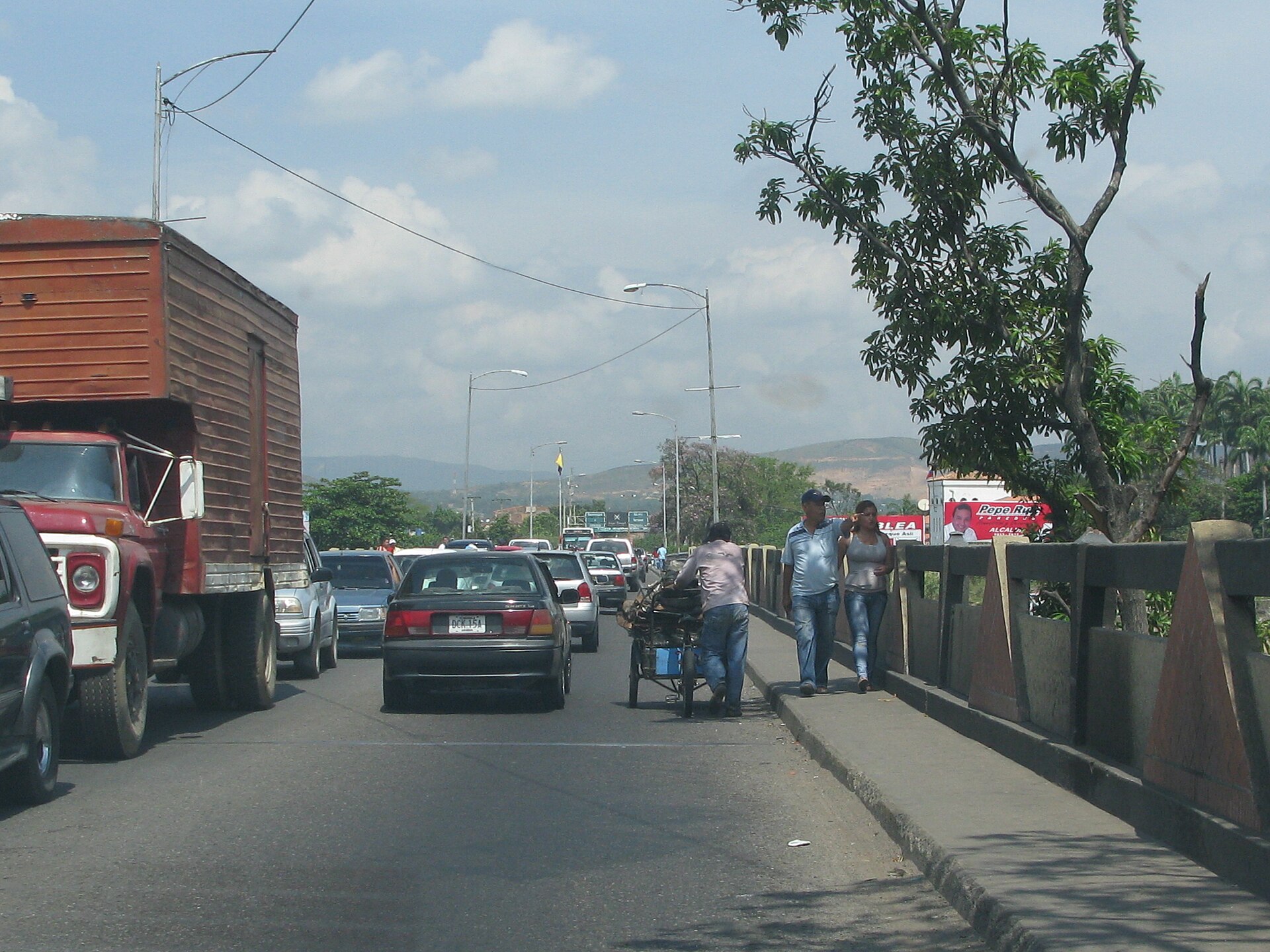
For Colombia, the border is a daily reality. Migración Colombia, the migration authority, counted 20.6 million back-and-forth border crossings between January and June 2026.
Average daily border entries fell to 56,264 from 73,596 in 2025. The authority found no surge after the earthquakes that struck Venezuela on 24 June 2026.
Trade is modest. Colombia sold Venezuela goods worth US$1.07 billion in 2025, while imports from Venezuela came to just US$104 million.
Detentions are a sore point. On 10 September 2026 the foreign ministry met families of Colombians held in Venezuela, some of whom have reportedly not been charged.
On the border economy, see the Rio Times report on cross-border bank transfers and the guide to Colombia’s Andean neighbours.
Israel, Iran and Morocco, a Middle East Reset
The sharpest reversal is in the Middle East. On Monday, 10 August 2026, Colombia recognised Israeli sovereignty over the Golan Heights.
The next day it decided to restore full diplomatic relations with Israel, which Petro had broken off in 2024. Israel and Colombia had first established relations in 1957.
Ambassador Tania Gilinski was sworn in on Thursday, 1 October 2026. Her stated priorities are security, intelligence, cybersecurity and the fight against transnational crime.
Visa-free tourist travel between the two countries resumed in September 2026. Colombia also withdrew its 2024 intervention in South Africa’s genocide case against Israel at the International Court of Justice.
The court, the UN’s highest judicial body, confirmed that withdrawal on 22 September 2026. Iran went the other way.
Colombia broke diplomatic relations with Tehran effective 19 September 2026, citing alleged links to terrorist and drug-trafficking groups. Consular relations continue.
On 24 September it designated Iran’s Islamic Revolutionary Guard Corps, the regime’s elite military force, as a terrorist group.
In North Africa, Colombia froze relations with the Sahrawi Arab Democratic Republic, the self-declared state of the Western Sahara independence movement. It now recognises Moroccan sovereignty over the territory.
Gulf states have chosen aid diplomacy. After the 10 August earthquake in Colombia, the United Arab Emirates pledged US$10 million and Qatar flew in a field hospital.
Europe, Russia, Turkey and India
The European Union is Colombia’s other big Western anchor. Its trade agreement with Colombia has applied since 1 August 2013, and the EU bought 12.4% of Colombian exports in 2025.
That share rose to 15.1% in the first eight months of 2026. At a ministers’ meeting in New York in September 2026, Bula urged closer EU cooperation against organised crime.
Defence ties with Europe are growing too. In November 2025 Sweden’s Saab signed a contract to sell Colombia 17 Gripen fighter jets for EUR 3.1 billion (about US$3.5 billion).
Saab says deliveries will run from 2026 to 2032. The order was signed under Petro.
Russia’s trade footprint is small. Colombia imported US$317 million of Russian goods in 2025, according to DANE.
The war in Ukraine reaches Colombia through citizens who enlist in foreign forces. By September 2026 the foreign ministry had logged 863 consular cases tied to Colombians in Ukraine and 890 in Russia.
Those cases include dead, missing and detained citizens. Bogotá has formally asked both Moscow and Kyiv to stop enlisting Colombians.
Turkey counts Colombia as its third-largest trading partner in Latin America and the Caribbean, with trade of US$1.28 billion in 2024. TIKA, Turkey’s aid agency, runs its South America office from Bogotá.
India is a quieter but bigger customer than China. It bought US$2.17 billion of Colombian goods in 2025, against US$1.65 billion for China.
India also sold Colombia US$1.75 billion of goods that year. In September 2026 Colombia backed a more structured dialogue between India and CELAC, the club of Latin American and Caribbean states.
BRICS, the UN Seat and the Lenders
Colombia is not a member of BRICS, the group of emerging economies that includes Brazil, Russia, India, China and South Africa. The New Development Bank, the lender the BRICS founded, lists Colombia only as a prospective member.
The bank says prospective members have been admitted by its governors but join only when they deposit an instrument of accession. Colombia had not done so as of October 2026.
At the United Nations, Colombia holds a non-permanent seat on the Security Council until the end of 2027. That gives the new government a vote on sanctions and peacekeeping mandates.
Its UN ambassador since September 2026 is J. Mauricio Gaona Bejarano. Colombia says it will not back the Sahrawi Arab Democratic Republic in the Council.
Colombia also cancelled its Flexible Credit Line with the International Monetary Fund, a precautionary credit facility, effective 1 October 2025. The line, approved in April 2024, was worth SDR 6.13 billion (about US$8.3 billion at current rates).
Colombia’s Partners at a Glance
This summary reflects official positions and trade data as of October 2026.
- United States: largest export market at 29.6% in 2025; minerals and nuclear deals signed in September 2026; drug decertification renewed.
- China: largest supplier at US$19.4 billion in 2025; Belt and Road memorandum signed in May 2025, exit promised but not formalised.
- European Union: trade agreement since 2013; 12.4% of exports in 2025; Swedish Gripen jets on order.
- Israel: relations restored in August 2026; Golan sovereignty recognised; new ambassador since 1 October 2026.
- Iran: diplomatic relations broken from 19 September 2026; Revolutionary Guards listed as a terrorist group.
- Venezuela: 20.6 million border crossings in the first half of 2026; Colombian detainees a live dispute.
- Russia and Ukraine: more than 1,700 consular cases involving Colombians in the two countries.
- Gulf, Turkey and India: earthquake aid from the Emirates and Qatar; US$1.28 billion of trade with Turkey in 2024; India a larger buyer than China.
What It Means for US Readers
Colombia geopolitics reaches US portfolios directly, because two Colombian heavyweights trade in New York.
Ecopetrol, the state-controlled oil company, lists as EC, and Grupo Cibest, the holding company of Bancolombia, lists as CIB.
A government aligned with Washington lowers the political risk around trade. The September 2026 decertification shows that drug policy can still strain relations.
For US policy, Colombia is now a named partner on critical minerals and rare earths. Both governments frame that work as diversifying supply chains.
On migration, the Venezuelan border still sees tens of thousands of entries a day. Travellers should check the US State Department’s current advisory for Colombia before booking.
For Colombia’s weight in the region, see the Rio Times guide to Colombia’s role in Latin America.
What Is Not Known
The biggest open question in Colombia geopolitics is China. It is not known whether Colombia will formally leave the Belt and Road memorandum.
Morris’s account of the president’s commitment has not been confirmed by the Colombian government. How Beijing would respond to an exit is also unclear.
It is unclear whether Washington will drop the “failed demonstrably” label in September 2027. The new government’s approach to Venezuela’s post-Maduro authorities and to detained Colombians is still taking shape.
The government has not said whether it will seek a new IMF credit line. How it will treat Petro-era contracts, such as the Gripen order, is not yet clear from official statements.
Frequently Asked Questions
Who is the president of Colombia in 2026?
Abelardo de la Espriella, a conservative, has been president since 7 August 2026. He narrowly won the 21 June runoff against the left-wing candidate Ivan Cepeda.
Is Colombia part of China’s Belt and Road Initiative?
Colombia signed a Belt and Road memorandum with China in May 2025 under Gustavo Petro. The new president reportedly committed to leaving it, but no formal withdrawal had been announced by early October 2026.
Is Colombia a member of BRICS?
Colombia is not a BRICS member. The BRICS-founded New Development Bank lists it as an admitted prospective member that has not completed accession.
Is Colombia a NATO member?
Colombia is a NATO global partner, not a member, and in 2017 became the alliance’s first partner in Latin America. That means training and cooperation but no defence guarantee.
Why did the US decertify Colombia?
On 15 September 2026 the White House listed Colombia among four countries that failed demonstrably on counternarcotics. Colombian media reported that the decision blamed the Petro years and welcomed the new government’s anti-coca plans.
Who are Colombia’s biggest trading partners?
The United States bought 29.6% of Colombian exports in 2025, ahead of the European Union with 12.4%. China was the biggest source of imports, at US$19.4 billion.
Does Colombia have relations with Israel again?
Yes, Colombia decided to restore full relations on 11 August 2026. Its new ambassador to Israel was sworn in on 1 October 2026.
Sources: Colombian Foreign Ministry, foreign policy roadmap; Foreign Ministry, Rubio visit; Foreign Ministry, minerals and nuclear instruments; Foreign Ministry, ambassador to Israel; Foreign Ministry, Golan Heights; Foreign Ministry, Israel visa waiver; Foreign Ministry, ICJ withdrawal; Foreign Ministry, Iran; Foreign Ministry, Revolutionary Guards; Foreign Ministry, Western Sahara; Foreign Ministry, ambassadors to the US and UN; Foreign Ministry, Russia and Ukraine recruitment; Foreign Ministry, Chinese aid; Foreign Ministry, UAE aid; Foreign Ministry, Qatar field hospital; Foreign Ministry, CELAC-EU meeting; Foreign Ministry, CELAC-India meeting; Foreign Ministry, detainees in Venezuela; DANE, exports by destination; DANE, imports by origin; DANE, population projections; White House, 2027 Majors List; USTR, Colombia TPA; European Commission, EU-Andean trade; NATO, relations with Colombia; UN Security Council members; New Development Bank, members; IMF, press release 25/324; Saab, Gripen contract; Turkish Foreign Ministry; Migración Colombia, border monitoring; Forbes Colombia, runoff result; El Tiempo, runoff by city; Vanguardia, inauguration; Portafolio, Belt and Road; El Colombiano, Nate Morris testimony; NTN24, decertification; Jurist, Maduro arraignment (all accessed 7 October 2026). Conversions use open.er-api.com rates of 7 October 2026.
This article was produced by The Rio Times’ automated newsroom system. How we use AI · Report an error · Editorial responsibility: Matthias Camenzind, Editor-in-Chief