Colombia Neighbours Explained, the Andean Border Guide

COLOMBIA · ANDEAN NEIGHBOURHOOD
Key Facts
- —What it is Colombia shares five land borders with Venezuela, Brazil, Peru, Ecuador and Panama, plus membership in the Andean Community and Pacific Alliance.
- —Why it matters The Venezuela frontier alone recorded 13,987,130 pendular movements between January and April 2026, making it one of Latin America’s busiest cross-border corridors.
- —The numbers Border lengths run from 2,219 km with Venezuela to 266 km with Panama, while intra-Andean Community trade in goods is 100% tariff-free according to Colombia’s foreign ministry.
- —The catch Formal bilateral trade with Venezuela fell to US$222 million in 2020 from a reported US$7 billion peak, showing how political rupture can empty a busy frontier.
- —Who is who The Andean Community links Bolivia, Colombia, Ecuador and Peru, while the Pacific Alliance adds Chile and Mexico for trade, investment and mobility.
- —What it means for you A foreigner can live, work, study or do business across Andean Community countries using national identity documents and common residence rules.
Colombia neighbours are not a single bloc but a set of five very different frontiers, each with its own economy, risks and daily rhythm. Understanding them explains where Colombia leads, where it follows, and where the region is heading.
Colombia sits at the hinge of South America, with Pacific and Caribbean coasts, an Andean road system and a land bridge toward Central America. This guide explains the borders, the institutions and the practical realities that shape life for Colombians and foreigners alike.
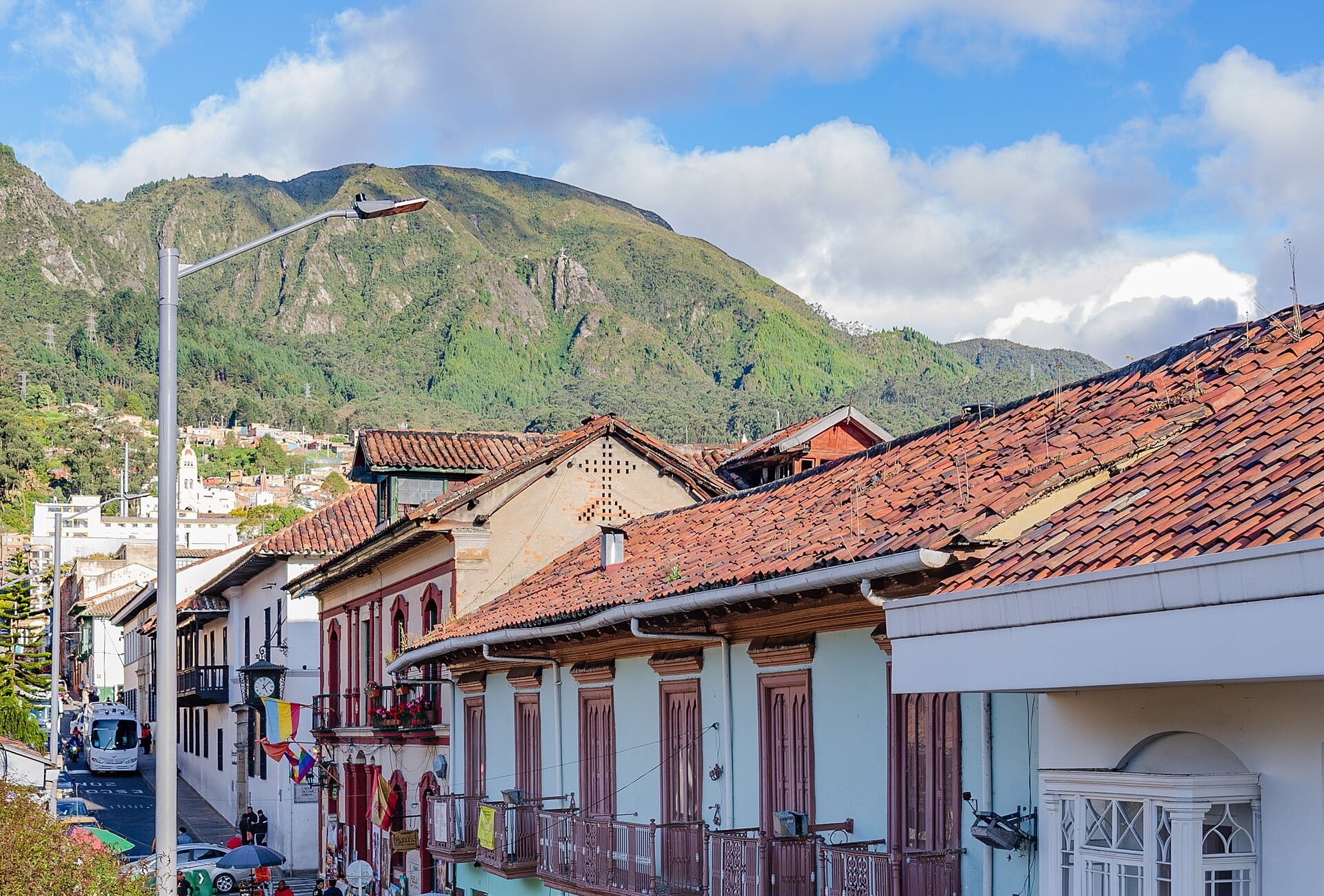
The Five Borders That Define Colombia
Colombia shares land frontiers with five countries. The longest is with Venezuela at approximately 2,219 km, followed by Brazil at 1,645 km, Peru at 1,626 km, Ecuador at 586 km and Panama at 266 km. These figures come from Colombian official sources and describe very different physical and human landscapes.
The Venezuela border is the most socially and economically active. Its principal crossings connect Norte de Santander with Táchira, Arauca with Apure, and La Guajira with Zulia. The Ecuador border is the most developed Andean road corridor, centred on the Rumichaca International Bridge between Ipiales and Tulcán.
Brazil and Peru share largely Amazonian and riverine frontiers with Colombia. The Brazil connection runs through Leticia and Tabatinga, with road access on the Brazilian side but no continuous road into Colombia’s interior. The Panama border is the Darién, a heavily forested region with no road link at all.
This geography gives Colombia a distinctive position. It is the only South American country with both Pacific and Caribbean coasts. It connects Andean roads to the Caribbean and forms the land bridge toward Central America, even though the Darién gap breaks the Pan-American Highway.
Venezuela: The Busiest and Most Fragile Frontier
The Colombia–Venezuela border is the region’s most densely interconnected frontier. Official Colombian migration monitoring recorded 13,987,130 pendular movements between January and April 2026. Pendular movements are cross-border trips by people who regularly return, rather than permanent migration.
Of those movements, 6,966,262 were entries into Colombia and 7,020,868 were returns to Venezuela. Norte de Santander concentrated 86.7% of the flow, with Arauca at 11.4% and La Guajira at 1.9%. For January and February 2026 alone, Migración Colombia recorded 6,786,712 pendular crossings.
The same official report said 21.6% of Venezuelan citizens transiting Colombia identified the United States as their final destination. Other important destinations included Chile, Panama and Spain. This makes the frontier a transit corridor as much as a local economic space.
Trade tells a harder story. Local business coverage described the former bilateral commercial relationship as having reached roughly US$7 billion, while official exchange fell to US$222 million in 2020. Definitions of bilateral trade vary between Colombian and Venezuelan statistics, so the two figures are not strictly comparable.
The political relationship has improved from the rupture and border closures of the late 2010s, but it remains vulnerable to security incidents, political changes and weak state control in border areas. Colombia and Venezuela share concerns over armed groups, smuggling, migration management, irregular crossings, energy links and the restoration of commerce.
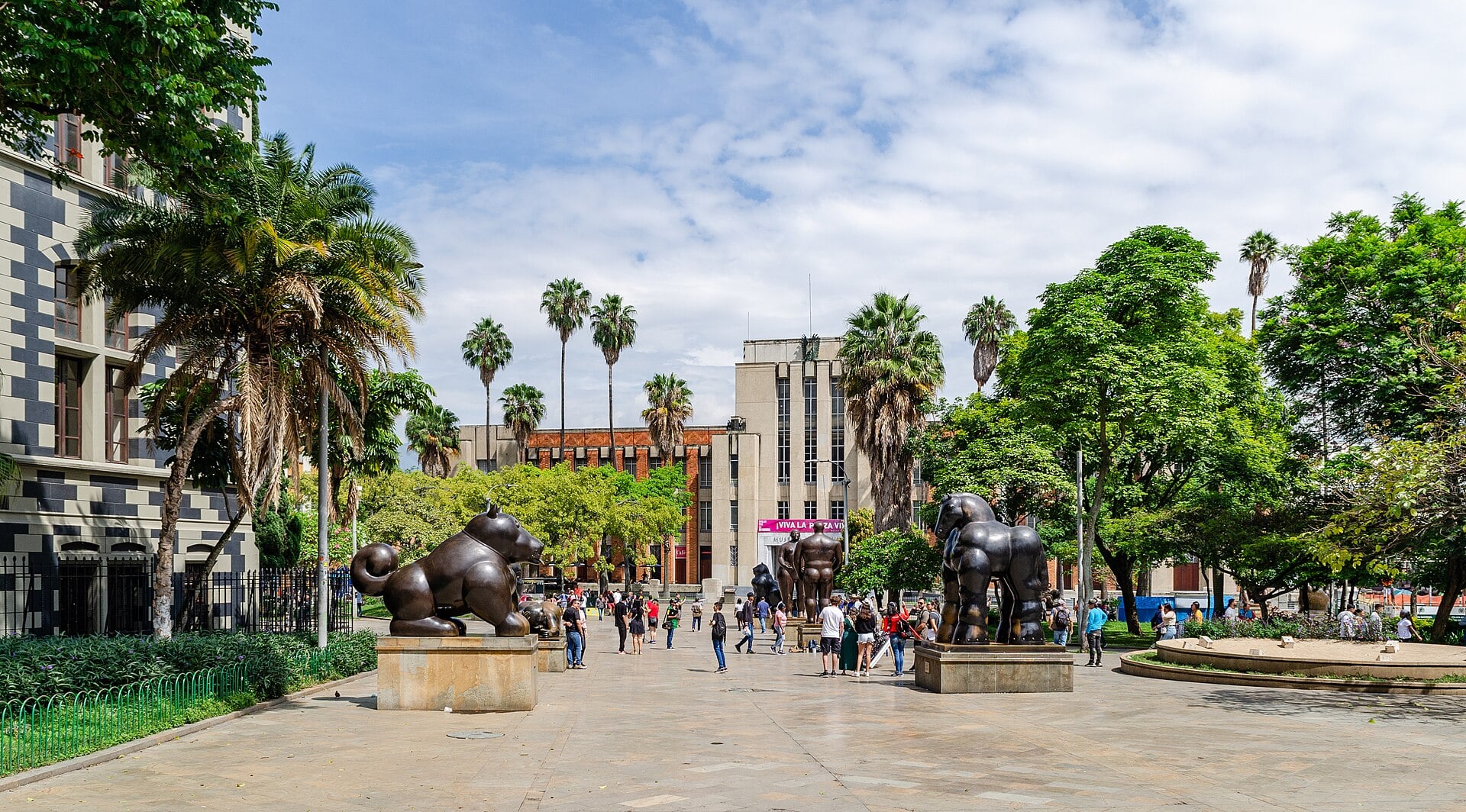
Ecuador: Integration With Recurrent Tensions
The Colombia–Ecuador border is shorter than the Venezuelan frontier but strategically important because it contains the principal overland route between the two countries. The Rumichaca International Bridge is the main formal crossing, linking Ipiales in Colombia with Tulcán in Ecuador.
Relations combine substantial institutional cooperation with recurrent disputes over security and trade. The two governments use the Binational Border Commission, known as COMBIFRON, plus presidential and ministerial binational cabinets, regional commanders’ meetings, police and intelligence exchanges, and cooperation against narcotics trafficking and organised crime.
On 21 January 2026, Ecuadorian President Daniel Noboa announced a 30% “security levy” on Colombian goods, in force from 1 February 2026. Quito raised it to 50% from 1 March and to 100% from 1 May. Colombia answered with reciprocal tariffs on Ecuadorian products and a halt to electricity sales.
On 29 May 2026, Noboa ordered the levy lifted from 1 June 2026, after an agreement with Abelardo de la Espriella, then a presidential candidate. Ecuador’s customs service formalised the repeal in Resolution SENAE-SENAE-2026-0051-RE on 31 May. Colombia followed with Decree 0583 of 5 June 2026, which repealed Decree 0170 and most of its reciprocal tariffs on Ecuadorian goods.
The dispute illustrates a structural tension. Ecuador and Colombia are members of the Andean Community, whose rules provide for duty-free trade in goods. Colombia’s foreign ministry says intra-CAN trade in goods is 100% tariff-free, principally covering manufactured products. Yet bilateral governments may still impose emergency measures based on security or other arguments.
Peru and Brazil: Amazonian Partners With Different Weight
Colombia and Peru share a largely forested and riverine border. The principal cross-border urban area is the Leticia–Santa Rosa–Caballococha zone, where Colombia, Peru and Brazil meet around the Amazon River. The border is less commercially intensive than the Venezuelan or Ecuadorian frontiers.
Cooperation with Peru matters for Amazonian environmental management, river transport, Indigenous and border communities, illegal mining and logging, narcotics trafficking, health and emergency response, migration and riverine security. Peru and Colombia are both members of the Andean Community and the Pacific Alliance, alongside Chile and Mexico.
Peru is also a route to the Pacific economy. Colombia’s Pacific Alliance participation gives its businesses a framework for trade and investment links with Peru, Chile and Mexico. Peru’s ports and logistics corridors offer alternative access to Asian markets.
Brazil is Colombia’s largest South American neighbour by territory and population, but the shared border is predominantly Amazonian. The main formal connection is through Leticia and Tabatinga. Brazil is not a CAN member, so the relationship depends more heavily on presidential diplomacy, Amazon cooperation and security coordination.
For investors, the central constraint is infrastructure. The Colombia–Brazil border has strategic potential for Amazonian commerce and tourism, but transport costs, environmental restrictions, limited roads and weak logistics make it fundamentally different from the Rumichaca or Cúcuta corridors.
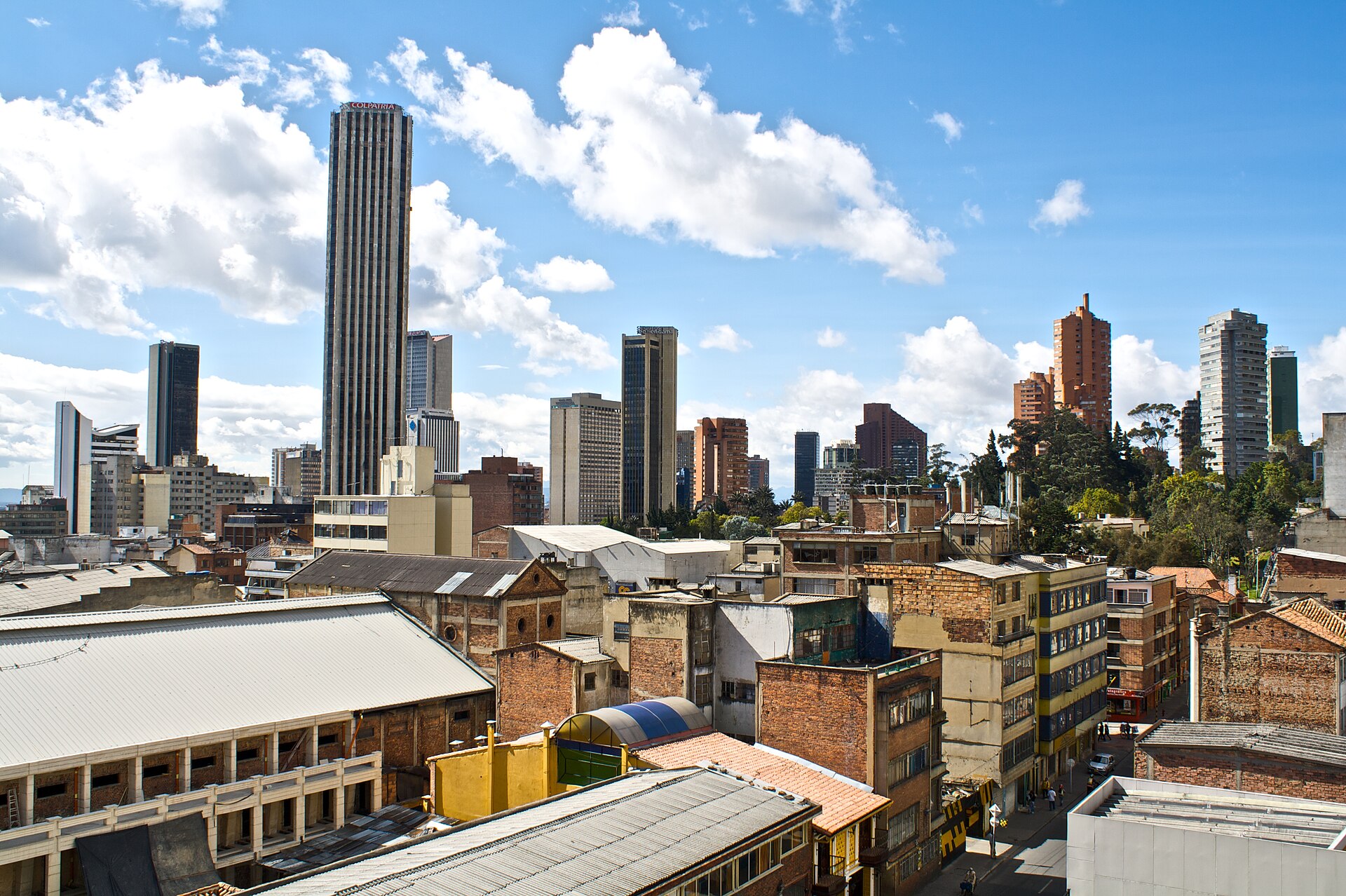
Panama: The Darién Hinge and Migration Corridor
Panama is not an Andean country, but it is indispensable to Colombia’s neighbourhood strategy. The two countries share the Darién, a heavily forested and roadless region. The absence of a road through the Darién means there is no Pan-American Highway connection between Colombia and Panama.
The border has become a major migration and security corridor. Panama’s security ministry reported that crossings of the Darién fell from 302,203 in 2024 to 3,091 in 2025, a decline of about 99%.
Colombia and Panama cooperate through border security commissions, military and police coordination, intelligence exchanges, deportation and repatriation arrangements, migration management, and efforts against human trafficking and organised crime. Migración Colombia records a Regional Border Commanders’ Meeting with Panama held in Panama City from 23 to 27 February 2026.
Panama is also important for Colombian logistics and investment. The Panama Canal, Colón free zone, financial sector and Caribbean ports connect Colombia to global supply chains. At the same time, the Darién’s environmental and humanitarian sensitivities limit conventional infrastructure development.
The Andean Community: Colombia’s Core Regional Institution
The Andean Community, known as the CAN, was created by the Cartagena Agreement on 26 May 1969. Its members are Bolivia, Colombia, Ecuador and Peru. The Colombian foreign ministry describes its agenda as including trade, services, investment, transport, electricity interconnection, Andean identity and the movement of people.
The most relevant practical advantages for foreigners and businesses include duty-free trade in goods among members, common customs and regulatory work, movement using national identity documents, common transport and passenger rules, temporary and permanent residence mechanisms, cooperation on electricity interconnection, and regional rules for services and investment.
Colombia’s trade ministry highlights Decision 854, which eliminated post-paid international roaming charges within the CAN, and Decision 878, the Andean Migration Statute. The statute provides the legal basis for temporary and permanent residence rights for nationals of member countries.
The CAN’s institutional system includes the Andean Presidential Council, the Andean Council of Foreign Ministers, the Commission of the Community, the Court of Justice of the Andean Community, the Andean Parliament, the General Secretariat, CAF, the Latin American Reserve Fund, the Andean Health Organization and the Simón Bolívar Andean University.
Abelardo de la Espriella won the run-off on 21 June 2026 with 49.66% of the vote against 48.70% for Iván Cepeda, according to the Registraduría count, and took office on 7 August 2026 for the 2026–2030 term. The Andean Community congratulated him on his election. His foreign minister is Omar Bula Escobar and his trade minister is Mauricio Gómez Amín.
The Pacific Alliance and What Comes Next
Colombia is a member of the Pacific Alliance, together with Chile, Mexico and Peru. Its focus is trade, investment, services, capital markets and mobility. Migración Colombia identifies the Pacific Alliance as a mechanism for mobility and regional cooperation.
For Colombia, the Pacific Alliance complements rather than replaces the CAN. The CAN provides deep Andean integration with duty-free goods trade and residence rights. The Pacific Alliance extends Colombia’s reach to the Pacific economies of Chile and Mexico, with a stronger emphasis on global value chains and Asian markets.
The open questions for the coming years are practical. Will the Venezuela border sustain its pendular flow and rebuild formal trade beyond the US$222 million recorded in 2020? Will Ecuador and Colombia resolve the structural tension between CAN duty-free rules and emergency security tariffs? Will the Darién remain a managed migration corridor or become a renewed humanitarian crisis?
For a foreigner, the neighbourhood matters in daily ways. An Andean Community national can travel with an identity document, not a passport, and can live, work, study or conduct business in another member country under common regional arrangements. A businessperson can move goods duty-free within the CAN, but must watch for emergency measures like Ecuador’s 2026 tariff, which reached 100% before it was repealed. An investor looking at Amazonian logistics must weigh the absence of roads against the potential of river corridors.
What to watch includes how the De la Espriella government handles Venezuela and Ecuador, whether trade with Ecuador normalises after both countries lifted their tariffs in June 2026, the quarterly pendular movement data from Migración Colombia, and any progress on electricity interconnection projects. The neighbourhood is not a fixed map. It is a set of living frontiers, each with its own pace and its own risks.
Related reading: More on Colombia: Colombia Explained, Who Is Abelardo de la Espriella?, Ecuador and Colombia border security and the Venezuela gas pipeline to Colombia.
Frequently Asked Questions
Which countries share a land border with Colombia?
Colombia shares land borders with Venezuela, Brazil, Peru, Ecuador and Panama. The longest is with Venezuela at approximately 2,219 km and the shortest with Panama at approximately 266 km.
How many people cross the Colombia–Venezuela border?
Official Colombian migration monitoring recorded 13,987,130 pendular movements between January and April 2026. Norte de Santander concentrated 86.7% of those movements.
What is the Andean Community?
The Andean Community, or CAN, is a regional bloc created by the Cartagena Agreement on 26 May 1969. Its members are Bolivia, Colombia, Ecuador and Peru, and it provides duty-free trade in goods and common residence rules.
Can Andean Community citizens live and work in Colombia?
Yes. The Andean Migration Statute, Decision 878, provides temporary and permanent residence rights for nationals of member countries. Andean citizens may travel using national identity documents.
Why is there no road between Colombia and Panama?
The Darién region between Colombia and Panama is heavily forested and roadless. This gap breaks the Pan-American Highway and has become a major migration and security corridor.
What is the Pacific Alliance?
The Pacific Alliance is a regional bloc comprising Colombia, Chile, Mexico and Peru. It focuses on trade, investment, services, capital markets and mobility, complementing the Andean Community.
Sources: andina.pe, cancilleria.gov.co, larepublica.co, infobae.com, migracioncolombia.gov.co, portal.migracioncolombia.gov.co. Retrieved 3 October 2026.
This article was produced by The Rio Times’ automated newsroom system. How we use AI · Report an error · Editorial responsibility: Matthias Camenzind, Editor-in-Chief