Updated 1 time · Latest: 2 October 2026
Key Facts
- The S&P IPSA, Chile’s main stock index, fell 0.56% to close at 10,908 points on Thursday.
- The Chilean peso weakened 1.40% to 986.18 per US dollar, marking its highest level since April 2025 and putting the psychological CLP1,000 barrier in view.
- Local media reported August economic activity contracted 1% due to a sharp mining slowdown, a key factor weighing on investor sentiment across Chilean assets.
- Copper prices eased on the day as the London Metal Exchange benchmark fell 1.1% to a two-week low, removing a cushion that often supports both the IPSA and the peso.
- Falabella stood out on the trading board with a 2.3% gain on turnover of US$17 million, defying the broader market sell-off alongside Mallplaza’s 1.3% advance.
Today’s Focus
Chile’s market had a risk-off Thursday. The S&P IPSA, the home for the country’s biggest listed companies, fell 0.56% to 10,908.18 points.
The peso took the heavier blow, weakening 1.40% to 986.18 per US dollar—its softest since April 2025. Traders are now eyeing CLP1,000 as the next key level.
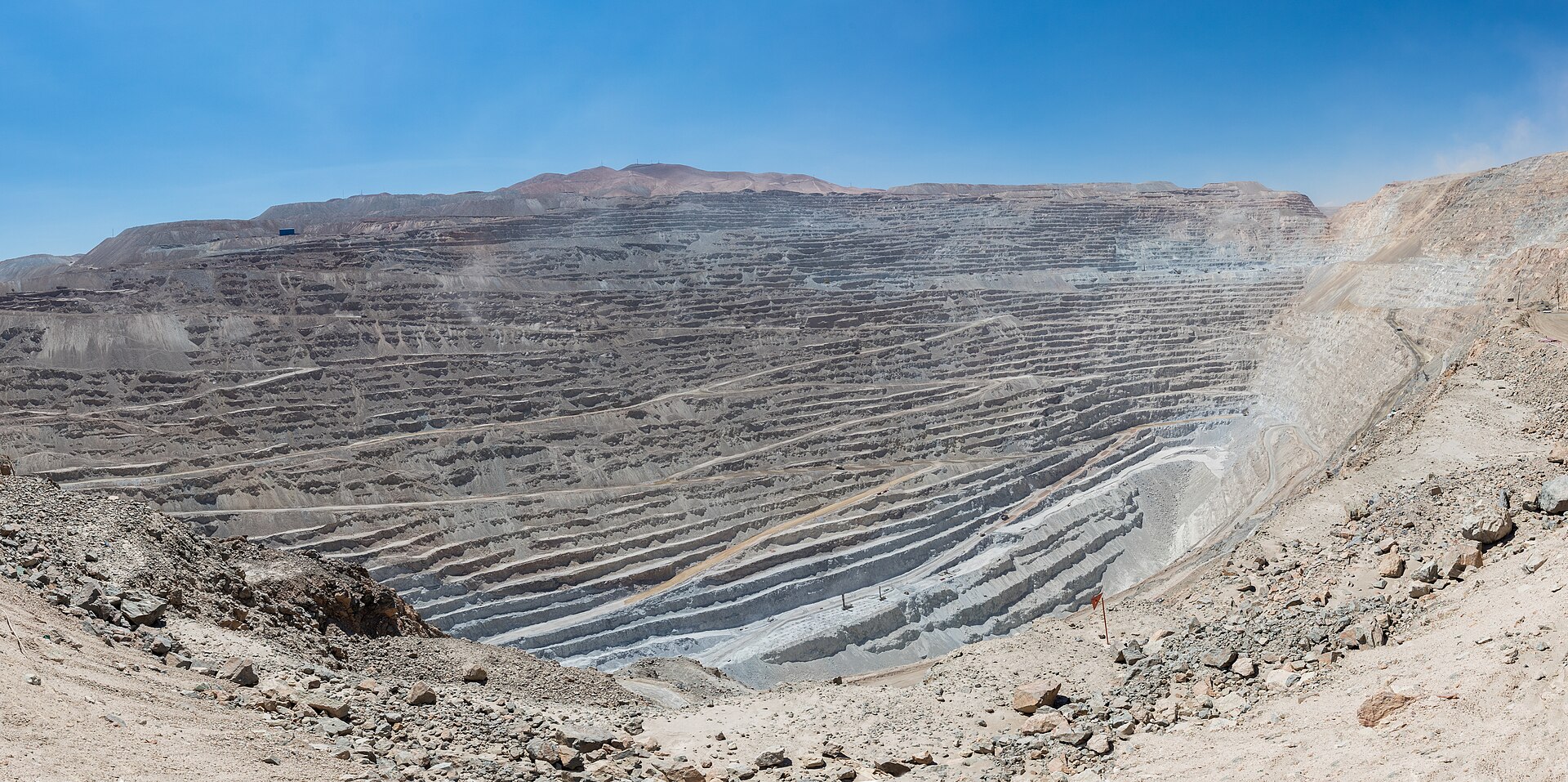
The trigger was domestic: August’s Imacec, Chile’s monthly GDP proxy, showed the economy shrank 1% year on year. Mining output hit its lowest level in 30 years, according to La Tercera.
A firmer US dollar (the dollar index rose 0.64%) added pressure, making higher-yielding emerging currencies like the peso less attractive to global investors.
What matters today. The peso’s slide to a one-year low signals rising investor caution about Chile’s growth momentum, even as longer-term copper investment stories remain in place.
01 The session in one read
Chilean assets fell in tandem on Thursday as soft domestic growth data collided with a stronger US dollar. The S&P IPSA, which tracks the most liquid stocks on the Santiago exchange, closed down 0.56% at 10,908.18 points.
The peso had the more dramatic session. It weakened 1.40% to 986.18 per dollar, hitting its weakest level since April 2025 and bringing the symbolic CLP1,000 mark within striking distance.
The catalyst was local. On Thursday morning the Imacec, Chile’s monthly economic activity index, showed the economy shrank 1% in August from a year earlier.
Mining, the backbone of Chile’s export revenue, posted its worst monthly reading in 30 years, according to La Tercera. That detail matters deeply for investors, because copper exports underpin both the currency and the stock market.
Thursday’s session looks like a genuine reassessment of Chilean risk rather than a simple profit-taking move. The peso’s 1.40% slide outpaced the IPSA’s 0.56% fall, suggesting currency markets are pricing in slower activity more aggressively than equity investors.
The weak Imacec print, driven by what La Tercera called the mining sector’s worst month in three decades, gives the move a fundamental anchor. With the dollar firm and the local economy fragile, the variable to watch is whether USD/CLP breaks above CLP990 on sustained volume, which would open the path to parity at CLP1,000.
02 The day’s numbers
| Measure | Level | Change | Read |
|---|---|---|---|
| S&P IPSA | 10,908 | −0.56% | 6.2% below 52-week high |
| USD/CLP | 986.18 | +1.40% | At 52-week high; strongest dollar since April 2025 |
| S&P 500 | 7,666 | +0.19% | US benchmark flat-to-up; no rescue for emerging assets |
| Gold | $4,182/oz | +0.63% | Safe-haven bid; did not spill into peso |
| US 10Y yield | 5.242% | −0.93% | Yields slipped, but dollar stayed firm |
The table shows the split: the IPSA sits 6.2% below its one-year high, but the peso has moved all the way to its 52-week extreme. That is the currency market telling you where the pressure is concentrated.
The dollar’s strength was broad-based, with the DXY index up 0.64% on the day. Even falling US yields could not lift emerging currencies, which is a warning sign for the next sessions. Rio Times · Live Market Intelligence
Live Market IntelligenceChile — Live Market Board
Chile — Live Market Board
Instrument Last Change YoY Prev. High Low Volume
IPSA
10,652.95
-0.07%
—
10,660.26
10,698
10,651
—
USD/CLP
1,001
+0.60%
+9.00%
994.88
1,002
996.41
—
COPPER
6.05
-0.52%
+20.96%
6.08
6.09
6.00
27,076
SQM-B
52,787
-1.42%
-6.24%
53,550
53,450
51,800
10,167
COPEC
6,302
+0.42%
-6.78%
6,275
6,341
6,297
21,594
BSANTANDER
80.33
-0.21%
+15.58%
80.50
80.77
79.94
1,600,739
FALABELLA
6,804
+0.06%
+8.43%
6,800
6,890
6,800
33,745
ENELAM
81.02
+0.02%
-10.72%
81.00
81.85
81.02
131,679
CENCOSUD
1,842
-0.39%
-35.41%
1,849
1,849
1,838
27,228
CMPC
885.01
-0.56%
-34.69%
890.00
897.25
885.01
13,115
BANCO CHILE
194.20
-0.41%
+12.83%
195.00
196.99
193.71
2,461,886
LATAM AIR
23.80
+0.51%
+14.15%
23.68
24.09
23.70
11,871,641
SOUTHERN COPPER
164.08
-2.46%
+30.65%
168.21
167.68
162.58
941,474
03 Why it moved — weak Imacec and firmer US dollar
Thursday’s sell-off was provoked by the August Imacec report. The central bank’s release showed the economy contracted 1% year on year, dragged down by mining.
Chilean media reported the mining sector’s monthly output hit a 30-year low. That directly undermines assumptions about export earnings, tax revenue, and dividend capacity across the IPSA.
The global backdrop added fuel: the US dollar index rose 0.64%, making it more expensive for foreign investors to hold peso-denominated assets.
Copper, Chile’s main export, eased on the day, with the London Metal Exchange benchmark down 1.1%. The metal’s short-term dip removed the usual cushion that supports the currency and mining-related stocks.
The central bank’s release put the August Imacec at −1.0% year on year, after −1.5% in July. The weakness sat in mining, which fell 17.4%, while non-mining activity grew 1.4%. That split matters for investors: the economy outside copper is still expanding, which limits the downside for domestic names even as mining drags on the headline.
04 The day’s movers
| Driver | Level / Move | Change | Note |
|---|---|---|---|
| Falabella | $17m turnover | +2.3% | Retailer defied weak tape; most-traded name |
| SQM-B | $16m turnover | +0.2% | Lithium giant flat; not enough to lift index |
| Banco de Chile | $15m turnover | −1.8% | Banks led weakness among financials |
| BSantander | $7m turnover | −1.9% | Heaviest bank fall; Spanish parent drag |
| Copec | $7m turnover | 0.0% | Fuel distributor flat despite weaker peso |
The trading board tells the story of selective buying in a falling market. Falabella and Mallplaza, both geared to domestic consumption, rose 2.3% and 1.3% respectively.
Banks took the hit: Banco de Chile fell 1.8% and BSantander 1.9%. In a high-rate environment with slowing growth, lenders face twin pressures from credit risk and compressed margins.
Banks were the weak spot: BSantander lost 1.9% and Banco de Chile 1.8%.
05 The regional scoreboard
| Index | Country | Change |
|---|---|---|
| IPSA | Chile | −0.56% |
| Ibovespa | Brazil | +0.46% |
| IPC | Mexico | −0.60% |
| Merval | Argentina | +0.00% |
Chile’s loss was mid-pack across the region. Brazil’s Ibovespa, the largest Latin American market, rose 0.46% on the day, showing that a commodity-heavy market can rise against a cautious global tone.
Argentina’s Merval was the worst performer at −2.15%, suggesting broader regional risk aversion. The live market board above carries the full regional closes for readers tracking cross-border flows.
06 The technical picture
The IPSA sits 6.2% below its 52-week high of 11,628, and Thursday’s close of 10,908 leaves the index well above its session low of 10,808.
For the peso, the technicals are more urgent. USD/CLP is at its 52-week high exactly, with the next psychological level at CLP1,000 and the current area of 985–986 identified as immediate resistance.
If the peso weakens through 990 in the coming sessions, it would confirm the breakout and could accelerate toward parity. For the IPSA, holding above 10,900 keeps the medium-term uptrend intact, but a break below could target the 10,600 area.
07 What to watch
- USD/CLP at CLP986−1000: Whether the peso breaks CLP990 and tests the CLP1,000 parity level, which would signal deeper risk-off sentiment
- US non-farm payrolls: Friday’s US jobs report will set the tone for the Fed; a strong print could lift the dollar further and pressure the peso
- Copper price stabilisation: If copper resumes its upward path, it could partially offset growth concerns and support both the IPSA and the peso
- Next Imacec release: Confirmation of the mining slowdown in September data would validate the bearish case; a reversal would spark a relief rally
More: Chile news in English, every day from The Rio Times.
Frequently Asked Questions
What is the S&P IPSA?
It is Chile’s main stock market index, tracking the most traded companies on the Santiago exchange. It is the benchmark used by local and foreign investors to gauge the health of Chile’s corporate sector.
Why did the Chilean peso fall on October 1?
The peso weakened 1.40% because of soft domestic growth data (the Imacec showed a 1% annual contraction in August) combined with a firmer US dollar.
What is the Imacec?
The Imacec is Chile’s monthly economic activity index, similar to GDP but published each month. It is the most watched real-time gauge of whether the Chilean economy is expanding or contracting.
Should I worry about CLP1,000 per dollar?
The CLP1,000 level is a psychological barrier. Crossing it does not mean economic crisis by itself, but it would signal that investors expect weaker Chilean growth and could add pressure to imported goods prices and corporate dollar debt.
Market data: RT; exchange figures from Bolsa de Santiago
This article was produced by The Rio Times’ automated AI newsroom. Editorial responsibility: Matthias Camenzind, Publisher and Editor-in-Chief. The Rio Times also runs Ask Rio Times, which answers from 100,000+ of our own articles, the daily Latin America Power Map, and prediction-market odds on elections and markets.. How we use AI · Report an error
LatAm Markets: Live Signals → — real-time movers, turnover leaders and FX across Latin America.