Brazil Places Three Interiors in a Global Top 20, Matching the United States

BRAZIL · CULTURE
Key Facts
Rio de Janeiro: the Real Gabinete Português de Leitura places eighth in the world, with a score of 79.7 out of 100.
Brasília: the Metropolitan Cathedral ties for 13th on 79.3, level with New York’s Metropolitan Opera House and the Meenakshi Amman Temple in Madurai.
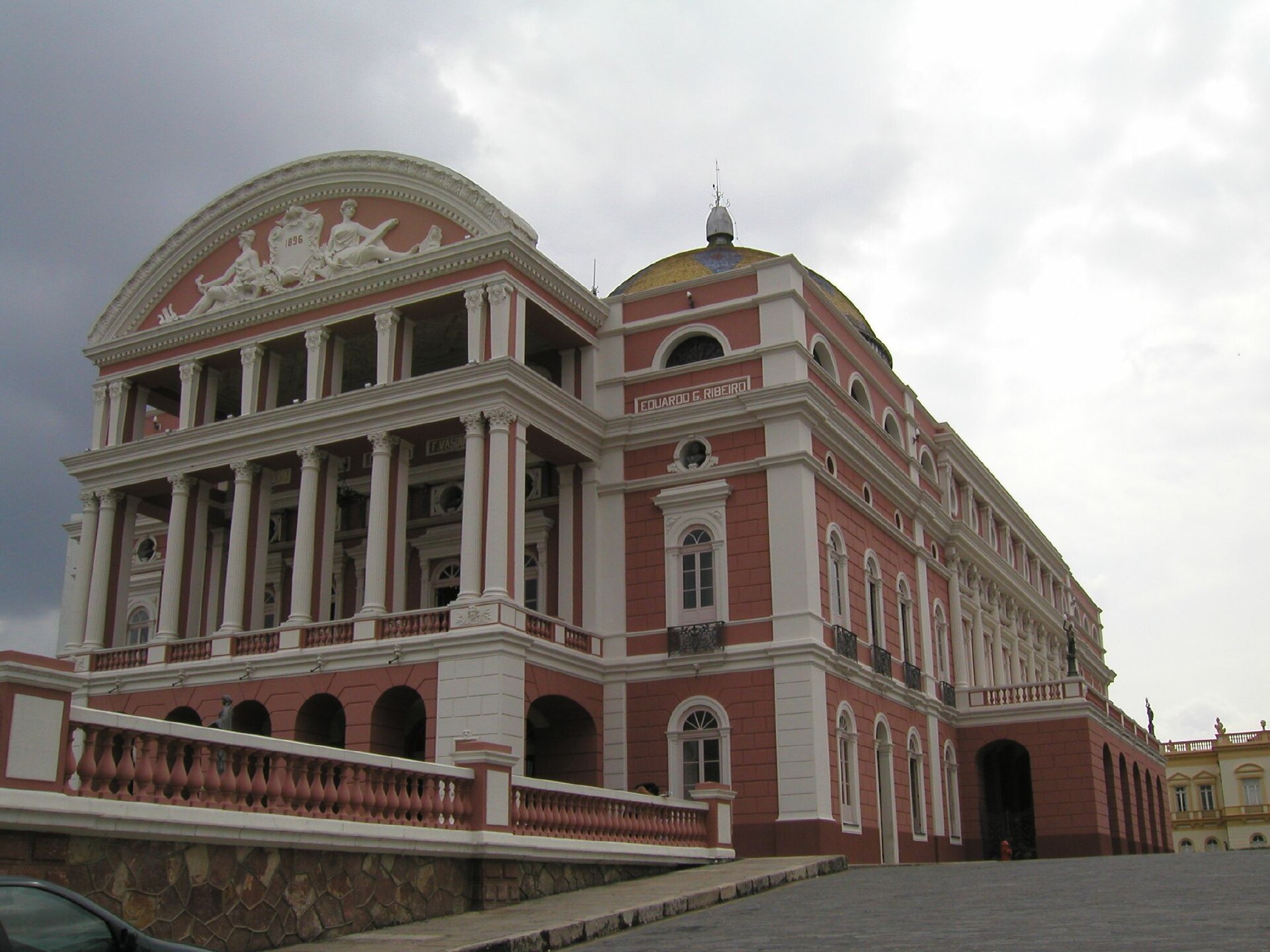
Manaus: the Teatro Amazonas takes 20th on 77.1, the last place inside the top 20.
The pattern: Brazil and the United States are the only countries with three entries in the top 20. Europe holds eight places — but no European country holds more than one.
Method: 52 interiors, 150 participants, eye-tracking on photographs — not on visits. Data as of July 2026.
Runoff · Sunday, 25 October
Brazil Runoff 2026: Lula vs Flávio
Date, polls, debates, odds and how the runoff works, updated every day.
Read our Brazil election 2026 runoff guide →
Brazil runoff polls · Polymarket and Kalshi odds · When results come · Brazil election poll data (CSV)
Prediction markets · who wins the runoff
Implied chance of winning Brazil’s presidency on 25 October, from traders’ prices.
Polymarket
Flávio Bolsonaro 75.8% · Lula 23.5% (US$193 million traded)
Kalshi (regulated in the US by the CFTC)
Flávio Bolsonaro 76% · Lula 25%
As of 23 October, 5:00 pm ET (22:00 Lisbon), updated every 20 minutes. Prices are bets, not polls, and can move fast.
Why we show this: prediction markets turn real-money bets into a live probability that moves within minutes of the news, which is why investors, campaigns and newsrooms in the United States now follow them closely. We show them next to polls and official results, never instead of them.
A ranking published by the British travel insurer AllClear has put three Brazilian interiors inside the world’s top 20, and the country’s highest entry is not in São Paulo or Brasília but in a side street in central Rio de Janeiro.
The Real Gabinete Português de Leitura, the Portuguese reading room on Rua Luís de Camões, comes eighth in the world — ahead of Cairo’s Egyptian Museum, ahead of Yale’s Beinecke Rare Book & Manuscript Library, ahead of the Hall of Mirrors at Versailles, which does not make the top 20 at all.
What the study actually measured
The researchers assembled photographs of 52 architecturally celebrated interiors and showed them to 150 participants while tracking their eyes. Three things were recorded: how quickly a viewer’s gaze first landed on something in the image, how long the image held that gaze, and what share of participants looked at it at all. The final score weights the first and third of those at 65 percent and the second at 35 percent.
It is worth being plain about what that does and does not establish. This measures how a photograph performs on a screen, in a laboratory, over a couple of seconds. It is not a measure of what it feels like to stand in the room. It was commissioned by an insurance company as part of its marketing, and it is presented as such. What it does capture, reasonably well, is which interiors are immediately legible as extraordinary — which ones do not need to be explained.
By that standard the Real Gabinete does very well. Ninety percent of participants looked at it, and they held their gaze for an average of 2.03 seconds. Built in the Neo-Manueline style and modelled on the Jerónimos Monastery in Lisbon, its reading hall rises three galleries of dark carved wood on iron columns, under a stained-glass skylight, around a collection of close to 400,000 volumes. It is the sort of room that photographs at full strength.
Brasília and Manaus
The Metropolitan Cathedral of Brasília ties for 13th place, scoring 79.3 alongside the Metropolitan Opera House at Lincoln Center and the Meenakshi Amman Temple in Madurai. Oscar Niemeyer’s hyperboloid of sixteen concrete columns is best known from outside, but the ranking is for what happens underneath: visitors enter through a dim underground passage and come up into a circular hall flooded with blue and green light from Marianne Peretti’s stained glass, with Alfredo Ceschiatti’s suspended angels overhead. Ninety-three percent of participants noticed it.

The Teatro Amazonas in Manaus closes the top 20 on 77.1. Finished in 1896 at the height of the rubber boom, with a dome of 36,000 tiles in the colours of the Brazilian flag and an auditorium fitted out with European materials shipped a thousand miles up the Amazon, it holds attention for 1.86 seconds — the shortest dwell time of the three Brazilian entries, but with a reach of 90 percent.
The country that quietly wins
Europe dominates the table on raw numbers, taking eight of the top 20 places, and Switzerland holds the top spot: the Abbey Library of Saint Gall scores 97.0, more than ten points clear of second-placed Mysore Palace, and was fixated on in 1.36 seconds — faster than anything else in the study.
But the eight European places are eight different countries. Only two countries appear three times in the top 20, and they are Brazil and the United States. India appears twice. Everyone else appears once.
Brazil’s three are also unusually varied: a 19th-century Portuguese library in Rio, a modernist cathedral from the 1960s in the planned capital, and a Belle Époque opera house in the middle of the rainforest. They have almost nothing in common except that all three were built to impress, and still do.
One more South American entry appears just outside the top 20: the Teatro Colón in Buenos Aires, 22nd on 76.6.
All three Brazilian buildings are open to visitors, and none of them is difficult to reach — the Real Gabinete stands on Rua Luís de Camões, a couple of blocks from Praça Tiradentes, in a part of the historic centre most visitors pass through without stopping. Which is rather the study’s point: the thing worth seeing is usually inside.
The full ranking and methodology are published by AllClear Travel Insurance. Data correct as of July 2026.
More: Brazil news in English, every day from The Rio Times.
This article was produced by The Rio Times’ automated newsroom system. How we use AI · Report an error · Editorial responsibility: Matthias Camenzind, Editor-in-Chief
Expat Guide to Brazil
What The Rio Times publishes for foreigners who live in or move to Brazil.
Start here
- Do US Citizens Need a Visa for Brazil? Yes, US$80.90 E-Visa
- Brazil Education and Healthcare Explained
- Brazil Security and Crime Explained 2026
- Brazil Rent and Power Bills After 4.58% Inflation
City guides
Rio de Janeiro, São Paulo, Florianópolis, Salvador, Belo Horizonte, Curitiba, Porto Alegre, Brasília
Coming up in Brazil
- Brazil Runoff Date and Results Time: 25 October, 4 p.m. ET 25 Oct
- Brazil Runoff Day on 25 October for Foreign Visitors 25 Oct
- Brazil Votes 25 October, Polls Close 4 p.m. Eastern 25 Oct
- Brazil Election 2026: Lula vs Flávio Runoff on 25 October 25 Oct
Understand Brazil