Brazil Panel Backs Jail for Accounting Fraud
Brazil is moving to make cooked books a crime with real prison time, but the bill is still several votes away from becoming law.

Politics: Brazil
On Wednesday 18 November 2026, a Brazilian Senate committee approved a bill that would send executives to prison for falsifying the accounts of listed companies. The Constitution and Justice Committee, which checks that bills fit the law, backed a rewritten text in a first vote.
Fraudulent accounting, false documents or lying to investors would carry two to six years in prison plus a fine, the Senate said. The committee still has to hold a second, supplementary vote before the bill moves on.
Key Facts
- Who. The Senate’s Constitution and Justice Committee approved PL 2.091/2023, a bill.
- What. A new crime of falsifying listed companies’ accounts: two to six years in prison plus a fine.
- When. First vote Wednesday 18 November; date of the supplementary vote not confirmed.
- Power Index. Brazil ranks 1st of 14 in The Rio Times Latin America Power Index, with 74.2 points (November 2026 edition).
- As of. 19 November 2026, 18:15 GMT.
Brazil is moving to make cooked books a crime with real prison time, but the bill is still several votes away from becoming law.
Former senator Augusta Brito, of the Workers’ Party (PT), the party of President Lula, filed the bill on 24 April 2023 to add new crimes to Law 6.385 of 1976, which governs Brazil’s securities market and its regulator, the CVM (Securities Commission). That law already punishes market manipulation and insider trading, in articles 27-C and 27-D, but it has no offence for falsified accounts.
The Senate’s news service said on 19 November that the collapse of the retailer Lojas Americanas motivated the new text. On 11 January 2023 Americanas, a Brazilian retail chain, disclosed accounting inconsistencies of about R$20 billion (about US$3.4 billion at R$5.89 per US$, the rate of the market-data provider RT on 19 November 2026), and its chief executive resigned.
The company filed for court-supervised reorganisation within weeks, and in July 2024 an independent committee of its own board confirmed accounting fraud. A separate bill by Senator Sergio Moro, a former federal judge, also set prison of up to six years for accounting fraud and reached the Chamber of Deputies, the lower house, in June 2024.
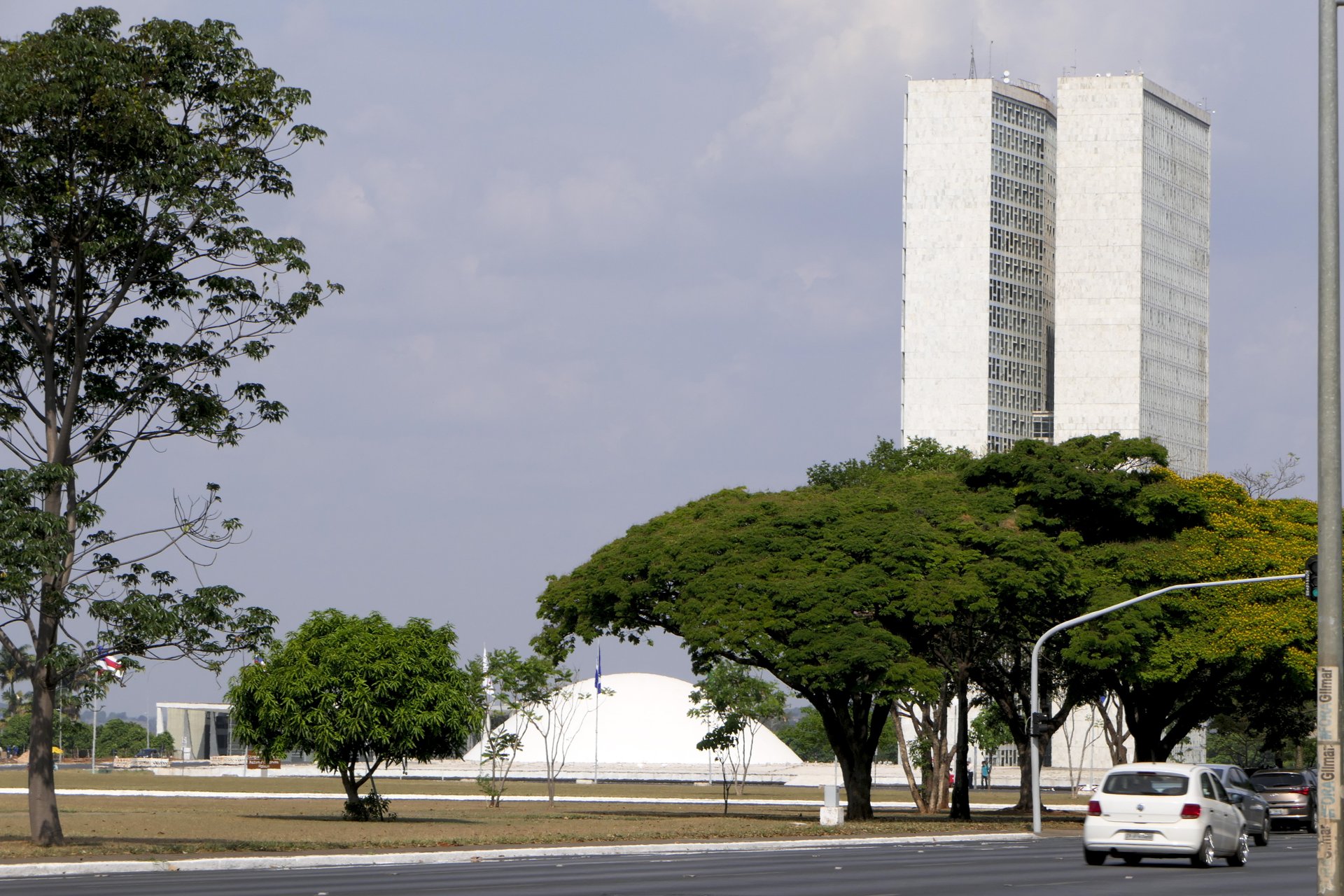
Senator Oriovisto Guimarães of the Brazilian Social Democracy Party (PSDB), from Paraná, wrote the rewritten text as the committee’s rapporteur, the senator who drafts the committee report. His version removes several crimes from the original bill, because he judged some provisions too open-ended or already covered by criminal law.
The committee’s text defines accounting fraud as recording nonexistent transactions or inaccurate data, failing to record real ones, or giving false documents to independent auditors. It also changes the offence of misleading investors in Law 7.492 of 1986, which covers crimes against the national financial system, and carries the same penalty.
Judges could raise a sentence by half up to double, depending on the losses, the illicit gain, the damage to confidence in the financial system or the number of victims, and up to triple for repeat offenders. Convicted people could also be barred from running a business or holding board and executive posts.
At the government’s request, Guimarães added a five-year limit on those bans, counted from when a conviction becomes final. He called it a very small change, because the ban as drafted seemed to run without end (translated).
US investors in Brazilian listed companies and in ADRs, the US-traded certificates of Brazilian shares, rely on audited accounts. A prison term raises the personal risk for executives and others who sign or feed false numbers, though this is a bill and nothing changes for companies yet.
In his report Guimarães wrote that economic development and national prosperity depend largely on the efficiency of institutions (translated). He argued that tougher rules can discourage conduct that erodes investor confidence, the Senate said.
The committee must now hold a supplementary round, a second vote required for substitute texts, and the committee has final say in the Senate, so no vote by the full Senate follows unless senators lodge an appeal. The date is not confirmed, and the Senate release gives no vote count for 18 November.
After that the bill goes to the Chamber of Deputies, the lower house, and it must pass there before it can reach President Lula for signature. The Senate release names no Chamber timetable.
Frequently Asked Questions
Is this already law in Brazil?
No, it is a bill that still needs a second committee vote and approval by the Chamber of Deputies. President Lula would then have to sign it.
Why should US investors care?
Many US funds and ADR holders rely on audited Brazilian accounts. A criminal penalty is meant to give executives a stronger reason to keep those accounts honest.
What happens next?
The committee holds a supplementary vote on the substitute text, on a date not yet confirmed. The Chamber of Deputies comes after that.
Sources
Brazilian Senate, bill page for PL 2.091/2023 · Brazilian Senate, news service, 18 November 2026 · Brazilian Senate, news service, 19 November 2026 · Presidency of the Republic, Law 6.385 of 1976 · Presidency of the Republic, Law 7.492 of 1986
Connected Coverage
Brazil news · Americanas Posts US$62M Loss as Sales Rise · Brazil Police Row Hits Bank Failure Probe · Latin America Power Map
This article was produced by The Rio Times’ automated AI newsroom. Editorial responsibility: Matthias Camenzind, Publisher and Editor-in-Chief. The Rio Times also runs Ask Rio Times, which answers from 100,000+ of our own articles, the daily Latin America Power Map, and prediction-market odds on elections and markets.. How we use AI · Report an error
Brazil runoff, Sunday, October 25: Brazil runoff start time and results schedule. Latest: Brazil runoff polls, Flávio 51%, Lula 49%.