Brazil’s Rumble Ban Deepens Tensions with Trump’s America
(Analysis) Brazil’s Supreme Court Justice Alexandre de Moraes ordered the immediate suspension of U.S. video-sharing platform Rumble on Friday, escalating a simmering conflict with the newly inaugurated Trump administration.
Citing Rumble’s refusal to comply with court orders, the ban—mirroring the 2024 shutdown of Elon Musk’s X—underscores a Brazilian judiciary at odds with American tech firms tied to President Donald Trump, who took office last month. As Argentina cements its role as Trump’s Latin American ally, Brazil risks isolation under a judiciary critics accuse of socialist bias.
Rumble, launched in 2013 by Canadian CEO Chris Pavlovski, has become a conservative free-speech hub, hosting Truth Social’s video backbone—the social media arm of Trump Media & Technology Group, where Trump holds a $4 billion stake. Vice President JD Vance, an early investor via Narya Capital, further ties Rumble to Trump’s inner circle.
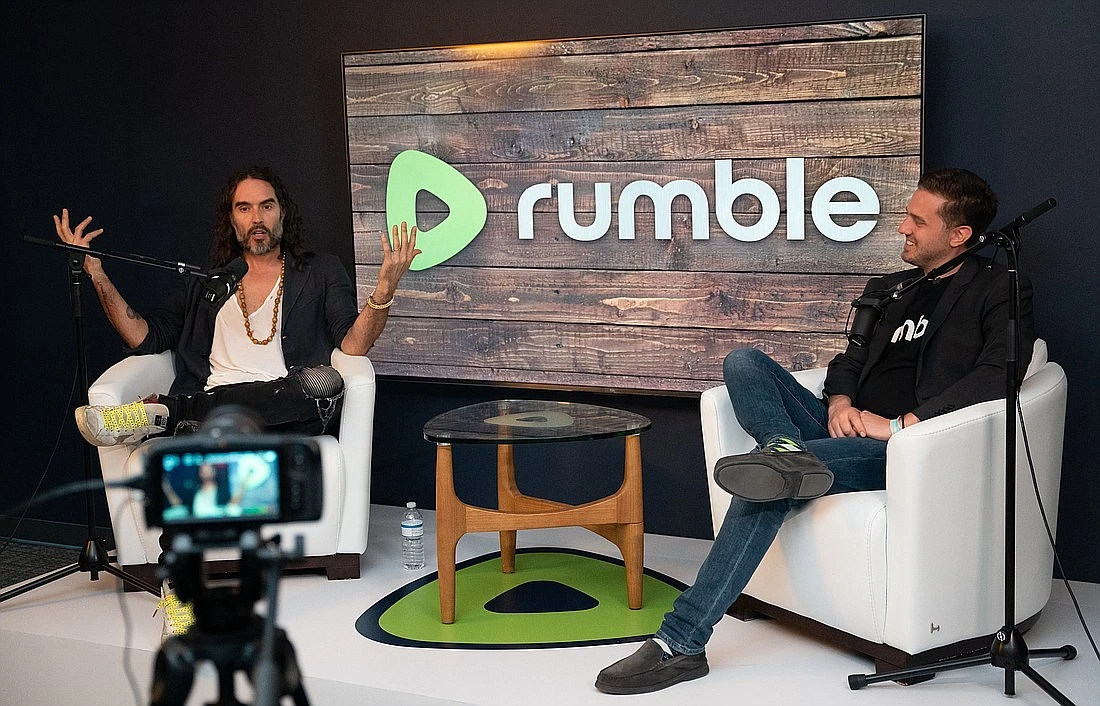
Valued at $2.1 billion since going public in 2022, Rumble defied Moraes’s demand to block Allan dos Santos, a Bolsonaro ally charged with hate speech. Brazil’s telecom regulator Anatel was given 24 hours to enforce the suspension, with daily fines of $9,000 looming. Rumble and Trump Media retaliated, filing a Florida lawsuit against Moraes this week, alleging First Amendment breaches.
The Law Is for All: A Hollow Claim?
Moraes, a Supreme Court justice since 2017, defends his rulings as upholding “the law is for all,” a post-dictatorship mantra. Yet, his record—suspending nearly 150 accounts since 2022, mostly Bolsonaro supporters—sparks accusations of targeting conservatives while shielding allies of President Luiz Inácio Lula da Silva’s Workers’ Party.
This week, the court charged Bolsonaro with plotting a 2022 coup, a case Moraes oversees, intensifying claims of judicial overreach. Brazilians, long skeptical of equal justice, see the motto as a façade. The fallout is immediate. Rumble’s 5 million Brazilian users lose access, and Truth Social’s operations take a hit, irking a Trump administration already bristling from Musk’s X saga.
Social media buzz suggests Moraes might target Trump confidants like Steve Bannon next, given their Bolsonaro ties—a move that could provoke retaliation. Trump, a vocal advocate for free speech, has hinted at reviewing Brazil’s triple-digit billion-dollar trade relationship with the U.S., a crucial economic lifeline for Brazil
Brazil’s Supreme Court Faces Rising Trust Crisis Amid Musk-Moraes Clash
Argentina Rises as Brazil Falters
Meanwhile, Argentina thrives under President Javier Milei, a libertarian who has aligned with Trump since his 2023 election. Milei’s deregulation and pro-U.S. stance—highlighted in a February meeting with Vance—position Argentina as a counterweight to Brazil.
Its lithium reserves, Vaca Muerta gas field, and beef exports rival Brazil’s assets, but its 46 million people and market-friendly policies make it a nimbler partner. U.S. exports to Argentina reached $12.6 billion in 2023, with projections of doubling by 2030—growth Brazil’s 2.9% GDP in 2024 can’t match, against Argentina’s forecast 5% in 2025.
Brazil’s judiciary might be digging its own grave. The Rumble ban alienates tech investment—Rumble’s creator ecosystem generates millions annually—and strains ties with a Trump White House poised to pivot.
Argentina offers Trump everything Brazil does, without the baggage of a biased court. Sanctions or trade shifts could follow if Moraes persists, sidelining a nation clinging to socialism while its neighbor prospers.
The Rumble saga reveals Brazil’s paradox: a judiciary that claims impartiality yet lacks credibility, clinging to outdated ideologies while inadvertently harming its own nation
More: Brazil news in English, every day from The Rio Times.
This article was produced by The Rio Times’ automated newsroom system. How we use AI · Report an error · Editorial responsibility: Matthias Camenzind, Editor-in-Chief
Brazil runoff, Sunday, October 25: When is the Brazil runoff election. Latest: Brazil runoff polls, Flávio 51%, Lula 49%.