Brazil’s Supreme Court Faces Rising Trust Crisis Amid Musk-Moraes Clash
A recent AtlasIntel survey reveals growing distrust among Brazilians towards their Supreme Federal Court (STF).
The poll, conducted in September 2024, shows 50% of Brazilians don’t trust the STF’s work. This marks a significant 6 percentage point increase from May 2024.
Notably, the rise in distrust coincides with escalating tensions between STF Justice Alexandre de Moraes and Elon Musk.
Their conflict led to the suspension of X’s operations in Brazil, further polarizing public opinion. The survey’s key findings paint a clear picture of public sentiment.
Half of Brazilians now distrust the STF’s work, up from 44% just months earlier. Conversely, 47% say they trust the Court’s performance, a slight increase within the margin of error.
Importantly, the survey boasts a 95% confidence level with a 2 percentage point margin of error.
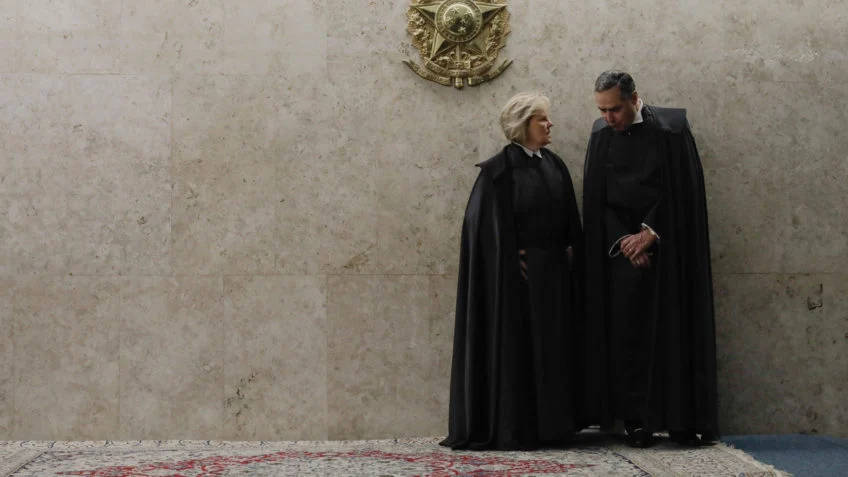
Brazil’s Supreme Court Faces Rising Trust Crisis Amid Musk-Moraes Clash
Moreover, the poll assessed public perception of individual STF justices. Alexandre de Moraes and Cármen Lúcia enjoy the highest “positive image” ratings at 47% each.
However, Gilmar Mendes faces the highest “negative image” at 59%. Strikingly, over half of Brazilians negatively evaluate 6 out of 11 justices.
This decline in trust occurs amid heightened judicial activism and controversial STF decisions.
The Court has tackled several high-profile cases recently. These include investigations into digital militias and fake news dissemination.
Additionally, the STF has ruled on electoral disputes and challenges to election integrity. Furthermore, it has made decisions on freedom of expression and content moderation on social media.
The Musk-Moraes conflict has intensified the debate around the STF’s role and powers. Musk accuses Moraes of censorship and overreach in his rulings.
Meanwhile, Moraes has included Musk in investigations for alleged obstruction of justice.
This situation has sparked broader discussions about balancing disinformation combat with free speech protection in Brazil. Consequently, it raises questions about the STF’s authority and its impact on democracy.
The AtlasIntel survey reflects growing public concern over these issues. Brazilians are increasingly skeptical of the highest court’s actions and decisions.
This trend could significantly impact the perceived legitimacy of Brazil’s judicial system.
Additionally, it may affect overall trust in the country’s democratic institutions. As a result, Brazil faces a critical juncture in its democratic journey.
More: Brazil news in English, every day from The Rio Times.
This article was drafted with automated assistance and reviewed before publication. How we use AI · Report an error · Editorial responsibility: Matthias Camenzind, Editor-in-Chief