Brazil’s Judiciary Risks Global Fallout in Clash with Elon Musk and U.S. Allies
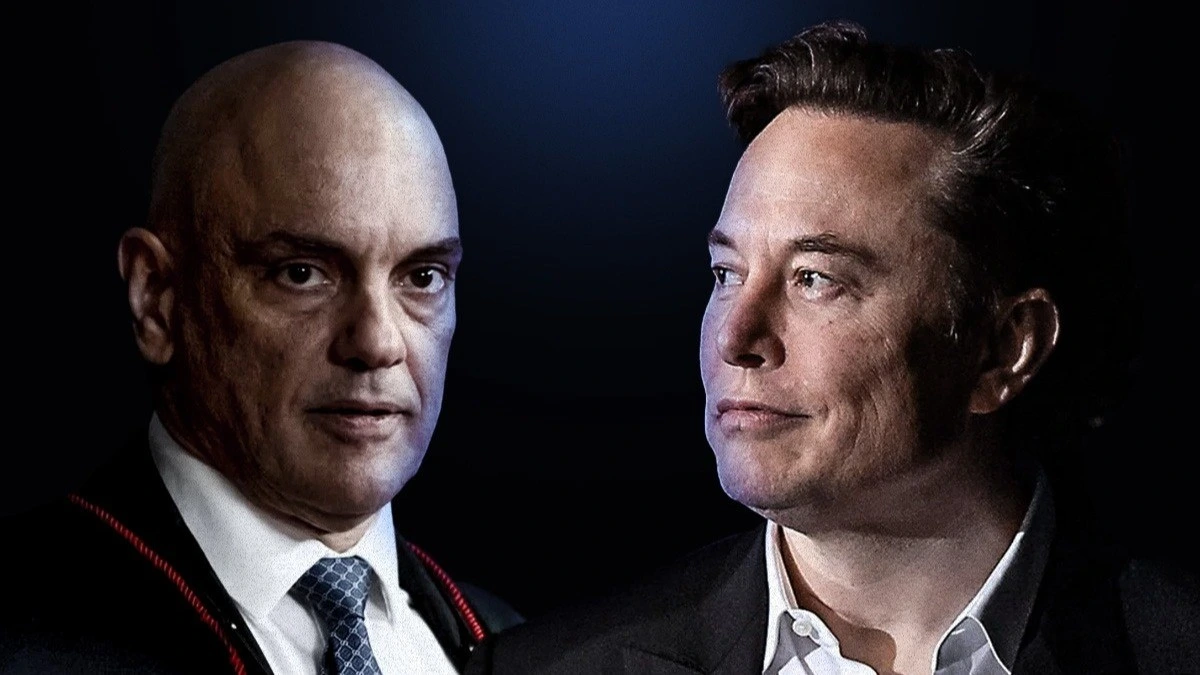
(Opinion) Justice Alexandre de Moraes, a prominent and controversial figure in Brazil’s judiciary, has fined Elon Musk’s X (formerly Twitter) 8.1 million reais ($1.4 million) for failing to comply with a court order.
The fine stems from X’s refusal to provide registration data linked to Allan dos Santos, a conservative blogger and ally of former President Jair Bolsonaro.
Musk, one of the world’s most influential business leaders and closely aligned with U.S. President Donald Trump, now finds himself at odds with Brazil’s judiciary in a case that could strain international relations.
De Moraes has pursued dos Santos since 2020, accusing him of “anti-democratic activities” for questioning Brazil’s electronic voting system and opposing COVID-19 restrictions. Dos Santos fled to the United States after being targeted in investigations.
Through his platform Terça Livre, he raised concerns about the lack of a paper trail in Brazil’s electronic voting machines and called for greater transparency. While Brazilian authorities have defended the system, questions about its reliability persist among some experts and segments of the public.
On COVID-19, dos Santos criticized lockdowns and vaccine mandates, arguing they disproportionately affected Brazil’s economically vulnerable populations and infringed on individual freedoms.
His views were widely criticized at the time but have gained renewed attention following developments in the United States. Robert F. Kennedy Jr., recently appointed as U.S. Secretary of Health and Human Services, has long questioned mandatory vaccination policies and rapid vaccine rollouts during the pandemic.
His appointment signals a shift in U.S. health policy toward increased scrutiny of pharmaceutical companies and vaccine approval processes—positions that align with some of dos Santos’ early criticisms.
Judicial Authority and Free Speech
This shift reflects broader global debates about pandemic responses and public health policies, raising questions about whether Brazil’s actions against dissenting voices like dos Santos were proportionate or premature.
The ongoing clash between De Moraes and Musk adds an international dimension to these tensions. Musk has refused to comply with what he considers unconstitutional demands from Brazil’s judiciary, framing his stance as a defense of free speech on his platform.
By targeting Musk—a key global figure—and maintaining legal pressure on Bolsonaro allies like dos Santos, De Moraes risks complicating Brazil’s relations with the United States at a time when economic partnerships are critical.
In short, this case highlights broader issues about judicial authority, governance, and international relations as global attitudes evolve on topics like election transparency and pandemic policies.
De Moraes’ decisions may have significant implications for Brazil’s standing on the international stage and its ability to navigate shifting global dynamics effectively.
More: Brazil news in English, every day from The Rio Times.
This article was produced by The Rio Times’ automated newsroom system. How we use AI · Report an error · Editorial responsibility: Matthias Camenzind, Editor-in-Chief