Brazil Court Sets Vote on Riot Sentence Law
One court session in December will decide whether a law that Congress passed, the president vetoed and a justice froze can finally reduce the sentences of Brazil's coup and riot convicts.

Politics: Brazil
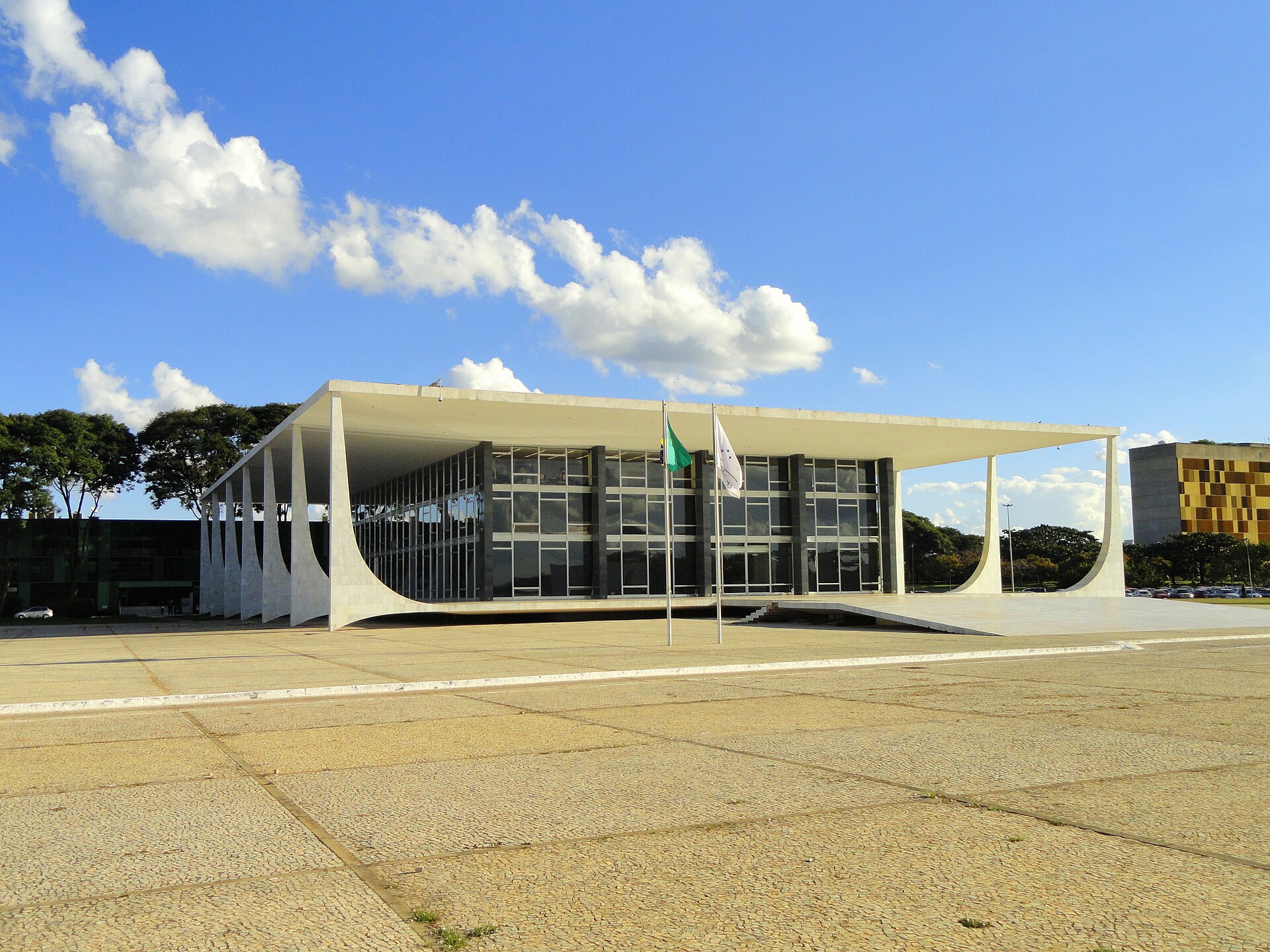
Brazil’s Supreme Federal Court will decide in December whether a law that shortens sentences for the 8 January 2023 rioters can take effect. Justice Alexandre de Moraes released four challenges to the so-called Dosimetry Law, named after the legal term for how a sentence is calculated, for judgment on Thursday 19 November 2026, his office said.
The online session runs from Friday 4 December to Tuesday 15 December 2026, and the justices cast written votes instead of debating in a courtroom. The outcome matters to former president Jair Bolsonaro, who received a sentence of 27 years and 3 months for the coup attempt.
Key Facts
- Who. Justice Alexandre de Moraes and the ten other justices of Brazil’s Supreme Federal Court.
- What. Four challenges to the Dosimetry Law, which cuts sentences for coup and riot convictions.
- Where. Online plenary session, where justices cast written votes, Friday 4 to Tuesday 15 December 2026.
- Power Index. Brazil ranks 1st of 14 in The Rio Times Latin America Power Index, with 74.2 points (November 2026 edition).
- As of. 20 November 2026, 06:00 GMT.
One court session in December will decide whether a law that Congress passed, the president vetoed and a justice froze can finally reduce the sentences of Brazil’s coup and riot convicts.
The law has a turbulent history. Congress passed it in December 2025, and President Luiz Inácio Lula da Silva vetoed it in full in January 2026.
Congress overrode the veto in April 2026, and the law was promulgated the following month. In May 2026 Moraes suspended its application until the full court rules, soon after the first two challenges, ADI 7966 and 7967, were filed.
The law changes how judges count punishment. When the crimes of attempted coup and of violent abolition of the democratic rule of law arise from the same set of facts, sentences are no longer added together, and the heavier penalty applies, increased by one sixth to one half.
It also cuts sentences by one third to two thirds for crimes against democratic institutions committed in a crowd. The cut applies only if the convict did not finance the acts or play a leadership role.
People convicted over the 8 January 2023 attacks on the seats of the three branches of government in Brasília could benefit, as could members of the group convicted of the coup attempt. Bolsonaro, who received the longest sentence among those named, is among them.
Military and former government figures named as possible beneficiaries include Walter Braga Netto, a former minister, Augusto Heleno, a former head of the Institutional Security Cabinet, Almir Garnier, a former Navy commander, and Paulo Sérgio Nogueira, a former defence minister. Nothing in the record says what the new counting would mean for any of them.
The four cases are direct actions of unconstitutionality, numbered ADI 7966, 7967, 7968 and 7969. They were filed by the Brazilian Press Association (ABI), a journalists’ body, the left-wing PSOL-Rede party federation, the centre-left PDT party and the PT-PCdoB-PV federation, which groups Lula’s Workers’ Party and two allied parties.
The challengers’ reasoning is not set out in the announcement from Moraes’s office. Congress, which passed the law and overrode the veto, wants the court to settle its validity.
Moraes, the rapporteur (the justice assigned to the cases), released them two days after Hugo Motta, president of the Chamber of Deputies, and Davi Alcolumbre, president of the Senate, met him on Tuesday 17 November and asked that the cases be judged this year. In a joint note they stressed the importance of a Supreme Court decision on the validity of the law passed by Congress.
The court’s president, Edson Fachin, had signalled that a ruling this year was possible if Moraes released the cases. That condition is now met.
A ruling that the law is constitutional would not cut any sentence automatically. Defence lawyers would have to ask for reviews, and each request would be examined case by case.
With the announcement, Moraes’s office released an updated report on the 8 January cases. It says 1,535 defendants have been held responsible, 598 of them through non-prosecution agreements, plea-style deals with prosecutors.
How the other ten justices will vote is not known, and neither is whether any of them will ask to move the case out of the online session. The next dated step is the opening of that session on Friday 4 December 2026.
Frequently Asked Questions
Would a ruling for the law cut Bolsonaro’s sentence at once?
No. Even if the court upholds the law, his lawyers would have to ask for a review, and judges would examine it individually.
What is the virtual plenary?
It is an online court session in which the justices cast written votes instead of arguing in a hall.
Why do Congress leaders want a ruling this year?
They say a Supreme Court decision on the law’s validity matters. Until the full court rules, the law stays suspended.
Sources: Brazil’s Supreme Federal Court; office of Justice Alexandre de Moraes (announcement of 19 November 2026 and updated report on the 8 January cases); joint note of the presidents of the Chamber of Deputies and the Senate (17 November 2026).
In depth
This article was produced by The Rio Times’ automated AI newsroom. Editorial responsibility: Matthias Camenzind, Publisher and Editor-in-Chief. The Rio Times also runs Ask Rio Times, which answers from 100,000+ of our own articles, the daily Latin America Power Map, and prediction-market odds on elections and markets.. How we use AI · Report an error
Brazil runoff, Sunday, October 25: Brazil runoff: date, poll closing times and when results start. Latest: Brazil runoff polls, Flávio 51%, Lula 49%.