Bolsonaro’s Fierce Rebuttal Fuels Brazil’s High-Stakes Trial
Brazil’s former President Jair Bolsonaro seizes the spotlight after the Supreme Tribunal Federal decides on March 26, 2025, to prosecute him for allegedly plotting a coup following his 2022 election loss.
Addressing reporters in Brasília, he passionately rejects the charges, calling them baseless and a personal attack by Justice Alexandre de Moraes. His confident denial ripples through a divided nation, amplifying the stakes of a trial that could jail him for 43 years.
Bolsonaro, who governed from 2019 to 2022, lost narrowly to Luiz Inácio Lula da Silva, with votes split 50.9% to 49.1%. The 272-page indictment claims he orchestrated the January 8, 2023, riots, when supporters trashed government buildings in Brasília, and even planned assassinations targeting Lula, Vice President Geraldo Alckmin, and Moraes.
Seven allies, including ex-ministers Walter Braga Netto and Augusto Heleno, face the same charges—forming an armed group and attacking democracy. Yet Bolsonaro stands firm, insisting he ensured a smooth transition.
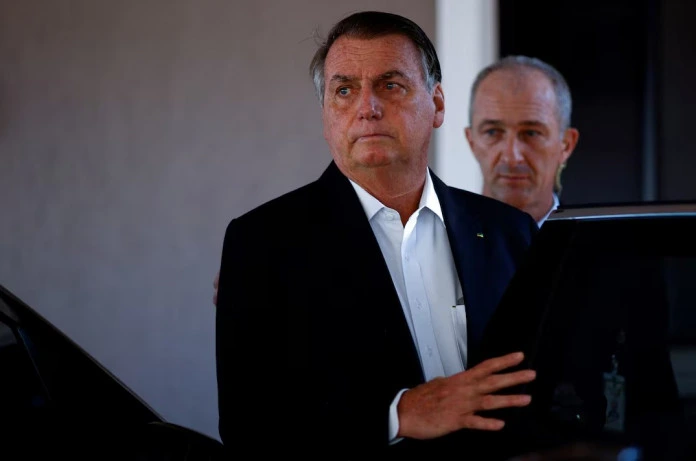
He dismisses the coup label outright. “They’ve got something personal against me,” he declares, arguing no evidence supports the accusations. He recalls urging truckers to clear highways post-election and claims his U.S. trip on December 30, 2022, proves he didn’t incite unrest.
“If I’d stayed, I’d be dead or jailed,” he says, framing his absence as a shield against persecution. His words carry weight beyond the courtroom. Already banned from office until 2030 for earlier election fraud claims, Bolsonaro retains a fervent base, evident at a March 16 Copacabana rally demanding amnesty for rioters.
He fuels their distrust, attacking Brazil’s electronic voting system again. “I don’t have to trust some programmer,” he asserts, echoing a grievance that sparked chaos. Refusing to hand Lula the presidential sash, he shrugs off tradition as optional.
Bolsonaro’s Legal Battle and Its Global Implications
The trial’s timing adds urgency—experts predict a verdict before the 2026 election, based on an 884-page police report unsealed in November 2024. Five justices unanimously back the case, signaling Brazil’s resolve to confront threats to its democracy, still scarred by the 1964-1985 dictatorship Bolsonaro once praised.
For global business leaders, this saga tests stability in Latin America’s biggest economy, where political unrest could rattle markets. Bolsonaro’s defiance shapes the narrative. He warns that prison won’t silence him, projecting strength to supporters and defiance to foes.
As the legal battle looms, his public stance—convincing to many—keeps Brazil on edge, blending personal loyalty with national reckoning. This clash promises to redefine the country’s political and economic future, drawing the world’s gaze.
More: Brazil news in English, every day from The Rio Times.
This article was produced by The Rio Times’ automated newsroom system. How we use AI · Report an error
Read More from The Rio Times