Brazil’s Top Court Charges Bolsonaro in Coup Plot
Brazil’s Supreme Federal Court (STF) unanimously charged former President Jair Bolsonaro and seven allies on March 26, 2025, with plotting a coup.
The Attorney General’s Office accuses them of forming the “crucial nucleus” behind a scheme to overturn the 2022 election. Facing up to 43 years in prison, they stand trial for five crimes: armed criminal organization, coup attempt, violent democratic subversion, heritage damage, and public property harm.
Bolsonaro lost narrowly to Luiz Inácio Lula da Silva in October 2022, sparking fraud claims akin to Donald Trump’s 2020 playbook. Supporters stormed Brasília’s government buildings on January 8, 2023, mirroring the U.S. Capitol riot.
Federal Police uncovered a draft decree to declare an emergency, void the election, and keep Bolsonaro in power via military force. Justices Alexandre de Moraes, Flávio Dino, Luiz Fux, Cármen Lúcia, and Cristiano Zanin agreed sufficient evidence exists to proceed.
Moraes insists Bolsonaro actively shaped the coup plan, citing intercepted talks and documents. Dino rejects defense claims that a failed coup lacks weight, arguing success would have ended judicial oversight.
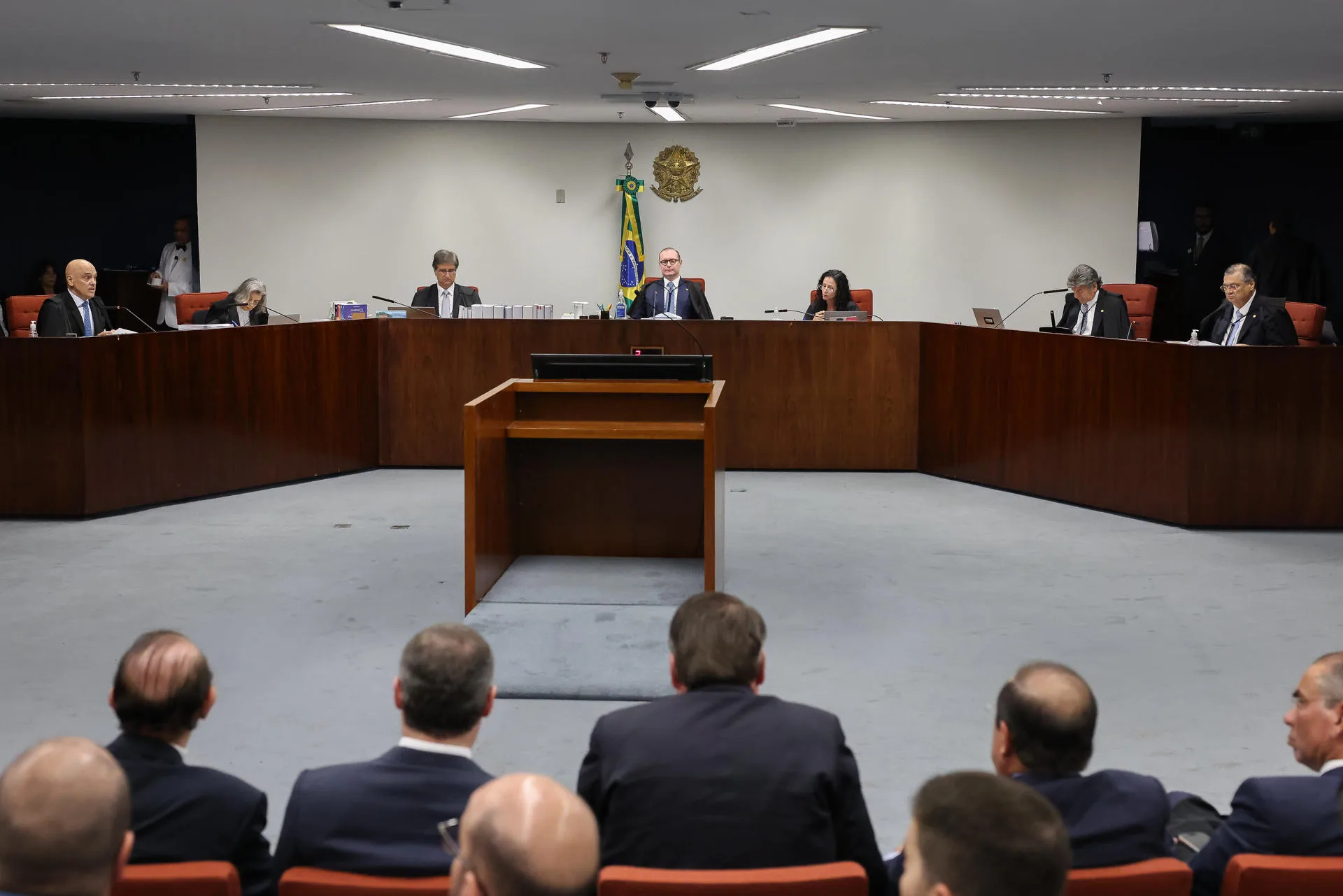
Bolsonaro’s Trial Tests Brazil’s Democracy and Judicial Power
The accused include ex-Defense Minister Walter Braga Netto, former security chief Augusto Heleno, and ex-Navy commander Almir Garnier. Mauro Cid, Bolsonaro’s ex-aide, bolsters the case via plea deal, though Zanin stresses broader evidence supports the charges.
Fux flags potential issues with labeling the attempt as a completed crime, hinting at future debate. Critics question the STF’s role, alleging it mimics Venezuela’s judiciary by targeting political foes.
Since 2019, Moraes has led probes into Bolsonaro’s circle, freezing assets and banning social media platforms like X in 2024. Lula’s appointment of Dino to the court fuels claims of bias.
Bolsonaro attended the trial’s first day but skipped the verdict, aware of the outcome. The next phase gathers witness accounts and evidence, with no set timeline. The STF may rush to conclude before 2026 elections, where Bolsonaro, barred from running until 2030, still wields influence over allies like São Paulo Governor Tarcísio de Freitas.
This case tests Brazil’s democratic resilience amid global scrutiny. A conviction could jail a former president, reinforcing accountability but deepening divides. An acquittal might embolden far-right defiance, echoing Trump’s 2025 U.S. comeback.
Businesses watch closely, as political stability shapes Latin America’s largest economy. The STF’s move reflects a judiciary unafraid to confront power, rooted in a post-dictatorship legacy.
Yet, accusations of overreach linger, drawing parallels to polarized judicial battles elsewhere. For now, Bolsonaro’s fate hangs in balance, a saga with stakes beyond Brazil’s borders.
More: Brazil news in English, every day from The Rio Times.
This article was produced by The Rio Times’ automated newsroom system. How we use AI · Report an error · Editorial responsibility: Matthias Camenzind, Editor-in-Chief