
Bolivia’s President Rodrigo Paz completes his first year in office on Sunday 8 November 2026, after twelve months of painful economic changes and political fights. For US readers, the stakes are a South American country with large lithium and gas reserves that is trying to avoid a debt and currency crisis with help from the International Monetary Fund (IMF), the global lender.
Key Facts
- Who: Rodrigo Paz, Bolivia’s president, took office on Saturday 8 November 2025.
- Fuel: A decree dated 17 December 2025 ended the state fuel subsidy, and its replacement kept that change.
- Currency: Bolivia’s central bank ended its fixed rate of 6.96 bolivianos per US dollar on 29 June 2026.
- IMF: IMF staff agreed a US$1.9 billion, 36-month programme in July; its board approved it in October.
- Prices: Consumer prices rose 2.07% in October and 6.03% from January to October.
- Power Index: Bolivia ranks 13th of 14 in The Rio Times Latin America Power Index, with 27.9 points (November 2026 edition).
Paz’s first year was defined by hard economic choices and a run of clashes with unions, prosecutors and his own vice president.
What Changed in the Economy
On 17 December 2025, Supreme Decree 5503 declared a national economic emergency and ended the state subsidy on fuel. After blockades, the government agreed with the Bolivian Workers’ Confederation (COB), the main union federation, to cancel that decree, and Decree 5516, dated 13 January 2026, replaced it while keeping the end of the subsidy.
On 29 June 2026 the central bank ended the fixed exchange rate of 6.96 bolivianos per US dollar, which had held for more than a decade. The official rate is now set each day from the dollar purchases made in the market.
On 29 July 2026 IMF experts and the Bolivian government reached a staff-level agreement, a deal reached before the Fund’s board votes, on a 36-month Extended Fund Facility (a lending programme) of about US$1.9 billion. The Fund’s executive board approved the arrangement in early October, and Bolivia committed to budget discipline, social protection, a more flexible exchange rate and anti-corruption reforms.
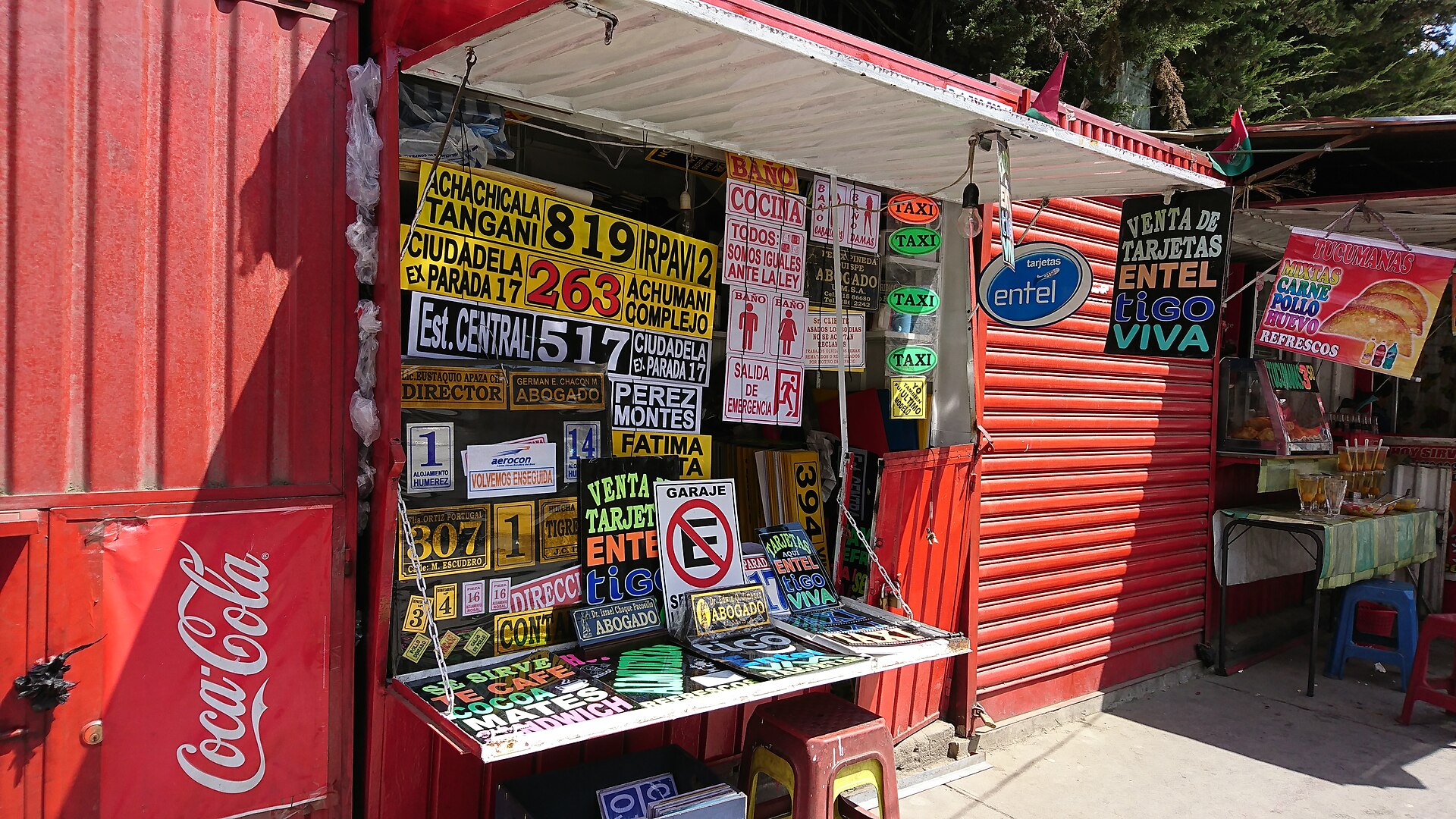
Prices have risen as these changes feed through: the national statistics institute (INE) reported that consumer prices rose 2.07% in October alone and 6.03% from January to October. Bus and minibus fares, onions and potatoes were among the biggest pushes, as we reported in our October inflation report.
Road blockades during May and June 2026 added to the strain. The National Chamber of Industries, a business group, estimated the losses at more than US$2.5 billion.
Political Fights and the Justice System
Vice President Edmand Lara said in November 2025 that he was no longer part of the government, and in late December 2025 he declared himself in opposition. He described his stance as “constructive opposition”.
On 13 March 2026 Bolivian authorities seized Sebastián Marset, a Uruguayan fugitive wanted by the United States, in Santa Cruz de la Sierra. They expelled him to the United States the same day.
On 30 September police arrested Róger Mariaca, the country’s attorney general, at Viru Viru, Santa Cruz’s international airport. The legislature removed him on 3 October and a judge ordered him held for six months before trial, in cases over organised crime and drug trafficking.
On 4 November Rómer Saucedo, president of the Supreme Court, announced that he had left Bolivia with his family, saying he was being persecuted. The government spokesman said there was no reason to investigate his travel, and a court dean took over provisionally, as we covered in our report on the judge’s departure.
On Friday 16 October Chile’s President José Antonio Kast visited La Paz and signed five agreements with Paz, the first official visit by a Chilean president in 71 years. We explained the deals in our report on the accords.
How Urban Bolivians Rate the Year
Ipsos Ciesmori, a Bolivian opinion-polling firm, has tracked Paz’s approval in La Paz, El Alto, Cochabamba and Santa Cruz since he took office. It stood at 65% in late 2025, and in the latest reading we could confirm, taken from 23 July to 2 August 2026, it had fallen to 32% while 55% disapproved.
For background on the people around the president, see our profile of Rodrigo Paz and our guide to who holds power in Bolivia. Our explainer on the legislative crisis covers the fight in Congress.
What It Means for You
Investors with Bolivian debt or exposure to the boliviano, Bolivia’s currency, should watch the daily official exchange rate and whether Bolivia meets the conditions of its IMF programme. Travellers should expect higher fuel and transport costs, and road blockades can cut routes at short notice.
What Is Not Known
We could not confirm the exact date of the IMF board decision or the amount released at once, so we give only the month. We also could not obtain the pollster’s own release for any reading after early August, so we do not report newer approval figures.
Saucedo’s whereabouts and whether prosecutors have opened a case against him are not confirmed. The cost of the 2026 blockades remains a business-group estimate, not an official figure.
Frequently Asked Questions
When did Rodrigo Paz take office?
Bolivia’s presidency lists 8 November 2025 as the date he assumed office. His first anniversary falls on Sunday 8 November 2026.
Did Bolivia end its fixed exchange rate?
Yes, the central bank ended the 6.96 bolivianos-per-dollar fixed rate on 29 June 2026. An official rate is now set daily from market dollar purchases.
What is the IMF deal with Bolivia?
It is a 36-month Extended Fund Facility, a lending programme, of about US$1.9 billion, agreed by IMF staff on 29 July 2026. The Fund’s executive board approved it in early October.
How high is inflation in Bolivia?
Consumer prices rose 2.07% in October 2026 and 6.03% from January to October, according to the national statistics institute. Bus and minibus fares and food drove the rise.
Sources
Presidency of Bolivia (presidencia.gob.bo); Bolivian Statistics Institute (ine.gob.bo), October 2026 consumer price release of 5 November 2026; Central Bank of Bolivia, Resolutions RD 88/2026 and RD 142/2026; International Monetary Fund, press release 26/268 of 29 July 2026 (imf.org); Supreme Decrees 5503 and 5516; Ipsos Ciesmori public opinion monitor. Read 7 November 2026.
Connected Coverage
This article was produced by The Rio Times’ automated AI newsroom. Editorial responsibility: Matthias Camenzind, Publisher and Editor-in-Chief. How we use AI · Report an error