Milei Takes Governors to Paris to Trade Deals for an End to Primaries
Key Facts
Argentina’s president governs with a minority in Congress and needs provincial allies to pass anything. Next week he takes fourteen governors to Paris, hoping to trade attention for votes at home.
President Javier Milei’s government is preparing formal announcements for a Paris investment showcase, Infobae reported on 26 September. The same trip is meant to unlock a stalled bill that would end the country’s compulsory primaries.
Why This Matters
Argentina holds compulsory open primaries known as PASO before each national election. The system was created by law 26,571 in 2009 and first used in 2011.
Every party must run in them, and voting is obligatory for citizens. A party needs 1.5% of the primary vote to reach the general election.
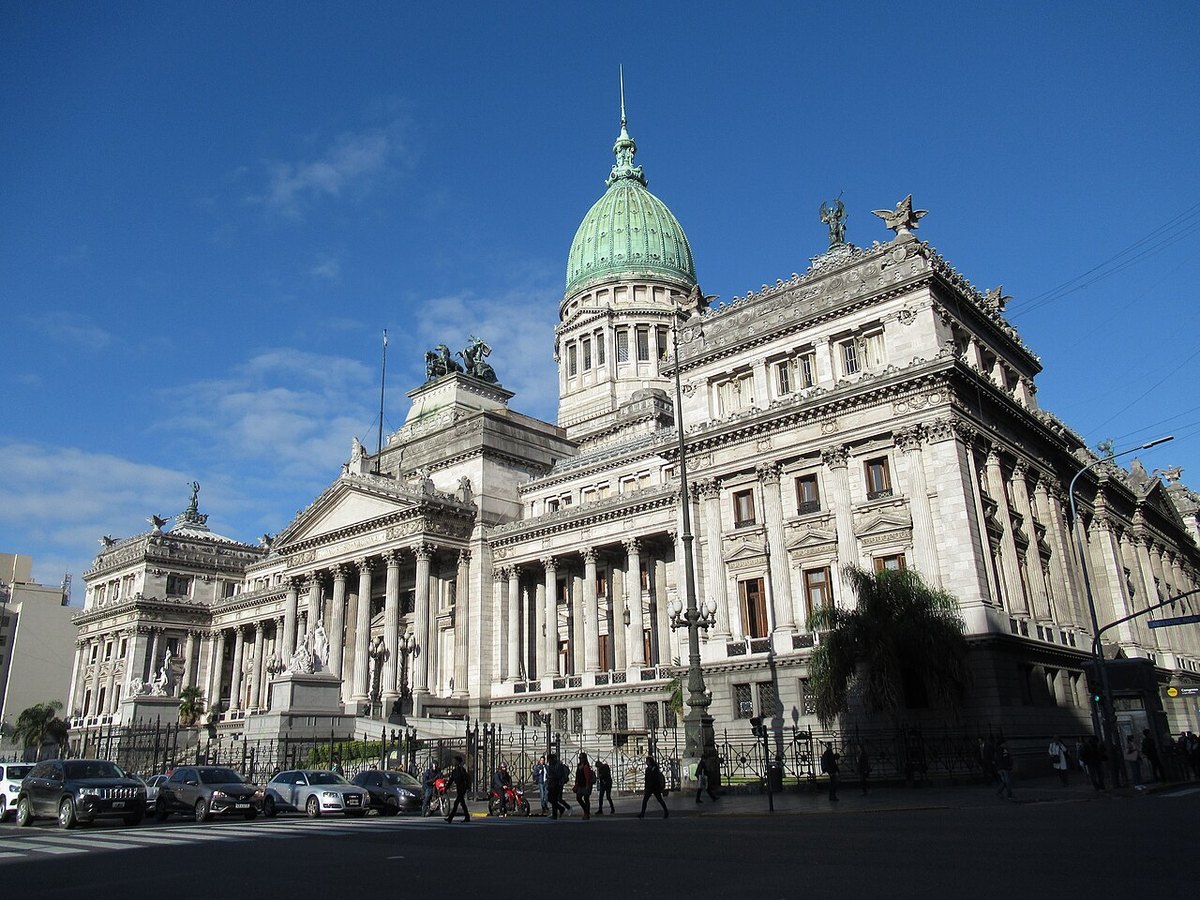
Milei wants the primaries gone before the presidential election of 24 October 2027. His La Libertad Avanza bloc holds 21 of the 72 Senate seats.
Passing electoral law there requires 37 votes, an absolute majority of the chamber. That gap is why provincial governors now hold the decisive hand.
Foreign investors watch the fight because it shapes the 2027 field. A shorter calendar favours the incumbent, while primaries help fragmented opponents sort themselves out.
What the Government Is Preparing in Paris
The delegation leaves Buenos Aires on Tuesday 29 September and lands the next day. Argentina Week opens on 1 October and runs for two days of panels.
Infobae reported that officials plan to sign a Financial Action Task Force agreement. That body, known by its Spanish acronym GAFI, sets global anti-money-laundering standards.
A second announcement concerns RIGI, the large-investment incentive regime created in 2024. Panels cover energy, agribusiness, fishing and the knowledge economy, Sitio Andino reported.
Milei is due to meet President Emmanuel Macron on Thursday afternoon. The travelling ministers include Luis Caputo of the economy and Federico Sturzenegger of deregulation.
Justice Minister Juan Bautista Mahiques travels for the anti-money-laundering file. Karina Milei, the president’s sister and general secretary, leads the political talks.
How the Primary System Works
PASO stands for open, simultaneous and obligatory primaries in Spanish. All parties vote on the same day, and any citizen may take part.
Voters receive ballots from every party but may choose only one. The result fixes each alliance’s candidate list for the October general election.
Supporters say the system settles internal fights in public rather than in party rooms. Critics say parties rarely compete, turning the exercise into a costly opinion poll.
Congress already suspended the primaries once, for the 2025 midterm elections. That law passed in February 2025 after the government failed to repeal PASO outright.
Turnout in the primaries has fallen steadily since the system began. Few alliances have used them for a genuine contest between rival candidates.
Why the Reform Is Stuck
The bill reached the Senate in April 2026 as a government priority. Its constitutional affairs committee has met twice in four months, Infobae reported.
The last meeting, on 14 September, ended quickly without progress; the Rio Times reported that deadlock on 16 September. Security Minister Patricia Bullrich leads the ruling bloc in the Senate.
“There is no consensus; today we are building it, but we still do not have them,” she told La Nación. The UCR, a centrist party with ten senators, wants primaries made voluntary instead.
PRO, the centre-right party led by Mauricio Macri, takes the same line. Salta’s Gustavo Sáenz and Tucumán’s Osvaldo Jaldo face libertarian challengers at home, elDiarioAR reported.
The left-leaning site reported Karina Milei warned unsupportive governors of federal electoral intervention. Austerity has removed the public-works money that past governments used to buy support.
Chief of Cabinet Diego Santilli was given the task of finding votes in June. La Nación reported that he had made no measurable progress by early September.
The Poverty Number Behind the Politics
INDEC, the national statistics office, put poverty at 32.3% for the first half of 2026. Indigence reached 7.5%, and about 15.6 million people were counted as poor.
The Rio Times reported those official figures on 25 September. A separate estimate now disputes the method behind them.
The consultancy Equilibra puts real poverty near 44.9%, MisionesOnline and Ámbito reported. That estimate is not official and has not been confirmed by INDEC.
Equilibra updates the consumption basket to 2017 and 2018 patterns instead of 2004 and 2005 ones. Its economist Gonzalo Carrera said meat prices explained close to half the basket’s rise.
On the official basket, a family of four needed 1,605,497 pesos (US$1,052) in August. The food-only basket stood at 726,469 pesos (US$476) for the same family.
Peso conversions use the BCRA reference rate A3500 of 1,525.50 pesos per dollar on 25 September 2026. The Catholic University of Argentina has also questioned the official weighting, Ámbito reported.
Reactions From Both Sides
Economy Minister Luis Caputo has stressed that poverty sits below its 2024 peak. He noted the rate stood at 52.9% in the first half of 2024.
Indigence fell from 18.1% over the same two years, the same figures show. Ten Radical and three PRO senators hold the balance in the chamber, La Nación reported.
Moderate Peronist and Radical senators treat the primaries as a tool for internal order, La Nación reported. Bullrich frames the bill as an answer to what she calls very strong party fragmentation.
Infobae listed fourteen confirmed governors, among them Alfredo Cornejo of Mendoza. Others confirmed include Martín Llaryora of Córdoba and Rogelio Frigerio of Entre Ríos.
Business names on the list include Horacio Marín of YPF and Alejandro Bulgheroni. Nicolás Pino, who heads the Sociedad Rural farm lobby, also travels.
What It Means If You Live In or Invest In Argentina
Election rules decide when campaign noise starts, and that timing moves asset prices. Without primaries, the 2027 field would only become clear close to October.
Country risk closed on 25 September at 609 basis points, its highest since early April. The Rio Times tracked that move this week.
Residents feel the argument through prices rather than through parliamentary procedure. A disputed poverty figure shapes wage talks, welfare spending and provincial budgets.
Foreign companies watching RIGI will look at what Paris actually delivers. Promises made abroad have to survive a Congress the government does not control.
Provincial budgets for 2027 are being negotiated in parallel with the electoral bill. Anyone signing long contracts should assume the rules may move before August.
What Is Not Yet Known
No date has been set for a Senate vote on the electoral bill. It is unclear whether the government will accept voluntary primaries instead of abolition.
The exact content of the Paris announcements has not been published. Officials have not said what the GAFI agreement would commit Argentina to.
The Equilibra figure is a consultancy estimate, not an official statistic. INDEC has not said whether it will update its consumption basket.
Whether governors trade votes for budget support remains untested. The 2027 calendar still lists primaries for 8 August, unless the law changes.
Reports differ on how many governors will finally board the plane. Counts published on 26 September ranged from twelve to fourteen names.
Frequently Asked Questions
What are Argentina’s PASO primaries?
They are open, simultaneous and obligatory primaries held before each national election. A party needs 1.5% of the primary vote to reach the general ballot.
Why does Milei want to remove them?
His government argues they entrench party fragmentation and cost money. Opponents say primaries let parties settle internal fights in public.
Is the poverty rate really 45%?
The official INDEC rate is 32.3% for the first half of 2026. The consultancy Equilibra estimates 44.9% using an updated basket, which INDEC has not endorsed.
What happens during Argentina Week in Paris?
The government plans announcements on anti-money-laundering rules and the RIGI investment regime. Fourteen governors travel with the delegation from 29 September.
Sources: Infobae, Argentina Week and the announcements planned in Paris, Infobae, the Paris trip and the blocked PASO debate, La Nación, political reform stalled in the Senate, elDiarioAR, pressure on governors over the primaries, Ámbito, the Equilibra estimate of 44.9% poverty, MisionesOnline, updated baskets and the poverty debate, Sitio Andino, panels and ministers travelling to Paris, Diario Popular, the 2027 electoral calendar
This article was produced by The Rio Times’ automated newsroom system. How we use AI · Report an error
Read More from The Rio Times